REVIEW · VARANASI
Heritage Walking Tour in Varanasi
Book on Viator →Operated by Spiritual Tours of Varanasi · Bookable on Viator
Varanasi by foot hits different. This heritage walking tour strings together major Shiva sites and the riverfront ghats where daily rituals happen, so you’re not just looking at monuments—you’re watching living religion in motion. It runs about 2 hours in the morning and uses a mobile ticket, which makes the whole thing feel easy even in a city that doesn’t always run on a tidy schedule.
I love the guide quality. Reviews highlight Manish as attentive, patient, and able to adjust to slower walkers, with English that actually makes the stories click. I also like how the route is tightly planned around recognizably important stops: Kashi Vishwanath Temple, Man Mandir Ghat, Domraja Palace, the Nepali (Kathwala) Temple, and finally Manikarnika Ghat.
One consideration: Manikarnika is a working cremation ghat. Even if you’ve prepared yourself, the atmosphere and what you may see can feel heavy. If you’re sensitive to death rituals, go with a calm mindset and the expectation that this is not a postcard stop.
In This Review
- Key highlights you’ll notice fast
- Why this morning ghats heritage walk is worth your $21
- Where you start at Girja Ghar Chauraha (and how that helps)
- Stop 1: Kashi Vishwanath Temple and the Shiva pilgrimage pull
- Stop 2: Nilkantheshwar Temple Ghat and the Narmada connection
- Stop 3: Man Mandir Ghat and the Raja Man Singh story
- Stop 4: Domraja Palace and the people tied to the cremation grounds
- Stop 5: Nepali Temple (Kathwala Temple), also called Mini Khajuraho
- Stop 6: Manikarnika Ghat and how to handle the emotional weight
- What makes the guide experience the real engine of the tour
- Timing, pace, and what to plan around
- Price and value: why $21 can actually make sense
- Tips to get more out of the experience (without getting weird)
- Should you book this heritage walking tour in Varanasi?
- FAQ
- How long is the Heritage Walking Tour in Varanasi?
- Where does the tour start and end?
- What temples and ghats are included?
- Is the tour private?
- How much does it cost?
- Do I get a mobile ticket?
- Is free cancellation available?
- Will I get confirmation after booking?
- Is it near public transportation?
Key highlights you’ll notice fast
- Manish’s English and patience help you understand what you’re seeing without rushing you.
- A focused 2-hour circuit keeps you moving through the ghats area without turning the day into a marathon.
- Kashi Vishwanath Temple puts you at one of the most important Shiva pilgrimage sites in Varanasi.
- Man Mandir Ghat connects architecture to history, including the 16th-century work of Raja Man Singh of Amer.
- Domraja Palace + Dom cremation custodians adds a human layer to the cremation-ground story.
- Manikarnika Ghat’s spiritual weight is the emotional anchor of the walk.
Why this morning ghats heritage walk is worth your $21
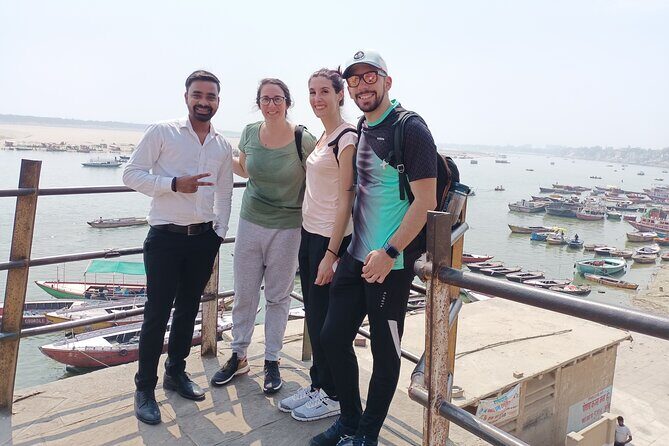
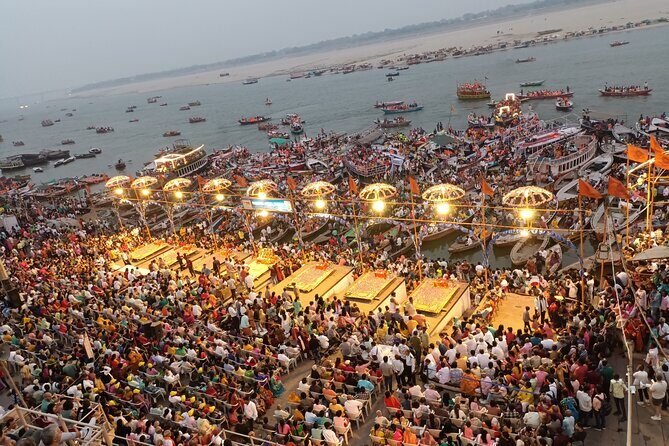
Varanasi can feel like information overload. This tour keeps it under control by doing two smart things: it walks you along the ghats (so you’re oriented to the Ganges area quickly), and it gives you explanations at the exact places where the meaning is concentrated.
At about $21 for roughly 2 hours, the best value isn’t that it’s cheap—it’s that you’re paying for time with a guide who can connect names, gods, architecture, and riverfront customs into one line you can remember. Each listed stop shows admission as free, which means you’re mainly funding the guiding and the route.
Also, it’s a private tour/activity, so it’s only your group. That matters in Varanasi where the best learning happens when your pace isn’t dictated by strangers.
You can also read our reviews of more walking tours in Varanasi


Where you start at Girja Ghar Chauraha (and how that helps)
The tour meets at Girja Ghar Chauraha, Girja Ghar, Varanasi, and ends back at the meeting point. That round-trip setup is more useful than it sounds. You don’t spend your limited time hunting for a guide or figuring out how to get from one side of the ghats maze to the other.
Because it’s near public transportation, you’re not stuck if you need to adjust your day. And since confirmation comes at booking time, you can plan around it without endless back-and-forth.
Practical tip: wear shoes you can handle on stone and steps. A short walk can still mean uneven ground, especially in the ghats zone.
Stop 1: Kashi Vishwanath Temple and the Shiva pilgrimage pull
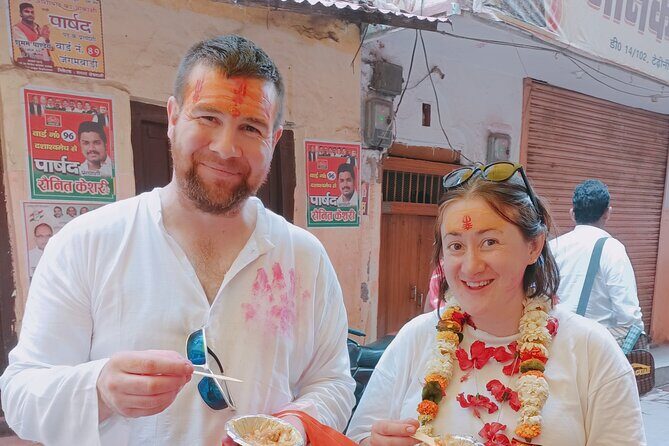
The first major religious stop is Kashi Vishwanath Temple, dedicated to Shiva. It’s located in Vishwanath Gali and is known as one of the twelve Jyotirlinga shrines—so this is not just a pretty temple. It’s a core pilgrimage destination.
What I like about starting here is that it sets the spiritual frame for the rest of the route. After you understand why Shiva is central in this city, the later stops along the cremation ghats and smaller shrines feel less random. You can see how the riverfront isn’t only about scenery—it’s about ritual and belief.
What to expect on-site: temple entry rules can be strict in active places of worship, and this is a serious pilgrimage environment. Go with a respectful attitude and keep your questions ready—this is the kind of stop where a guide’s explanations help a lot.
Stop 2: Nilkantheshwar Temple Ghat and the Narmada connection
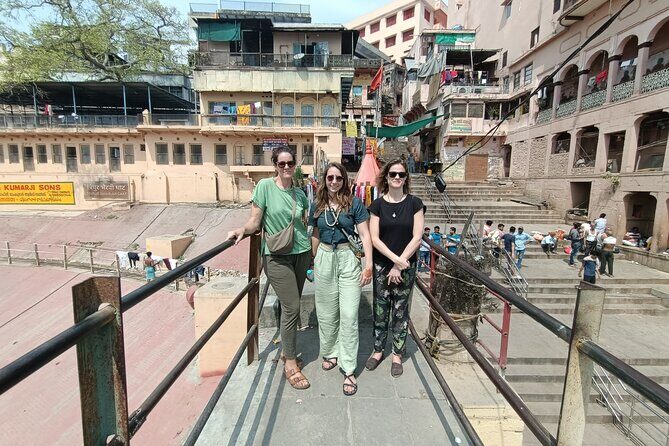
Next comes Nilkantheshwar Temple Ghat, described alongside the Beach of Narmada. This pairing is a good example of how Varanasi layers sacred geography. Even when you’re standing on the Ganges riverfront, there are links to other sacred rivers and traditions.
As a visitor, you’ll probably notice two things here:
- the ghat setting feels like a lived-in place rather than a museum backdrop
- your guide can explain why that kind of connection matters to pilgrims and Hindus
This is a shorter stop in the flow of the walk (about 20 minutes), so it’s less about a long sit-down and more about getting oriented to how the waterfront functions.
Stop 3: Man Mandir Ghat and the Raja Man Singh story
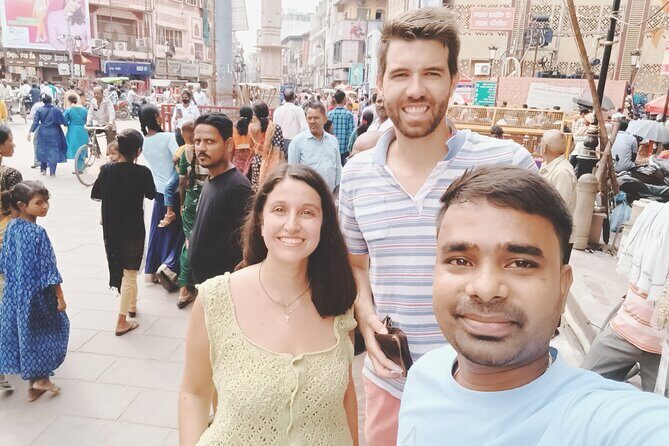
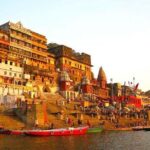
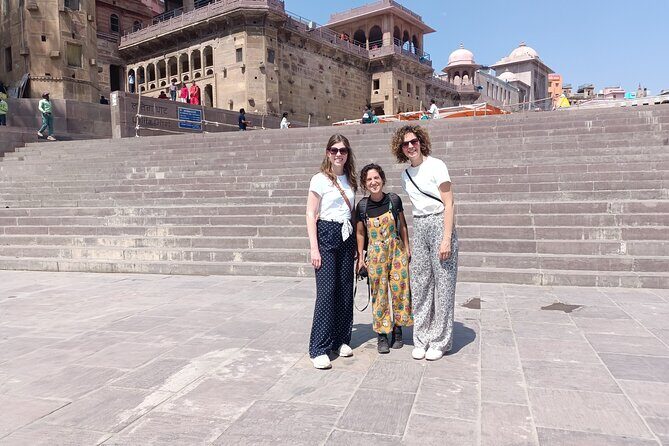
Then you reach Man Mandir Ghat, earlier known as Someswara Ghat. The story attached to it is specific and fascinating: it was built in the 16th century CE by Raja Man Singh of Amer, and the ghat was later renamed after him. The description also points to his ornate window carvings, which is the kind of detail that turns a name into something you can actually picture.
Why this stop works on a walking tour: it bridges religion and art. You’re not only hearing about gods—you’re seeing how patronage, architecture, and the ghats’ importance came together.
Look for what stands out visually: the ghat structures and carved elements your guide points out. In a place like Varanasi, small details get lost unless someone shows you where to look.
You can also read our reviews of more historical tours in Varanasi



Stop 4: Domraja Palace and the people tied to the cremation grounds
Next is Domraja Palace. This is where the tour gets real. The Dom community is described as the traditional custodian of cremation grounds. They keep sacred fire that is described as never allowed to die down, and they are connected to cremation work at Manikarnika.
Even if you’re not sure what questions to ask, you’ll understand the point: this isn’t a vague spiritual concept. It’s about roles, responsibility, and the continuity of ritual practice.
A balanced way to approach this stop:
- Stay respectful and quiet while you’re nearby
- Let your guide explain the meaning of what you’re seeing
- Remember that you’re observing a working system, not a staged ceremony
This section can feel uncomfortable for some people. That’s normal. If you’re prone to strong reactions to death-related rituals, treat this as an emotional checkpoint.
Stop 5: Nepali Temple (Kathwala Temple), also called Mini Khajuraho
After the cremation-ground context, the tour pivots to a temple stop that feels like a visual breath: the Nepali Temple, also known as Kathwala Temple. The full name given is Shri Samrajeswar Pashupatinath Mahadev Mandir, and it’s also referred to as the Nepali Mandir and Kanthwala Mandir. It’s nicknamed Mini Khajuraho—the description connects this nickname to the meaning of Kanthwala as wooden.
This is the kind of stop that makes a walking tour feel worth it. Temples along the ghats area can look similar at first glance, but your guide’s explanations help you spot what’s different about each one.
What I like here: it adds variety in a short time. You go from the riverfront work of cremation custodians to a temple with a reputation for distinctive style. That contrast keeps the tour from becoming one-note.
Stop 6: Manikarnika Ghat and how to handle the emotional weight
The final stop is Manikarnika Ghat, one of the holiest cremation grounds among the sacred riverfronts on the Ganges. It’s explicitly described as a gateway to another life in Hindu belief.
This is the stop most visitors remember, even if they didn’t plan for it. It’s not just historical. It’s happening. That’s why a guided explanation matters: without context, the experience can feel random or shocking.
How to do this respectfully (and for your own comfort):
- Keep a calm posture and don’t block people working or moving nearby
- If you feel overwhelmed, step back and let your guide talk you through meaning rather than forcing yourself to stare
- Ask your guide how people see this place spiritually and practically
If you’re a history buff, you’ll still find plenty to connect here. But if you’re looking for a light sightseeing stroll, this is where you should adjust expectations. Manikarnika is not a casual photo stop.
What makes the guide experience the real engine of the tour
A walking route can be pretty on paper. The difference here is the human factor, and the reviews you’ve got point strongly toward that.
Manish is repeatedly mentioned as:
- attentive and patient, with time for questions
- comfortable explaining complex parts of Hindu culture in clear English
- flexible with pacing, including for someone traveling with a parent around age 68
That flexibility matters more than people think. Varanasi’s ghats area can be visually intense and physically uneven. If your group moves slowly, a good guide doesn’t treat that like a problem. They shape the tour so you still learn without feeling rushed.
And since this is private, you’re not stuck with a rigid schedule that ignores your group’s mood.
Timing, pace, and what to plan around
The tour runs about 2 hours (approx.) in the morning. Morning makes sense in a city where heat and crowd energy can change fast. It also tends to feel calmer for first-time orientation along the riverfront.
Expect a steady rhythm: short guided segments at each stop and time to move between them. The listed stop lengths range from about 10 minutes at Domraja Palace to 30 minutes at Manikarnika Ghat. That gives the emotional climax enough time to land, without turning the walk into a never-ending loop.
If you want to do more that day, this is a good “anchor tour.” After it, you’ll usually feel more confident navigating the ghats area because you’ve seen the key landmarks in a logical order.
Price and value: why $21 can actually make sense
Let’s talk money without pretending it’s magic.
At around $21 for a guided, private walk of about 2 hours, you’re paying for:
- a local guide’s ability to explain what you’re seeing
- route planning through the ghats area
- access to key spiritual and architectural stops
- the convenience of a mobile ticket and a clear start/end point
Also, the stops listed show admission ticket free, which suggests you’re not paying extra at each location. Even if costs vary by circumstance, the overall feel is: you’re funding interpretation and direction, not a stack of paid entry fees.
Is it expensive? No. Is it a miracle deal? Also no. The value depends on whether you want meaning, not just movement. If you like learning at real locations with real context, this price is very reasonable.
Tips to get more out of the experience (without getting weird)
Here are practical things I’d do to make the tour easier on myself:
- Bring patience for crowds. This is a holy city with active rituals.
- Ask questions at temples. It’s when you can match names and ideas to what you’re seeing.
- Respect the cremation area. It’s a working ghat, so your behavior affects your comfort and others’.
- Wear comfortable shoes. A “short” tour still means walking steps and uneven surfaces.
- Let your guide set the pace. If the guide is adapting to your group, it usually means you’ll get better explanations.
If you’re traveling with older relatives or someone who needs slower pacing, this kind of responsive guiding is a major plus.
Should you book this heritage walking tour in Varanasi?
You should book it if you want a guided introduction to Varanasi that actually teaches you something at the places that matter. It’s a smart way to connect Shiva pilgrimage culture at Kashi Vishwanath with the real-world meaning of the ghats—especially the emotional anchor at Manikarnika.
Skip it or choose carefully if you want a light, purely scenic tour. This walk includes cremation-ground context, and that can be intense even when you understand the spiritual framework. If you know you handle that kind of experience poorly, consider a different format or different area of town.
If you’re on the fence, my advice is simple: ask yourself whether you’re there to learn. If the answer is yes, this tour’s price, timing, and guide focus make it a strong first step into Varanasi.
FAQ
How long is the Heritage Walking Tour in Varanasi?
It lasts about 2 hours (approx.).
Where does the tour start and end?
It starts at Girja Ghar Chauraha, Girja Ghar, Varanasi, Uttar Pradesh, India and ends back at the meeting point.
What temples and ghats are included?
The tour includes Kashi Vishwanath Temple, Nilkantheshwar Temple Ghat (Beach of Narmada), Man Mandir Ghat, Domraja Palace, the Nepali Temple (Kathwala Temple), and Manikarnika Ghat.
Is the tour private?
Yes. Only your group will participate.
How much does it cost?
The price is listed as $21.
Do I get a mobile ticket?
Yes. The tour uses a mobile ticket.
Is free cancellation available?
Yes, you can cancel up to 24 hours in advance for a full refund.
Will I get confirmation after booking?
Confirmation is received at the time of booking.
Is it near public transportation?
Yes, the meeting area is listed as near public transportation.