REVIEW · VARANASI
Cultural & Spiritual Trails of Old Town Varanasi Guided Walking Tour
Book on Viator →Operated by Yo Tours · Bookable on Viator
Varanasi gets clearer fast when you walk. This 2-hour Old Town guided walking tour takes you along the ghats and into the tight lanes of Kashi, where the city’s spiritual life is obvious but not always easy to interpret on your own. You get a trained storyteller to translate what you’re seeing, plus time to ask questions while you move.
Two things I especially like here are the focus on the waterfront meaning of each stop and the way the guide helps you connect the dots between Hindu beliefs and daily ritual. One possible drawback: the pace and religious sites can get intense, and one review mentioned a stop tied to a silk shop—so if you want zero shopping moments, I’d be clear about that up front.
If you’re trying to see Varanasi for the first time, this is a practical way to get your bearings. It is also a good fit for mobile travelers since you’re walking a lot and using a nearby meeting point rather than relying on hotel pickup.
In This Review
- Key things to know before you go
- The vibe: spiritual landmarks plus Kashi’s tight lanes
- Where you meet and how the walking tour works
- Dashashwamedh Ghat: the oldest holy heart of the action
- Manikarnika Ghat and Moksha: what you’re really looking at
- A pass by the Holiest Shiva Temple: religion in plain sight
- The Wooden Temple (Mini Khajuraho): Nepali-style details you might miss
- Kashi lanes, old markets, photo-worthy temples, and masonry observatories
- Guide quality matters here: you’ll want a strong storyteller
- Price and value: $11.17 for a focused orientation walk
- Who should book this Varanasi Old Town walk
- A practical packing and behavior checklist (so the tour stays enjoyable)
- Should you book this tour?
- FAQ
- How long is the Cultural & Spiritual Trails of Old Town Varanasi guided walking tour?
- Where does the tour start?
- Is the tour a walking tour?
- What are the main stops on the route?
- Is there an admission fee included?
- Is hotel pickup or drop-off included?
- Is food or drinks included?
- How big are the groups?
- What language will the guide speak?
- What is the cancellation policy?
Key things to know before you go
- 2 hours on foot across ghats and old lanes, so wear shoes you can trust.
- Small group size (max 20) keeps it easier to hear your guide and ask questions.
- Religious stops with real meaning: Dashashwamedh Ghat and Manikarnika Ghat/Moksha themes.
- A mix of temples and architecture including a Wooden Temple (Mini Khajuraho) in Nepali-style architecture.
- You may see cremation activity at Manikarnika, depending on what is happening that day.
- Shopping can be a sticking point for some people, so set expectations with your guide.
The vibe: spiritual landmarks plus Kashi’s tight lanes
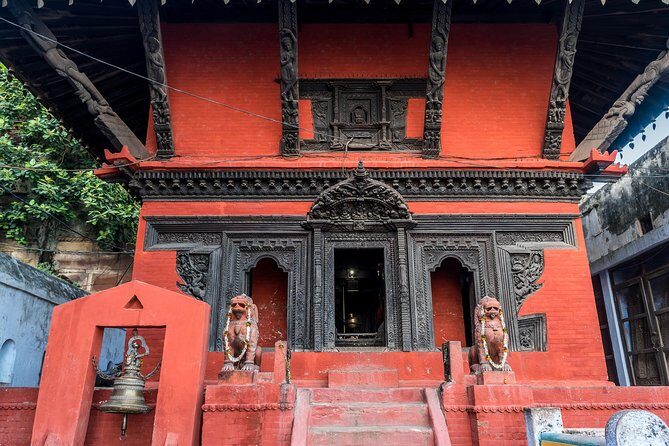
This tour is built for orientation. Varanasi can feel like a living maze—beautiful, meaningful, and hard to read—especially when you only have a short window. Instead of bouncing between random spots, you follow a route that ties geography to story: riverfront ghats first, then the old-town buildings, lanes, and temples that made the city what it is.
I like that the tone is explanatory rather than lecture-style. Your guide talks about local beliefs and why places matter, which helps you understand what you’re seeing without needing to know Sanskrit or local legends before you arrive. And because it’s a walking format, you’re not stuck waiting for a vehicle or getting lost between stops.
You can also read our reviews of more walking tours in Varanasi


Where you meet and how the walking tour works
You meet at St. Thomas Church on Luxa Road (Luxmanpura, Laxmanpura, Ramapura Luxa, Varanasi). The tour ends back at the meeting point, which is handy when you’re trying to plan the rest of your day. The listing also notes it’s near public transportation, so you should be able to reach the area without too much fuss.
Expect to move through uneven, narrow lanes and crowded spaces around the ghats. This is one of those tours where your comfort matters more than your sightseeing checklist. Bring water if you can (food and drinks aren’t included), and wear lightweight layers you can adjust, since weather can change quickly along the river.
Finally, this experience depends on good weather. If it’s canceled due to poor conditions, you’ll be offered a different date or a full refund—so don’t schedule something delicate right after.
Dashashwamedh Ghat: the oldest holy heart of the action
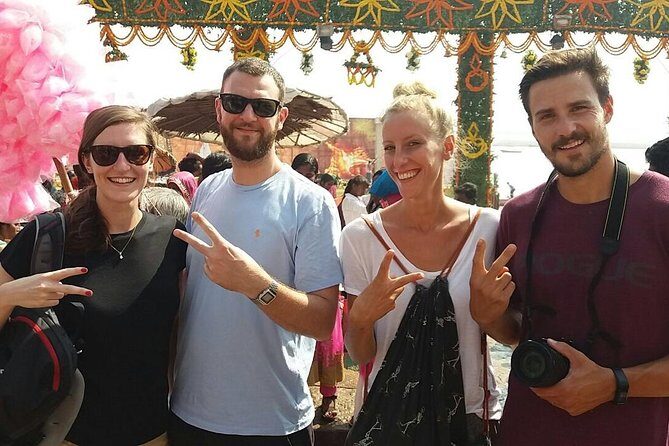
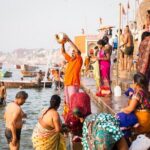
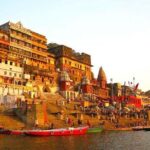
Your first major stop is Dasaswamedh (Dashashwamedh) Ghat. It’s described as the oldest and holiest ghat and the center of daily river activity. This is also the place where the famous Ganga aarti happens every evening, so even if your timing doesn’t line up with the ceremony, you’re still standing in the setting that makes it famous.
What makes this stop valuable is not just the view of the water. It’s the way your guide frames the ghat as a spiritual engine of the city—energy, ritual, and belief all concentrated in one shoreline corridor. You’ll walk around the ghats of Kashi, which helps you understand that these steps and platforms are not just scenic overlooks. They are part of a living religious system.
A possible drawback: the area can be busy, and you’ll be close to the activity happening around you. If you’re sensitive to crowds or strong emotions, manage your expectations: this is a working spiritual center, not a quiet museum terrace.
Manikarnika Ghat and Moksha: what you’re really looking at
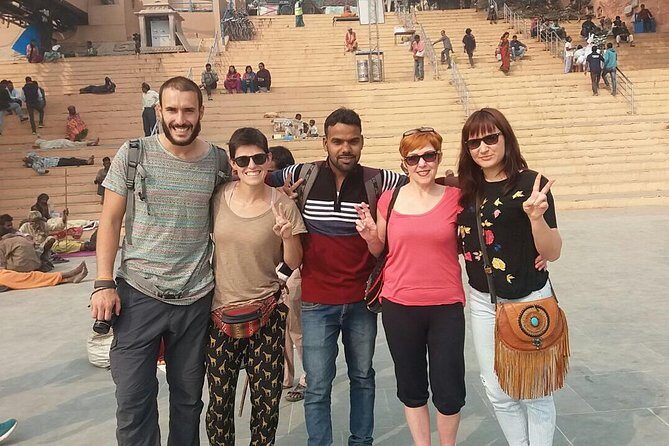
Next up is Manikarnika Ghat, called the holiest sacred riverfront along the Ganga. The tour focuses on its role in the idea of salvation/Moksha after cremation. This stop is powerful, and it’s also the one that can feel most intense for visitors who aren’t sure what they’ll witness.
You may see cremations depending on what’s happening at the time. One review specifically mentioned watching cremations, and that matches why this ghat is famous. If you choose to go, go with respect and emotional realism. Keep your distance, don’t interfere, and remember that locals are moving through something deeply personal.
Why I think this stop is still worth including: Moksha isn’t just a concept you can read on a sign. Here, you confront the meaning of death and ritual in a place where belief has shaped daily life for centuries. Your guide’s job is to translate that so you leave with understanding, not just images.
A pass by the Holiest Shiva Temple: religion in plain sight
During the walk, you’ll pass by the Holiest Shiva Temple. The key word here is pass by. This isn’t billed as a long temple visit where you lose time inside. It’s more about letting the route connect what you see on the ghats to what exists in the lanes and devotion spaces of Old Town.
When a guide points out why a temple is important, you start noticing patterns: how the city’s geography supports religious practice, and how specific deities and rituals remain part of ordinary movement. Even if you aren’t going inside, the visual cues help you read the city.
If you’re expecting a long, sit-down cultural lecture, adjust your mindset. This is a walk with story beats along the way.
You can also read our reviews of more guided tours in Varanasi




The Wooden Temple (Mini Khajuraho): Nepali-style details you might miss
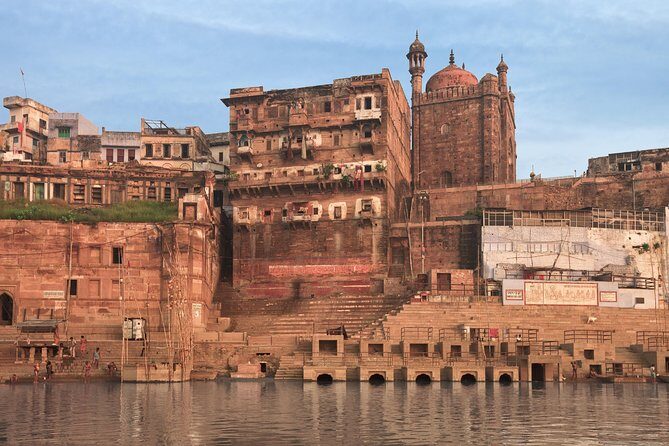
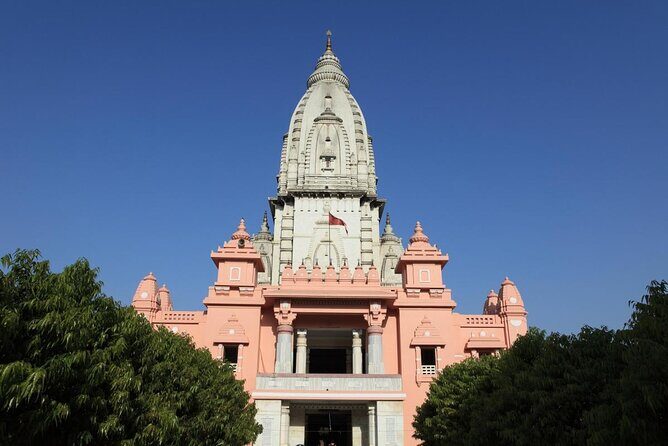
One stop to watch for is the Wooden Temple, also known as Mini Khajuraho, built in Nepali-style architecture. This is the kind of site that can get overlooked if you’re simply following a standard sightseeing list.
Why it works on this route: it adds architectural variety right in the middle of the religious riverfront theme. You get a chance to slow down and look at design choices—how local building traditions show up in sacred spaces. Your guide’s framing helps you understand what you’re looking at beyond, it’s old and it’s pretty.
This is also a good moment to ask questions, since the walking pace tends to give you brief pauses. If architecture is your thing, give yourself permission to stand and look for a minute rather than rushing for the next photo.
Kashi lanes, old markets, photo-worthy temples, and masonry observatories
After the major spiritual landmarks, the tour shifts into the everyday fabric of Kashi: centuries-old buildings, narrow lanes, and old markets. You’ll also see what’s described as the most photographed temples in the city, plus you’ll pass by a masonry observatory.
This section is where you start to feel how Varanasi works as a city, not just a destination. Markets aren’t just places to shop here; they are part of the city’s circulation—where people move for daily life while spiritual sites anchor the landscape. Narrow lanes also explain why getting lost is so easy on your own. Your guide prevents that stress by keeping you on a readable path.
Two practical notes. First, expect photography conditions to vary: lighting and crowds at the ghats and temples can shift quickly. Second, the markets area may involve sales activity. If shopping is not your priority, keep moving with your group and focus on the buildings and street scene rather than stopping for counters.
Guide quality matters here: you’ll want a strong storyteller
The tour is run by Yo Tours, and it’s guided by a highly trained English and Hindi-speaking storyteller. That matters in Varanasi more than in many cities, because so much is location-based and belief-based.
One review praised a guide named Manish for arriving early, being friendly, explaining a lot, and answering questions. That kind of responsiveness is exactly what turns a “walk past interesting places” into “I actually understand what I’m seeing.”
That said, one less-positive comment pointed to a silk shop stop as a frustration. I’d treat this as a signal: if you strongly prefer no shopping detours, communicate that early. A good guide can often keep you focused on the cultural route.
Price and value: $11.17 for a focused orientation walk
At $11.17 per person for about 2 hours, this is priced like a true budget orientation tour. The value comes from three places:
- You’re not paying for transport. Hotel pickup isn’t included, which keeps the cost down. Instead, your money supports a guide to interpret the sights as you walk.
- It’s a small group experience (max 20). That size makes questions realistic, and it’s easier to stay together in tight lanes.
- Entry is at least free for the Dashashwamedh stop (listed as free admission ticket). Even if other segments don’t include ticket details, this free element helps confirm you’re not paying extra just to access the core sights.
For first-time visitors, this kind of guided time is often the best value: you pay a small amount to avoid expensive time-wasting mistakes like wandering in circles, misunderstanding sacred context, or missing key places because your route was random.
Who should book this Varanasi Old Town walk
This tour fits best if you:
- are visiting Varanasi for the first time and want fast context
- prefer walking and can handle crowded, active religious areas
- like asking questions and learning the meaning behind what you see
- want a route focused on ghats and lanes, not just temple exteriors
It may not be ideal if:
- you strongly dislike shopping-related detours and want zero sales stops
- you find cremation activity emotionally difficult
- you need a fully seated, low-movement experience
A practical packing and behavior checklist (so the tour stays enjoyable)
A walking tour in Varanasi is mostly about comfort and respectful pacing. I’d prepare for:
- good walking shoes for uneven surfaces
- modest clothing that helps you feel comfortable around religious spaces
- a calm mindset for powerful sights at Manikarnika
- keeping expectations realistic: this is active spiritual ground, not a staged experience
- bringing water or planning for it nearby since food and drinks aren’t included
If you’re worried about the tone of the tour, ask questions at the start. A clear conversation with your guide can help you shape the walk to your comfort level.
Should you book this tour?
Yes, I think you should book it—if your main goal is orientation and you want your time to make sense. For the price, the guided structure hits the big spiritual anchors: Dashashwamedh Ghat, Manikarnika Ghat/Moksha, temple stops, and Old Town lanes with architecture and market life. It’s the kind of walk that helps you decode Varanasi instead of just passing through it.
I’d only hesitate if you know you can’t handle cremation sights or you’re very sensitive to any shopping detours. If that’s you, message your provider or speak clearly to your guide at the meeting point so you get the experience you want, not a surprise detour.
FAQ
How long is the Cultural & Spiritual Trails of Old Town Varanasi guided walking tour?
It lasts about 2 hours.
Where does the tour start?
It starts at St. Thomas Church on Luxa Rd in Varanasi.
Is the tour a walking tour?
Yes. It’s designed as a guided walking tour through ghats and lanes.
What are the main stops on the route?
Key stops include Dashashwamedh Ghat, Manikarnika Ghat, a Shiva Temple (passed by), the Wooden Temple (Mini Khajuraho), and Old Town lanes/markets with temples and a masonry observatory.
Is there an admission fee included?
The admission ticket for the Dashashwamedh Ghat stop is listed as free.
Is hotel pickup or drop-off included?
No. Hotel pickup and drop-off are not included.
Is food or drinks included?
No. Food and drinks are not included.
How big are the groups?
The tour has a maximum of 20 travelers.
What language will the guide speak?
The guide can speak English and Hindi.
What is the cancellation policy?
You can cancel for a full refund up to 24 hours before the experience start time, and changes within 24 hours aren’t accepted. The experience also depends on good weather.
If you want, tell me your travel dates and whether you prefer absolutely no shopping stops, and I’ll suggest a smart way to plan the rest of your Old Town day around this 2-hour walk.