REVIEW · VARANASI
Explore Varanasi’s heritage
Book on Viator →Operated by The Heritage Walk By Manjeet · Bookable on Viator
Varanasi hits differently when you walk. This private heritage walk is built to help you see the city like a resident would—through Manjeet Sahani, whose family has lived here for over 500 years. I love the way the tour moves you through iconic places and the everyday lanes that connect them, and I also love the practical help he can offer when ceremonies or access change. The one possible drawback: it’s still a lot of walking, and some temple admissions aren’t included, so you’ll want comfortable shoes and a little flexibility with costs.
This is the kind of tour that can feel personal fast, because it’s private and tailored as you go. You’ll cover major ghats and temples over about 2 to 4 hours, with pickup offered and a mobile ticket for easy entry. If you’re hoping for a quick, checklist-style sightseeing loop, you might find the pace more thoughtful than rushy.
In This Review
- Key Highlights You’ll Notice Fast
- Meet Manjeet Sahani, a Guide With 500-Years Roots
- How the 2–4 Hour Walk Makes Varanasi Feel Local
- Dashashwamedh Ghat to Meer Ghat: Views, Ghats, and a Sense of Scale
- Old Kashi Bylanes to Vishalakshi Temple: Walking Through the Real Town
- Nepali (Kathwala) Temple and the Teak-Wood Carvings Stop
- Manikarnika Ghat and Panchganga Ghat: Ritual Meaning and Mughal-Era Layers
- Shri Kashi Vishwanath Temple (Golden Temple): Sacred Pressure and Getting In the Right Way
- Bhans Phatak Flower Market, Madanpura Weavers, and Manmandir Ghat
- Price, Pickup, and Logistics That Actually Matter
- Who This Tour Fits Best (and Who Might Prefer Something Else)
- Should You Book The Heritage Walk By Manjeet?
- FAQ
- How long is the Varanasi heritage walk?
- Is this tour private?
- Is pickup available?
- Do I need to buy admission tickets for temple stops?
- Where does the tour start and end?
- What do I receive after booking?
- What happens if the weather is poor?
Key Highlights You’ll Notice Fast
- Manjeet Sahani’s local roots: a guide whose family has lived in Varanasi for generations
- Private, just-for-you routing: your group keeps the focus and the questions
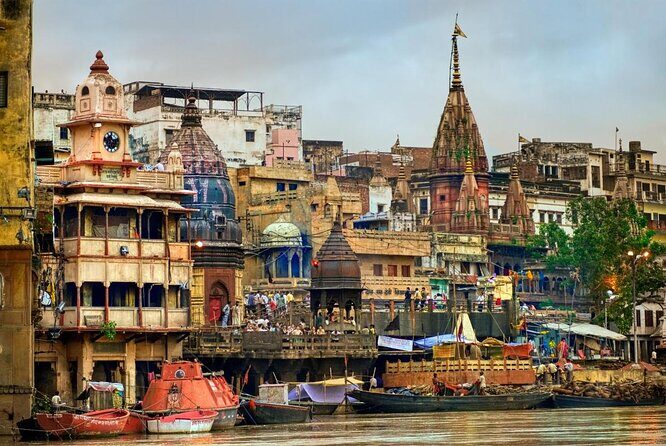
- Iconic ghats with real context: from panoramic views to long-used ritual spaces
- Old Kashi bylanes to major temples: walking links the sacred and the everyday
- Art, markets, and hands-on craft stops: flower market plus centuries-old weaving work
- Adaptable to weather changes: when conditions disrupt ceremonies, he works on alternatives
Meet Manjeet Sahani, a Guide With 500-Years Roots
The biggest reason this walk works is the guide. Manjeet Sahani isn’t a temporary add-on or a distant voice on a headset—he’s a local whose family has been in Varanasi for more than 500 years. That matters because Varanasi isn’t just monuments. It’s people, daily routines, and layered meanings that don’t always show up in guidebooks.
I like tours where you don’t have to fight for context. Here, you get explanations that help you connect what you’re seeing—ghat steps, temple carvings, busy markets—with why it matters in real life. It also makes questions easier. You can ask about what’s happening now, what’s used daily, and what visitors often miss.
One more practical upside: this tour is private. Only your group participates. That gives you room to slow down when a moment matters—like watching ritual activity at a ghat—without having to “keep up” with a bigger group. It’s also easier to adjust if your interests lean more toward temples, more toward views, or more toward crafts.
You can also read our reviews of more historical tours in Varanasi


How the 2–4 Hour Walk Makes Varanasi Feel Local
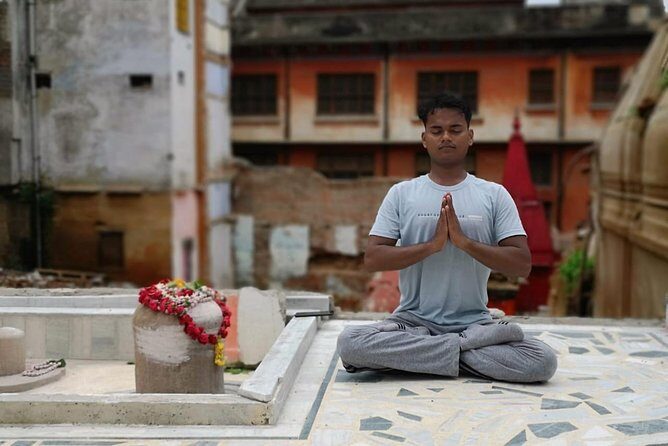
A 2 to 4 hour walking experience can sound short, but in Varanasi, short can be perfect. The city moves on foot. You’ll notice small shifts—crowds near certain ghats, quieter lanes near temples, merchants at market corners—so walking isn’t just transportation. It’s how the city reveals itself.
The structure is also smart. The stops are spaced so you’re not rushing between far-apart areas. You start at Dashashwamedh Ghat, then work through a sequence of temples and ghats that lets you see Varanasi’s “sacred corridor” in stages. The tour includes admission tickets at some points (so you’re not constantly checking what costs extra), and other stops explicitly list admission as not included.
If you want a tip for enjoying the whole thing: treat it like a guided walk with built-in pauses, not like a stamp-collecting route. Ask for context before you move on. When you understand what a place is used for, the next photo you take actually makes sense.
Dashashwamedh Ghat to Meer Ghat: Views, Ghats, and a Sense of Scale
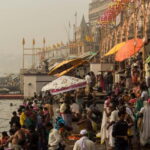
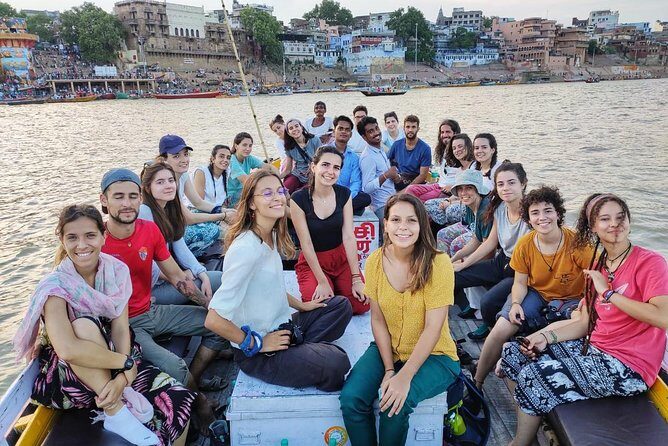
You begin at Dashashwamedh Ghat, where the city’s heritage shows up immediately. Even before you reach the later highlights, this first stop sets the tone: Varanasi is a place where history isn’t behind glass. It’s right there in the steps, the flow of people, and the ongoing use of the ghats.
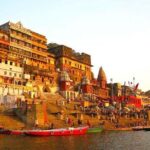
From there you go toward Meer Ghat for one of the route’s best rewards: a panoramic look that takes in the 84 ghats of Kashi. This is the kind of view that changes how you understand the city. Instead of thinking of “a ghat here, a ghat there,” you see a full system—stone steps and religious geography spread across the riverfront.
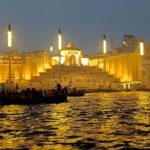
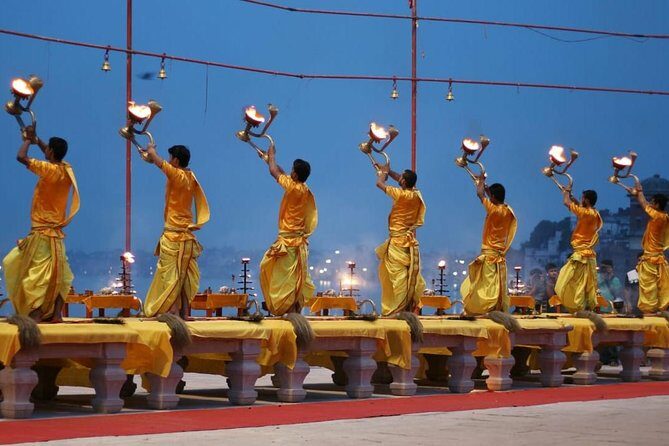
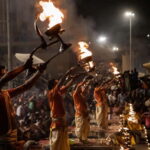
The main drawback here is practical, not cultural. Ghats can be slippery, crowded, or simply chaotic at peak times. If you’re visiting in monsoon season or right after heavy rain, conditions can be rough—steps can be wet, and access can change. The good news: the tour is built around adaptability. When rain disrupted normal ceremonies and the ghats were underwater, Manjeet helped arrange a different way to experience the Aarti from a strong rooftop vantage.
Old Kashi Bylanes to Vishalakshi Temple: Walking Through the Real Town
One of the best parts of this tour is how it uses streets as a living “bridge” between landmarks. At Vishalakshi Temple, you don’t just arrive and stare. You walk through the bylanes of old Kashi town first, so the temple feels like part of a neighborhood—not like a lonely stop.
This is where a local guide earns their pay. In Varanasi, lanes can be confusing quickly. Manjeet can help you get the route right on the ground, not just in theory. You’ll also understand what you’re seeing as you pass it: the way people move, the way daily life wraps around sacred spaces, and why temples can feel both formal and intimate at the same time.
Admission here is listed as included. That’s a small detail, but it matters for your budget and pacing. Fewer “wait while we sort it out” moments means more time for the experience.
Nepali (Kathwala) Temple and the Teak-Wood Carvings Stop
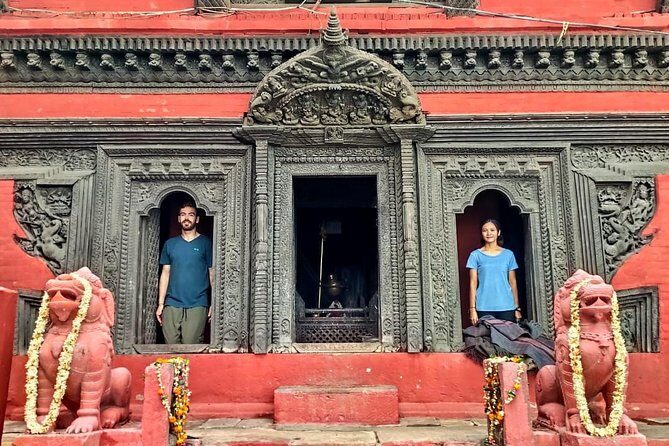
Next comes Nepali Temple (Kathwala Temple), and it’s a standout for a specific reason: it was built using teak wood by the King of Nepal. That detail alone is interesting, but the stop gets more fascinating with the carvings—intricate erotic and historical designs.
This is a temple you’ll want to slow down for. Carving work rewards close attention, and teak wood helps create a different visual warmth than stone you might be used to seeing in other religious spaces. If you’re the type who likes art and symbolism, this stop will give you more to interpret than the typical “big famous building” photo.
One note to keep expectations realistic: admission is not included at this stop. That doesn’t ruin the tour, but it’s smart to plan for it as part of your on-the-ground costs.






Manikarnika Ghat and Panchganga Ghat: Ritual Meaning and Mughal-Era Layers
At Manikarnika Ghat, you’ll step into one of the places Varanasi is most known for, and it’s not a casual sightseeing moment. This is described as the main ghat for death rituals for Hindus for thousands of years. That’s heavy context, and the value of a guided walk here is that you understand what you’re looking at and why it’s treated with seriousness.
You also get a key reminder: Varanasi isn’t designed for tourists. It’s designed for life, faith, and ritual. If you’re sensitive to intense ceremonies, take a breath and choose your viewing distance. A guide helps here too—because you’ll know when it’s best to watch, when to step back, and when to just let the scene be what it is.
Admission at Manikarnika Ghat is listed as included, which helps you keep the flow.
Then you’ll head to Panchganga Ghat, where the highlight isn’t just the riverfront. You visit the Alamgir mosque built in the Mughal era. This is an important contrast point. It shows how different faiths and empires left their mark in the same river zone—an overlap you’d miss if you only focused on the most famous Hindu temples.
Admission here is not included, so budgeting again matters.
Shri Kashi Vishwanath Temple (Golden Temple): Sacred Pressure and Getting In the Right Way
No Varanasi day feels complete without Shri Kashi Vishwanath Temple (Golden Temple). This is described as one of the most sacred Hindu temples, and the tour treats it accordingly with a longer stop than many other points (about 30 minutes).
Here’s where a good guide can make the experience smoother. Complex temple entries can be stressful, especially when crowds swell. The route includes practical help for getting through the right gates and moving inside the temple complex efficiently. That saves time and reduces the frustration that can come from trying to figure it out on your own.
Admission for this stop is not included. Also, because this temple area can be crowded and rules can shift, you’ll want to keep your plan flexible. This is a place where calm patience works better than speed.
Bhans Phatak Flower Market, Madanpura Weavers, and Manmandir Ghat
After the major temples and ghats, the tour pivots to everyday Varanasi—markets and craft—where you start feeling the city as a workplace.
At Bhans Phatak, Chowk Godowlia, you’ll visit the famous flower market. Flowers are not just decoration here. They’re part of offerings and daily temple life, so the market stop connects back to what you saw earlier. If you like sensory travel—color, scent, human scale—this is a refreshing break from temple stone.
Next is Madanpura, an artisans market tied to the centuries-old weaving industry. This is where you get a sense of continuity: skills passed down, materials handled, and craft that keeps going even as tourists come and go. Admission is listed as free, which keeps your budget predictable.
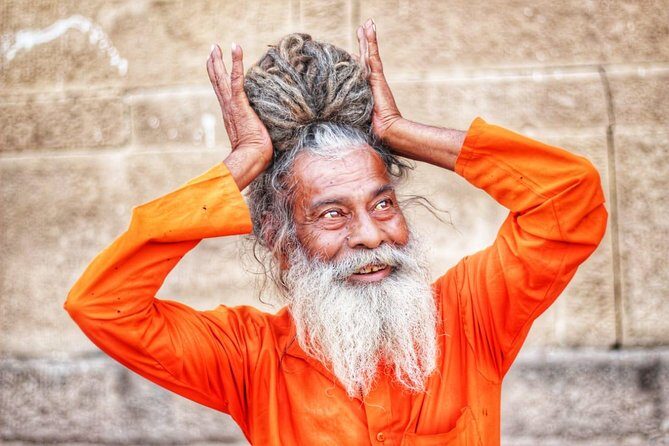
Then you’ll see Manmandir Ghat, where you can spot the sages of Kashi. This stop is short, but it adds another piece to the story: not only rituals and temples, but also the names and traditions that give Varanasi its mythic layer.
For these market and ghat stops, admission varies, and some are listed free. It’s a helpful mix, so not every moment costs you extra.
Price, Pickup, and Logistics That Actually Matter
The price is $20.69 per person, with an average booking window of about 40 days in advance. For this kind of private, local-guided route, that’s strong value—especially because you’re paying for direction, context, and navigation in a place where finding your way and understanding what you’re seeing can be half the challenge.
You also get a couple practical conveniences:
- Pickup offered, so you’re not fully responsible for figuring out the meeting point on arrival day
- Mobile ticket, which tends to speed up entry versus paper-only systems
- Near public transportation, handy if you’d rather not wait for pickup
The meeting point starts at Dashashwamedh Ghat Rd, Ghats of Varanasi, Godowlia, and the tour ends there too. But the ending point is described as flexible. If you want to finish closer to where you’ll head next—hotel, river steps, or a transit stop—tell Manjeet what works for you.
One more small consideration: the experience requires good weather. If rain or poor conditions disrupt plans, you should expect an alternate date or a full refund. In practice, that means you’ll want to keep an eye on forecasts and stay ready for adjustments.
Who This Tour Fits Best (and Who Might Prefer Something Else)
I think this tour is a great match if you want:
- a private guide who can answer questions as you walk
- a route that balances major temples and key ghats with markets and craft
- a heritage-style day that feels more like you’re learning how Varanasi works than just what it looks like
It may not be ideal if you want:
- a very short, mostly photo-based loop
- a route that avoids intense ceremony context entirely
- a strictly fixed itinerary with no weather-based changes
Most travelers can participate, but since it’s a walking route, you’ll enjoy it most with comfortable shoes and a willingness to move at a local pace.
Should You Book The Heritage Walk By Manjeet?
Yes, you should book it if your goal is to understand Varanasi as a living city. The biggest win is Manjeet Sahani himself: a guide with deep local ties, a flexible approach, and the ability to help you get the right access when conditions change. The route also hits useful variety—ghats with big meaning, temples with distinct art and purpose, and market stops that show how people make offerings and earn a living.
If you’re price-sensitive, the admission mix matters: some stops include tickets, others do not. Still, the overall value looks solid given it’s private and structured around major places plus daily life. Just go in prepared for walking, crowds, and the reality that weather can reshape what’s possible.
FAQ
How long is the Varanasi heritage walk?
It runs about 2 to 4 hours.
Is this tour private?
Yes. It’s a private tour/activity, and only your group participates.
Is pickup available?
Pickup is offered.
Do I need to buy admission tickets for temple stops?
Admission is included for some stops and not included for others. For example, Nepali Temple (Kathwala Temple) and Shri Kashi Vishwanath Temple (Golden Temple) are listed as admission not included.
Where does the tour start and end?
The start and end are listed at Dashashwamedh Ghat Rd, Ghats of Varanasi, Godowlia, Varanasi, Uttar Pradesh 221001, India. The endpoint is also flexible if you request a different finishing point.
What do I receive after booking?
You’ll receive a mobile ticket, and confirmation is received at the time of booking.
What happens if the weather is poor?
The experience requires good weather. If it’s canceled due to poor weather, you’ll be offered a different date or a full refund.