REVIEW · VARANASI
City of good life walk (South Varanasi Walk)
Book on Viator →Operated by Roobaroo Walks · Bookable on Viator
Morning in Varanasi changes you fast. This South Varanasi walk keeps the energy on a calmer track, focusing on everyday rituals, working craft traditions, and ancient sacred places in the southern part of the old city.
I especially like that it starts with a complimentary breakfast and a local guide, so you’re not just seeing sights—you’re learning how people actually live around them. I also like that the route is small-group sized (up to 12), which makes it easier to ask questions and stay moving at a pace that works for different ages.
One possible drawback: it’s a walking tour in real neighborhood streets, so warm weather and crowding can make it feel more physical than a museum visit. If you’re sensitive to noise, religion-on-the-street, or uneven walking surfaces, plan for that.
In This Review
- Key Things I’d Put on Your Must-Know List
- Starting at Assi Ghat: Why the Meeting Point Matters
- South Varanasi Feels Calmer for a Reason
- Breakfast and Storytelling: The Morning Setup You’ll Thank Yourself For
- Yoga, Classical Music, and Temple Ambiences You Can Watch Closely
- Handlooms and Artisans: The Craft Stop That Changes Your Sightline
- Wrestling, Pilgrimage Sites, and the Long View of Kasi
- Pairing With a Sunrise Ganges Cruise: The Full Arc of the River
- Price and Value: What $39.08 Buys You for 3 Hours
- Who This Tour Fits Best (And Who Might Prefer Something Else)
- Practical Tips for a Smooth 3-Hour Morning
- Should You Book the City of Good Life Walk?
- FAQ
- Where does the City of Good Life Walk start?
- Where does the walk end?
- How long is the walk?
- What’s included in the tour?
- Is it a mobile ticket?
- How many people are in the group?
- When will I receive confirmation after booking?
- Does weather affect this experience?
- Can I combine it with a sunrise boat cruise on the Ganges?
- Is free cancellation available?
Key Things I’d Put on Your Must-Know List
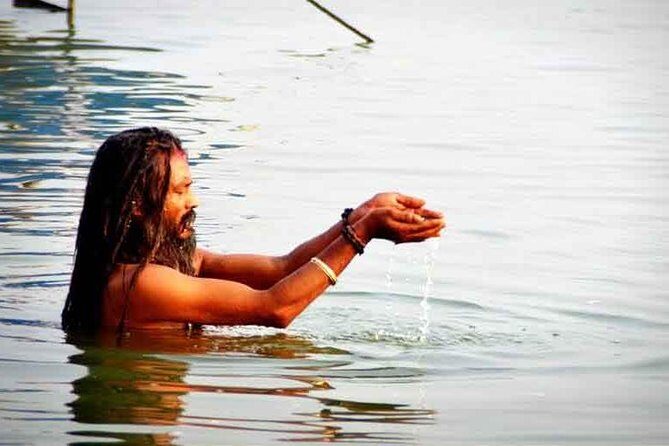
- South Varanasi focus: You’ll spend time in the calmer southern side of Varanasi, where philosophers and poets found inspiration for centuries.
- Breakfast plus guide: The tour includes breakfast, with a local guide to explain what you’re seeing as you go.
- Hands-on cultural moments: Expect stops linked to community yoga, Indian classical music, temple atmospheres, and more.
- Craft work you can watch: You’ll see artisans working on intricate handlooms, not just pass by a shop.
- Small groups, up to 12: With fewer people, the guide can handle questions and different family needs more smoothly.
- Long-view sacred sites: The walk includes pilgrimage places with roots stretching back about 2,500 years.
Starting at Assi Ghat: Why the Meeting Point Matters
The walk meets at Subah-e-Banaras, Assi ghat (near Shivala), in Varanasi. That location is a big part of why the experience works. Assi ghat sits in a living part of the city, not a staged tourist zone, so your morning starts with the real rhythm of the river neighborhood.
From the start, you’ll be guided into the quieter side of Varanasi. That’s not just a geographic choice—it changes your mindset. The tour is designed to help you notice details: how people begin their day, how music and practice show up in daily life, and how sacred spaces fit into normal routines.
Also, your ticket is a mobile ticket, which makes check-in simpler. The experience runs about 3 hours, so it’s not a half-day commitment that eats your whole trip schedule.
You can also read our reviews of more walking tours in Varanasi


South Varanasi Feels Calmer for a Reason
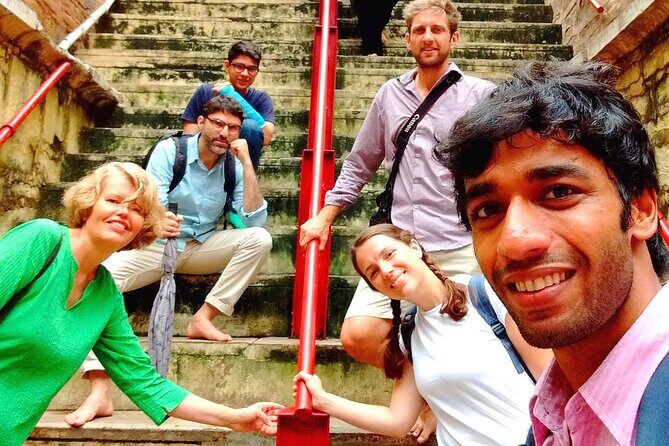
South Varanasi isn’t just “less crowded.” It’s presented as the side of the city that’s inspired thinkers and writers for a very long time, and where you can still see timeless virtues in everyday practice. The tour uses that idea to guide the route: you don’t spend the entire morning bouncing between the most famous, most overloaded hotspots.
Instead, the walk threads through places tied to community life and ritual—things that don’t require a ticket to witness. You’ll move through the city in a way that helps you see Varanasi as lived-in, not just photographed.
The goal is simple: you walk away with a deeper understanding of the way of life in one of the world’s oldest continually inhabited cities. That sounds grand, but the method is practical. A good guide points out what to look for, and then your eyes catch up.
Breakfast and Storytelling: The Morning Setup You’ll Thank Yourself For
Breakfast is included, and I like that a lot. In Varanasi, mornings can run early and fast, and having food built in means you’re not trying to hunt for it while also trying to follow a guide through local lanes.
This is also where the guide’s role becomes more than logistics. You’re learning what the places mean, not just what they look like. In the feedback for this experience, guides are praised for storytelling that makes the city feel personal—like someone is showing you their home, not reading facts off a sign.
One name that comes up often in the partner tours is Anupam, described as thoughtful and strong at explaining history and mythology in a way that stays easy to follow. Another person mentioned in coordination is Tulika, which suggests the company puts effort into making the experience smooth before you even start walking.
If you want a Varanasi morning that feels human and understandable, this breakfast-and-guide start is a big reason it works.
Yoga, Classical Music, and Temple Ambiences You Can Watch Closely
A major theme of the walk is the visible practice of tradition. You’ll get close to moments like community yoga, where you can observe people doing poses in a setting that feels integrated with daily life. It’s the kind of stop where you’re not learning yoga technique from a class—you’re watching how practice functions as part of the city’s culture.
You’ll also encounter Indian classical music connected to the area and its traditions. Music in Varanasi isn’t only for performances; it often appears as part of social and spiritual movement through the day. A guide helps you understand what you’re hearing and why it matters in that specific neighborhood context.
Temple ambiences are another key stop category. Rather than sprinting past shrines, you’re meant to slow down enough to notice atmosphere: the flow of people, how devotion shows up, and how sacred space feels in everyday rhythm.
A balanced note: if you’re expecting a quiet, scenic walk with no religion-in-your-face moments, this might feel too “real.” But if you want to understand how the sacred and the normal share the same streets, you’ll appreciate the design.
Handlooms and Artisans: The Craft Stop That Changes Your Sightline
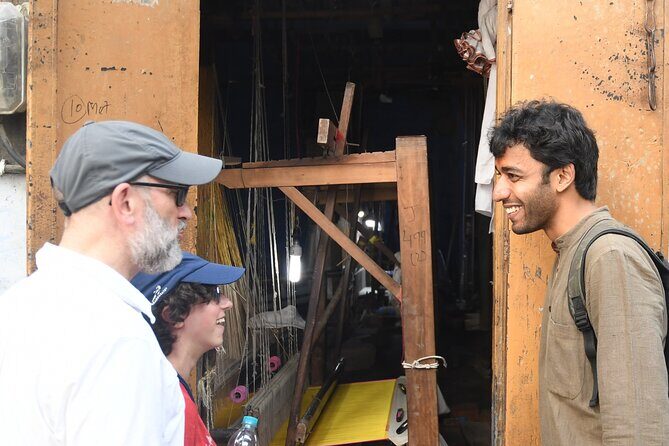
One of the best parts of the South Varanasi walk is the inclusion of artisans working on intricate handlooms. This isn’t presented as a generic shopping stop. The idea is that you get close enough to see how craft happens, and to connect that work to a bigger story of daily tradition.
Handloom craft is the kind of topic that can feel abstract if you only see finished products. Watching the process makes it more tangible: you can notice patience, precision, and the rhythm of making. It also gives you a break from purely spiritual stops, which keeps the morning from feeling like nonstop ceremony.
This balance matters. A morning full of temples can become heavy. A craft stop brings you back to the idea that Varanasi is also a working city with skilled people and real livelihoods.
From the practical side, these craft stops also create natural pauses in the walking. That helps the tour feel doable, even if you’re not used to walking in old-city streets.
You can also read our reviews of more city tours in Varanasi




Wrestling, Pilgrimage Sites, and the Long View of Kasi
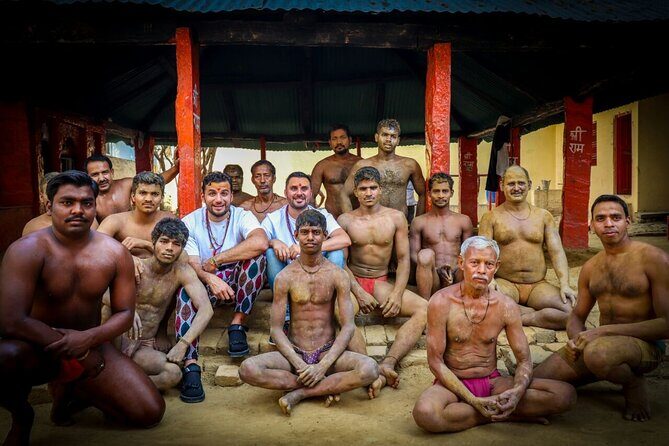
The walk includes traditional wrestling and pilgrimage sites tied to the deep timeline of Varanasi. Traditional wrestling may sound niche, but it fits the tour’s theme: daily tradition. It also reflects how physical culture and spiritual culture can coexist in the same city ecosystem.
Then there are the pilgrimage sites—places with roots that reach back around 2,500 years. That number isn’t there to impress you. It’s meant to frame what you see: when you stand in a religious setting that has mattered for centuries, your interpretation shifts. You start looking for continuity, not just spectacle.
This is also where a strong guide becomes critical. In the feedback shared for these Roobaroo Walks experiences, Anupam is repeatedly credited for explaining mythology and history alongside what you’re doing in the moment—eating, watching practice, or standing in sacred space. That kind of narration helps you connect past and present without turning the morning into a lecture.
If you’re the type who likes meaning and context, these stops will feel satisfying. If you only want one kind of experience—purely spiritual, purely cultural, or purely food-focused—this tour blends more categories than a single-theme walk.
Pairing With a Sunrise Ganges Cruise: The Full Arc of the River
A standout feature is the option to combine this morning walk with a sunrise boat cruise for a full Ganges experience. Even though this particular walk centers on South Varanasi streets and sacred-cultural stops, the river adds an entirely different perspective.
A Ganges cruise changes what you notice. From the water, you can often see how temples and ghats line up along the river, and how the city’s sacred life is shaped by the shoreline. It also helps you understand why mornings in Varanasi matter so much—light, movement, and ritual often line up around sunrise.
Practical tip: if you plan to pair them, protect your energy. You’ll be combining walking with time on the water, which means a full morning block. The reward is a cleaner sense of the city’s structure: streets and river as one story.
Price and Value: What $39.08 Buys You for 3 Hours
The price is $39.08 per person for about 3 hours, with breakfast and a local guide included. On paper, that may look like a modest price for a city where you can hire a driver or take free wandering time. But the value here is about what you get that casual exploring usually doesn’t.
You get a guide to point out what matters in the southern side of Varanasi. You get breakfast instead of forcing a scramble mid-morning. You also get a small-group format (max 12), which matters when you want questions answered and you don’t want the experience to feel rushed.
You’re also paying for the tour’s positioning as off-the-beaten-track. That can be hard to do alone, because the city can feel like a maze of lanes and sacred spaces. A guide helps you avoid wandering randomly and missing the key cultural moments the tour is built around.
So the value is best understood as time-savings plus meaning. If you enjoy learning how local life works, this pricing feels fair. If you’re only looking for photo stops and don’t care about explanations, you might find the cost less compelling.
Who This Tour Fits Best (And Who Might Prefer Something Else)
This walk is described as suitable for most people, and it’s capped at 12 travelers, which generally makes it easier to handle different group dynamics. In the experience feedback, families with multiple ages have used the walks—people with seniors and children—suggesting the pacing and stops can work across generations.
It’s a great fit if you:
- Want a morning that shows Varanasi as a living city, not a single big attraction
- Like watching traditions in action (yoga practice, music, artisan work)
- Prefer smaller groups over large tour crowds
- Appreciate a guide who answers questions clearly
It might be less ideal if you:
- Want a strictly quiet, low-stimulation sightseeing day
- Need long, fully seated breaks (this is primarily a walking experience)
- Dislike religious settings as part of everyday life
Think of it as a cultural walk with sacred context, not a theme-park tour.
Practical Tips for a Smooth 3-Hour Morning
- Wear comfortable shoes. A walking tour in old-city lanes is not the time for fragile soles.
- Go in hungry (breakfast helps). Breakfast is included, but plan for a full morning rather than expecting to snack constantly.
- Bring your curiosity. The experience leans heavily on understanding what you’re seeing—ask questions.
- Plan your sunrise timing if you pair the boat cruise. Combining experiences can be great, but keep the schedule realistic.
- Expect real neighborhood life. Temple atmospheres, practice spaces, and artisan areas are part of normal city rhythm.
These points aren’t about rules. They’re about matching your expectations to how this walk is designed.
Should You Book the City of Good Life Walk?
I’d book this if you want Varanasi without the constant sprint to the most famous spots. The South Varanasi angle is the whole point, and the combination of breakfast, a local guide, and watchable cultural moments (yoga, classical music, temple ambiences, handlooms, wrestling, and ancient pilgrimage sites) makes the morning feel like more than walking.
If you’re excited by meaning—why places matter, how traditions continue, what daily life looks like—you’ll likely enjoy it a lot. And if you like structure without feeling trapped in a rigid schedule, a 3-hour guided walk is a sweet length.
If you only want scenery or you hate walking through religious spaces, you might prefer a different type of tour. But if your goal is understanding Varanasi as a real city with deep roots, this is a strong choice.
FAQ
Where does the City of Good Life Walk start?
It starts at Subah-e-Banaras Assi ghat, Shivala, Varanasi, Uttar Pradesh 221005, India.
Where does the walk end?
The walk ends at Shivala, Varanasi, Uttar Pradesh, India.
How long is the walk?
It runs for about 3 hours.
What’s included in the tour?
Breakfast and a local guide are included.
Is it a mobile ticket?
Yes, the tour includes a mobile ticket.
How many people are in the group?
The tour has a maximum of 12 travelers.
When will I receive confirmation after booking?
Confirmation is received within 48 hours of booking, subject to availability.
Does weather affect this experience?
Yes. The tour requires good weather, and if it’s canceled due to poor weather, you’ll be offered a different date or a full refund.
Can I combine it with a sunrise boat cruise on the Ganges?
The experience highlights mention combining the walking tour with a sunrise boat cruise for a total Ganges experience.
Is free cancellation available?
Yes. You can cancel up to 24 hours in advance for a full refund. Cancellation rules depend on local time cutoffs.