REVIEW · VARANASI
Walking tours – for an authentic Varanasi experience
Book on Viator →Operated by Kashi Journeys · Bookable on Viator
Varanasi can feel overwhelming fast. This walking tour keeps it human-sized, with a local guide helping you move through the ghats and tight alleyways without missing the meaning behind what you’re seeing. I especially like the way the route mixes major sites with the everyday streets around them, so you get both ceremony and street life. I also like the private format, so the pace can match your questions, and guides like Rajiv or Anubis often focus on the places where you can actually watch and understand what’s going on.
One consideration: the walk is long enough to be tiring if you hate crowds or uneven steps, and Varanasi’s key moments depend on good weather. Also, not every stop has the same entrance setup, so budget time for a mix of included and non-included entries.
In This Review
- Key things that make this tour worth it
- Varanasi on Foot: Why This 4–5 Hour Walk Works
- Starting at Godowlia Crossing, Then Sliding Into Dashashwamedh Ghat
- Man Singh Observatory, Meer Ghat, and the Temple Connections
- Manikarnika Ghat: A Powerful Stop With Clear Photography Rules
- Alamgir Mosque and Maa Sankata Devi: Old City Lanes and Lived-In Faith
- Lassi Break and Kashi Vishwanath: The Sweet Spot Between Sacred and Local
- What You’re Really Paying For: $13 Value and Entrance Fees
- Pace, Weather, and Practical Tips for First-Time Varanasi Walkers
- Should You Book This Walking Tour for Varanasi?
- FAQ
- Is this tour private?
- How long is the walking tour?
- What is included in the price?
- Is pickup from my hotel included?
- Do I need to pay entrance fees?
- Are there any photography restrictions?
- What happens if the weather is bad?
- Can I get a full refund if I cancel?
Key things that make this tour worth it
- Private guide time for more personalized route tweaks and questions.
- Ghat-to-lane flow, from Godowlia’s crossing to Dashashwamedh’s ritual space, then into older neighborhoods.
- Ceremony viewing with clear boundaries, including a stop where cremation photography is prohibited.
- Temple variety across faith traditions, from Kashi Vishwanath to Alamgir Mosque on a reused historical site.
- Local taste pause, with a quick stop for a famous lassi (at your own expense).
Varanasi on Foot: Why This 4–5 Hour Walk Works
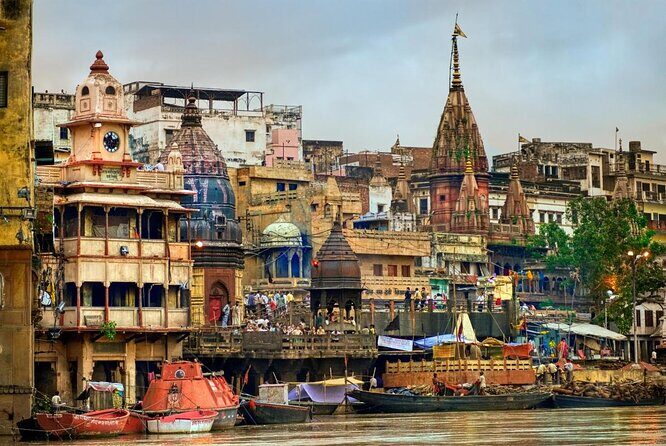
A good first Varanasi experience isn’t just about seeing famous spots. It’s about learning how the city operates: where people gather, where families move, how sacred space blends into daily life, and what you’re expected to respect.
This tour is priced at about $13 and runs around 4 to 5 hours, which is a big part of why it’s a solid value. You’re not paying for a long bus ride or a rushed stamp-collection. Instead, you’re paying for a guide who knows how to connect the dots between the ghats, temples, and street corners.
You’ll also get real small comforts that matter on a walk in India’s heat: bottled water plus coffee and/or tea. It’s simple, but it keeps you from feeling like you have to sprint between stops.
Finally, the tour is described as eco friendly, which for me translates into less fuss and more common sense—walking where you can, and letting the guide handle the sequencing.
If you want a version of Varanasi that feels guided but not controlled, this fits.
You can also read our reviews of more walking tours in Varanasi

Starting at Godowlia Crossing, Then Sliding Into Dashashwamedh Ghat
You start near Godowlia, known for being one of the busier, more crowded crossing points. That’s a smart beginning. It gets you oriented fast, because you’re not starting in a calm brochure scene—you’re starting where people actually flow through the city.
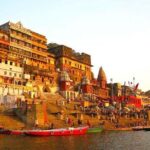
From there, you head toward Dashashwamedh Ghat, one of Varanasi’s best-known ritual ghats. Here’s the kind of detail a guide adds that you’d struggle to piece together alone: the ghat is described as having two parts, with Prayaga Ghat in between. That area is tied to the holy city concept of Prayagraj (Allahabad), and the tour also links the site to early historical associations with a horse sacrifice tradition.
On a practical level, this is where you learn how to watch. In Varanasi, ceremonies aren’t static exhibits. They move. So the guide’s job is to place you where you can see what’s happening without turning it into a chaotic scramble.
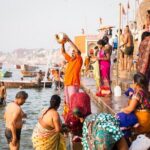
It’s also where you’ll feel the emotional temperature of Varanasi. You’re seeing sacred space at work—people bathing, praying, and doing rituals on a timeline that doesn’t revolve around tourists.
Man Singh Observatory, Meer Ghat, and the Temple Connections
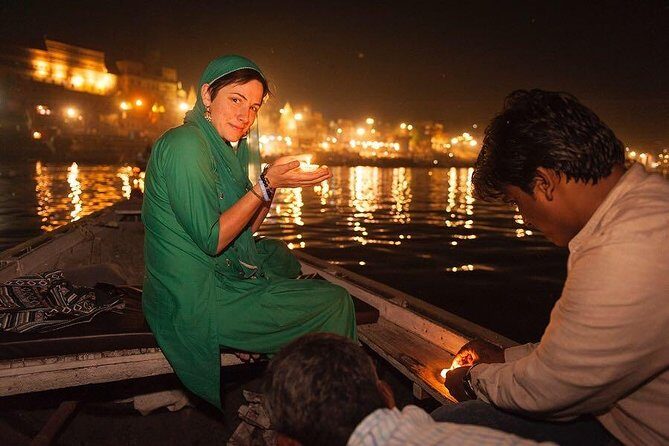
Next comes Man Mandir Ghat, connected to the palace and observatory complex built under Savai Man Singh (dated to the late 1500s to early 1600s). What you’re looking at isn’t just architecture for architecture’s sake. The tour frames it through the building’s ornate windows and the rooftop observatory use—so you can see the site as an engineered blend of power, religion-adjacent scholarship, and design.
Then you move to Meer Ghat. The name is tied to a Muslim commander, Mir Rustam Ali, with a date of 1735 mentioned in the tour notes. What I like here is the way history gets layered: you’re not stuck in a single narrative. Meer Ghat also provides access to places like the Vishalakshi temple and Dharma Kupa. And at the top of the ghat, the tour points out the New Vishwanath temple, built in 1956 by Swami Karapatri-ji.
That temple detail matters because it shows you how Varanasi keeps adding chapters. Even with ancient roots, sacred life keeps evolving.
You’ll also stop at the Nepali Temple (Kathwala Temple) area, reached from steps near Nepali Ghat. The guide’s framing centers on the goddess Ganga shrine by the river and then the staircase up to a Nepalese-style temple described as a replica of Pashupati Nath Temple. The building material notes—wood and brick—help you visualize what makes it look distinct from the surrounding structures.
In short, this middle section is where the city’s sacred geography starts to click. Ghats aren’t just river edges. They’re portals that lead you to temples, stories, and community spaces.
Manikarnika Ghat: A Powerful Stop With Clear Photography Rules
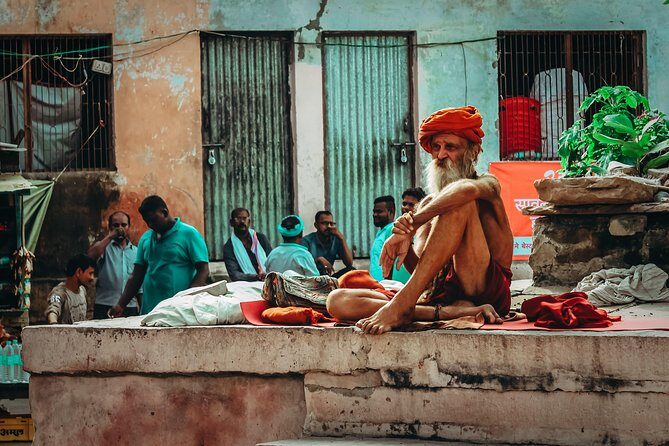
Then you reach Manikarnika Ghat, the one most people have heard about because it’s famous for cremation rituals. This is the stop where you really need a calm mindset.
The tour notes make one thing unmistakably clear: photography of the cremation area is prohibited. I’d treat that as more than a rule. It’s a sign of the respect you need to carry into the space.
What you can expect is the presence of ongoing rites and the sense that this isn’t staged. The guide’s role becomes crucial here. If you follow along with the group and watch respectfully, you’ll understand what’s happening without turning the moment into spectacle.
This part of Varanasi can feel heavy, even if you consider yourself open-minded. If you’re sensitive to death and ritual spaces, you might want to mentally prepare before you arrive.
But if you can handle it, this stop gives you a grounding truth about Varanasi: the city’s sacred identity isn’t only about festivals and temples. It’s also about how people face the end of life in a public, ritual way.
Alamgir Mosque and Maa Sankata Devi: Old City Lanes and Lived-In Faith
From the cremation ghat, the tour shifts into the old city feel—more lanes, more passing faces, more everyday lives threaded through sacred landmarks.
You’ll visit Alamgir Mosque, described as built on the site of a 11th-century Vishnu temple. The tour notes a history of destruction and rebuilding, with a final transformation into mosque form in 1673. You don’t need to be a history nerd to appreciate why this matters. Seeing a religious site with layered origins helps you understand why Varanasi can feel both deeply traditional and historically complicated.
Next comes Maa Sankata Devi Temple and the walk through galiya—tight alleys. The tour description highlights the experience of looking into lanes where people have lived with the street for years. That’s a big part of the value of a walking tour: you can’t get that simply by viewing walls from a distance.
This is also a good segment for questions. Ask your guide about what you’re seeing—why certain lanes open into certain temple spaces, how the market areas feed into everyday routines, or what particular shrines are used for.
One more helpful point: reviews tied to guides like Rajiv/Rajeev and Anubis emphasize that the guides don’t just talk history. They point you to places to observe and explain what you’re seeing in straightforward English. That matters especially here, because old lanes are easy to misread without context.





Lassi Break and Kashi Vishwanath: The Sweet Spot Between Sacred and Local
After you’ve spent time with the river’s major ceremony spaces, you get a small palate reset: a stop for Blue Lassi. The tour frames it as a famous lassi option, and you pay on your own. Even if you skip it, it’s a good time to cool off, sip something sweet, and refocus.
Then you head to Kashi Vishwanath Temple, one of the best-known temples dedicated to Lord Shiva. The tour calls it also known as the Golden temple. Even without going deep into legend, this stop helps you tie the whole afternoon together: ghat ritual, temple worship, and the river’s central place in how people understand sacred life.
Finally, you end back near Godowlia, passing local markets and another notable temple before the tour wraps. This ending matters because it gives you a gentler landing. Instead of leaving immediately into the unknown, you’re guided through the kind of market street where you might want to keep walking on your own afterward.
What You’re Really Paying For: $13 Value and Entrance Fees
At roughly $13, the cost is low enough that you’ll want to think about value, not just price.
Here’s what you’re getting for that money:
- A private walking experience (only your group participates)
- A guide who adds context so you don’t just photograph stone and steps
- Bottled water plus coffee and/or tea
- An eco friendly tour guide
- A mobile ticket
What you should watch:
- Pickup vehicle and drop-off are not included. The tour mentions pickup is offered, but the vehicle cost is not part of what’s listed as included.
- Monument entrance fees vary by stop. Some stops are listed as free, some as included, and some not included (for example, Man Mandir Observatory and the Nepali Temple area are marked as not included in the notes you provided; Meer Ghat and Alamgir Mosque are marked included).
If you want the smoothest experience, bring a little cash or be ready for small add-ons. The tour is meant to be affordable, but Varanasi sites can’t all follow the same entry-fee model.
Pace, Weather, and Practical Tips for First-Time Varanasi Walkers
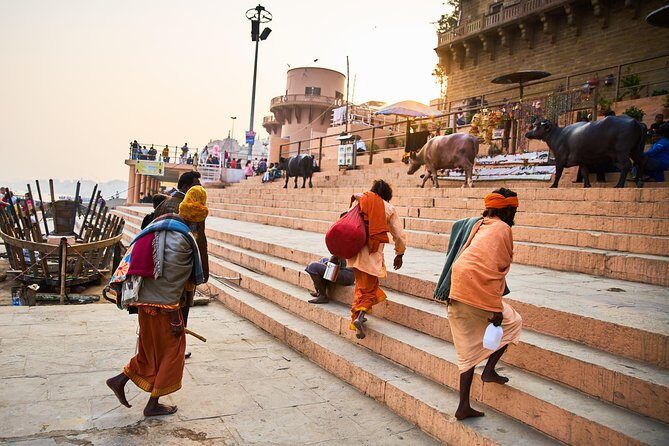
This is a walking tour through some of the most meaningful areas of Varanasi. That means you should plan for:
- Crowds, especially around the busier crossing and major ghats
- Uneven steps and tight spaces near temples and lanes
- The fact that the emotional weight of some stops can hit you harder than you expect
The tour also has a weather requirement: it needs good weather. If rain or bad conditions show up, the tour can be rescheduled or you can get a full refund. In real terms, that means you shouldn’t book it if you’re trying to cram Varanasi between travel disasters like delayed trains and tight flight windows.
One more practical point: the tour is listed as near public transportation. So even if you don’t use the pickup option, you should be able to reach the start area without major logistics.
As for language and comfort, the reviews strongly emphasize guides with good English and a friendly, kind approach. That shows up most at the stops where you’re tempted to just stand there and stare. A guide helps you know what to look for, when to move, and how to keep respectful distance.
Should You Book This Walking Tour for Varanasi?
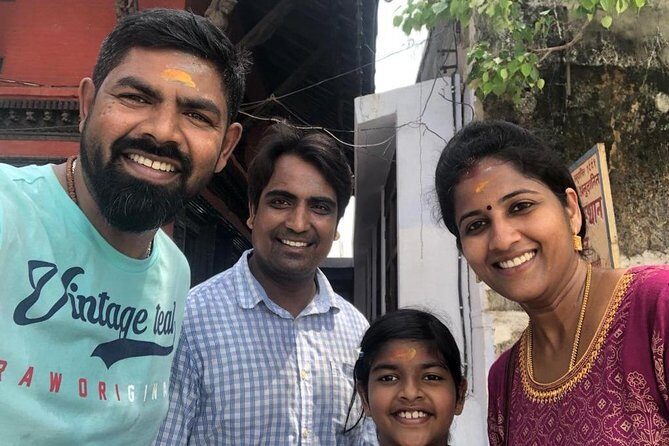
Yes, if you want an authentic Varanasi day that prioritizes meaning over speed. This is especially good for first-timers who feel nervous about navigating ghats and old-city lanes alone.
Book it if:
- You value a private guide who will keep you oriented
- You want both major sights and the smaller street-level moments
- You’re comfortable with a mix of temple worship and solemn ritual viewing
- You appreciate a guide who can explain what you’re seeing in clear English (guided by standout experiences tied to guides like Rajiv/Rajeev and Anubis)
Skip it or think carefully if:
- You get overwhelmed by crowded spaces and want a quieter itinerary
- You’d rather avoid cremation-related areas, even with clear respect rules
- You’re expecting everything to be fully accessible and friction-free on foot (some parts are stairs and tight lanes)
If you go in with patience and respect, you’ll come away with a Varanasi that feels like a place with systems and stories, not just a set of photos. And for $13, that’s a pretty fair deal.
FAQ
Is this tour private?
Yes. It’s a private tour/activity, so only your group participates.
How long is the walking tour?
The duration is approximately 4 to 5 hours.
What is included in the price?
Included items are bottled water, coffee and/or tea, and an eco friendly tour guide. You also get a mobile ticket.
Is pickup from my hotel included?
Vehicle pickup and drop-off from/to your hotel is not included. Pickup is mentioned as offered, but the vehicle is not part of what’s listed as included.
Do I need to pay entrance fees?
Entrance fees vary by stop. Some areas are free, some are listed as included, and some are listed as not included.
Are there any photography restrictions?
Yes. At Manikarnika Ghat, photography of the cremation area is prohibited.
What happens if the weather is bad?
The experience requires good weather. If it’s canceled due to poor weather, you’ll be offered a different date or a full refund.
Can I get a full refund if I cancel?
You can cancel for a full refund if you cancel up to 24 hours in advance of the experience start time. If you cancel less than 24 hours before, the amount paid is not refunded.