REVIEW · VARANASI
Evening Boat Ride
Book on GetYourGuide →Operated by Sachan Tours · Bookable on GetYourGuide
Two hours on the Ganges changes your perspective. This evening boat ride is special because you watch Varanasi from the water, with panoramic city views and a slow, unfolding look at Assi-ghat and the riverfront culture glowing in dusky light. It’s not just sightseeing; it’s a guided walk through sacred places you’ve probably only seen in photos, now moving past you in real time.
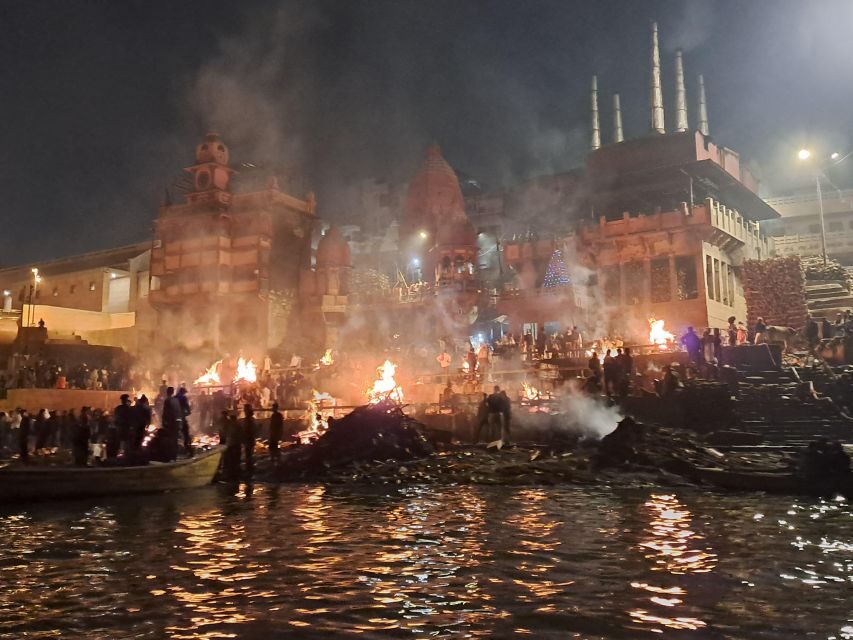
I also love how the route leads you to the most intense, meaningful stop: Manikarnika-ghat, the Hindu cremation crematorium. Your guide (often Karan, in English) talks through why these ghats matter, including how people have practiced rituals here for generations, and what you’re seeing when the flames rise. The only real drawback: the cremation scenes can be emotionally heavy, so if you’re sensitive to death rituals or fire, think twice and be honest about your comfort level.
In This Review
- Key highlights to expect
- Why Assi-ghat at dusk feels different
- The 2-hour route that strings together 55+ ghats
- Passing Tulsi-ghat, Harishchandra-ghat, and Dashashwamedh-ghat
- Manikarnika-ghat: the cremation scenes and the meaning behind them
- City-wide views that photos can’t fully replace
- The guide experience: conversations, clarity, and Karan’s style
- What’s included, what’s not, and what that means for your budget
- Who this boat ride is perfect for
- Small practical tips before you go
- Should you book this evening boat ride?
- FAQ
- How long is the evening boat ride?
- Where does the boat ride start?
- Is hotel pickup included?
- What ghats will the boat pass?
- Is there a guide, and is the tour in English?
- Is food or drinks included?
- Is there an advantage to the ticket process?
- What does the $31 price include?
- Are there options for cancellation and payment timing?
Key highlights to expect
- Assi-ghat to the riverfront loop: you start from one of Varanasi’s most well-known ghats and move through many others
- 55+ ghats in one ride: you’ll pass major names like Tulsi-ghat, Harishchandra-ghat, and Dashashwamedh-ghat
- Manikarnika-ghat focus: a guided look at the city’s venerated cremation setting
- Live English guidance: the storytelling helps the scenery make sense, not just look beautiful
- Photo-friendly pacing: the guide works around photography without turning the trip into a constant stop-start
Why Assi-ghat at dusk feels different
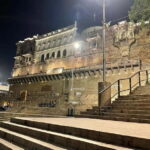
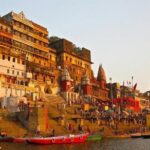
Starting at Palace on Ganges—toward the left corner near Assi-ghat—you get that classic Varanasi setup: you’re close enough to feel the city, but you’re also quickly out on the river. Evening matters here. The crowds don’t disappear, but the mood softens, and the water becomes the stage where everything reads more clearly.
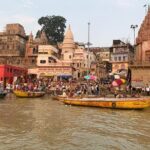
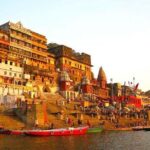
From the boat, the ghats start to look less like separate spots and more like a connected system—stone steps, ritual points, and daily life stacked along the river. That’s the big win of a night cruise: you’re not bouncing between locations. You’re watching the riverfront unfold at the pace of the current and the light.
You can also read our reviews of more boat tours in Varanasi


The 2-hour route that strings together 55+ ghats
This ride runs about 2 hours, and that time makes sense. Long enough for real movement and steady views, short enough that you’re not stuck on the water too long. It’s also designed to cover more than 55 ghats, including some of Varanasi’s best-known names, so you get breadth without needing to plan a full day of walking and getting in and out of traffic.
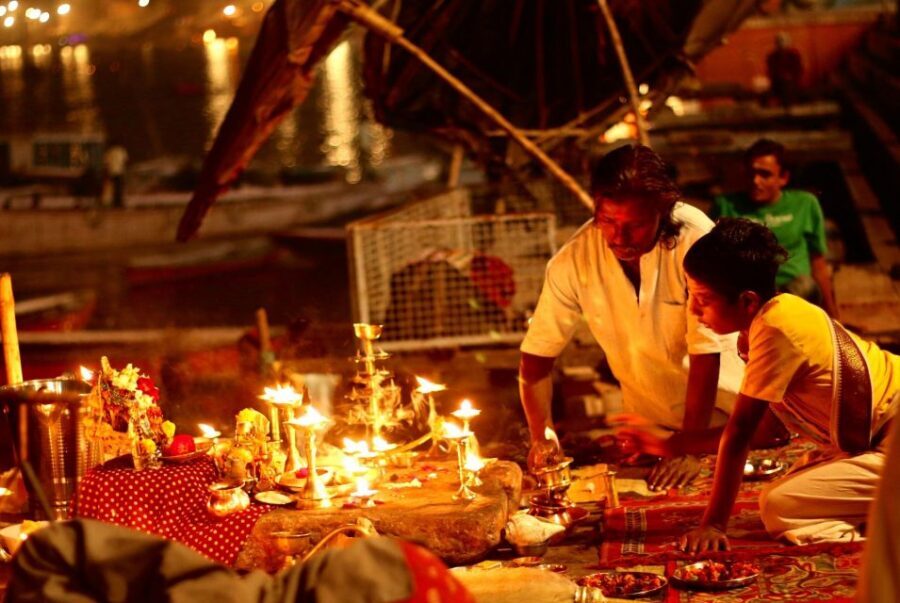
As you glide along, you’ll repeatedly notice a pattern: each ghat looks similar at first glance—steps, people, activity—but each one has its own rhythm. That’s where the guide earns their keep. Instead of letting you just watch passively, your guide frames what you’re seeing: the importance of the river, the role of devotion, and the way these places have been built, repaired, and rebuilt over time.
Passing Tulsi-ghat, Harishchandra-ghat, and Dashashwamedh-ghat
Some ghats come with name recognition—Tulsi-ghat, Harishchandra-ghat, and Dashashwamedh-ghat are on the route. The value isn’t only that you’ll see them. It’s that the boat gives you a consistent vantage point where you can compare one ghat’s activity to another’s without getting stuck on a single spot for too long.
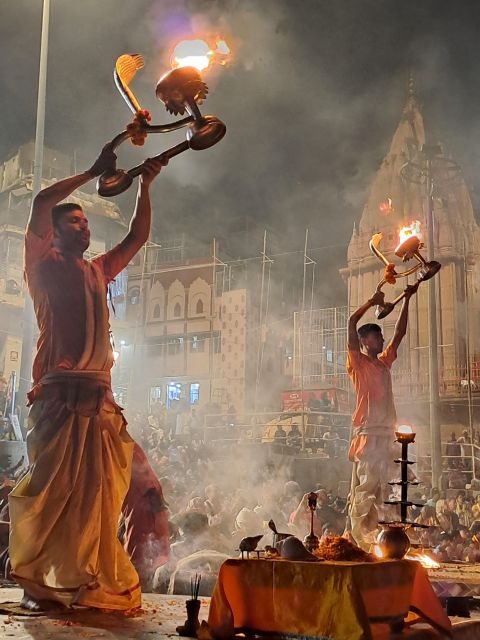
Your guide also connects the dots with history and meaning—how ghats were constructed and later demolished and rebuilt, and how rituals and hymns have been part of life here for ages. That turns “a famous place” into “a living place with layers,” even if you’re not an expert on every term.
If you’re the type who likes to understand what you’re looking at, this section is where you start building that mental map. You’ll begin to notice that the ghats aren’t just tourist sights—they’re where devotion happens, where families gather, and where the river is treated as something sacred, not just water.
Manikarnika-ghat: the cremation scenes and the meaning behind them
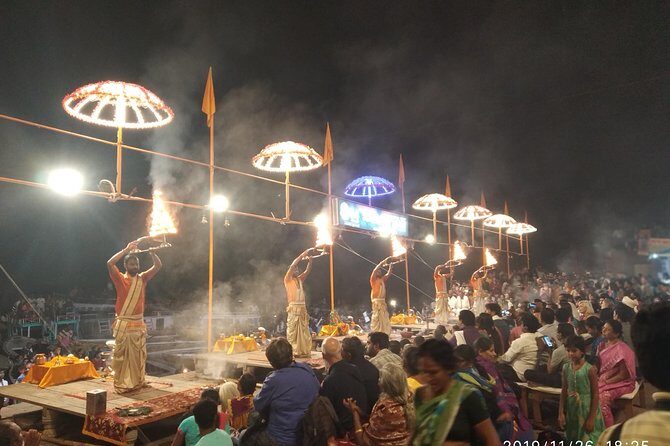
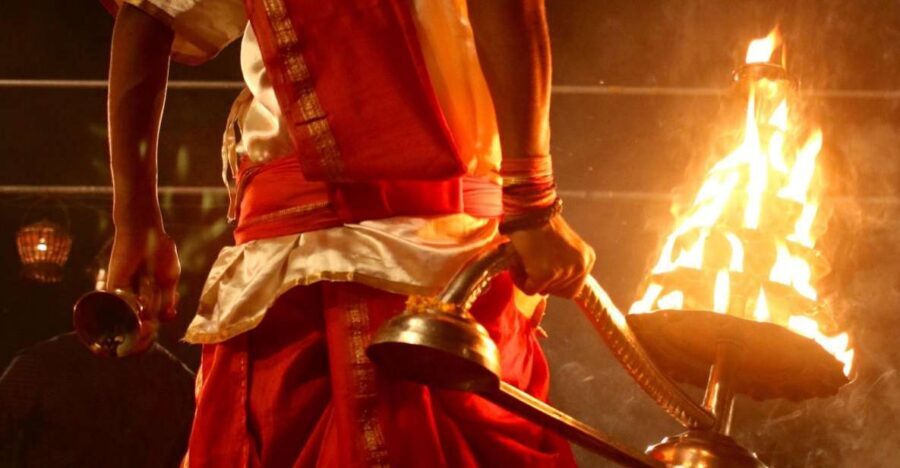
Then the route’s emotional center arrives: Manikarnika-ghat, described as the most venerated Hindu crematorium. This is the stop that can bring out goosebumps. You’re not watching from a distance like in a museum—you’re right there in the river’s line of sight as flames rise from pyres and the reality of mortality becomes impossible to ignore.
The point of the guide’s storytelling matters here. You’re not just looking at fire; you’re understanding why the cremation process is treated as sacred and tied to long-standing beliefs. The ride is structured so that you can take it in, think about it, and let the experience do its work—quietly, without the tour turning into sensational theater.
Important note for your planning: this is one of the most intense places you’re likely to see in India in a single evening. If you’re uncomfortable with death rituals or strong flames, don’t force it. You can decide whether to watch closely, look away when needed, or even adjust your expectations for the rest of the ride.
City-wide views that photos can’t fully replace
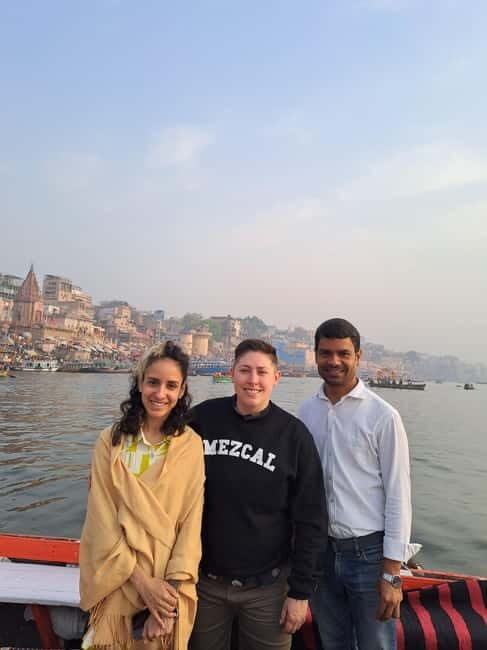
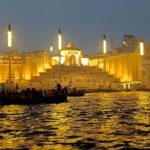
You’ll see a panoramic spread of the city from the water. That’s a basic claim, but here it’s practical. From the boat, you get angles and distances that are hard to recreate on land. Buildings, steps, and river activity align in a way that makes Varanasi feel like one connected experience rather than a list of landmarks.
This also helps your photos. The light shifts through the evening, and the river adds movement. The result is that images taken from the boat often look more “honest” than staged shots from a busy ghatside. One of the most loved parts of the experience is that the guide doesn’t treat photography like a distraction. Instead, they work around it in a way that keeps the flow moving and the atmosphere intact.
If you like to document travel, you’ll probably appreciate the pacing and the fact that you’re not constantly getting shoved aside by crowds. You’re still around people, but the boat gives you a calmer rhythm.
You can also read our reviews of more evening experiences in Varanasi


The guide experience: conversations, clarity, and Karan’s style
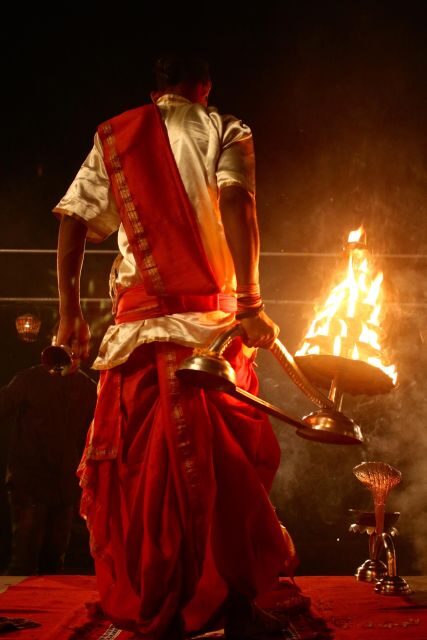
A big reason this tour scores well is the English live tour guide experience. Your guide doesn’t just recite facts. The best version of this trip feels like a mix of context and human conversation—religion explained in a way you can follow, and India framed through real ideas and questions.
Karan stands out in the way he answers questions and keeps the tone interesting rather than lecture-like. He’s also attentive to the group’s needs, especially when it comes to photography—allowing time and angles so you can capture the river scenes without losing the meaning behind them. And yes, the experience is even more enjoyable if you’re open to back-and-forth questions, because the information sticks better when you can react to it.
Some practical things you’ll likely notice:
- Explanations help the different ghats feel distinct, not repetitive
- The guide integrates moments so you don’t feel rushed, and you don’t feel like you’re standing still all the time
- The trip stays human, not robotic—an important difference on spiritual tours
What’s included, what’s not, and what that means for your budget
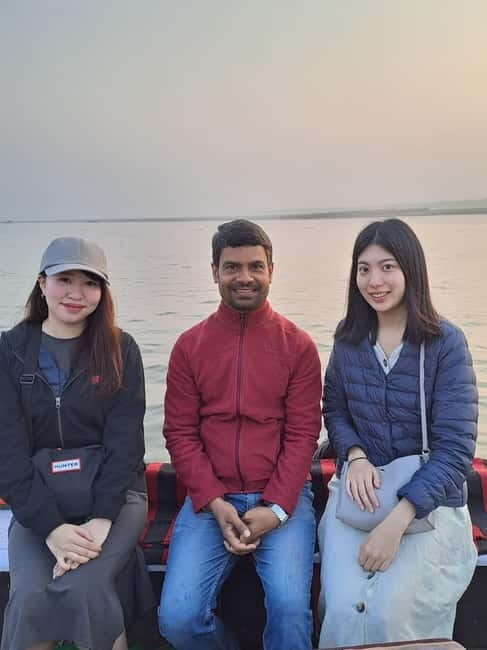
This experience is $31 per person for about two hours of evening sightseeing and guided boat touring. For Varanasi, that price can feel reasonable because you’re paying for three things at once: boat time, guided interpretation, and the ride’s built-in access to multiple major ghats in a single loop.
What you should plan around: hotel pickup and dropping aren’t included. You’ll want to be able to get yourself to the starting area near Assi-ghat—specifically the Palace on Ganges meeting point area. Also, food and drinks aren’t included, so if you’re hungry you’ll want your own plan before you go out on the water.
One more small but meaningful detail: the experience includes skipping the ticket line. That matters because lines near popular waterfront activities can eat into your evening. Saving time helps you enjoy the light and not just survive logistics.
Who this boat ride is perfect for
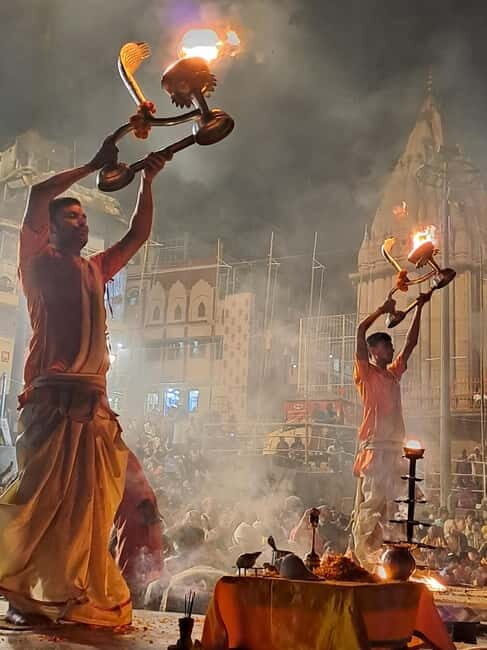
I think this tour is best if you want more than a standard scenic cruise. It fits travelers who like context—people who want to understand why these ghats are sacred, how devotion shapes daily life, and what it means to watch the cremation rituals from the river.
It also works well for first-timers in Varanasi, because you cover a lot of well-known ghats without building a full day itinerary. And if you’re traveling with someone who enjoys thoughtful conversation, the guide’s tone can make the ride feel like more than a checklist of sights.
That said, it may not be the right match for everyone. If you’re very sensitive to death rituals, or you prefer a lighter, purely scenic experience, you might find the Manikarnika-ghat portion too intense for comfort.
Small practical tips before you go
These aren’t big “tour tricks,” just things that keep the evening smooth.
First, plan to reach the meeting area near Palace on Ganges with enough time to settle in before departure. Starting location matters on riverfront evenings, when people and movement can be unpredictable.
Second, think about your viewing approach at Manikarnika-ghat. You don’t have to force yourself to stare through anything uncomfortable. The point is to experience the reality of the place in a way that still lets you stay respectful and steady.
Third, if you’re serious about photography, go in knowing the guide can help you work it into the ride. You’ll get better results if you communicate what you want to capture rather than trying to solve it alone in the moment.
Should you book this evening boat ride?
I’d book it if you want a guided, one-night overview of Varanasi that actually explains what you’re seeing—especially if you’re drawn to the ghats beyond the postcard view. The value is in the combination: 55+ ghats, a real sense of riverfront life, and the guide-led framing that makes famous places feel meaningful.
I’d skip or carefully reconsider if you know you’re not comfortable watching cremation rituals or strong flames. This isn’t a gentle “pretty lights on water” cruise. It’s a spiritual evening with a powerful centerpiece.
If your goal is understanding, not just photos, this is a strong choice—and the two-hour length keeps it from turning into an endurance test.
FAQ
How long is the evening boat ride?
The duration is about 2 hours.
Where does the boat ride start?
The boat ride starts from Assi-ghat, with the meeting point at Palace on Ganges in Varanasi (left corner toward Assi-ghat).
Is hotel pickup included?
No. Hotel pickup and dropping are not included.
What ghats will the boat pass?
The boat covers more than 55 ghats, including well-known ones such as Tulsi-ghat, Harishchandra-ghat, Dashashwamedh-ghat, and Manikarnika-ghat.
Is there a guide, and is the tour in English?
Yes. The tour includes a live tour guide in English.
Is food or drinks included?
No. Food and drinks are not included.
Is there an advantage to the ticket process?
Yes. The experience includes skipping the ticket line.
What does the $31 price include?
It includes sightseeing and the evening boat-tour experience.
Are there options for cancellation and payment timing?
The experience offers free cancellation up to 24 hours in advance for a full refund, and it also offers a reserve now & pay later option.