REVIEW · VARANASI
Varanasi Ganga Arti visit and Heritage Walk
Book on Viator →Operated by Pick My Tour · Bookable on Viator
Varanasi turns an evening into a ritual. This Ganga Aarti and Heritage Walk focuses on the walk between key ghats and then settles you in for the main ceremony around 6pm at Rajendra Prasad Ghat. What makes it work is the structure: short stops, clear guidance, and a local expert explaining what you’re seeing as you go.
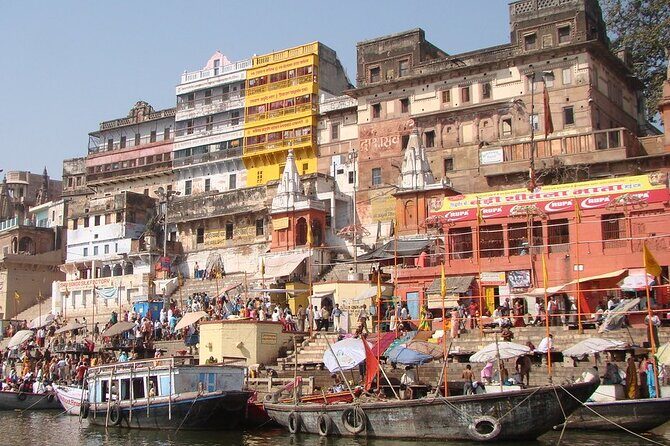
I especially like two things. First, you’re guided to a good viewing setup so you can watch the whole Aarti without playing guess-and-crowd. Second, the tour doesn’t treat this as a quick photo stop; you get context about the ghats and nearby landmarks as you move along the waterfront.
One consideration: you’re doing a lot on foot along ghat areas near the river, so it’s not a laid-back stroll. Plan for uneven ground, stairs, and an outdoor evening where conditions can change.
In This Review
- Key Things That Make This Varanasi Aarti Walk Worth It
- The 5pm Start That Sets the Whole Mood
- Godowlia to Dashashwamedh: Getting Oriented Fast
- Ganga Aarti at Rajendra Prasad Ghat: The Main Event
- Gateway of Kashi Vishwanath and Dom Raja House: Sacred Streets and Details
- Kathwala (Nepali) Temple: Why Architecture Changes How You See the Ghat
- Manikarnika Ghat: Burning Ghat, Heavy Belief, and Real-World Context
- Price and Value: How $10 Works for an Evening Like This
- Practical Tips So You Enjoy the Walk (Not Just Survive It)
- Who This Tour Fits Best
- Should You Book This Ganga Aarti and Heritage Walk?
- FAQ
- What is the duration of the Varanasi Ganga Aarti and Heritage Walk?
- What time does the tour start?
- Where does the tour meet and where does it end?
- Is pickup available?
- What major ceremony will I see?
- Which locations are included besides the Aarti?
- What is included in the price?
- Is the tour private?
- What is the cancellation policy?
- How quickly do I receive confirmation after booking?
Key Things That Make This Varanasi Aarti Walk Worth It
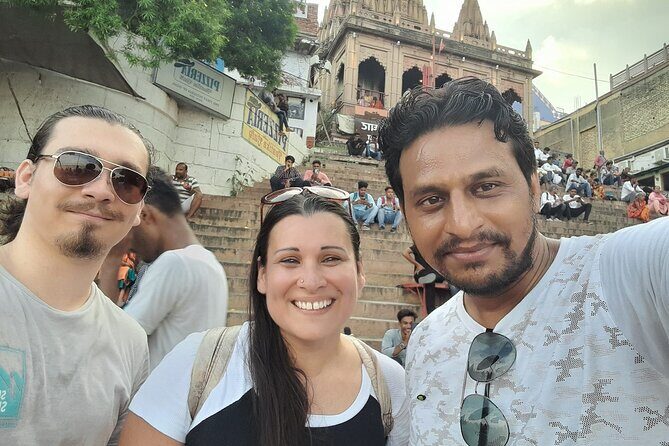
- Comfort-minded Aarti viewing at Rajendra Prasad Ghat for the ceremony starting around 6pm
- A local guide with context, connecting temples, ghats, and rituals as you walk
- Manikarnika Ghat stop so you understand the cremation site and local belief tied to it
- Classic ghat route starting at Godowalia and passing through areas like Dashashwamedh Ghat
- Low-cost value at about $10 per person for a guided, multi-stop evening outing
The 5pm Start That Sets the Whole Mood
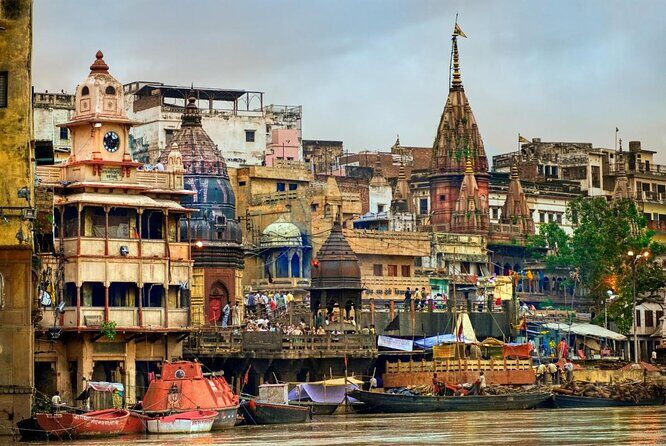
This tour is built around timing. You meet at Godowalia Chauraha, Ramapura Luxa and start at 5:00 pm. That timing matters because the big moment, the Ganga Aarti, is set to begin around 6pm. You’re not rushing in at the last minute, and you’re not waiting around with nothing to do either. Instead, the tour uses the hour before the ceremony to get you oriented.
It also helps that the tour is designed as a private experience for your group. That changes the energy. You’re not stuck with a chaotic crowd management vibe. Your guide can keep things moving at the right pace and still focus on explanation.
Duration is listed at about 3 hours (with travel time). That’s a sweet spot in Varanasi: long enough to see multiple ghats and key stops, short enough that you won’t feel trapped in evening logistics.
You can also read our reviews of more walking tours in Varanasi


Godowlia to Dashashwamedh: Getting Oriented Fast
The first stop is Godowlia, where the tour begins with a meet-and-greet and a walk toward the Ganga ghat. You’ll have around 30 minutes here. This is the “get your bearings fast” phase. You’re moving from the meeting area toward the river and starting to understand how the city’s life clusters around the water.
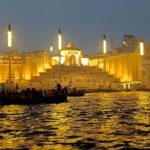
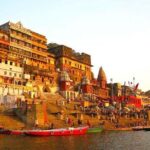
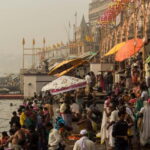
From there, you head toward Dashashwamedh Ghat. This stretch isn’t just scenic. You’ll pass by local shops and temples, and your guide briefs you on the cultural and historical details of places along the way. I like this approach because it turns the walking time into part of the story, not just movement between photo points.
One practical note: ghats can be dense and busy, especially toward evening. The tour’s pacing helps, but you should still expect the area to feel active.
Ganga Aarti at Rajendra Prasad Ghat: The Main Event
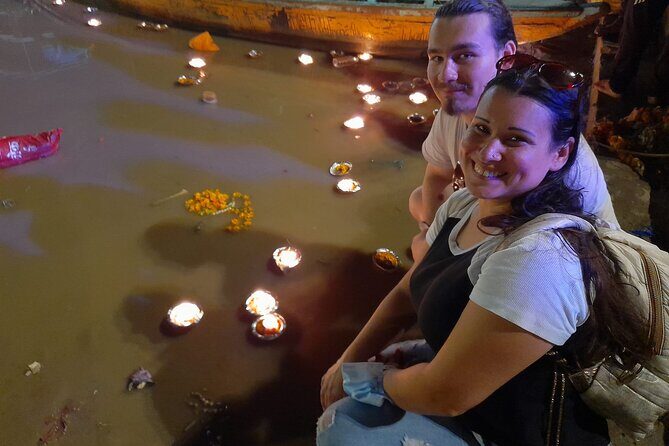
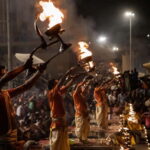
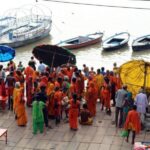
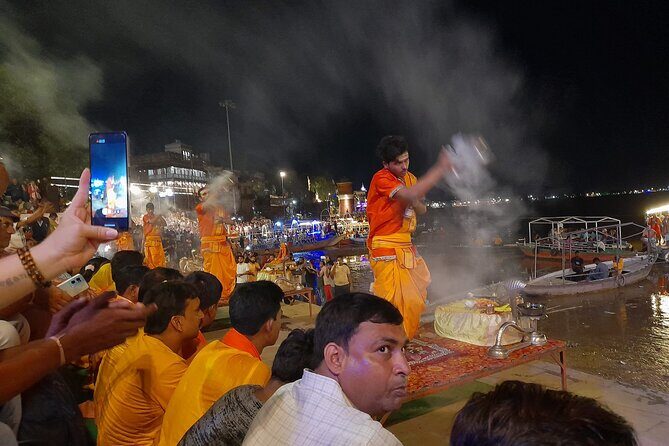
The heart of the experience is watching Ganga Aarti live at Rajendra Prasad Ghat. The schedule says it starts around 6pm, and the Aarti viewing time is about one hour.
Here’s what makes this stop feel valuable: the tour is clearly built around a real viewing experience, not a quick “look from wherever you stand” moment. In fact, people describe the guide as getting them a place to sit and watch the full ceremony. That matters in Varanasi because the crowd situation can change minute to minute. A guide who knows where to stand or how to position your group can save you from spending half the ceremony trying to find a workable spot.
Culturally, you’re seeing a ritual that functions as prayer—people connecting with God through light, chants, and synchronized movement. Even if you don’t know the words or the meaning behind every element, you can still read the purpose. It’s devotion in public. It’s also community—neighbors, families, and observers all gathered in one shared moment.
If you want the best experience, arrive mentally ready for atmosphere: you’re at river level, on a living ceremonial stage. Don’t plan this as a quiet, museum-style moment.
Gateway of Kashi Vishwanath and Dom Raja House: Sacred Streets and Details
After the Aarti, the walk continues along the ghats, with a stop at the Gateway of Kashi Vishwanath Temple. You’ll also see a newly built temple corridor along the way. This is a useful contrast to the river ceremony: you shift from ritual at the water to the spiritual infrastructure of the old city.
You’ll also have time to visit Dom Raja House nearby. The tour includes a 20-minute window for these landmarks, which is short but enough to grasp what they are and why they sit where they do.
Why I think these stops are worth it: Varanasi makes you earn understanding through context. If you only watch the Aarti, you get the emotional peak but miss the street-level map of where sacred life extends inland. This part of the walk helps you connect the dots.
A drawback to keep in mind: with only about 20 minutes at each additional site, you won’t have time for long wandering or deep solo exploring. It’s an efficient tour. If you love “linger” time, you’ll want to add extra hours later on your own.
Kathwala (Nepali) Temple: Why Architecture Changes How You See the Ghat
Next you visit the Nepali Temple, also called the Kathwala Temple, known for historical Nepali architecture. You’ll spend about 20 minutes here.
This stop is more important than it sounds. Varanasi can feel like one long riverfront storyline, but the city also absorbs influences from outside. Seeing a temple associated with the King of Nepal adds a layer of complexity to your mental map of the ghats. It’s not only about local Indian traditions; it also reflects historical connections and patronage patterns.
In practical terms, the best way to enjoy this stop is to look at the architecture as a language. Even without memorizing details, you can sense what makes it different from nearby structures. That contrast helps the whole evening click.
You can also read our reviews of more historical tours in Varanasi




Manikarnika Ghat: Burning Ghat, Heavy Belief, and Real-World Context
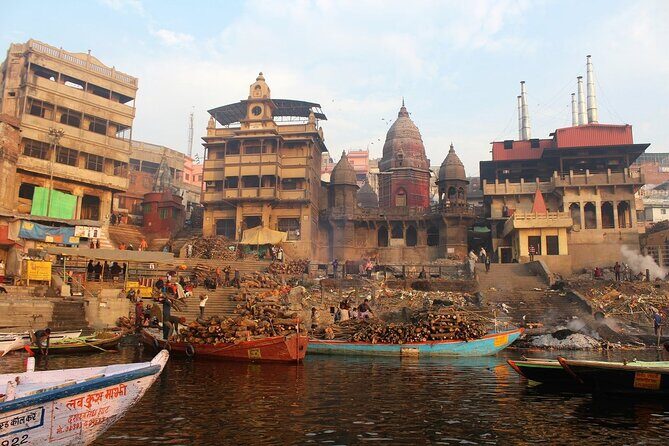
The final cultural heavyweight is Manikarnika Ghat, often called the burning ghat and crematorium. You’ll have about 20 minutes here, and your guide explains the place and the rituals happening.
This is not a comfortable “just sightseeing” stop. It’s a working cremation area, and the meaning around it is intense. The tour information notes a strong local belief: people cremated here are free from the cycle of death.
If you’re sensitive to mortality topics, go in with awareness. This stop can be emotionally challenging. But I also think it’s one of the most important moments in a Varanasi evening, because it explains why the city’s spiritual atmosphere feels so serious. Death and ritual aren’t distant ideas here. They’re part of the river’s daily reality.
Your guide’s role is crucial. Without explanation, Manikarnika can feel like a blunt shock. With context, you begin to understand what locals believe, why they perform these rituals, and how the ghat fits into a larger spiritual worldview.
Price and Value: How $10 Works for an Evening Like This
At $10 per person, this tour is priced for access. The big value isn’t just the low cost. It’s that you’re getting a guided, multi-stop evening that includes the Ganga Aarti visit plus all fees and taxes and a guide fee.
For $10, most people would otherwise be stuck with either:
- going to the Aarti alone and spending time figuring out where to stand, or
- doing a generic heritage walk without a firm tie to the main ceremony.
Here, the timing and the guided structure do the heavy lifting. You’re not paying for a huge museum day. You’re paying for orientation, cultural interpretation, and help getting through the crowded riverfront in time for the ritual.
You’ll also want to know what you likely won’t pay extra for: the tour lists admission ticket free at stops and includes the Aarti visit. That keeps the evening predictable.
One small consideration: anything outside the tour inclusions would be on you. So if you plan snacks, water, or personal purchases at shops you pass, budget a little.
Practical Tips So You Enjoy the Walk (Not Just Survive It)
Here’s how to make the evening smoother based on the tour’s flow and timing:
- Dress for an outdoor evening. You’ll be walking and standing by the river.
- Keep your plans simple after the tour. You’ve got about 3 hours and a major ceremony at the center.
- Bring a flexible mindset for Manikarnika. You’re seeing a cremation site with spiritual meaning, not a themed attraction.
- If you can get pickup, consider using it. The meeting point is in a busy central area, and pickup can reduce stress before the 5pm start.
- Use the mobile ticket. It’s part of how the tour is handled, and it avoids last-minute hassle.
Also, confirmation is described as coming within 48 hours of booking, subject to availability. If you’re traveling during peak season, don’t wait until the last moment.
Who This Tour Fits Best
This experience is a good match if you want:
- a structured way to see Varanasi’s ghats in a short time,
- an evening focused on Ganga Aarti with guidance and context,
- a guide who helps you get a good view and keeps the experience calm and organized.
It’s especially appealing if you like the mix of:
- public ritual (Aarti),
- sacred architecture (Kashi Vishwanath gateway),
- and deeper, heavier cultural context (Manikarnika).
If you prefer total independence, long lingering, or minimal walking, you might find the format too “tight.” But if you want a focused evening plan that covers the essentials without leaving you scrambling, this works.
Should You Book This Ganga Aarti and Heritage Walk?
I’d book it if you value easy logistics, a friendly guide, and a tour that respects the main event—the Aarti—by positioning you to actually watch it. The strongest signals here are comfort-minded viewing and a guide who knows where to go for a better experience, plus a calm, professional tone.
Skip it only if you know you hate crowded outdoor riverfronts or if Manikarnika would feel like too much for you emotionally. Otherwise, for $10 in Varanasi, it’s a solid way to understand how the city’s spiritual life connects from street temples to the river’s ceremony and finally to the burning ghat.
If you’re building your first Varanasi evening and want it to feel guided rather than random, this is a smart place to start.
FAQ
What is the duration of the Varanasi Ganga Aarti and Heritage Walk?
The tour lasts about 3 hours (approx.), including travel time.
What time does the tour start?
The start time is 5:00 pm.
Where does the tour meet and where does it end?
You meet at Godowalia Chauraha, Ramapura Luxa, Varanasi, Uttar Pradesh 221001. The activity ends back at the meeting point.
Is pickup available?
Pickup is offered.
What major ceremony will I see?
You will watch Ganga Aarti live at Rajendra Prasad Ghat, with the ritual starting around 6pm.
Which locations are included besides the Aarti?
The walk includes stops at Godowlia, Dashashwamedh Ghat, the Gateway of Kashi Vishwanath Temple corridor, Dom Raja House, Nepali Temple (Kathwala Temple), and Manikarnika Ghat.
What is included in the price?
Included are all fees and taxes, the guide fee, and the Ganga Aarti visit.
Is the tour private?
Yes. It is private, with only your group participating.
What is the cancellation policy?
Free cancellation is available. You can cancel up to 24 hours in advance of the experience for a full refund.
How quickly do I receive confirmation after booking?
Confirmation is received within 48 hours of booking, subject to availability.