REVIEW · VARANASI
From Varasani: Private Half Day Tour to Sarnath
Book on GetYourGuide →Operated by INDIATOR · Bookable on GetYourGuide
Sarnath hits fast and hard. In just four hours, this private tour gets you from Varanasi to one of Buddhism’s key pilgrimage zones, with an air-conditioned car and an English-speaking guide who can connect the monuments to the ideas behind them. I like the straight-line structure: you’re not left wandering. I also like that the stop list covers the big visual hits—Dhameka Stupa, Chaukhandi, the museum, and the Lion Capital. One drawback to keep in mind: the pace can feel brisk, and the quality of the guide’s English (and what’s actually included, like entry fees) can vary, so you’ll want to confirm details up front.
If you’re short on time but still want the spiritual and historical “why” behind Sarnath, this is a practical way to do it. The private vehicle helps a lot too—Sarnath is about 10 km from Varanasi, so you spend less effort figuring out transport and more time at the site.
In This Review
- Key things to know before you go
- Sarnath in Four Hours: How the Timing and Drive Work
- Dhameka Stupa: Where the Tour’s Spiritual Story Starts
- Chaukhandi Stupa and the Ruins That Feel Like Real History
- The Sarnath Archaeological Museum Stop: Artefacts, Not Just Stones
- The Lion Capital of Ashoka: A National Emblem Inside a Religious Site
- Mulagandhakuti Vihara and Wall Paintings: The Quiet Finish
- Price and Value: Is $40 Worth It for This Short Private Tour?
- Private Transport and an English Guide: What Matters Day-of
- Practical Tips That Protect Your Half-Day Schedule
- Who This Tour Fits Best (and Who Should Rethink It)
- Should You Book Varasani’s Private Half-Day Tour to Sarnath?
- FAQ
- What time does the tour start?
- How long is the tour?
- Where will I be picked up and dropped off?
- What transportation is included?
- Is there an English-speaking guide?
- What are the main places you visit in Sarnath?
- Are monument and museum entry fees included?
- What is the price per person?
- Is the tour private or group-based?
- Can I cancel for a refund?
Key things to know before you go
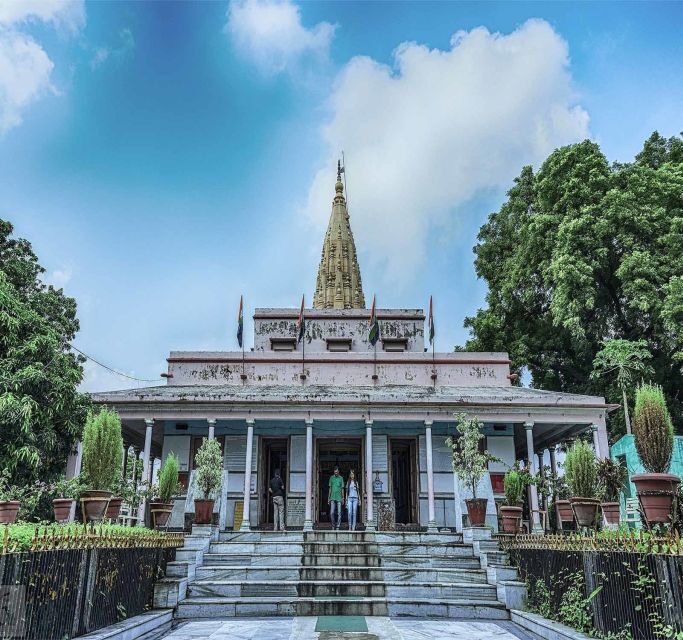
- Four-hour private plan: pick-up from your Varanasi hotel and return the same day, with a chauffeur-driven car.
- Dhameka Stupa is the anchor: a centerpiece linked to Buddha’s first sermon after enlightenment.
- Chaukhandi Stupa adds context: another major monument that rounds out the pilgrimage story.
- Sarnath Archaeological Museum: a focused stop to see artefacts tied to the site.
- Lion Capital of Ashoka: the national emblem of India, brought into the visit’s meaning.
- Mulagandhakuti Vihara: a monastery stop with wall paintings you can look for during the tour.
Sarnath in Four Hours: How the Timing and Drive Work
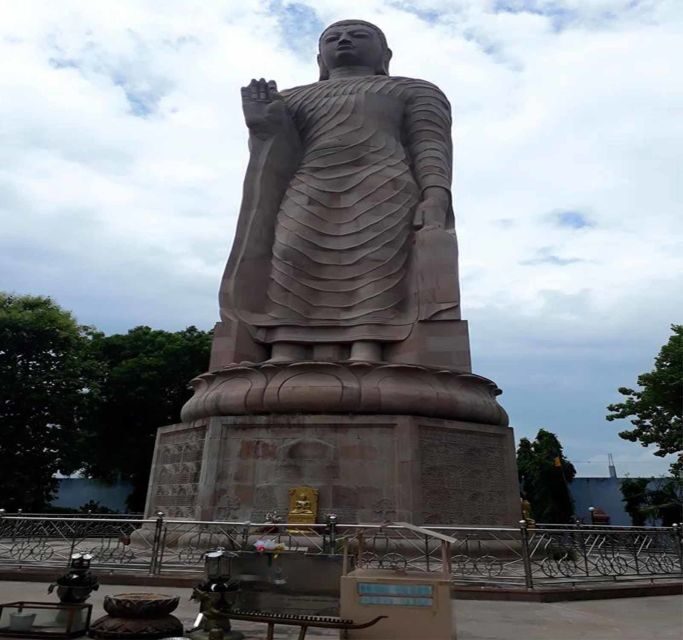
This tour runs for about 4 hours, starting at 11:00am. You’ll be picked up from your Varanasi hotel and driven to Sarnath, roughly 10 km outside the city. That may sound like a small detail, but it matters here: Sarnath is a pilgrimage destination with multiple stops, and the private car keeps the schedule tight instead of turning your day into a scavenger hunt.
Once you arrive, your guide is there to connect the dots. The tour is designed as a “guided highlights” format, so you get a tour of the major monuments and key interpretation points rather than just a self-guided walk. The guide’s role is especially useful if you want more than postcard photos—things like why Dhameka Stupa matters or what the museum artefacts can tell you.
The main thing to watch is pacing. In a half-day, you won’t linger at every corner. If you want slow, quiet contemplation at each monument, treat this as a taste, not a long pilgrimage day.
You can also read our reviews of more private tours in Varanasi


Dhameka Stupa: Where the Tour’s Spiritual Story Starts
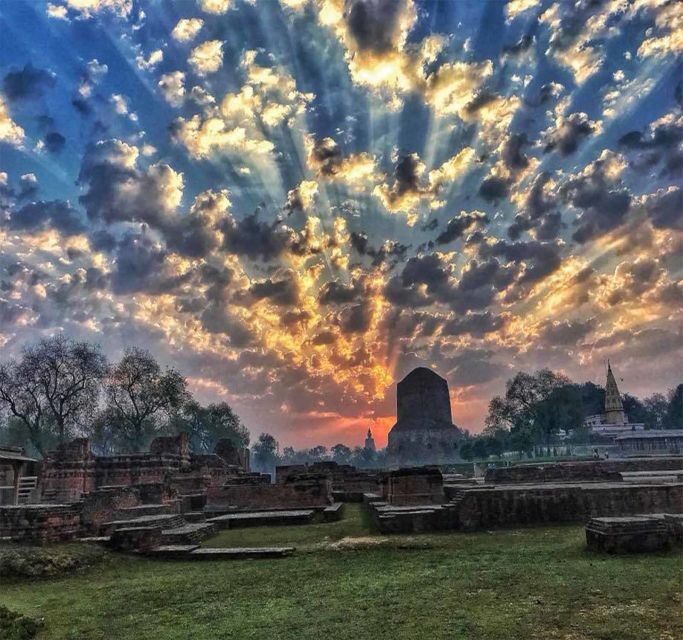
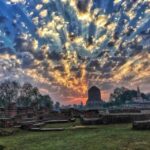
Dhameka Stupa is the emotional center of the visit. The tour highlights it as the site where Buddha delivered his first sermon after attaining enlightenment—one of the reasons Sarnath is such a major Buddhist pilgrimage destination.
What I like about this stop in a guided half-day is that it gives you an anchor. Instead of seeing a cluster of ancient structures with no thread, you get a clear storyline early on: enlightenment leads to teaching, teaching leads to community, and Sarnath becomes one of the key places tied to that transition.
When you stand near Dhameka Stupa, you’re looking at a monument that’s meant to hold meaning across generations. Even if you don’t read every inscription or learn every architectural detail, your guide can point you toward the “big idea” behind the location—why this stupa is treated as a landmark in Buddhist heritage.
If you’re a photo person, it’s also a natural focal point: it’s the kind of structure that gives you context fast, letting you orient your visit around a single visual.
Chaukhandi Stupa and the Ruins That Feel Like Real History
After Dhameka Stupa, you’ll move on to Chaukhandi Stupa. This is another major pilgrimage stop at Sarnath and an important step in the tour’s “see and understand” flow.
Then comes the part that many people enjoy the most if they like history: the tour time includes time around the rustic ruins of Buddhist monuments associated with major teachings. That word rustic matters. Sarnath isn’t staged like a theme park. You get a sense of age and unevenness—structures that feel part of an archaeological landscape rather than a perfectly manicured garden.
In a short tour, ruins can be a double-edged sword. On one hand, they’re visually compelling and they make the place feel lived-in by time. On the other hand, if the guide’s explanations don’t land, ruins can feel like “more rocks.” Your best move: ask your guide to point out what you should look for—how this ruin connects to the teachings they’re discussing.
The Sarnath Archaeological Museum Stop: Artefacts, Not Just Stones
Next you’ll visit the Sarnath Archaeological Museum, which is where the tour becomes more than scenery. Monuments give you scale and atmosphere; museums give you tangible proof.
The museum display is described as featuring artefacts tied to the site. That’s valuable because it helps you connect what you see outside with what researchers have recovered. In practical terms, you’ll get a clearer sense of Buddhist heritage through objects rather than only architecture.
I especially like museum stops in half-day tours because you can learn a lot without needing hours of walking. If you’re the type who likes to understand what you’re looking at—names, dates, relic connections—this museum stop can turn your Sarnath visit from a visual sweep into a more meaningful one.
One note for expectations: a museum can’t replace a full scholarly visit. But as part of a highlights tour, it’s a strong “value amplifier” if you’re curious about relics and historical context.
The Lion Capital of Ashoka: A National Emblem Inside a Religious Site
You’ll also see the Lion Capital of Ashoka, described here as the national emblem of India. This is one of those moments that reminds you Sarnath isn’t just a “Buddhist place.” It’s also part of India’s national story—because symbols travel. An ancient heritage site can link directly to modern identity.
For many visitors, the Lion Capital is memorable because it’s recognizable in a totally different way than a temple complex or a stupa. It’s the kind of object that makes you sit up: wait, I’ve seen this symbol on official contexts.
On a half-day tour, it works as a final “meaning” stop before the drive back. It gives your visit a bridge between devotion, archaeology, and national symbolism—three angles that can otherwise feel separate.




Mulagandhakuti Vihara and Wall Paintings: The Quiet Finish
Near the end, the tour includes Mulagandhakuti Vihara, a monastery area noted for beautiful wall paintings. If you’ve been focused on stupa shapes and archaeological ruins, this stop changes the texture. You shift from exterior monuments to a more human-scale space tied to monastic life and artistic decoration.
Wall paintings are often where you can spot mood quickly—what artists chose to emphasize, how scenes or figures were meant to be read, and how religious storytelling was made visible. Even without deep study, a monastery with paintings can make a visit feel more intimate, less like a museum walkthrough and more like a place still oriented around practice.
Since this tour is a highlights route with limited time, I’d treat this stop as something to watch for, not something to assume. If you care a lot about seeing the wall paintings, ask your guide when you arrive how long you’ll have at Mulagandhakuti Vihara, and make sure it’s actually part of your time on the ground.
Price and Value: Is $40 Worth It for This Short Private Tour?
At $40 per person for a half-day private tour, you’re paying for three main things:
1) private hotel pick-up and drop-off in an air-conditioned vehicle,
2) an English-speaking guide,
3) monument and museum entry fees (as described).
That’s the value math on paper. Where value can slip is when expectations don’t match reality—especially around entry fees and time spent at each location. One key consideration: although the tour says entry fees are included, some visitors have run into confusion about what was actually covered on-site. Before you go, confirm what the tour price includes for monument and museum access so you don’t face surprises after you’ve already built a mental schedule around those stops.
The other value issue is pacing. A 4-hour tour can only fit so much. If you’re expecting a slow, detailed tour with lots of conversation, you might find the experience moving faster than you want. On the other hand, if your goal is a well-organized hits-and-meanings tour—without the hassle of transport and ticketing—this setup can feel efficient.
So is it worth it? It’s a good deal if:
- you want a private, guided overview,
- you’re happy with a “highlights” tempo,
- and your entry fees are clearly covered ahead of time.
If you’re the type who wants deep, long explanations at each stop, you may prefer a longer tour or a format with more time per monument.
Private Transport and an English Guide: What Matters Day-of
Because the tour is private, you’re not sharing a cramped ride or getting yanked along by a bigger group’s schedule. The chauffeur-driven private, air-conditioned vehicle is a real comfort win, especially on a day when you’ll be walking around stone and open courtyards.
The guide is listed as English-speaking, and that’s a big deal here. Sarnath makes more sense when you get the “why” behind each stop. In short tours, good guiding is what turns the visit from sightseeing into understanding.
Still, you should plan for the fact that “English-speaking” can mean different things depending on the guide’s comfort. If you want specifics—dates, key concepts, names of teachings—go in with a mindset of interaction. Ask questions like:
- What should I notice at Dhameka Stupa?
- What’s the connection between the monuments and Buddha’s teaching moment?
- What can the museum artefacts help me understand?
If you feel you aren’t getting clear answers, it’s better to raise that early rather than wait until you’re rushing through the last stops.
Practical Tips That Protect Your Half-Day Schedule
Since the itinerary is tightly packed, your best “planning” moves are simple:
- Confirm that monument and museum entry fees are included exactly as you expect.
- If you care about the Mulagandhakuti Vihara wall paintings, ask your guide at the start how much time you’ll have there.
- Remember the tour starts at 11:00am, so aim to be ready at your Varanasi hotel a bit earlier than you think you need.
Also, budget for personal expenses not included on the tour. That’s standard for most experiences, but it’s worth noting so you’re not trying to solve money questions while you’re already on the move.
Lastly, keep your expectations realistic: 4 hours is enough for major stops, not enough for a slow pilgrimage day with long pauses and deep study. Treat it like an intelligent sampler.
Who This Tour Fits Best (and Who Should Rethink It)
This tour fits you if:
- You want a private way to see Sarnath without transport stress.
- You’re into spiritual heritage and want interpretation, not just walking through.
- You like a museum stop that adds artefact-based context.
- You’re time-limited but still want the big monuments, including Dhameka Stupa, Chaukhandi Stupa, and Lion Capital of Ashoka.
You may want to rethink it if:
- You expect a slow, unhurried, conversation-heavy visit.
- You really need highly polished English with lots of detail.
- You prefer to control ticketing and pacing yourself (since even small entry-fee misunderstandings can spoil the vibe).
If you’re somewhere in the middle—curious, but not demanding a long academic lecture—this kind of half-day private tour can be a smart use of time.
Should You Book Varasani’s Private Half-Day Tour to Sarnath?
I’d book it if you want a structured highlights experience with private comfort and a guide to make Sarnath click quickly. The biggest reasons are clear: Dhameka Stupa’s significance, the addition of the museum and artefacts, and the way the tour includes emblematic stops like the Lion Capital.
Before you hit confirm, do two things to protect your value:
- Ask (or double-check) that entry fees for the monuments and the museum are truly covered.
- Make sure you’re comfortable with a 4-hour, highlights-based pace—because that’s the deal.
If those boxes check out, this tour is a practical way to get the essentials of Sarnath without losing half your day to logistics.
FAQ
What time does the tour start?
The tour starts at 11:00am.
How long is the tour?
The duration is about 4 hours.
Where will I be picked up and dropped off?
You’ll be picked up from your Varanasi hotel and dropped back at your hotel after the tour.
What transportation is included?
The tour includes private, air-conditioned vehicle transportation with a chauffeur.
Is there an English-speaking guide?
Yes. The tour includes an English-speaking guide.
What are the main places you visit in Sarnath?
The tour includes Dhameka Stupa, Chaukhandi Stupa, the Sarnath Archaeological Museum, the Lion Capital of Ashoka, and Mulagandhakuti Vihara.
Are monument and museum entry fees included?
Monument and museum entry fees are listed as included.
What is the price per person?
The price is $40 per person.
Is the tour private or group-based?
It’s a private group.
Can I cancel for a refund?
Yes, you can cancel up to 24 hours in advance for a full refund.