REVIEW · VARANASI
Varanasi: Full day Heritage walking tour
Book on GetYourGuide →Operated by Season Holidayz · Bookable on GetYourGuide
That first morning in Varanasi sets the tone. This full-day walking tour led by Nikhil focuses on the Hindu parts of the city in a way that feels more like street-level understanding than sightseeing checklist. I especially love how you get Assi Ghat at sunrise energy, and how the pace leaves room to ask questions while you move through older lanes and temples instead of only the most crowded stops.
The biggest thing to consider is that it is long and outdoors. You should be ready for crowds, dust, and strong sunlight, and plan for breaks because the walk is not a quick hit.
In This Review
- Key Points You’ll Actually Feel
- Your Best Shot at Understanding Varanasi (Instead of Just Visiting It)
- Meeting Up: Choose the Starting Spot That Fits Your Day
- Assi Ghat at Sunrise: Where the Day Makes Sense
- Lolark Kund and the Temple Stops: Hinduism Through Places, Not Lectures
- Lunch Break at Assi Ghat: Built-In Recovery Time
- A Short Tuk-Tuk Transfer: Less Strain, Same City Feeling
- Godowlia Crossing On Foot: The Old Lanes Experience
- Manikarnika Ghat: Visiting the Cremation Ghats With Context
- The Pace and Structure: Why the Route Feels Manageable
- What’s Included for $8: The Value Is in the Guidance
- Who This Tour Fits Best (And Who Might Want Something Else)
- Practical Stuff to Bring (Because the Tour Warns You)
- Ending the Day: Drop-Off Options Back Where You Started
- Should You Book This Varanasi Heritage Walking Tour?
- FAQ
- How long is the Varanasi heritage walking tour?
- Where does the tour start?
- What time does the tour begin?
- Is the tour guided in English?
- How big is the group?
- What’s included in the price?
- Are meals included?
- What should I bring?
- Is there cancellation, and can I pay later?
Key Points You’ll Actually Feel
- Assi Ghat sunrise start: start the day when the river edge is calm enough to think
- Less-crowded temple focus: you see Hinduism through places that are not always packed
- Old-city lanes and markets: real neighborhood routing, not just big monuments
- Cremation ghats explained: you get context for what you’re seeing at Manikarnika Ghat
- Small group, up to 10: easier questions, better flow, less waiting around
- Short tuk-tuk transfer: a small break from constant walking without losing the street experience
Your Best Shot at Understanding Varanasi (Instead of Just Visiting It)
Varanasi can feel overwhelming fast. This tour helps you get your bearings because it mixes three things you need for the city to make sense: religious context, old-street routing, and guided walking at a human pace.
I like that it starts early and then slows down at the right moments. You’re not rushed from one photo angle to the next. Instead, you’re moving through daily life and sacred space, guided in English by a local who knows how to answer questions without making you feel rushed.
You can also read our reviews of more walking tours in Varanasi


Meeting Up: Choose the Starting Spot That Fits Your Day
You can begin from one of three meeting options: Godowalia Chauraha, Assi Ghat, or an Assi Ghat hotel palace on the Ganges. Your exact meeting point can vary depending on what you book, so read your confirmation carefully.
Why this matters: if you’re staying near the river, starting at Assi Ghat is convenient. If your hotel is closer to the old-city lanes, Godowlia Chauraha can be easier. Either way, the tour is built to end back at one of those same drop-off locations.
Assi Ghat at Sunrise: Where the Day Makes Sense
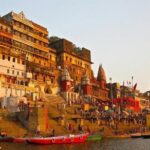
The tour starts around 9:00 AM. Then you spend time at Assi Ghat in the morning with a sunrise-focused stop lasting about 30 minutes.
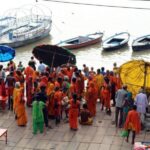
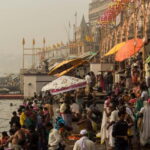
This part is valuable because it sets context. You see how the riverfront functions as a sacred and everyday space, not just a backdrop. You’ll also get the kind of orientation that helps later stops feel connected, especially once you shift from temples to the ghats area.
Practical tip: early hours mean cooler air, but the sun can still build quickly. Bring something for sun protection and be ready for dust as the morning progresses.
Lolark Kund and the Temple Stops: Hinduism Through Places, Not Lectures
After Assi Ghat, you visit Lolark Kund for about 10 minutes, then move to Durga Mandir, Varanasi for another short visit (about 10 minutes).
Then comes one of the most meaningful temple moments: Sankat Mochan Hanuman Mandir with a longer guided visit of about 30 minutes. Even when temple stops are brief, the guide’s approach is the key. You’re there to understand temples, the gods, and the ways people pray and behave in these spaces.
What you’ll likely appreciate here is that the guide doesn’t treat this like a museum tour. The religious meaning comes from watching where people focus attention and how the prayer rhythms work in real time.
Lunch Break at Assi Ghat: Built-In Recovery Time
You return to Assi Ghat for a break of about 1.5 hours. The tour doesn’t include meals, so you’ll either buy food nearby or step away to sort your own timing.
This is a good setup because it’s long enough to reset. After temple time and morning walking, you’ll want a real break before you head deeper into the old lanes and on toward the ghats area.
If you’re sensitive to heat or crowds, this is also where you can regroup mentally. The walking portion after this is longer.
You can also read our reviews of more historical tours in Varanasi



A Short Tuk-Tuk Transfer: Less Strain, Same City Feeling
You’ll take a tuk-tuk segment for about 20 minutes. This is not a full transport day; it’s a strategic break in the middle of the route.
Why I like this: it helps you keep the day enjoyable without turning it into a slow, stop-and-go slog. You still spend most of the time on foot, but you don’t have to burn energy on longer stretches that could be tiring in the heat and dust.
Godowlia Crossing On Foot: The Old Lanes Experience
After the tuk-tuk, you head from Godowlia Crossing and spend about 2.5 hours on foot through the old lanes.
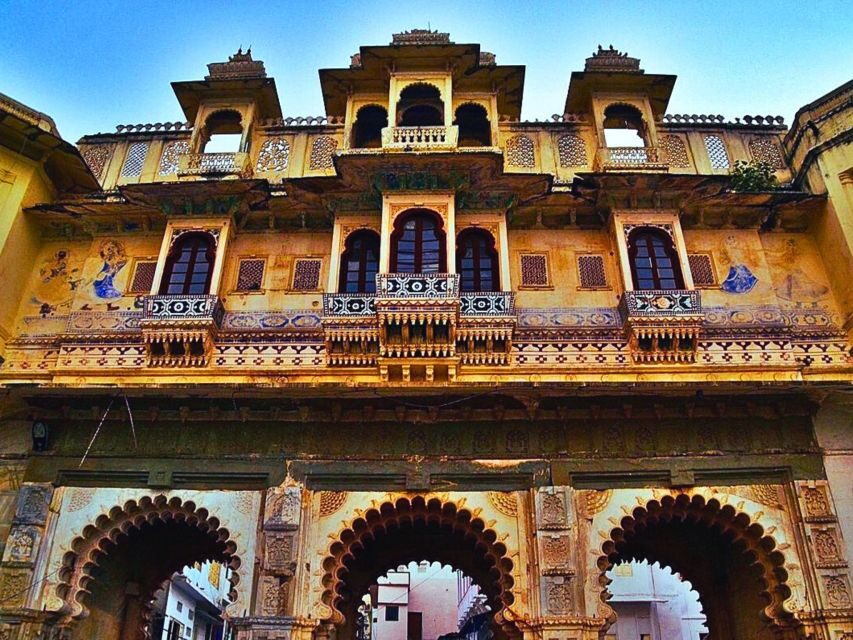
This is the part that tends to make people remember the tour. You pass older houses and streets, plus old markets and shops. You also get explanations about where Varanasi starts from and its long timeline—presented as the story of a living city, not a distant textbook.
The guide’s job here is to help you slow down enough to notice details: how streets are shaped, how neighborhoods connect, and why certain areas matter to locals. In the reviews, Nikhil is specifically praised for guiding people through a maze of backstreets and answering lots of questions. That matters because the old city is not the easiest place to explore alone.
Manikarnika Ghat: Visiting the Cremation Ghats With Context
The highlight for many people is the visit to Manikarnika Ghat (about 30 minutes), with guided context during your time there. You’ll also have a brief additional Godowlia Crossing guided segment (about 5 minutes) near the end, depending on how the route flows.
This part is not just about looking. The tour is designed to explain the cremation process and help you understand what you’re seeing with respect. That context is crucial because cremation ghats are powerful, and not knowing what the rituals mean can turn the experience into pure shock or confusion.
A balanced expectation: you’re not being told to watch everything. You’re learning what the place represents and how the process works in local Hindu practice. If you’re someone who wants meaning first and photos second, this section is likely to feel worth the full day.
The Pace and Structure: Why the Route Feels Manageable
The full tour is built around about 6 hours of walking overall, with breaks that keep it from becoming a constant slog. You also have multiple short guided stops (temples and a couple of quick visits), then longer walking time through the old lanes, then a main ghats moment.
Also, it’s a small group, limited to 10 participants. That group size matters in practice. In a crowd-heavy place like Varanasi, smaller groups help the guide keep things moving without leaving you behind, and it’s easier to ask questions without feeling like you’re shouting.
What’s Included for $8: The Value Is in the Guidance
At about $8 per person, this is priced in the “you should at least try it” category. Entrance charges are included, and you get an English-speaking guide. Meals are not included.
Here’s the value math that matters: a good guide in Varanasi can be the difference between walking through chaos and understanding how the city’s religious life works. Entrance charges would add up quickly for a route that includes multiple sacred sites, and those costs are covered.
Even if you only care about the cremation ghats and one or two temples, the guide is still the product. Nikhil’s local perspective comes through in the way he’s described: humor, strong historical and cultural knowledge, and patience for questions. That combination is exactly what turns an inexpensive tour into a worthwhile one.
Who This Tour Fits Best (And Who Might Want Something Else)
This tour is ideal if you want a guided way to understand Varanasi’s Hindu culture without only hitting the most crowded tourist corridors. The tour is also a good match if you enjoy old-city walking and want explanations for the places you see, especially temples and the cremation ghats.
It might not be your best fit if:
- you hate walking for long periods in dust and heat
- you prefer a slower, sit-down style tour with lots of indoor time
- you want meals included and don’t want to plan lunch
If you are comfortable with outdoor time and you like asking questions, you’ll probably get a lot out of it.
Practical Stuff to Bring (Because the Tour Warns You)
The tour is outdoors and mentions crowd, dust, and sunlight challenges, so come prepared. I’d plan on bringing:
- sun protection (hat or cap, plus sunscreen)
- water for the day
- something to cover up your face lightly if dust gets to you
- ID or passport (the tour asks you to bring one)
Wear shoes you trust. You’ll be on foot for long stretches in older lanes, where sidewalks can be uneven and surfaces can shift.
Ending the Day: Drop-Off Options Back Where You Started
Drop-offs are available at Assi Ghat, the Assi Ghat hotel palace on Ganges, or Godowlia Chauraha, depending on your booked start option and how the route finishes.
This is helpful because you don’t have to fight transport immediately after the most intense part of the day. You can simply head back and pace your evening.
Should You Book This Varanasi Heritage Walking Tour?
I’d book it if your goal is understanding Varanasi’s religious life with real context. The mix of temple visits, old-city lanes, and a guided look at Manikarnika Ghat is what makes it more than a basic walking tour. With a small group and an English guide, you also get the freedom to ask questions, and that’s where the day turns from watching into learning.
I’d think twice if you’re not comfortable with heat, dust, and a long outdoor pace. But if you’re ready for a full day and you want the city explained while you walk through it, this one looks like strong value.
FAQ
How long is the Varanasi heritage walking tour?
It’s listed as a 6-hour walking tour, with the overall duration shown as 1.5 to 6 hours depending on the starting time availability.
Where does the tour start?
You can start from one of three meeting options: Godowalia Chauraha, Assi Ghat, or Assi Ghat hotel palace on Ganges. The exact meeting point can vary depending on the option booked.
What time does the tour begin?
The tour starts at 9 AM in the morning.
Is the tour guided in English?
Yes. It includes an English-speaking live guide.
How big is the group?
It’s a small group limited to 10 participants.
What’s included in the price?
Entrance charges and an English-speaking guide are included.
Are meals included?
No. Any meals are not included.
What should I bring?
Bring a passport or ID card.
Is there cancellation, and can I pay later?
You can cancel up to 24 hours in advance for a full refund. You can also reserve now & pay later.