REVIEW · VARANASI
Walking Tour in the old part of the city of Varanasi
Book on GetYourGuide →Operated by Sachan Tours · Bookable on GetYourGuide
Varanasi feels close-up on foot. This 3-hour walk threads together Girjaghar church history, Nagara-style temple details, old havelis, and the river ghats, ending at Manikarnika-ghat for a respectful view of cremation rituals. I love the way the route mixes holy places with real street life, especially the flower market that sells locally grown blooms. I also love the guide’s sensitive pacing near the cremation grounds. The only real consideration: this is a front-row look at death rites, so you’ll want emotional steadiness and modest clothing.
For $28, you’re paying mainly for access and context: an English live guide, a separate entrance to skip waiting, and a route through tight lanes where you’d otherwise miss the story. The walk is best with comfortable shoes, and the streets can feel intense if you rush.
In This Review
- Key Things That Make This Walk Worth It
- Starting at Girjaghar: the church that sets the tone
- Kashiraj Kali Mandir: Nagara style you can actually see
- Flower market + chai: the everyday Varanasi you’ll remember
- Havelis and old lanes: where the city shows its craft
- A giant mosque by the river: built after a Vishnu temple
- Bhonsale Palace: an old grandeur moment on the route
- Manikarnika-ghat: watching cremation rituals with respect
- Timing, walking comfort, and what to wear
- Price and value: what $28 buys you in the real world
- Who should book, and who might want a different option
- Should you book this Varanasi old-town walking tour?
- FAQ
- Where is the meeting point?
- How long is the walk?
- Is the tour in English?
- What is included in the price?
- Are meals or drinks included?
- Do I need hotel pickup or drop-off?
- Do I need to bring anything?
- What should I wear?
- Are there restrictions on what I can bring?
- Is there a limit for age?
- Is there free cancellation?
Key Things That Make This Walk Worth It
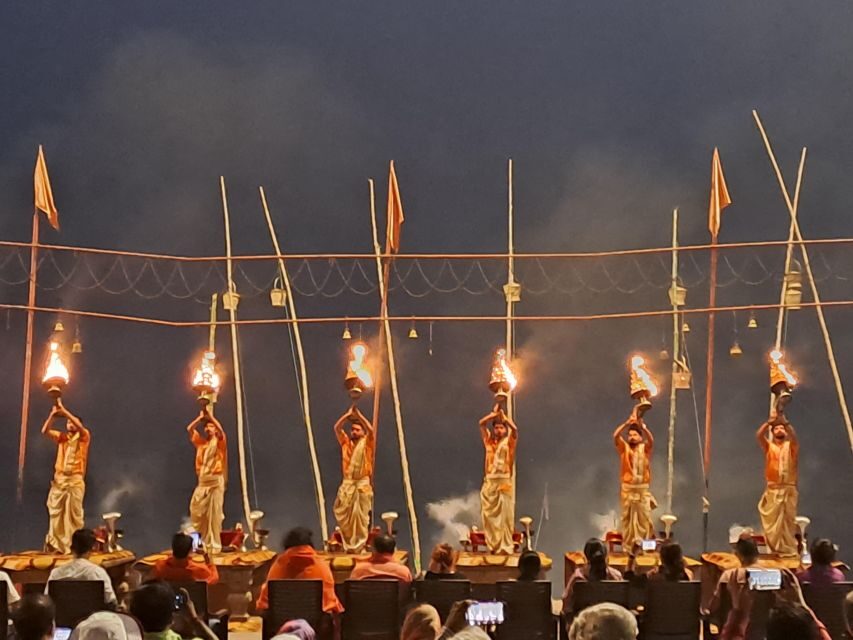
- Girjaghar (St. Thomas Church) sets the scene right in the city center, in a white building called the one-and-only church there.
- Nagara-style Kashiraj Kali Mandir gives you real architecture to look at, not just a quick glance.
- Locally grown flower market means you see what people buy for worship, not imported souvenirs.
- Old havelis and narrow bazaar lanes make Varanasi feel like you’re reading a living city map.
- A giant mosque linked to an older Vishnu temple adds a layered history lesson as you move toward the river.
- Manikarnika-ghat viewing is done respectfully, with the guide helping you understand what you’re seeing.
Starting at Girjaghar: the church that sets the tone
Your walking tour begins at a white church in the city center, known locally as Girjaghar. It’s also described as the only church in the center, which makes it a smart anchor point: you start in a place that’s easier to find than the maze of lanes around it.
From the start, the tour’s tone is clear. You’re not just sightseeing. You’re learning how different religious traditions exist side by side here, and how older layers of meaning show up in everyday spaces. The guide’s English helps a lot, especially if you want to ask follow-ups instead of nodding along.
Practical detail that matters: the guide meets you in semi-formal dress, so you won’t be guessing who to follow. And because the tour includes a separate entrance at key stops, you’re less likely to burn time standing around.
You can also read our reviews of more walking tours in Varanasi


Kashiraj Kali Mandir: Nagara style you can actually see
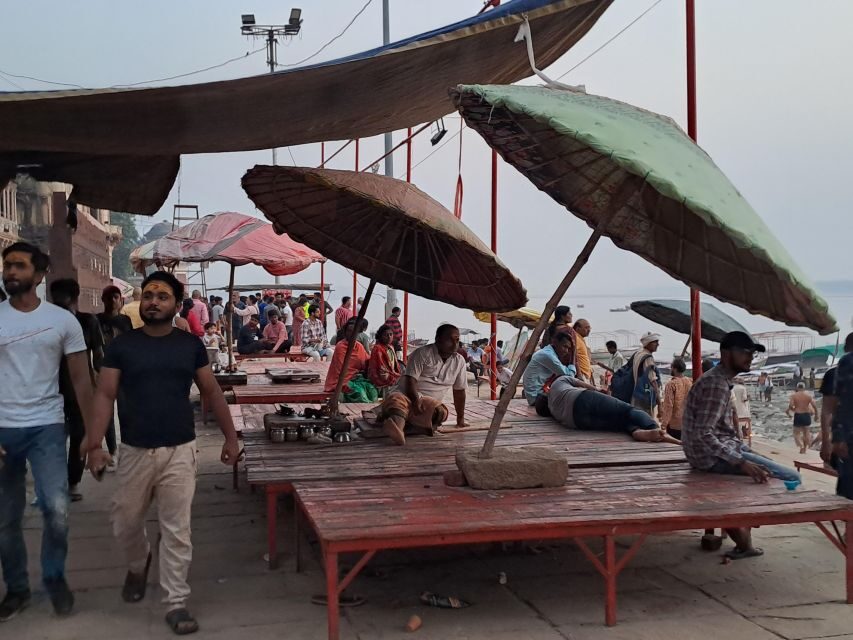
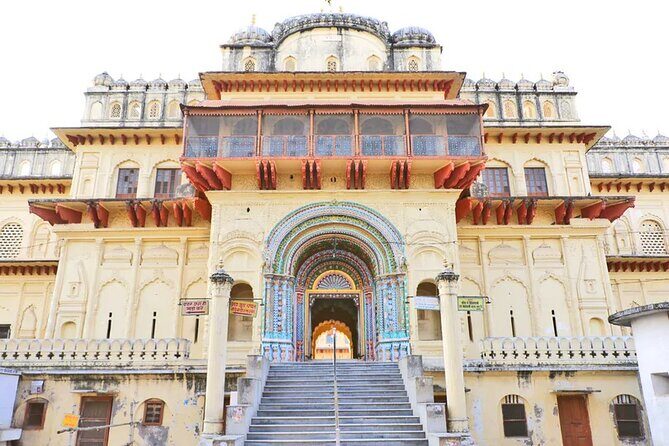
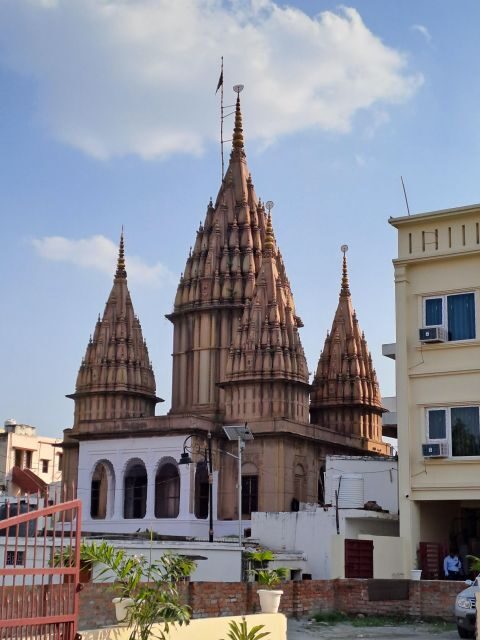
Next comes Kashiraj Kali Mandir, noted as a beautiful example of Nagara style of temple architecture. If you’ve ever seen temple roofs from far away and wondered what to look for, this kind of stop is useful. You can focus on the shapes and design choices rather than only on the crowds.
Nagaria-style details tend to be about how the temple looks vertically, how the elements stack, and how the structure guides your eyes upward. The tour approach makes that feel tangible because you’re walking slowly and asking questions instead of rushing past.
Also, this is where the guide’s human touch really comes through. The whole tour is described as talk-and-walk. You’ll sip local chai along the way, but you’ll also get explanations about customs, traditions, and art and architecture as you go. That matters because in Varanasi, temples aren’t isolated landmarks. They connect to daily rhythms.
A quick note: you’ll want modest clothing for the whole outing. It’s not about rules for rules’ sake. It helps you feel comfortable inside sacred spaces.
Flower market + chai: the everyday Varanasi you’ll remember
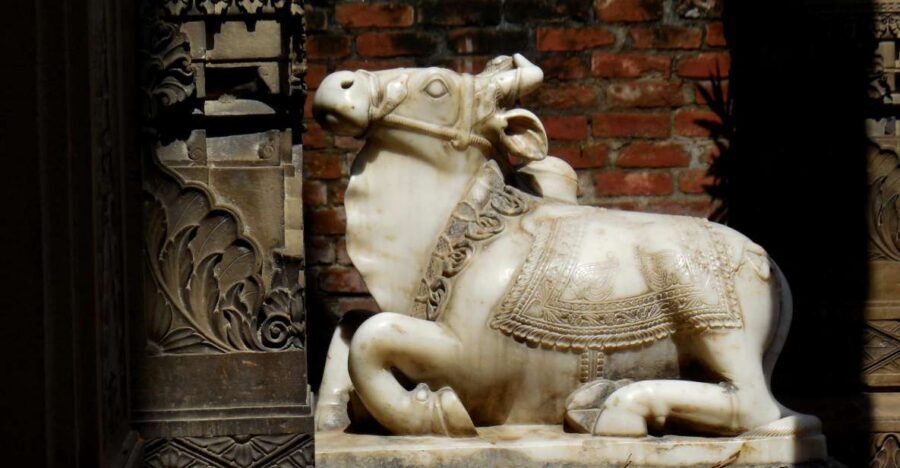
Then you shift to a local flower market where the focus is on locally produced flowers only. That detail is more meaningful than it sounds. It tells you the supply chain is local, the colors are chosen by local practice, and the buying rhythms are tied to worship rather than tourism.
You’ll see what people use when they’re preparing offerings. Even if you don’t plan to buy anything, it’s a strong sensory break from stone-and-stairs sightseeing.
Right after that, the route threads into narrow lanes and traditional shops and bazaar sections. This is where the tour earns its walking-tour badge. Varanasi’s old streets are tangled by design, and you experience that complexity at human pace. It’s not a drive-by photo. It’s you squeezing through history with your feet.
Along the way, you sip masala chai and chat about local traditions. This is a good moment to ask your biggest questions: how people understand religious practice here, what certain architectural terms mean, and why the city’s layout feels the way it does.
Havelis and old lanes: where the city shows its craft
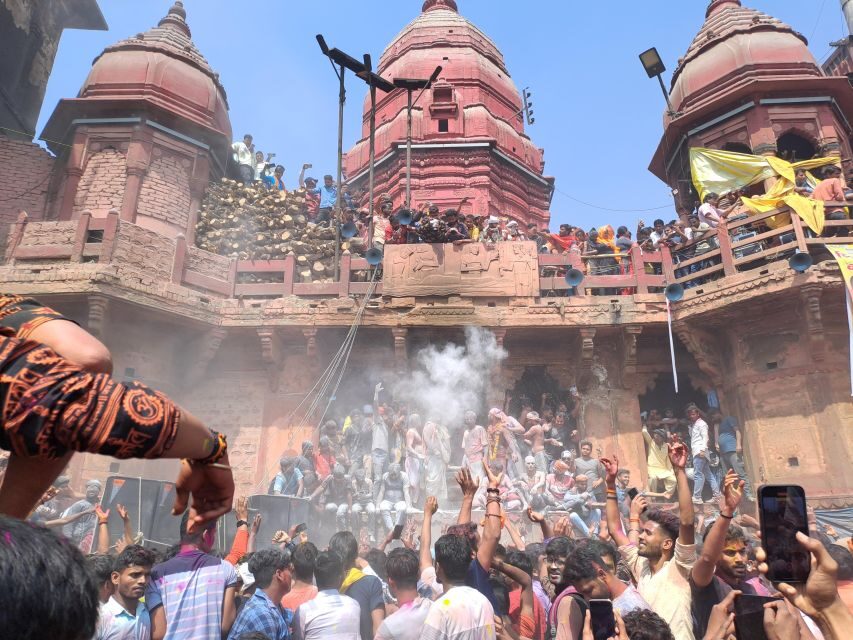
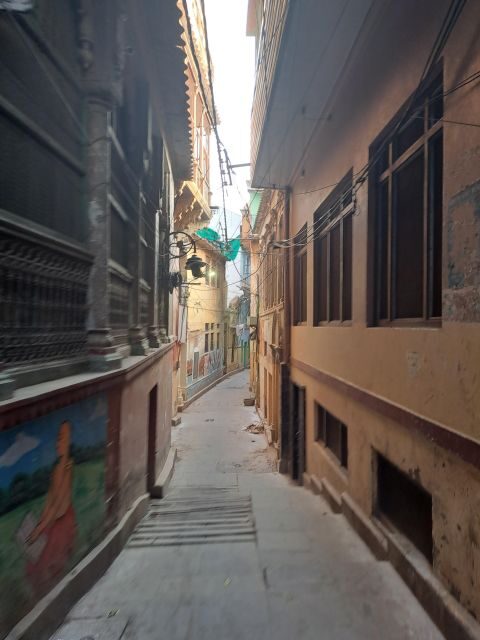
One of the standout parts of the walk is passing narrow lanes lined with older-style shops and some famous havelis—mansion-like residences—with beauty that still holds up today. Even if you don’t know a lot about architecture, you’ll be able to notice craftsmanship: doors, facades, and the way buildings face the street.
Havelis are also a clue. In cities like Varanasi, these weren’t just fancy houses. They were part of social and economic life. Seeing them on foot helps you understand their role because you can observe how people move past them, how close the lanes feel, and how the city grew around these grand structures.
This is also the area where you’ll feel the practical side of a guided walk. The guide helps you notice what you’d otherwise miss, and you’re more likely to get permission or understanding for smaller interiors and side spaces, where access isn’t guaranteed for everyone.
If you’re the type who likes to linger, this is your section. Slow down when the guide pauses. Take in the patterns. Let the city explain itself.
A giant mosque by the river: built after a Vishnu temple
As you head toward the river, you see a giant mosque described as built after the demolition of an ancient Vishnu temple. That’s a heavy historical note, but the tour treats it like a lesson, not a debate.
This stop adds a layer that’s easy to miss when you only think of places as single-purpose monuments. Here, you get the sense that religious and political shifts can reshape the physical city over time. Seeing that mosque in context, after spending time among temples and local shops, helps the story land.
What I like about this portion is the pacing. You’re not shoved into one “big sight” and then sent along. You’re walking in sequence, and the guide’s explanations help you connect the dots across places.
Keep your camera ready but don’t swing wildly. Sacred sites mean people are watching. Also, keep an eye on your footing in the lanes. The city is old, and the surfaces are not always modern.
You can also read our reviews of more city tours in Varanasi




Bhonsale Palace: an old grandeur moment on the route
After that historical pause by the river approach, the walk visits a beautiful old palace called Bhonsale palace. A palace stop can feel like an extra if you’re only focused on religion, but here it fits. Palaces represent power, patronage, and the social structures that shaped the city long before today’s crowds.
Because you’re arriving from the old lanes, the palace also feels more believable. It doesn’t feel like an isolated postcard. It feels like part of the same urban fabric.
This is a good place to reset your brain. You’ve been through narrow streets, active markets, and religious spaces. A palace gives you breathing room and a chance to appreciate scale and design without the same intensity.
Manikarnika-ghat: watching cremation rituals with respect
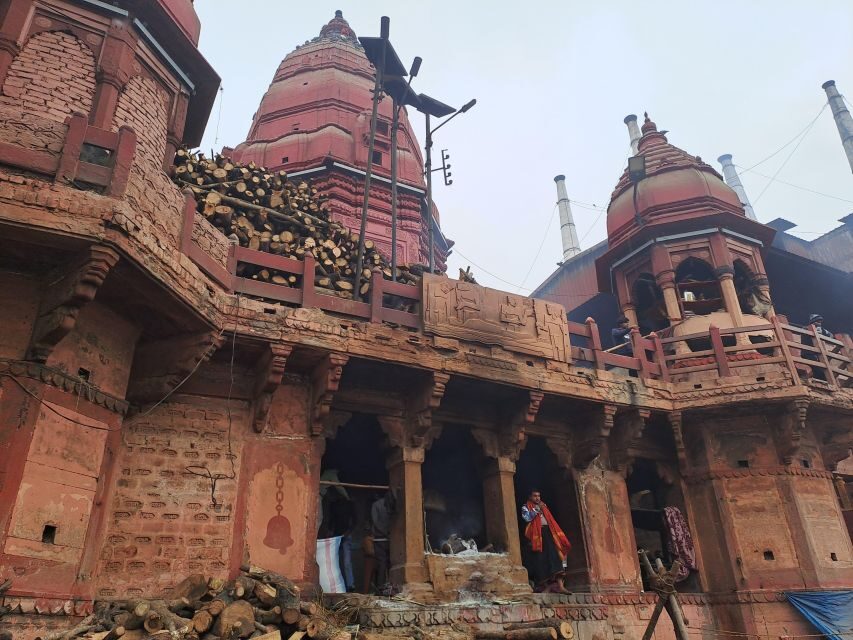
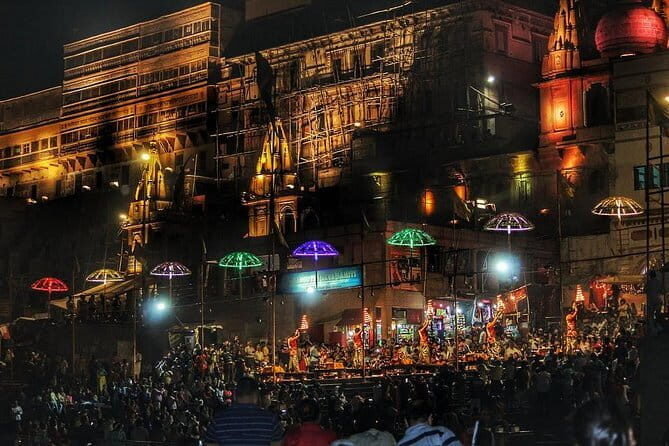
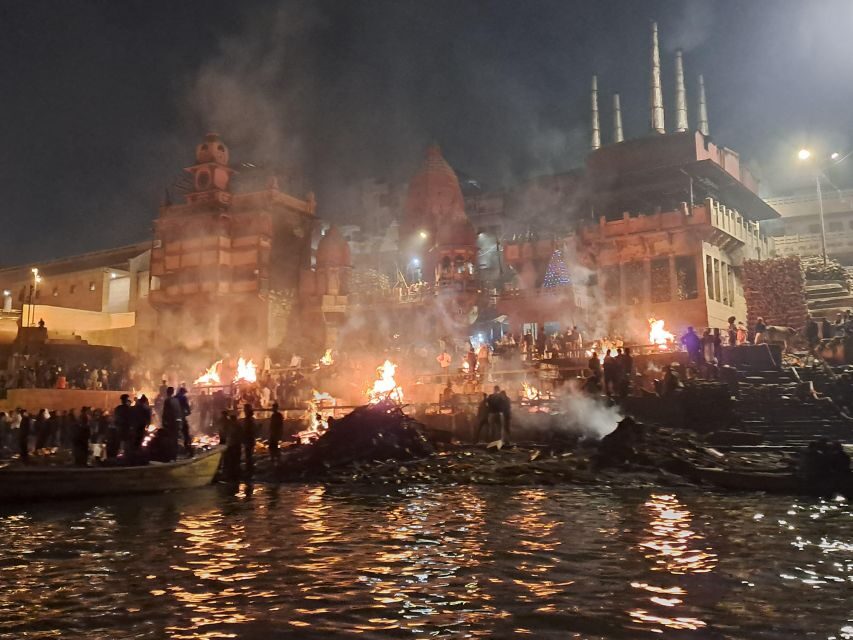
Finally, you reach Manikarnika-ghat, described as the most venerated crematorium. This is the emotional center of the tour.
You’ll watch the ritual of cremation of the dead bodies brought by Hindu families. The key word here is respectfully. The tour approach is guided and framed so you understand what you’re seeing and how to behave. It’s not entertainment. It’s a life-and-death practice with rules of decorum.
If you’re worried about how this will feel, you’re not alone. This part can be intense. I’d advise you to go in mentally prepared: keep your reactions inside, avoid sudden moves, and listen when the guide explains.
Why this stop matters for value: you don’t just learn Varanasi is religious. You witness how religious belief is lived at the end of life. That’s the kind of insight that stays with you after you leave.
If you choose to continue after the tour, you can enjoy a delicious refreshing lassi made with yoghurt. It’s a gentle way to cool down after an emotionally heavy hour.
Timing, walking comfort, and what to wear
This experience is designed as about a 3-hour walk, which is the sweet spot between “too short to matter” and “too long to stay alert.” The route includes tight lanes, temple steps, and ghats, so shoes matter more than you think.
Bring comfortable shoes with a solid sole. You’ll be moving enough that flip-flops are a bad idea, and shoes with good grip help when surfaces change.
For clothing, the rule is modest. That’s common for religious spaces, but in Varanasi it also helps you feel less like you’re showing up as a tourist. You blend better, and it makes the cremation viewing feel more respectful.
One more consideration: it’s not suitable for people over 95 years. That’s about safety and the pace on older surfaces.
Price and value: what $28 buys you in the real world
$28 per person might sound modest for an experience that covers multiple major stops. The value is mostly in what you don’t have to figure out alone.
You’re paying for:
- an English live guide who explains what you’re seeing as you walk
- access via a separate entrance to reduce waiting
- a route that strings together temples, bazaars, palaces, and the river ghats logically
Also, note the food detail carefully. The listed inclusion says no food or drinks. That means you should plan to pay for anything you eat or sip. Still, the tour itself includes chai in the flow, so you might find small tastings or ordering opportunities along the way. My practical advice: budget a little extra so you’re not stressed about whether you can purchase snacks.
Where it’s really worth it: the areas you’ll walk through are easy to get wrong. You might find temples, but you’ll miss meanings. You’ll see ghats, but you might not understand the ritual context or where to stand. This tour helps you do both.
Who should book, and who might want a different option
This walking tour fits best if you:
- want the old-city feel with a guide leading the story
- care about architecture details, not just photos
- can handle emotionally intense cultural viewing in a respectful way
- prefer chatty, explanation-led sightseeing (chai conversation style)
You might want to skip it or choose another format if:
- you’re uncomfortable with cremation rituals as a viewing experience
- you need minimal walking or fully predictable surfaces
- you prefer a purely light sightseeing day with no heavy context
It’s also a great fit for first-timers who find Varanasi overwhelming. A good guide helps you get bearings fast and gives you a safe structure for a city that doesn’t do shortcuts.
Should you book this Varanasi old-town walking tour?
If you want Varanasi that feels real—temple details, tangled lanes, local flower market rhythms, and a respectful look at Manikarnika-ghat—this is a strong choice. The $28 price makes sense because the guide’s value is access plus interpretation, and the route is paced for understanding, not rushing.
Book it if you’re ready to walk, dress modestly, and stay calm during the cremation section. Don’t book it if death rites viewing would feel too difficult for you. If you’re in the right mindset, you’ll come away with a much deeper sense of how this city functions spiritually and socially, one lane at a time.
FAQ
Where is the meeting point?
The meeting point is a white church in the city center called Girjaghar, and the guide will be there in semi-formal dress.
How long is the walk?
It lasts about 3 hours.
Is the tour in English?
Yes, the live tour guide speaks English.
What is included in the price?
The tour includes the guided experience and a skip-the-line entrance via a separate entrance.
Are meals or drinks included?
No. The activity listing says no food or drinks are included.
Do I need hotel pickup or drop-off?
No hotel pickup or drop-off is included.
Do I need to bring anything?
Bring comfortable shoes, since you’ll be walking through narrow lanes and along the river ghats.
What should I wear?
Wear modest clothing.
Are there restrictions on what I can bring?
Alcohol and drugs are not allowed.
Is there a limit for age?
Yes. It is not suitable for people over 95 years.
Is there free cancellation?
Yes, you can cancel up to 24 hours in advance for a full refund.