REVIEW · VARANASI
Whispers of Varanasi A Guided Walk into the Divine and Boat Ride
Book on Viator →Operated by Omvity · Bookable on Viator
Varanasi starts before sunrise. You’ll begin at Assi Ghat for the Subah-e-Banaras ceremony, with Vedic chants, live classical music, and open-air yoga along the Ganges. Then it’s a slow, guided wander through South Varanasi’s lanes—where shrines, wrestling traditions, and temple stops connect into one clear story of daily faith. I love the Subah-e-Banaras start because it feels like Varanasi is waking up in rhythm, not on a schedule. I also love how the walk and boat ride let you see the city from two angles: on foot through the lanes, and on the water where rituals and routines line up perfectly.
The main drawback is timing: the tour starts at 5:00 am, so you’ll want to be ready for early wake-up and whatever the morning weather brings. Also, the boat boarding point can shift based on water levels, so expect a little flexibility in where you hop on and off.
In This Review
- Key things I’d look forward to
- Subah-e-Banaras at Assi Ghat: chants, music, and morning yoga
- South Varanasi on foot: Tulsi Ghat and the wrestling akhara world
- The Ganges boat ride: daily life, rituals, and a view of Manikarnika
- Nepali Temple (Kathwala) and Vishalakshi Temple: two kinds of sacred storytelling
- Dashashwamedh Ghat finale: turning one guided morning into your own wandering
- Price and value: what $34.49 gets you (and why it feels fair)
- What to expect from your guide and how the tour works in real life
- Who this tour suits best
- Should you book this Whispers of Varanasi walk and boat ride?
- FAQ
- What time does the tour start?
- How long is the experience?
- Where does the tour start and end?
- Is the Ganges boat ride included?
- What is included in the tour price?
- Are meals included?
- Is this a private tour?
- Do I get a mobile ticket?
- Are there any ticket requirements for stops like the ceremony and Dashashwamedh Ghat?
- What is the cancellation policy?
- Is the tour suitable for most people?
Key things I’d look forward to
- Subah-e-Banaras at Assi Ghat: Vedic chanting, classical music, and open-air yoga in one morning scene
- South Varanasi lanes with real purpose: Lolark Kund area, Tulsi Ghat traditions, and key ghat-side stops
- Tulsi Ghat wrestling akharas: pehelwa training ground energy mixed into temple-land
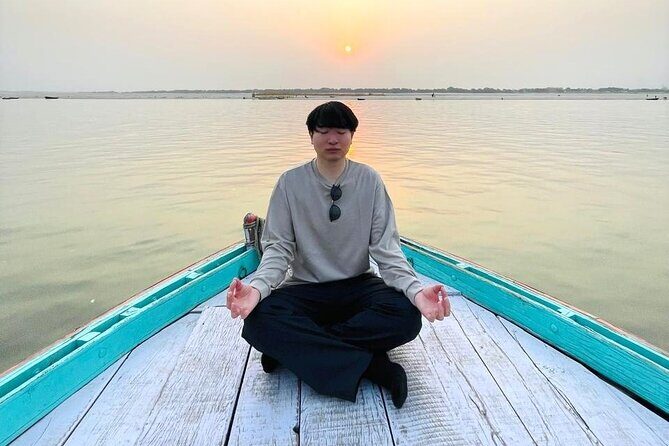
- A guided wooden boat ride on the Ganges: you’ll watch daily life and sacred moments from the river
- Temple mix that teaches: Nepali (Kathwala) Temple and Vishalakshi Temple with clear guide explanations
Subah-e-Banaras at Assi Ghat: chants, music, and morning yoga
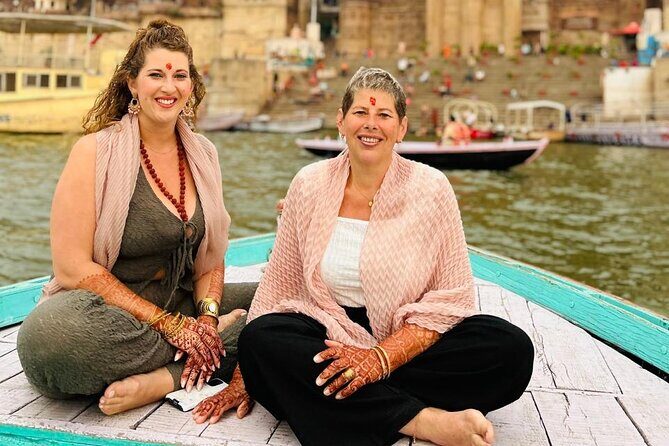
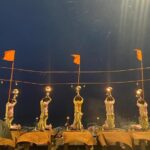
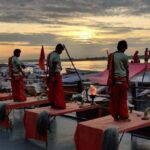
This tour begins at Assi Ghat (near Shivala) at 5:00 am, while the riverfront still feels calm and focused. The centerpiece is the Subah-e-Banaras ceremony. You’re not just watching from the edge. You’re guided through what’s happening—Vedic chants, live classical music, and open-air yoga—so your brain can follow the meaning instead of getting lost in the noise and motion.
Here’s what I like about this start for most first-timers: it gives you a framework. Varanasi can feel overwhelming fast if you jump straight into temples without context. Beginning with Subah-e-Banaras helps you understand that the day isn’t random. It’s structured by devotion, sound, and daily practice along the water.
Practical tip: bring something for early-morning comfort. Even if the city warms up later, the first hour near the river can feel chilly, and you’ll be outside before you get moving. Your coffee or tea inclusion later helps too, but the morning itself is the show.
You can also read our reviews of more walking tours in Varanasi


South Varanasi on foot: Tulsi Ghat and the wrestling akhara world
After Assi Ghat, the walk turns into a real “read the street” experience. You’ll head through the historic lanes of South Varanasi toward Tulsi Ghat, home to spiritual traditions and the well-known wrestling training grounds (akharas).
This is where the tour gets more interesting than a basic temple circuit. At Tulsi Ghat, you’re not only learning about religion. You’re also seeing how disciplined training and faith sit side by side in everyday Varanasi life. The tour includes time to watch pehelwa-style wrestling tradition at the akhara, which changes your view of what a “spiritual city” looks like in practice. It’s not only incense and bells. It’s also routines, strength, and training.
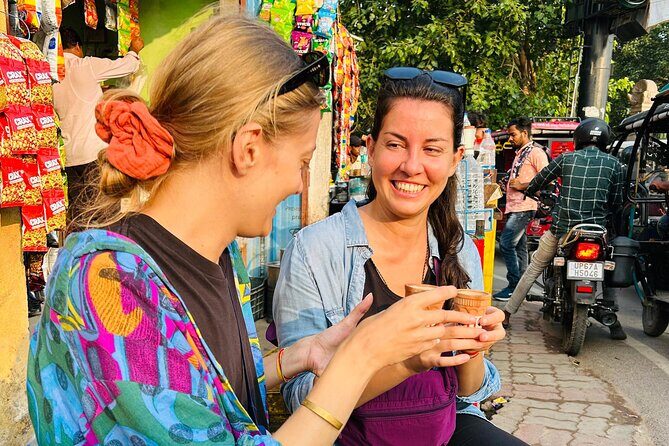
You also get a break for chai and local snacks, which matters more than it sounds. Early mornings are great until you realize hunger hits while your feet are doing the heavy work. This pause keeps the energy steady before you move to the river.
Possible drawback to consider: walking in old lanes means you’ll be on uneven ground and close to crowds at times. The tour is private for your group, but the area around ghats and temples can still be busy. Comfortable shoes help more than fancy plans.
The Ganges boat ride: daily life, rituals, and a view of Manikarnika
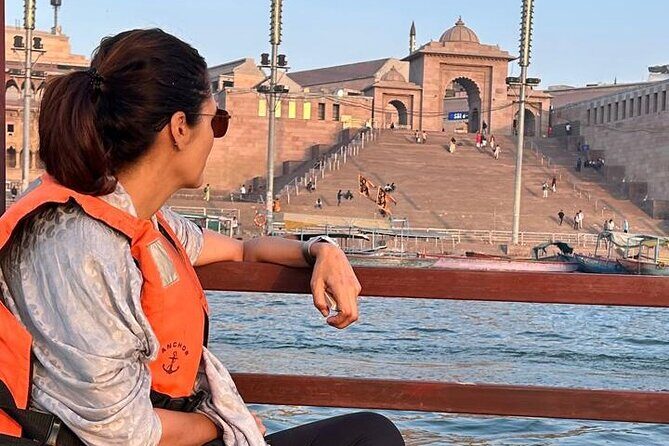
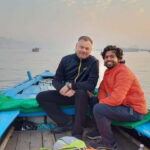
Next comes the river. You’ll board a traditional wooden boat for about 1 hour of guided riding, with the boarding point set as either Tulsi Ghat or Assi Ghat depending on water levels. That’s a small detail, but it’s important: it means you should expect the flow of the timing to adjust slightly so you get the best access on the day.
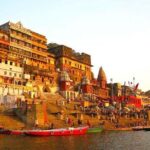
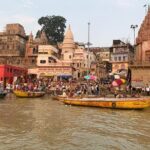
From the boat, Varanasi reveals a different logic. On land, you see temples and steps. From the river, you see relationships—between worship, work, and the constant river movement. The tour’s focus is on what you notice: yoga practice, daily life along the ghats, and sacred rituals unfolding in view.
One stop gives the emotional weight. From the boat, you’ll observe Manikarnika Ghat, Varanasi’s main cremation ground. The eternal flame burns 24/7, and this is the kind of moment that can feel heavy even when you’re prepared for the reality of the place. Having a guide helps a lot here, because it’s easy to look and then miss what you’re actually seeing.
Nepali Temple (Kathwala) and Vishalakshi Temple: two kinds of sacred storytelling
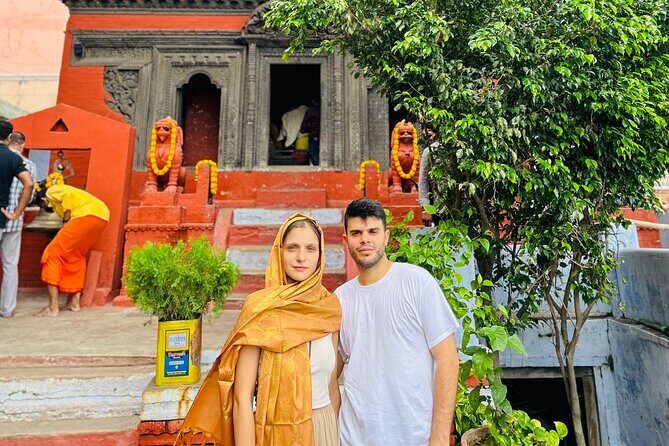
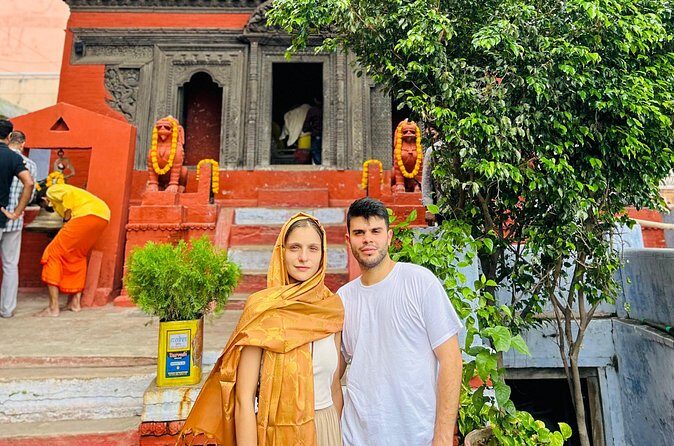
After the boat ride, you disembark near Lalita Ghat and visit the Nepali Temple (Kathwala Temple). This is a wooden pagoda-style Shiva temple built in traditional Kathmandu architecture. The tour also highlights its erotic carvings, but what stays with me is the contrast: ornate symbolism with a peaceful feel in how the space holds attention.
From there, the tour goes to Vishalakshi Temple, one of the Shakti Peetha sites. The story tied to it is that this is where Goddess Sati’s earrings fell. The temple is also described as part of a spiritual triad with other temple locations in Madurai and Kanchipuram. So even though you’re standing in Varanasi, you’re also learning how this sacred geography connects across regions.
This is the kind of temple stop I’d recommend even if you’re not deeply religious. The real value is in the explanations—how your guide turns stone, layout, and local tradition into something you can understand on the spot.
Small consideration: temple visits are usually brief here (around 15 minutes each). That’s ideal if you want to cover highlights without losing the morning. If you’re someone who likes to sit and soak for long stretches, you might want extra free time after the tour.
Dashashwamedh Ghat finale: turning one guided morning into your own wandering
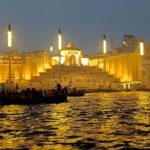
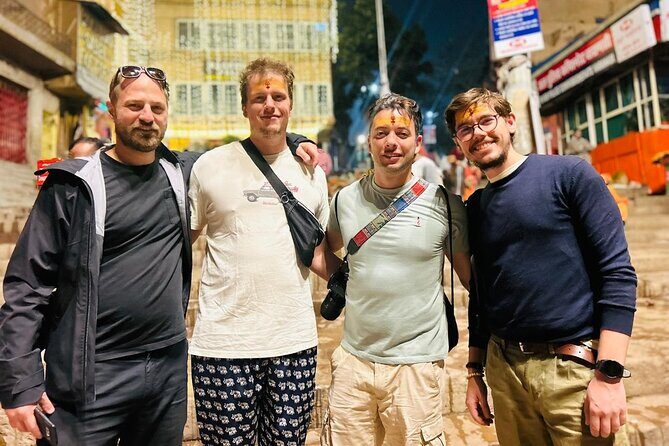
The walk and boat ride end at Dasashwamedh Ghat. This is one of Varanasi’s most iconic riverfronts, named after a legendary horse sacrifice performed by Lord Brahma. The tour doesn’t try to pin you down at the finish line. Instead, you get dropped where you can continue at your pace.
This ending works well because you’ve already learned the “rules of looking.” By the time you reach Dashashwamedh Ghat, you can recognize what’s happening around you: why ghats matter, how rituals shape the day, and how temples connect to river life.
If you still have energy, you can keep exploring the area on your own. If you’re running on low sleep (and odds are you are after a 5am start), you’ll feel better knowing your guided part is done and you’re not stuck trying to figure out the city from scratch.
You can also read our reviews of more boat tours in Varanasi



Price and value: what $34.49 gets you (and why it feels fair)

At $34.49 per person, this is priced like a focused morning experience, not a half-day production. The biggest value is that you’re paying for structure: ceremony context at Assi Ghat, interpretive storytelling on the lanes, and a guided boat ride that’s hard to do well on your own as a first-timer.
Included in the experience are coffee and/or tea plus bottled water, which is genuinely useful on a hot morning or a cool start by the river. Admission details are handled in the experience flow too: the ceremony is listed as ticket-free, the boat has admission included, and temple admission is included for key stops like Manikarnika viewing, the Nepali Temple, and Vishalakshi Temple.
Meals aren’t included, so plan to snack before and/or after. The tour does include chai and local snacks during the morning, which helps cover the biggest gap, but you shouldn’t count on a full meal being part of the experience.
Also, the tour is private for your group. That’s a big deal in Varanasi, where group dynamics can swing your experience. With a smaller setting, your guide can answer your questions and pace the walking so you’re not sprinting to keep up.
What to expect from your guide and how the tour works in real life
The experience is led by Omvity’s experts. In past comments, the guide Suhail comes up as polite, entertaining, and genuinely helpful with what to look for. One of the best parts of a guided Varanasi morning is that you’re not left guessing what you’re seeing—especially at places like Manikarnika Ghat or the Vishalakshi Temple, where the stories explain why the sites matter.
The pacing is built around short stops and an ongoing explanation. You’re active for most of the morning, but not rushed. The total time is about 3 hours 30 minutes, which is long enough to feel like you “got it,” but short enough to still enjoy your day after.
One more practical note: this starts near public transportation, which can help you reach the meeting point without drama.
Who this tour suits best
This is a great fit if you want a first taste of Varanasi that doesn’t feel random. You’ll likely love it if you:
- Want a 5am start and can handle early mornings without complaining too much to your alarm clock
- Enjoy explanations that connect temples, ghats, and daily routines
- Prefer a guided boat ride instead of trying to figure out river logistics on your own
- Like seeing different sides of Varanasi, including the wrestling akharas at Tulsi Ghat
It may not be ideal if you dislike walking on uneven ground or if you want long temple stays. This tour is designed to hit key sites efficiently, not to linger for hours in one place.
Should you book this Whispers of Varanasi walk and boat ride?
I’d book it if you’re short on time but want a morning that teaches you how Varanasi works—ceremony at Assi Ghat, tradition at Tulsi Ghat, a guided Ganges boat ride, then temple stops like Nepali (Kathwala) and Vishalakshi before finishing at Dasashwamedh Ghat. The price feels fair for what you get: guided interpretation plus boat time, with practical inclusions like tea/coffee and water.
If you’re the kind of person who hates early wake-ups, sleep matters more than spiritual payoff, or you want slow solo exploring rather than a structured route, you might feel better skipping this specific tour and building a later-day plan. But if you can handle 5am, this one is a strong way to start your Varanasi story.
FAQ
What time does the tour start?
The tour starts at 5:00 am.
How long is the experience?
It lasts about 3 hours 30 minutes.
Where does the tour start and end?
It starts at Assi ghat, Shivala, Varanasi, Uttar Pradesh 221005, India, and ends at Dashashwamedh Ghat Rd, Ghats of Varanasi, Godowlia, Varanasi, Uttar Pradesh 221001, India.
Is the Ganges boat ride included?
Yes. There’s a guided boat ride on the Ganges, lasting about 1 hour, and it includes admission for that segment.
What is included in the tour price?
Coffee and/or tea and bottled water are included, and admissions are included for the boat ride and several temple/ghat stops as specified in the experience flow.
Are meals included?
No. Meals are not included.
Is this a private tour?
Yes. It’s a private tour/activity, so only your group participates.
Do I get a mobile ticket?
Yes. The experience provides a mobile ticket.
Are there any ticket requirements for stops like the ceremony and Dashashwamedh Ghat?
The Subah-e-Banaras ceremony and the Dashashwamedh Ghat stop are listed as free (admission ticket free), while other segments (like the boat ride and certain temple stops) are listed as included.
What is the cancellation policy?
Free cancellation is available up to 24 hours in advance for a full refund. If you cancel less than 24 hours before the start time, the amount paid is not refundable.
Is the tour suitable for most people?
Most travelers can participate.