REVIEW · JAIPUR
Jaipur: Full-Day City Tour with Camel Ride and Monkey Temple
Book on GetYourGuide →Operated by INDIATOR · Bookable on GetYourGuide
Jaipur can feel like a magic trick. One morning and a single full-day plan can stack up Amber Fort, Jal Mahal (Water Palace), Hawa Mahal, Jantar Mantar, and the Monkey Temple in a way that’s hard to DIY. It’s a tight loop through royal power, street-level city scenes, and the kind of architecture that makes you stop and stare.
I especially like how this tour gives you two big “wow” moments: the 953 windows of Hawa Mahal and the science-with-stones vibe of Jantar Mantar, built to study planets and time. Add a camel ride at the Water Palace and the day stops being only about monuments.
One thing to keep in mind: the stop order can change based on your hotel location, and on some days you may find the exact timing or final temple stop isn’t handled exactly the way you expect—so confirm the plan for Galtaji Monkey Temple.
In This Review
- Key things to know before you go
- Morning Pickup at 8 AM: the day starts where you sleep
- Amber Fort’s gates and courtyards: where Man Singh’s power shows
- Jal Mahal (Water Palace) and the camel ride: royals on Man Sagar Lake
- Water Palace exhibits: weapons, costumes, Mughal miniatures, and more
- Hawa Mahal (Air Palace): 953 windows and crisscross latticework
- Jantar Mantar: when Maharaja Jai Singh II tried to map the sky
- Galtaji Monkey Temple: holy pools, and why you should watch your behavior
- Lunch and local shop time: where the day becomes personal
- Price and value: what $113 buys in 9 hours
- Who this tour fits best (and who should think twice)
- Should you book this Jaipur full-day city tour?
- FAQ
- What time does the tour start?
- Where do I meet the guide?
- How long is the Jaipur full-day tour?
- Is there an English-speaking guide?
- Do you include a camel ride?
- Which sights are included?
- Can I cancel for a refund?
Key things to know before you go
- 8 AM hotel pickup makes the day feel efficient instead of lost to logistics
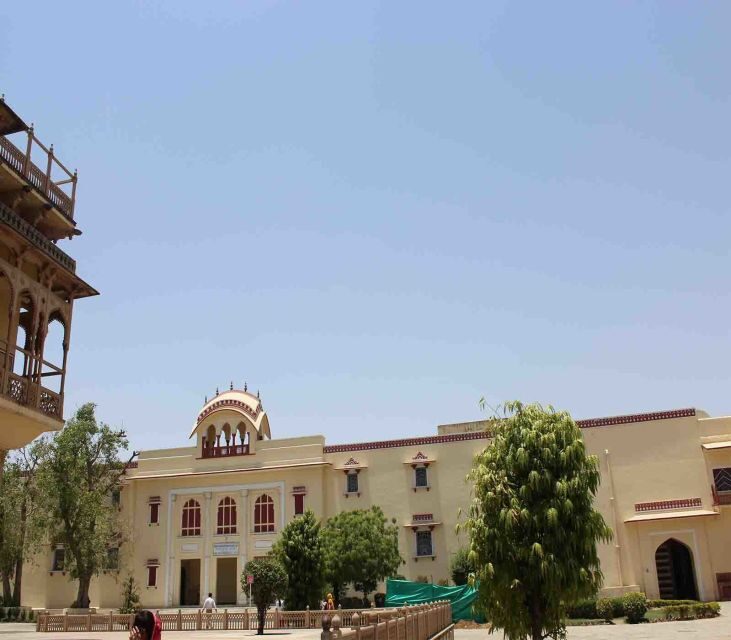
- Amber Fort is more than a viewpoint; it’s a whole sequence of gates, courtyards, and palace space
- Jal Mahal camel ride happens right by Man Sagar Lake at the Water Palace
- Water Palace exhibits include weapons, royal costumes, Mughal miniatures, antiques, and paintings
- Jantar Mantar connects Jaipur to math and astronomy via Maharaja Jai Singh II
Morning Pickup at 8 AM: the day starts where you sleep
This tour is built around an early start: at 8:00 AM, your driver picks you up from your hotel lobby. That matters in Jaipur. Travel time inside the city can be unpredictable, so starting on schedule helps you actually see everything without feeling rushed right out of the gate.
You’ll ride between sights with a driver, while a live English-speaking guide keeps the story straight. That’s a big deal because Jaipur’s landmarks can look similar until someone explains what you’re looking at—like why certain forts were laid out the way they were, or what those large instruments at Jantar Mantar are doing.
Practical tip: wear comfortable shoes and keep water handy. You’ll be outside for long stretches, and even on a “mostly sightseeing” day, your feet will notice.
You can also read our reviews of more city tours in Jaipur
Amber Fort’s gates and courtyards: where Man Singh’s power shows
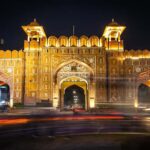
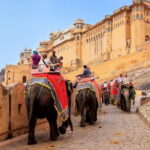
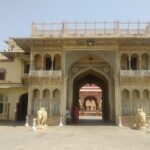
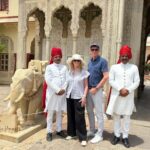
The first major stop is Amber Fort, a massive fortress with layers of history built into its layout. You’re not just walking through one courtyard and calling it done. Expect gate after gate, then courtyards, then palace spaces, each with its own significance.
Amber Fort was built by Man Singh, the Rajput king, and the protective design is the key. You’ll feel the idea of defense and control in how the fort is structured—how movement is guided, how spaces transition, and how the fort asserts authority over the area.
What I like about this stop is that it makes you read the architecture instead of just snapping photos. Look for the shifts in space: where you enter, where you pause, and how the fort changes from exterior to interior. It’s a “walk-and-understand” type of place.
One consideration: it’s enormous. If you’re sensitive to stairs, uneven stone, or long walks, plan for slow pacing and breaks.
Jal Mahal (Water Palace) and the camel ride: royals on Man Sagar Lake
Next comes the Jal Mahal, often called the Water Palace. It sits in the middle of Man Sagar Lake, which is exactly why it looks so unreal from a distance. This isn’t a “quick photo stop.” The setting helps you slow down, because the palace seems to float on the water.
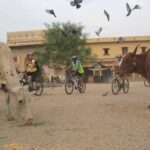
Then you’ll do the camel ride here—at the Water Palace area. A camel ride is one of those activities that can feel cheesy in other places. Here, it works better because you’re riding into a visual context: lake, palace, and the royal-city mood of Jaipur.
I’d treat the camel ride as a short experience, not a long scenic journey. Your time is part of a bigger day, and you’ll want energy for what comes next.
Quick safety and comfort note: follow your guide’s instructions around the animals and take care with your footing. Camel areas can have uneven ground, and you don’t want a slip to ruin the day.
Water Palace exhibits: weapons, costumes, Mughal miniatures, and more
After the camel ride, you’ll head into the Water Palace exhibits. This is where the day gains depth, because you move from “wow architecture” into physical objects tied to power and culture.
You’ll see a huge collection of:
- weapons
- royal costumes
- Mughal miniatures
- antiques and paintings
This mix is valuable because it shows how Jaipur connects to broader North India influences, not just local royal storytelling. The weapons and costumes ground the displays in real life—what people wore, what they carried, what mattered. The miniatures and paintings help you understand taste and storytelling, especially the way detail was a status symbol.
If you’re only a “photos first” person, this stop might feel slow at first. Give it a little time. Even a short look at the weapons and costumes can make the fort and palace spaces feel less abstract.
Hawa Mahal (Air Palace): 953 windows and crisscross latticework
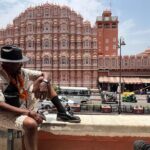
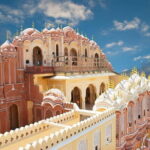
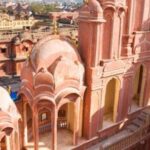
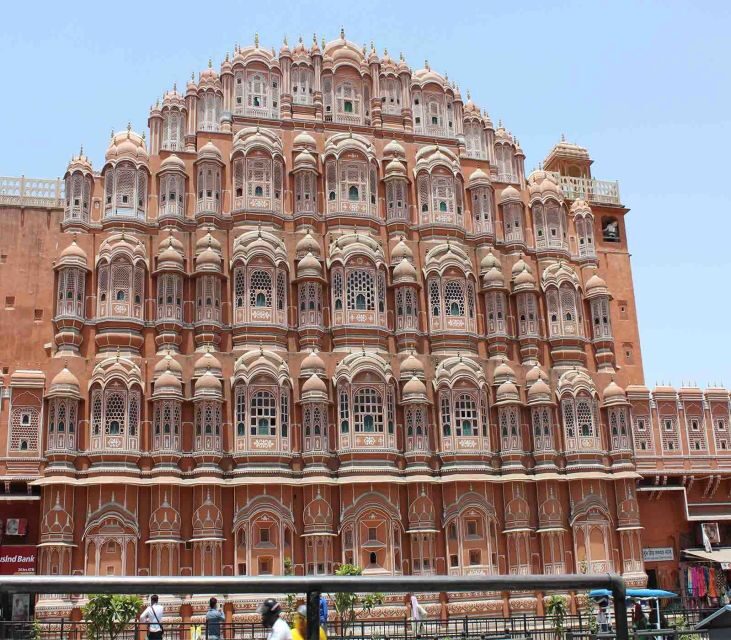
Then it’s Hawa Mahal, also called the Air Palace. This is one of the most recognizable buildings in Jaipur, and it’s iconic for a reason. The star feature is its 953 small windows, decorated with incredible latticework—crisscross patterns of strips that shape how light and air move through the facade.
I love this stop because it’s architecture you can read even if you know nothing about the details. From the street, it looks like a honeycomb of openings. Up close, you start to notice the rhythm of the design and how the windows aren’t just decoration—they’re part of the building’s function.
Hawa Mahal was built by Maharaja Sawai Pratap Singh, the Kachwaha ruler of Jaipur. That name matters because it ties the structure to the people behind the city’s statement-making architecture.
Best approach: don’t rush to the front photo. Walk along the edges when you can, so you catch different angles of the lattice patterns and how they change the look of the building.
You can also read our reviews of more tours and experiences in Jaipur




Jantar Mantar: when Maharaja Jai Singh II tried to map the sky
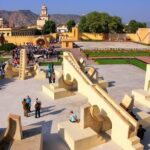
Next is Jantar Mantar, an astronomical observation site built by Maharaja Jai Singh II. This is where Jaipur gets extra interesting because the vibe isn’t “temple only” or “fort only.” It’s about instruments built for studying astronomy—time, planets, and celestial positions.
The big value of Jantar Mantar is that it makes science visible. Those stone forms aren’t just decorative. They were designed to observe and measure. You’ll get a guided explanation that helps you connect what you’re seeing to the sky.
If you enjoy history in a practical way—how people actually solved problems with the tools they had—this will land well. And if you don’t usually get excited about astronomy, this is still worth it because it’s a rare chance to see technical thinking made into public space.
One consideration: it can get sunny. Wear sun protection and plan your breaks. Your guide can help you pace around the instruments.
Galtaji Monkey Temple: holy pools, and why you should watch your behavior
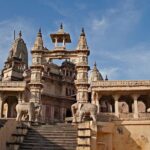
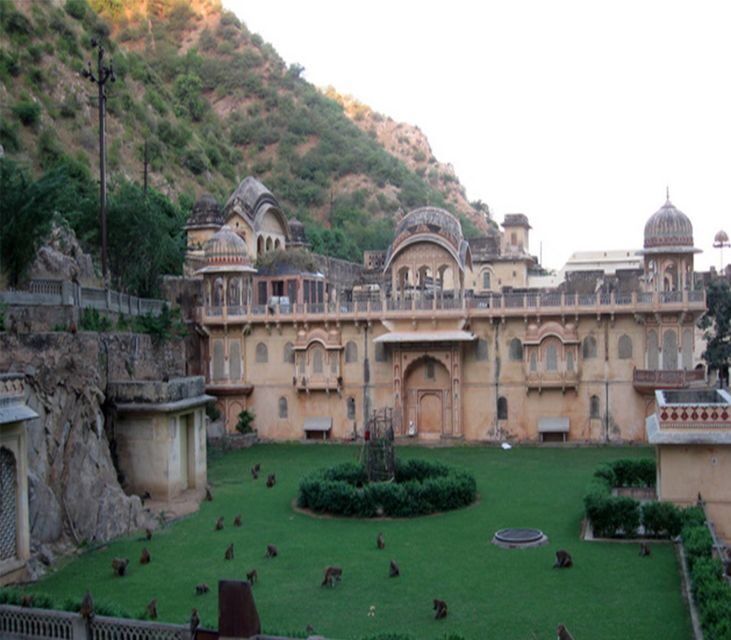
The final major cultural stop is the Monkey Temple, also known as Galtaji Temple. This is a Hindu temple with a large number of monkeys and seven water pools filled with holy water.
The pools are a key part of the temple experience. Followers come to bathe and wash away sins, so the whole space has a spiritual rhythm beyond “watch the monkeys.”
Here’s the practical angle: this is a place where your choices matter. You’re dealing with animals that respond to movement and food cues. Some guides handle this smoothly; others may be less careful. I’d stick close to your guide, avoid offering food, and keep your hands and bag secured.
Also, some entrances and walking routes can involve more uneven stone and slopes than you’d expect. If you have any knee or balance concerns, go slowly and ask your guide to point you to the easiest path.
Lunch and local shop time: where the day becomes personal
You’ll enjoy a delicious lunch at a local restaurant after the Water Palace stage. Lunch is strategically placed after a long morning, so you can reset before Hawa Mahal and Jantar Mantar start stacking.
Then there’s time to browse famous shops before you return to your hotel. Shopping time can be the most unpredictable part of any city tour—so I like that this tour includes it explicitly. You’re not left wondering if you’ll have any chance to pick up textiles, crafts, or small gifts.
Practical tip: set a spending limit before you arrive. Jaipur shopping can be fun, but it’s easy to get carried away when everything is interesting.
Price and value: what $113 buys in 9 hours
At $113 per person for about 9 hours, this tour is priced for people who want a guided, high-efficiency day without hunting down transport between distant sights. You’re paying for a bundled experience: hotel pickup and driving, a live English guide, a set sequence of major monuments, and the camel ride.
Is it “cheap”? No. But value in Jaipur often comes down to how much you avoid decision fatigue. Instead of figuring out schedules, distances, and which order makes sense, you’re given a full plan that covers the highlights most people want: Amber Fort, Hawa Mahal, Jantar Mantar, and Galtaji.
The real value question is how well your guide manages pacing and sequencing. If your guide is flexible and explains clearly, the day feels smooth. If the day starts to feel rushed or stops change without notice, the value drops fast—especially for the Monkey Temple, which is a specific and popular goal.
Who this tour fits best (and who should think twice)
This is a great match if you want:
- a “see the big names” day with guided context
- a mix of fort, palace architecture, science, and temple life
- the included camel ride experience
You might think twice if you’re the type who hates last-minute changes or needs exact timing for one specific stop. The order can shift based on your hotel location, and it’s smart to confirm you’ll reach the Monkey Temple (Galtaji) as planned.
It also suits people who like structure. Jaipur is huge, and a guided route keeps you from spending your day in transit.
Should you book this Jaipur full-day city tour?
Book it if you want a compact, high-impact Jaipur day with a strong mix of architecture, astronomy, and a real temple experience. The Water Palace stop (including the camel ride) and Jantar Mantar are the kind of add-ons that make the itinerary feel more than a checklist.
Skip or carefully verify the plan if Galtaji Monkey Temple is your must-see and you’re very schedule-sensitive. The biggest variable in how satisfying this day feels is how your guide handles pacing and any adjustments during the day. If you communicate your priorities early—especially the camel ride and Monkey Temple—you’ll set yourself up for a day that actually matches what you came for.
FAQ
What time does the tour start?
The driver picks you up at 8 AM from your hotel lobby.
Where do I meet the guide?
Meet your driver in your hotel lobby.
How long is the Jaipur full-day tour?
It lasts about 9 hours.
Is there an English-speaking guide?
Yes, the tour includes a live guide who speaks English.
Do you include a camel ride?
Yes, you get a camel ride at the Water Palace area.
Which sights are included?
The tour includes Amber Fort, Jal Mahal (Water Palace) with exhibits, Hawa Mahal (Air Palace), Jantar Mantar, Monkey Temple (Galtaji), and time for shopping.
Can I cancel for a refund?
Yes. You can cancel up to 24 hours in advance for a full refund.