REVIEW · VARANASI
Assi to Manikarnika Walking Tour: Varanasi Ghats & Lanes
Book on Viator →Operated by Varanasi Day Tours · Bookable on Viator
Steam, prayers, and sacred steps. This Assi to Manikarnika walking tour threads you through Varanasi’s riverfront life, from morning rituals at Assi to the final cremation flames at Manikarnika, with stops that connect buildings, legends, and daily devotion along the Ganga. You’ll cover key ghats, historic forts and palaces, and those tight lanes where real city routines happen right next to the spiritual performances.
What makes this route work is the pacing and the mix. You start at Assi’s calmer confluence mood, then move toward the energy of Dasaswamedh and Ganga Aarti, and finally land at Manikarnika, where the meaning of life and death is central to everything around you. The small-group setup means you can actually ask questions as you walk, not just follow a line.
I like two things most: the small group feel (easy to keep up and hear the guide) and the way the guide connects each stop to a specific story or tradition, not just a name on a plaque. One consideration: at one of the temple-related stops, interior access can be limited, so you may end up seeing more of an entrance/front area than the full interior you might expect.
In This Review
- Key highlights worth planning for
- The Assi-to-Manikarnika route: what you’ll actually experience on foot
- Assi Ghat through the temples and forts: the morning that sets Kashi’s rhythm
- Dasaswamedh Ghat and Mir Ghat: where the Ganga Aarti energy takes over
- Lalita Ghat and the Nepali temple style: a calmer cultural pause
- Manikarnika Ghat: the end of the route and the meaning of the eternal flame
- Walking pace, group size, and value for money (yes, $25 makes sense)
- Temple stops and lane surprises: how to prepare for a more realistic day
- Should you book the Assi to Manikarnika walking tour?
- FAQ
- How long is the Assi to Manikarnika Walking Tour?
- Where does the tour start and end?
- What sites are included on the route?
- What is included in the price?
- What is not included?
- How big is the group?
- What are the available tour hours?
- Is there free cancellation?
Key highlights worth planning for
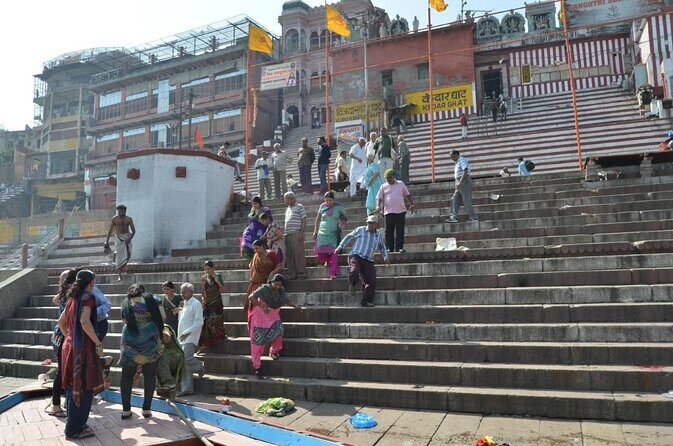
- Assi Ghat start: morning rituals and the confluence of Assi and Ganga set the tone fast
- Temple-to-fort to palace route: you pass places tied to Tulsidas, Harishchandra, British-era conflict, and Maratha-era architecture
- Dasaswamedh + Aarti atmosphere: a strong dose of Ganga ceremony and riverfront energy
- Narrow lanes on foot: you’ll navigate tight passages where you might see everyday street life, including animals like cows and monkeys
- End at Manikarnika: the most sacred cremation ground, with the flame said to be lit by Lord Shiva
The Assi-to-Manikarnika route: what you’ll actually experience on foot
This tour is built for one clear goal: helping you read Varanasi as a living place. You’re not only “seeing ghats.” You’re moving through the city’s layers—river rituals, temple devotion, royal-era architecture, and cremation-anchored beliefs—one stop to the next, mostly by foot.
The walk is short enough to stay focused but long enough to feel the shift in atmosphere. You’ll begin at Assi Ghat and work northward toward Manikarnika Ghat, with intermediary stops that break the route into understandable themes: stories of devotion, historic sites, and then the spiritual intensity near the end.
Because the tour is capped at a small maximum group size, it tends to feel like guided wandering with a purpose. You can slow down when a lane gets narrow or when you want to take in a specific architectural detail, rather than being rushed along by a big crowd.
For the best experience, think of it as a “walk with context.” If you like understanding what you’re looking at—who built it, why it matters, and what people do here day after day—you’ll get a lot more out of it than if you’re expecting a checklist of photo stops.
You can also read our reviews of more walking tours in Varanasi


Assi Ghat through the temples and forts: the morning that sets Kashi’s rhythm
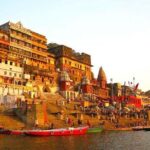
The tour begins at Assi Ghat, the southernmost ghat in Varanasi. This is a good starting point because it’s linked with morning rituals and the spiritual feel of Kashi, especially the confluence where Assi meets the Ganga. Even before you hit the more famous riverfront theatrics later in the walk, Assi gives you a calmer entry point.
Stop one includes a visit to the sacred place connected to saint-poet Tulsidas, where he composed the Ramcharitmanas. The value here isn’t just literary fame. It’s that you’re stepping into a site tied to devotional memory, where literature and worship overlap in real physical space. You’ll also spend time along the riverfront and notice the presence of akharas—training grounds for wrestlers—because Varanasi isn’t only about ceremonies. It’s also about discipline and bodies.
From there, the walk moves toward the Kedareshwar Temple via colorful steps. The tour frames it around devotional atmosphere and South Indian architectural style. If you’re used to northern Indian temple forms, this is the kind of contrast that makes the city feel bigger than one stereotype. The downside? As with many religious sites, your access can depend on local rules and the time of day, so don’t assume you’ll be able to see every area.
Then comes a harder spiritual moment: a view of one of Varanasi’s ancient cremation ghats, with connections to King Harishchandra and the ideas of truth, dharma, and liberation. This stop can be emotionally intense. If death rituals make you uneasy, still go in with respect and with the mindset that this is part of how the city teaches its beliefs through everyday practice—not just a spectacle.
After that, you shift into history and architecture. You’ll see Chet Singh Fort, historically tied to conflict with the British. What I like about including forts on a walking ghats tour is that it gives you perspective: Varanasi wasn’t frozen in time. People fought over power here, and the riverfront was strategic. The views from this area also help you connect the geometry of the ghats to the buildings above.
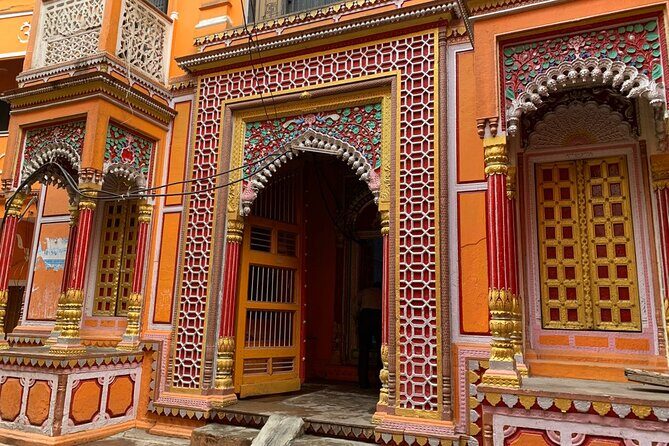
Next is a quieter, more scenic pause at Raja Rao Balaji’s 1720 Peshwa Haveli, noted for Maratha-era architecture and for being a calmer place for photography and gentle walking. This is the spot that often gives your legs a break while your eyes keep moving. It’s also where you can notice small details—doorways, balcony lines, and the way old houses face the river.
The section ends with one of the most photogenic stops: Darbhanga Palace with its royal balconies overlooking the Ganges. Even if you’re not a “palaces” person, this is useful because it shows how wealth and power in Varanasi faced the same river that pilgrims come to for devotion and release.
Practical takeaway: this Assi portion gives you the tour’s backstory—faith, legend, and politics—before the walk turns more energetic later on.
Dasaswamedh Ghat and Mir Ghat: where the Ganga Aarti energy takes over
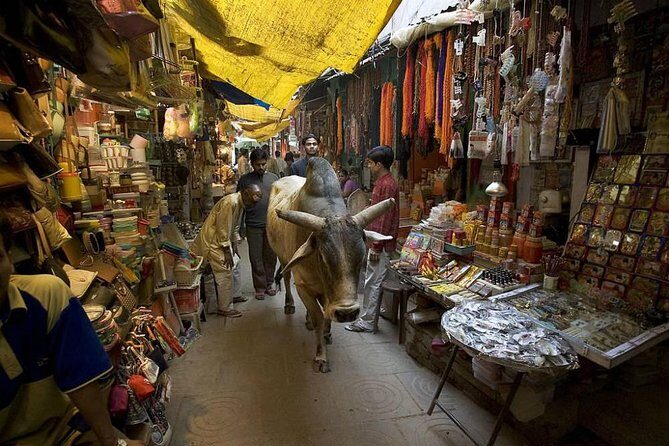
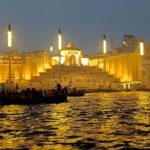
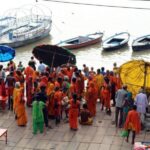
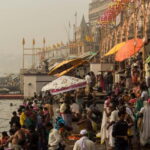
After Assi, the tour heads to Dasaswamedh Ghat, described as the vibrant heart of Varanasi where legends tie into Brahma, and where the famous Ganga Aarti happens. Even if you’re not deeply religious, this is one of the places where you can feel why the river is the center of the city’s spiritual calendar.
This stop is also where you’ll likely notice how different Varanasi feels depending on the crowd flow. The guide’s job matters here—knowing where to stand, how to watch respectfully, and how to keep the walk moving without turning it into a rushed spectator event.
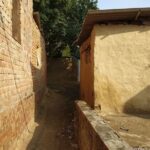
From Dasaswamedh, you also walk through Mir Ghat, known for ancient temples and narrow lanes that show traditional lifestyle in old Banaras. This is a strong contrast point: earlier you were looking at major riverfront structures; now you’re threading through smaller spaces where everyday life shows itself. One review point that makes me trust this portion: you can run into animals on the lanes—cows and monkeys—which is exactly the kind of real-world texture that makes a city feel like itself.
If you’re sensitive to noise, crowds, or smells, this is where you’ll want a little extra patience. Still, it’s also where the tour becomes “alive.” It’s not just stone and stairs. It’s people doing what they came to do.
Lalita Ghat and the Nepali temple style: a calmer cultural pause
The walk continues to Lalita Ghat, with a visit to the Lalita Devi Temple and attention to Nepali-style pagoda architecture built by Nepal’s royal family. This stop matters because it reminds you that Varanasi has long attracted connections beyond one region. You’re not only looking at local Indian styles—you’re seeing how political and cultural relationships show up in religious design.
The architecture here is the story: the wooden pagoda form gives you something different to look at compared with the more typical temple shapes you may see elsewhere. And because this stop is framed as peaceful, it gives your mind a moment to slow down after the heavier cremation and strong riverfront ceremony earlier in the day.
Time here is short, but that can be a plus. The tour doesn’t waste your energy. You get a clear moment of calm, then you keep moving toward the end point with less mental overload.
Manikarnika Ghat: the end of the route and the meaning of the eternal flame
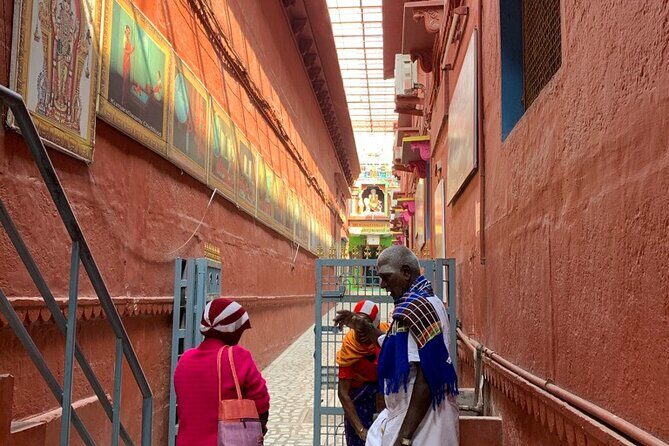
The tour finishes at Manikarnika Ghat, described as the most sacred cremation ground in Hinduism. This is the endpoint where the whole route’s theme tightens: life, death, and liberation are not abstract concepts in Varanasi. They’re part of the daily rhythm of the riverfront.
The site is associated with the idea of an eternal flame, said to be lit by Lord Shiva. That kind of detail isn’t just a fun fact—it’s a symbolic anchor. If you’ve been wondering why people treat this place with such focused seriousness, the tour’s closing stop gives you the framework.
I’ll be honest: this is not a casual sightseeing ending. If you prefer light-hearted tours, you might find this section emotionally heavy. But if you want a deeper understanding of why Varanasi has the reputation it does, the ending makes sense. It turns the walk from “interesting buildings” into a cultural lesson about belief and ritual.
Respect matters most here. You’ll get the most out of this stop if you watch quietly, follow your guide’s cues, and avoid turning it into background for selfies. The power of Manikarnika is in the atmosphere, not in what you can photograph.






Walking pace, group size, and value for money (yes, $25 makes sense)
This is a 3 to 4 hour walk, usually long enough to cover meaningful ground without feeling like a full-day trek. Reviews also point out it’s not rushed, which is a big deal on ghat days. When you’re dealing with stairs, tight lanes, and sudden crowd shifts near the river, a hurried guide usually turns the experience into stress. A calmer pace lets you absorb what you’re seeing—especially if you stop to look at architecture or to listen.
Group size is capped at a maximum of 6 and requires a minimum of 2, which helps keep the walk manageable. You’re not stuck behind a hundred people, and you can ask questions when something doesn’t click. That personal attention is one of the best “hidden value” factors in a walking tour.
Price is $25 per person, with professional guidance included. For a city like Varanasi, that feels reasonable because you’re not only paying for direction. You’re paying for interpretation—what the places mean and why they connect to the broader culture. Admission tickets are marked free at the listed stops, which also helps you avoid surprise costs.
What’s not included: food and drinks. Plan to handle your meals on your own before or after, or bring a plan for later. If you need hotel pickup/drop-off by private vehicle, it’s extra at $10 per person, paid directly.
One more practical note: the tour asks for moderate physical fitness. The ghats and lanes involve uneven steps and walking time that adds up. If your mobility is limited, this might be uncomfortable. Comfortable shoes are your best friend here.
Temple stops and lane surprises: how to prepare for a more realistic day
One thing I’d call out from the experience: not every religious stop guarantees full interior access. At one temple-related point, you may end up seeing more of the entrance area—or even a shop-front experience—rather than getting inside and looking around freely. That doesn’t make the stop useless, but it does change what you’ll get out of it. Go in expecting observation, not an architectural tour of every room.
Also, the tour’s route through narrow lanes can come with small surprises, like encountering cows and monkeys during your walk. That’s not a “problem” so much as a reminder that Varanasi lanes are lived-in spaces. Your guide’s local navigation is part of the value, since they know how to steer you through without turning it into chaos.
If you want the best attitude for the day, aim for respect first, curiosity second. When you see cremation areas, temples, and river rituals close up, try to treat it like you’re learning someone’s worldview, not like you’re collecting landmarks.
Finally, because this is a mobile-ticket experience and runs daily from 6:00 AM to 5:00 PM, you’ll want to choose a start time that matches your energy. Mornings tend to feel more manageable for walking and for hearing your guide over ambient noise.
Should you book the Assi to Manikarnika walking tour?
I think you should book this tour if you want a focused Varanasi ghats and lanes experience with real context, not just a parade of sights. The small group size, the emphasis on river rituals like the Ganga Aarti, and the way the route moves from Assi’s calm into Manikarnika’s profound ending are a smart structure. For first-timers, it gives you a coherent map of meaning across the city.
Skip it (or choose a different style of tour) if you dislike emotional intensity, or if you mainly want indoor temple viewing. A temple interior may not be available at one stop, and the cremation-ground finale is not meant to be light.
If your goal is understanding Varanasi as a spiritual city shaped by the Ganga, this walk is one of the better ways to do it in a few hours.
FAQ
How long is the Assi to Manikarnika Walking Tour?
The tour lasts about 3 to 4 hours.
Where does the tour start and end?
It starts around Assi Ghat and ends back at the meeting point.
What sites are included on the route?
The route includes Assi Ghat, a Tulsidas-linked sacred place, Kedareshwar Temple, an ancient cremation ghat linked to King Harishchandra, Chet Singh Fort, Raja Rao Balaji’s 1720 Peshwa Haveli, Darbhanga Palace, then Dasaswamedh Ghat, Mir Ghat, Lalita Ghat (with Lalita Devi Temple and Nepali-style pagoda architecture), and finally Manikarnika Ghat.
What is included in the price?
A professional English-speaking guide is included, and guides in other languages (French/ German, Spanish/ Italian) are available on demand and availability.
What is not included?
Food and drinks are not included. Hotel pickup and drop-off by private vehicle are also not included, and cost $10 per person extra if needed.
How big is the group?
The booking requires a minimum of 2 people and has a maximum of 6 people per booking.
What are the available tour hours?
The tour runs daily from 6:00 AM to 5:00 PM during the stated operating dates.
Is there free cancellation?
Yes. You can cancel for a full refund up to 24 hours in advance of the experience start time.