REVIEW · VARANASI
Varanasi: Ganges River Sunrise and Morning Walking Tour
Book on GetYourGuide →Operated by Kashi Trident Tours · Bookable on GetYourGuide
Varanasi starts before sunrise. This guided morning walk has one job: get you to the river at the exact moment when Varanasi feels most real, starting with the morning Ganga Aarti at Assi Ghat just before dawn. I love how the ceremony’s sound and movement set the tone for everything that follows, and I love that the route keeps you walking through everyday lanes, not just looking at postcards. A key drawback to plan for is the early start plus lots of walking through narrow streets and crowded river steps.
You’ll also see the full emotional range of the ghats—from busy ritual life at Dashashwamedh Ghat to the solemn setting of Manikarnika Ghat, where funerals are part of daily spiritual practice. It’s powerful, but it’s not soft. If you want a gentle, scenic-only morning, this may feel too intense. And because it’s a walking tour, people with mobility limitations and wheelchair users won’t be a good fit.
In This Review
- Key highlights you’ll notice fast
- Why this early-walk route is the real Varanasi
- Getting to Assi Ghat without wasting time
- Assi Ghat Ganga Aarti: what to watch and how to act
- The sunrise walk: calm river moments between major ghats
- Tulsi Ghat and optional temple time
- Dashashwamedh Ghat: where rituals run at full volume
- Manikarnika Ghat: solemn rites and respectful distance
- The lanes behind the ghats: where Varanasi feels like daily life
- Breakfast in the neighborhood: fuel without overthinking it
- Price and value: why $16 makes sense here
- What to bring (and what to leave at home)
- Who this tour suits best
- What to expect from your guide (and why it matters)
- Should you book this Varanasi sunrise tour?
- FAQ
- What time should I plan for the start of the tour?
- Where does the tour start, and is pickup included?
- Is a sunrise boat ride included?
- Which ghats are included in the walk?
- Is breakfast included?
- What languages are the guides available in?
- Are there rules for photos or items I should bring?
- Is the tour suitable for wheelchair users or pregnancy?
Key highlights you’ll notice fast
- Assi Ghat Aarti before dawn with a clear, guided path into the action
- Sunrise along the Ganges plus quiet moments as you move from ghat to ghat
- Tulsi Ghat and nearby temples for a calmer stop along the river route
- Dashashwamedh Ghat rituals where you see religious life at full volume
- Manikarnika Ghat respectful observation of funeral rites and their meaning
- Breakfast in the lanes so you fuel up after early wake-up time
Why this early-walk route is the real Varanasi
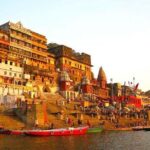
I get why people come to Varanasi. But most places feel the same at 10 a.m. What makes this tour special is that it starts when the city is still half-dreaming. You’re not arriving after everything has warmed up. You’re watching ritual begin, then you’re walking as the light changes over the Ganges.
The tour is also built around a practical idea: you’ll cover several key ghats on foot, while a guide helps you understand what you’re seeing. That means you’re less likely to miss the point of a ceremony, a statue, or a lane that looks random until someone connects it to local life.
And yes, you’ll see contrast. You’ll move from the energy of major river steps to quieter corners near Tulsi Ghat, then down to Manikarnika Ghat’s solemn atmosphere. That range is hard to replicate on your own without a plan and local context.
You can also read our reviews of more walking tours in Varanasi


Getting to Assi Ghat without wasting time
This experience begins at Assi Ghat, and you get help getting there: pickup is included if you book an e-rickshaw or tuk tuk to Assi ghat. That matters in Varanasi. Getting across the riverfront and into the right spot before dawn can be a headache without local guidance.
You’ll also have a smoother flow into the ceremony area because there’s a separate entrance designed to help you avoid lines. In other words, you spend your time watching, not stuck.
Timing-wise, the Ganga Aarti typically starts just before dawn and continues as the sun rises. The tour runs for 1 day, and starting times depend on availability. Plan for an early morning that actually feels early.
Assi Ghat Ganga Aarti: what to watch and how to act
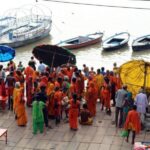
This is the centerpiece. You go to Assi Ghat before sunrise for the morning Ganga Aarti, the daily river ritual where worshipers offer light and prayers to the Ganges. Aarti isn’t only a visual show—it’s a rhythm. You’ll notice the synchronized movement, the calls and chants, and how people gather in a respectful semicircle around the ceremony area.
A guide is especially useful here because you’re not just observing. You’re learning what’s happening in plain terms so you can follow the flow instead of guessing. In the reviews, the guide experience stood out again and again, including English clarity and patience with questions. Many times, that makes the difference between watching a ceremony and actually understanding why people treat the river with this level of devotion.
Practical behavior tip: keep your camera ready, but follow the local rules. Flash photography is not allowed, and some locations have additional photography restrictions. Also, keep your tone and volume low. You’re standing near worship and—later in the route—near funeral rites. The tour asks you to respect the customs, and it’s not just a polite suggestion.
The sunrise walk: calm river moments between major ghats
After the Aarti, the tour shifts into walking mode. First comes the riverbank atmosphere, then the slow transition into city lanes behind the ghats. This is where the experience becomes more than “see one ceremony, move on.”
As you go, you’re moving through narrow streets that feel alive even before breakfast crowds arrive. You’ll get a look at day-to-day life close up: small shops, temple fronts, and the kind of street textures that don’t show up in wider views from afar.
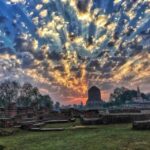
The sunrise part is more than scenery. Morning light changes how you perceive everything—faces, water, smoke from ritual lamps, the feel of the steps themselves. It’s one of those experiences where you get both spiritual atmosphere and city realism at the same time.
One consideration: the lanes and ghat edges can be crowded and uneven. You’ll want comfortable shoes with good grip. Also, don’t bring a bulky backpack; backpacks aren’t allowed on this tour.
Tulsi Ghat and optional temple time
From Assi Ghat and the riverbank path, you’ll continue toward Tulsi Ghat. Compared to the biggest names on the river, this stop often feels quieter, more like a pause than a main stage.
There’s also an optional nearby temple area you may be able to visit, the Tulsi Manas Mandir, depending on timing and the group pace. Even if you only have time for a short visit, it gives you another angle on Varanasi’s religious landscape—less about spectacle, more about atmosphere and routine worship.
This portion works well if you want a slower beat in your morning before the tour ramps up again. If you’re someone who gets overwhelmed by crowds easily, this may be the break you needed.
You can also read our reviews of more tours and experiences in Varanasi



Dashashwamedh Ghat: where rituals run at full volume
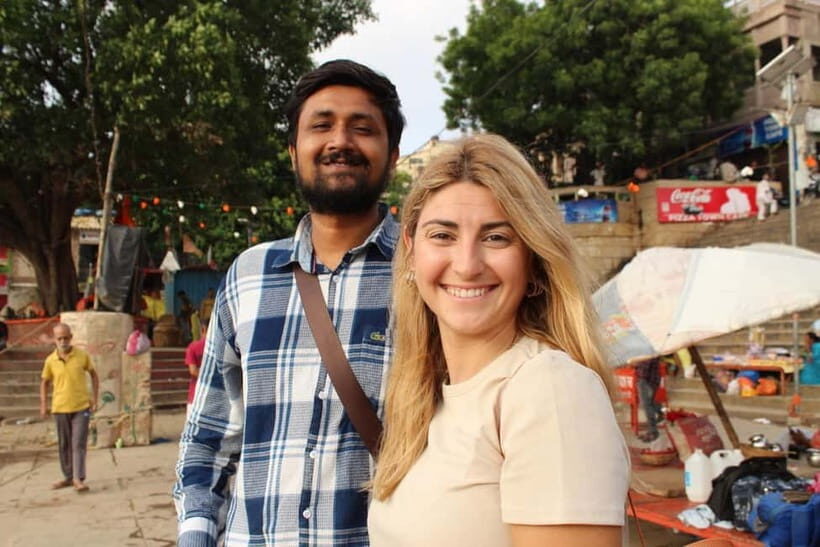
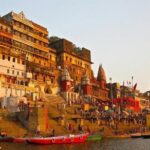
Next up is Dashashwamedh Ghat, one of the most prominent ghats in Varanasi. If Assi felt like the sunrise opening scene, Dashashwamedh is where the city starts speaking louder.
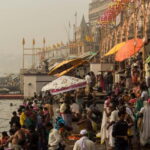
Here you’ll observe the rituals and activities happening at a major river step. Expect a busier flow of people, movement around the water, and ongoing worship-related actions. This isn’t only a single moment—it’s a lived place, where morning routines continue even as you watch.
What I like about having a guide through this segment is how it prevents the “what am I looking at?” confusion. You can take photos, but it’s also important to be present. You’re there to understand the role of the Ganges and why these ghats matter. With a guide present, you can ask questions and get explanations in real time instead of reading about it later.
Manikarnika Ghat: solemn rites and respectful distance
One of the most emotionally serious stops is Manikarnika Ghat, where funeral pyres and funeral rituals take place. This part of the tour is handled with a specific tone: respectful observation only. The goal is not shock value. It’s understanding how the rituals fit into local spirituality and how people approach death with meaning.
Before you go, you should honestly ask yourself if you’re comfortable with close-up funeral rites. The tour notes that it’s not suitable for pregnant women and it also isn’t recommended for people with mobility impairments. Even for those who are physically able, the setting is solemn and can be heavy.
Photography rules also matter here. There are mentionable photography restrictions at certain locations, and flash is not allowed. Even if you can take a photo, you might decide it’s better to keep your camera down and focus on what you’re learning.
If you choose this tour, treat Manikarnika as a learning and reflection stop, not an Instagram mission.
The lanes behind the ghats: where Varanasi feels like daily life
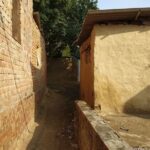
Between major river stops, you’ll explore narrow lanes behind the ghats. This is where the “walking” part becomes the best part.
These streets tend to be full of small storefronts, local eateries, and temples tucked into tight spaces. You’ll see how people live close to the riverfront while still moving through normal routines: errands, food, worship, and conversation.
It also helps you connect the dots. Without the lanes, a ghat can feel like an isolated stage. Walking through the backstreets shows how ghats tie into the city’s social structure.
This is a good spot to slow down. Look up at doorways and signage, notice how shop life and religious life overlap, and remember you’re inside an active neighborhood, not a museum set.
Breakfast in the neighborhood: fuel without overthinking it
After all that early walking, the tour includes a breakfast stop at a local cafe or traditional eatery. You’ll likely find options like kachoris, jalebis, and chai—simple, widely loved foods that match what you’ll see people eating nearby.
What I like about including breakfast is that it makes the schedule realistic. You’ll be up early, walking fast, and breathing river air and street air before you’ve eaten. The included meal saves you time and helps you avoid the usual early-morning trap: scrambling for food while your energy crashes.
A practical note: bring cash, since cash is listed as a recommended item. Also avoid plastic bottles, since plastic bottles aren’t allowed on this tour. If you need water, plan for that rule when you pack.
Price and value: why $16 makes sense here
At about $16 per person, this tour is strong value for what you get. You’re paying for:
- Guided entry and explanations during the Ganga Aarti at Assi Ghat
- Guided walking across multiple important ghats, including Tulsi, Dashashwamedh, and Manikarnika
- Exploration of the lanes behind the ghats
- Breakfast at a local eatery
Compare that to the cost of doing any of these pieces separately. Getting to Assi ghat early, timing the Aarti, finding your way through crowded areas, and then securing a guide who can explain what you’re seeing usually costs far more. Here, the guide plus the morning plan are the product.
The one thing you don’t get is a sunrise boat ride. If you want boat time on the Ganges at sunrise, you’ll need to add that separately.
Also, the group pace is built around walking. So the value is best for travelers who are comfortable putting in steps and staying respectful in ceremonial spaces.
What to bring (and what to leave at home)
This tour is straightforward, but it’s strict in a few ways. Here’s what you should plan for:
Bring:
- Comfortable walking shoes
- Hat (helpful for early-morning light and sun later on)
- Camera (and follow the flash and photography restrictions)
- Cash
- Charged smartphone
- Passport or an ID card
Not allowed:
- Smoking
- Flash photography
- Backpacks
- Plastic bottles
A small but important mindset: keep your load light. In narrow lanes and crowded ghat edges, less is easier.
Who this tour suits best
This tour fits you best if:
- You want the morning Ganga Aarti experience as part of a guided route
- You’re comfortable walking and handling crowds in early hours
- You’re ready to see both ritual life and the more solemn side of ghats
- You want context while you’re there, not only afterward
It’s not a good fit if:
- You’re pregnant
- You use a wheelchair
- You have mobility impairments that would make walking through uneven, crowded areas difficult
If you prefer only gentle sightseeing with no funeral-rites portion, you may want a different day plan.
What to expect from your guide (and why it matters)
In the reviews, the guide quality comes through clearly—especially calm explanations and attention to questions. People specifically noted that the guide spoke clearly, stayed patient, and helped connect history and culture to what you’re seeing on the route. One guide name that shows up repeatedly is Shivam, and the recurring theme is how he handles questions and stays focused on giving you real understanding.
This matters because Varanasi can be overwhelming if you’re left to interpret everything on your own. With a strong guide, you’re more likely to grasp what each ghat represents, why the rituals are performed, and how to observe respectfully without missing the point.
Should you book this Varanasi sunrise tour?
Book it if you want a morning that feels intentional: Assi Ghat Aarti, sunrise atmosphere along the Ganges, key ghats with real context, and breakfast—all organized into one walking route for a reasonable price.
Skip or choose a gentler alternative if you’re not comfortable with funeral rites observation at Manikarnika Ghat, or if early mornings and lots of walking will wear you down. This isn’t a slow scenic stroll. It’s a spiritually focused route with emotional weight.
If you do book, bring light gear, wear proper shoes, and treat the ghats with respect. You’ll get a morning in Varanasi that feels less like sightseeing and more like understanding what people come here to experience.
FAQ
What time should I plan for the start of the tour?
The tour starts very early so you can reach Assi Ghat before the morning Ganga Aarti, which typically begins just before dawn. Starting times depend on availability, so check the available start times when you book.
Where does the tour start, and is pickup included?
The experience centers on Assi Ghat. Pickup is included if you book an e-rickshaw or tuk tuk to Assi ghat.
Is a sunrise boat ride included?
No. A morning sunrise boat ride is not included.
Which ghats are included in the walk?
You visit Assi Ghat for the Aarti, then Tulsi Ghat (with the option to visit nearby Tulsi Manas Mandir if desired), Dashashwamedh Ghat, and Manikarnika Ghat.
Is breakfast included?
Yes. Breakfast is included at a local cafe or traditional eatery, with options like kachoris, jalebis, and chai.
What languages are the guides available in?
The live tour guide is available in English, Spanish, Italian, and French.
Are there rules for photos or items I should bring?
Flash photography is not allowed, and there are photography restrictions at certain locations. Also, no backpacks and no plastic bottles are allowed. Bring a camera if you can follow the rules, plus a hat and comfortable shoes.
Is the tour suitable for wheelchair users or pregnancy?
No. It is not suitable for pregnant women, people with mobility impairments, or wheelchair users.