REVIEW · NEW DELHI
From Delhi: Private 3-Day Golden Triangle Tour with Hotel Options
Book on Viator →Operated by Travel Creators Of India · Bookable on Viator
That first drive out of Delhi sets the pace. This private 3-day Golden Triangle packs Delhi, Agra, and Jaipur into one smooth plan, with door-to-door pickup and guides who explain what you are actually seeing. I especially liked the Old Delhi sequence (Gurudwara Bangla Sahib, Jama Masjid, Chandni Chowk, Khari Baoli) because it mixes faith, Mughal architecture, and everyday street life. You also get those small but useful Taj extras like the golf cart to the entrance and shoe covers.
The only real drawback to plan for is extra spending. The tour price does not include meals and monument entry tickets, and those add-ons can change what this trip costs you in the end.
In This Review
- Key highlights worth getting excited about
- A tight 3-day Golden Triangle that still feels organized
- What the $80 tour fee covers (and what you’ll still pay for)
- Day 1 in Delhi: Gurudwara Bangla Sahib, Jama Masjid, and the Old Delhi route
- Gurudwara Bangla Sahib: the healing Sarovar start
- Jama Masjid: Mughal scale, 1656 craftsmanship, and a big viewpoint
- Chandni Chowk by rickshaw: see the market lanes in motion
- Khari Baoli spice market: smell and colors, plus practical knowledge
- India Gate and the WWI names on the walls
- Humayun’s Tomb: the first garden-tomb idea
- Lotus Temple: Bahá’í worship, opened in 1986
- Agra transfer: check in and keep the evening light
- Day 2: Taj Mahal focus, Agra Fort context, then Jaipur travel
- Taj Mahal with a personal guide and early light
- Agra Fort: Akbar’s build and Shah Jahan’s additions
- Jaipur arrival: enough time to settle in
- Day 3 in Jaipur: Hawa Mahal, Amber Fort, stepwell geometry, and lake views
- Hawa Mahal: latticework and panoramic viewing
- Amber Fort: courtyards, temples, lavish rooms, and Maota Lake views
- Panna Meena ka Kund: symmetry and a historic water system
- Jal Mahal: a palace-like structure in Man Sagar Lake
- Gaitore Ki Chhatriyan: cenotaphs with quiet atmosphere
- City Palace: Mughal-Rajasthani fusion and museums
- Jantar Mantar: UNESCO observatory built by Maharaja Jai Singh II
- Back to Delhi: finish strong, not frantic
- Guides and drivers: the human touch is the real upgrade
- Practical tips that keep this tour smooth
- Carry cash for entrance tickets
- Know the closure reroutes
- Time transfers are approximate
- Pack for a mix of walking and rides
- If your travel dates matter, factor in special fees
- Should you book this private 3-day Golden Triangle?
Key highlights worth getting excited about
- Door-to-door hotel transfers each day, so you are not stuck negotiating taxis or timing your own rides
- A private guide at the stops, with context for places like Humayun’s Tomb and Jantar Mantar
- Old Delhi on foot and by rickshaw, including Jama Masjid area and the spice market in Khari Baoli
- Taj Mahal logistics included, like the golf cart to the entrance and shoe covers
- Jaipur’s fort-and-palace mix across three different styles of sights (Amber Fort, City Palace, and Jantar Mantar)
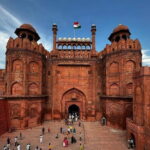
- Real flexibility for closures, including Friday Taj timing and Monday swaps for Lotus Temple/Red Fort issues
A tight 3-day Golden Triangle that still feels organized
When you only have a few days, the Golden Triangle can turn into a stress test. This format keeps the hard parts handled: you get picked up, you move between cities in a private air-conditioned vehicle, and you keep a clear sequence of sights so you are not constantly re-planning on the fly.
The big value for you is time saved. Delhi to Agra to Jaipur is doable on your own, but you have to manage train/bus timing, ticket lines, and whether you will actually arrive where you planned. Here, your schedule is built around the main monuments, and your guide keeps each stop from feeling like a checklist.
One more thing: this is a private tour, meaning it is only your group. That matters in India, where pacing can vary a lot depending on the site. Having your own driver and guide makes it easier to keep things flowing.
You can also read our reviews of more private tours in New Delhi


What the $80 tour fee covers (and what you’ll still pay for)
The price advertised is $80 per person, but it is smart to look at it as the planning and transport portion, not the full trip total.
Included basics that make the $80 meaningful:
- Pickup and drop-off (including airport drop-off options at the end)
- A private driver and vehicle for sightseeing and intercity travel
- A rickshaw ride through Old Delhi areas
- Golf cart ride to/from the Taj Mahal entrance plus shoe covers
- Tour guide at all sites
- 2-night hotel accommodation if you choose the hotel option
- Breakfast at the hotel each morning if you choose the breakfast option
What is not included:
- Meals: $70 per person
- Entry tickets: $70 per person
So what does that mean for your budget? If you go with the typical add-ons (meals + entry tickets), you should plan on extra costs on top of the $80. Also, if you upgrade to 4- or 5-star hotels, that is another variable. The good news is you can price it out early rather than being surprised later.
One practical note: some monuments do not accept credit cards, and you are advised to carry cash in INR for entrance tickets. Your guide can help find an ATM if needed. That alone is worth considering—nothing ruins a morning like a ticket line you cannot pay your way through.
Day 1 in Delhi: Gurudwara Bangla Sahib, Jama Masjid, and the Old Delhi route
Delhi Day 1 is built like a story that moves from spirituality to empire to street life.
Gurudwara Bangla Sahib: the healing Sarovar start
You begin with Gurudwara Bangla Sahib, linked to the eighth Sikh Guru. It is known for its healing Sarovar (the water tank area). This is a calming opener compared with the pace you will feel later in Old Delhi.
It is also a good way to get your bearings fast. Your guide can explain what you are seeing before you jump into a dense area of markets and mosque courtyards. Even if you are not religious, this stop helps you understand why these places matter to locals.
Jama Masjid: Mughal scale, 1656 craftsmanship, and a big viewpoint
Next is Jama Masjid, described as India’s largest mosque, built in 1656. The plan notes that 5,000 workers were involved, and it sits in Chandni Chowk facing the Red Fort.
This is one of those sites where a guide makes a difference. Without context, you can wander and still miss the main ideas: Mughal architectural priorities, the way the mosque relates to surrounding monuments, and why this is such a dominant civic religious space.
You can also read our reviews of more tours and experiences in New Delhi





Chandni Chowk by rickshaw: see the market lanes in motion
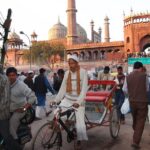
Then you jump into Chandni Chowk with a rickshaw ride. The timing is tight, but you get a real sense of the market’s role in daily life, with your guide sharing how the area functions beyond shopping.
For you, this is a key moment because it turns Old Delhi from a photo-op zone into something you understand. You are moving through the actual lanes people use.
Khari Baoli spice market: smell and colors, plus practical knowledge
Khari Baoli follows, the famous spice market. Your guide will help you connect the aromas and colors to how spices are used.
This stop is short enough to stay enjoyable. If you love cooking, you will likely get ideas you can take home. If you are less interested, this still works as a sensory break between big monuments.
India Gate and the WWI names on the walls
India Gate is next. This stop is only about 30 minutes, but it is not trivial. It honors 13,300 Indian soldiers who died in World War I, with their names engraved on the memorial walls.
It is a quick way to add a modern layer to the trip. Delhi is often treated as only Mughal or colonial-era in tourism, but this reminds you the city also holds 20th-century memory.
Humayun’s Tomb: the first garden-tomb idea
Then you reach Humayun’s Tomb, a UNESCO World Heritage Site and noted as India’s first Garden Tomb. You’ll also learn that Humayun’s wife commissioned it in his memory, and the architecture shows Mughal brilliance.
This is the kind of stop that grows on you once you see the layout. The gardens and symmetry help you slow down without needing a long pause.
Lotus Temple: Bahá’í worship, opened in 1986
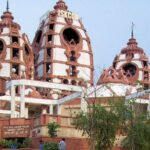
Your Day 1 ends with Lotus Temple, a Bahá’í House of Worship opened in December 1986, famous for its lotus-inspired design. It is described as a symbol of the city.
This is a nice contrast to the mosque you saw earlier. If your day is starting to feel like only heavy stone and empire architecture, Lotus Temple gives you a cleaner, more modern shape to remember.
Agra transfer: check in and keep the evening light
After Delhi, you head to Agra, check into your hotel, and get a few hours for leisure. That time matters. If you try to force too much sightseeing on arrival day, Taj Mahal can feel rushed the next morning. Here, you get a more comfortable setup.
Day 2: Taj Mahal focus, Agra Fort context, then Jaipur travel
Day 2 is a classic Golden Triangle powerhouse day, but it is built to protect the Taj experience.
Taj Mahal with a personal guide and early light
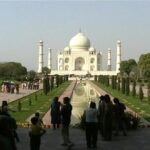
You go to the Taj Mahal with a personal guide. The schedule emphasizes the beauty of the Taj Mahal in early light.
It is hard to explain how much difference timing makes until you are there. In the morning, the monument often feels more calm and readable, and your guide can point out details you would usually miss—design features, alignment ideas, and what makes it more than just a big white building.
Two extra logistical inclusions help you in a very real way:
- a golf cart ride to/from the entrance
- shoe covers for the visit
Those details sound minor, but they reduce friction, especially when ground conditions or crowds make long walks less comfortable.
Agra Fort: Akbar’s build and Shah Jahan’s additions
After Taj, you visit Agra Fort, also UNESCO-listed. It was built by Emperor Akbar in 1565 along the Yamuna River. Later, Shah Jahan expanded it with white marble structures.
This is where the guide context can really pay off. Taj Mahal often becomes the only thing people remember from Agra. Agra Fort helps you see the political and architectural engine behind the beauty—who built, who expanded, and how the river-side setting matters.
Jaipur arrival: enough time to settle in
Then you travel to Jaipur, the Pink City, and check into your hotel for an overnight stay. The plan gives about four hours for travel time.
That four-hour window is another quiet value: it gets you to Jaipur without losing your entire afternoon. You can rest, shower, and still feel like you did something meaningful that day.
Day 3 in Jaipur: Hawa Mahal, Amber Fort, stepwell geometry, and lake views
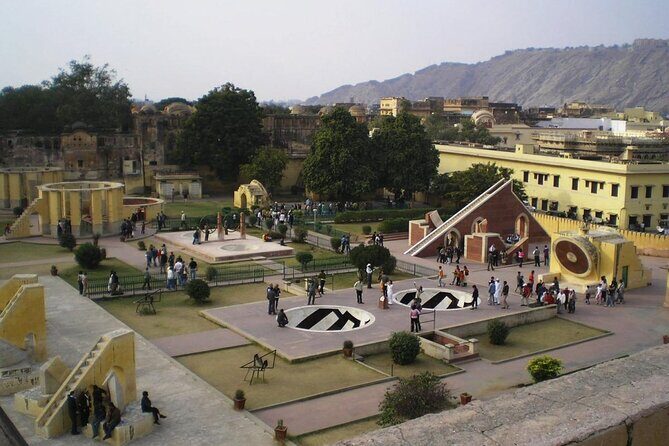
Jaipur Day 3 is a smart mix: one famous facade (Hawa Mahal), one major fort (Amber Fort), a few “less expected” architectural stops, and then the big palace and observatory finish.
Hawa Mahal: latticework and panoramic viewing
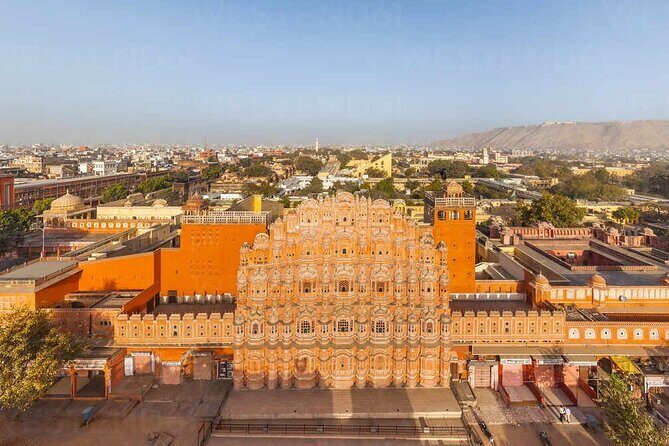
You start at Hawa Mahal, famous for its intricate latticework. The plan also notes panoramic city views from the top.
Even when you only have a short time, Hawa Mahal teaches you something about Jaipur’s design priorities—airflow, light, and how architecture served daily life. It is a quick stop, but it helps you understand the look and logic of the city.
Amber Fort: courtyards, temples, lavish rooms, and Maota Lake views
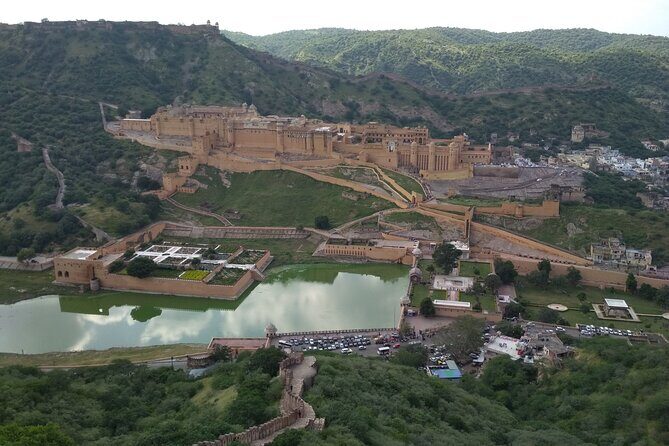
Then comes Amber Fort. The visit covers courtyards, temples, and lavish rooms with a guided tour. You are also meant to take in the views over the surrounding hills and Maota Lake below.
This is one of those stops where you want comfortable walking shoes and a patient mindset. Forts are built to impress, but that also means stairs, uneven ground in places, and lots to look at. Your guide helps by directing your attention so you do not just feel like you are moving from room to room with no thread.
Panna Meena ka Kund: symmetry and a historic water system
After Amber, you visit Panna Meena ka Kund, a stepwell. It is described as a peaceful spot with symmetrical architecture and a historic water system.
This is a great change of pace because it is less about power and more about engineering. The geometry makes it photogenic, but the water system angle makes it interesting even if you are not chasing pictures.
Jal Mahal: a palace-like structure in Man Sagar Lake
Then you go to Jal Mahal, located in the middle of Man Sagar Lake. You mainly admire it from the shore and learn its history.
This stop works well for the light and timing. It also breaks up the day so you are not only in forts and palaces. It gives you a wide view and a calmer moment.
Gaitore Ki Chhatriyan: cenotaphs with quiet atmosphere
Next is Gaitore Ki Chhatriyan, described as a historical and peaceful site with cenotaphs dedicated to Jaipur’s royal family. The carvings and tranquility are part of the appeal.
If you have been visiting big-ticket monuments all trip, this is a nice downshift. It is still “royal,” but it feels quieter and more reflective.
City Palace: Mughal-Rajasthani fusion and museums
You finish with City Palace, a fusion of Mughal and Rajasthani architecture. The plan says you can explore museums, courtyards, and palaces.
For you, this is where the trip’s theme gets rounded out. The fort showed military power. The palace shows the blend of cultures that shaped Jaipur’s elite life. A guide helps connect the design choices to the larger story.
Jantar Mantar: UNESCO observatory built by Maharaja Jai Singh II
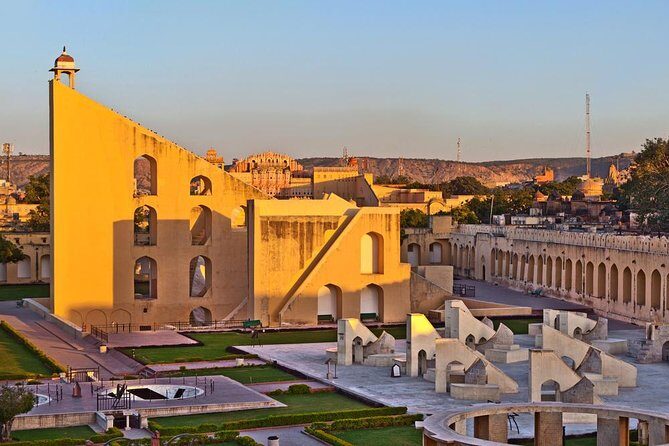
Then you end at Jantar Mantar, an astronomical observatory built by Maharaja Jai Singh II. The plan highlights the massive instruments used for astronomical observations.
This is the kind of place that can feel technical or abstract if you visit without explanation. Since your guide is with you, you are more likely to understand what you are looking at rather than simply admiring big carved shapes.
Back to Delhi: finish strong, not frantic
After a full day, you return to Delhi and end with drop-off at Delhi airport or hotels in Delhi, Gurugram, Aerocity, Noida, Ghaziabad, or Faridabad. The plan gives about four hours for the transfer window.
At the end of a long day, having a predictable return beats trying to coordinate your own ride.
Guides and drivers: the human touch is the real upgrade
This tour is built on logistics, but the best part is the people behind it.
In several experiences, the operator Akil is praised for being responsive and for handling requests. That matters when you have small timing needs, questions about what to see, or you want help staying on track.
Guide performance matters too. One Jaipur visit specifically highlights Kamal as highly knowledgeable and very kind to families. In other cases, the driver Naval is mentioned for safe driving, which is not a small thing when you are traveling long distances on tight schedules.
For you, the practical takeaway is simple: if you ask questions early, you will get more out of the day. A good guide does not just announce where you are going. They help you understand why that place looks the way it does and what to notice while you are there.
Practical tips that keep this tour smooth
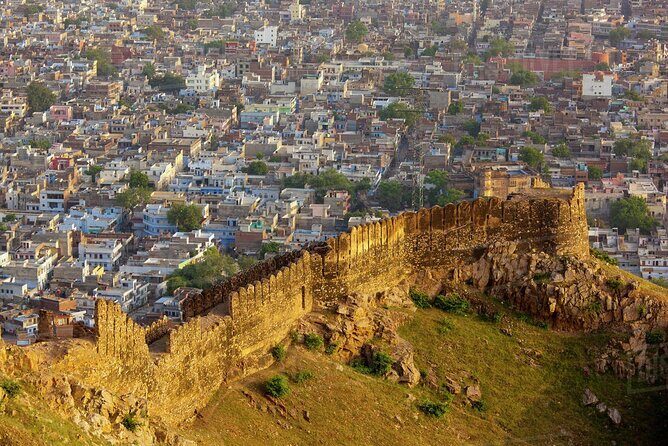
Here are the things I think you should plan for so the trip feels effortless.
Carry cash for entrance tickets
Some sites may not accept credit cards, so carry cash in INR for entrance tickets. Your guide can help locate an ATM if needed, but it is easier when you come prepared.
Know the closure reroutes
Two closure rules can affect your day:
- The Taj Mahal is closed on Fridays. If your tour date includes a Friday, the order changes to Delhi → Jaipur → Agra → Delhi.
- The Red Fort and Lotus Temple are closed on Mondays. If your schedule hits a Monday, your itinerary adjusts, and Gurudwara Bangla Sahib is visited in place of the closed sites.
This is one of the reasons I like having a guided schedule. Closures are common in India, and having a built-in reroute keeps you from losing hours.
Time transfers are approximate
Travel times are given as approximate and can vary based on traffic. That is normal. Still, it is smart to keep your expectations flexible and treat the schedule as a plan, not a stopwatch.
Pack for a mix of walking and rides
You will combine vehicle travel, rickshaw time, and walking through forts and tomb areas. Comfortable shoes help. Also bring water and something light for sun exposure, because you will be out at different times of day.
If your travel dates matter, factor in special fees
There is a mandatory Gala dinner fee on New Year’s Eve and Christmas. If your trip lands on those dates, expect that cost.
Should you book this private 3-day Golden Triangle?
You should book this tour if:
- you want the highlights of Delhi, Agra, and Jaipur without building a complex plan
- you like the idea of having a private guide at each site, not just occasional explanations
- you value practical inclusions like the Taj golf cart ride and shoe covers
- you are traveling as a solo person or as a family and want safety and control from a consistent driver and schedule
You might skip or switch options if:
- you are trying to travel on an ultra-tight budget, because meals and entry tickets are additional
- you dislike early-morning Taj planning or you prefer long unstructured time at fewer sites
One quick reality check: this is non-refundable and cannot be changed for any reason. If your dates are firm, that is fine. If not, you might want to wait until your schedule is locked.
If your goal is a focused, well-run Golden Triangle in three days, this one makes a strong case. It trades the DIY headaches for a guided plan, and the best moments—Taj timing, Old Delhi orientation, and Jaipur’s fort-and-palace mix—are exactly the ones that pay off when time is short.