REVIEW · VARANASI
Mysticism of Varanasi with Ganga Aarti (2 Hours Walking Tour)
Book on Viator →Operated by Yo Tours · Bookable on Viator
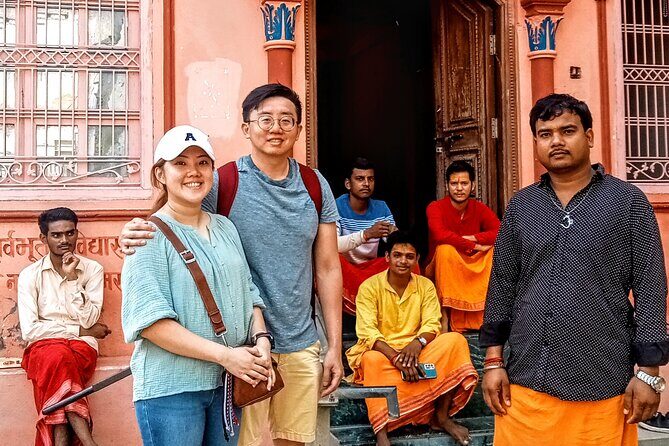
Dusk in Varanasi feels otherworldly. This 2-hour ghat walk plus Ganga Aarti experience is built around the city’s spiritual rhythm—old stone, river light, and a guide who makes the meaning click as the evening sets in. I love how the tour pairs views of the ghats with plain-language storytelling about Kashi and why rituals matter, not just what happens. I also love that guides can be English- and Hindi-speaking, and one guide name that shows up is Manish—careful, kind, and focused on explaining the stories clearly.
One consideration: the river portion is a boat ride, not a cruise. It’s easy to see why someone might expect a motorized sightseeing setup, but the experience is about being close to the water and the ceremony, with walking involved and no hotel pickup or AC along the way.
In This Review
- Key Highlights You’ll Actually Care About
- Why This 2-Hour Ganga Aarti Walk Feels Like Real Kashi
- Dashashwamedh Ghat: Where the Evening Ritual Takes Center Stage
- Banaras Ghats: Serenity, Meaning, and Rituals in Everyday Life
- Manikarnika Ghat: Moksha Beliefs Right on the Riverfront
- The Ganga Aarti Moment: Five-Part Worship, Real River Energy
- The Short Boat Ride: Close to the Water, Not a Cruise
- Price and Value: Is $13.16 Actually a Good Deal?
- Logistics That Affect Your Comfort (Meeting Point and Timing)
- Practical Tips for a Smoother Ganga Aarti Evening
- Who Should Book This (and Who Might Want a Different Plan)
- Should You Book It?
- FAQ
- How long is the Mysticism of Varanasi with Ganga Aarti tour?
- Where does the tour start and end?
- What is included in the tour price?
- Is hotel pickup or drop-off included?
- Is food and drinks included?
- Is it a cruise or just a boat ride?
Key Highlights You’ll Actually Care About
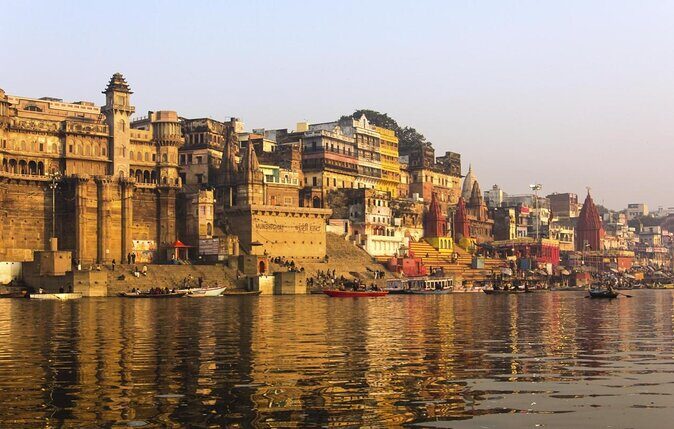
- Ganga Aarti darshan at Dashashwamedh Ghat, the core stage for the evening ritual
- A sunset start that pairs skyline views with the first steps into Kashi’s sacred geography
- Manish-style storytelling that connects rituals to daily life (and answers your questions)
- Manikarnika Ghat context, including the local belief about cremation and Moksha
- A short boat ride to shift your perspective on the riverfront
- A small, focused pace for a 2-hour window, with free admissions at stops
Why This 2-Hour Ganga Aarti Walk Feels Like Real Kashi
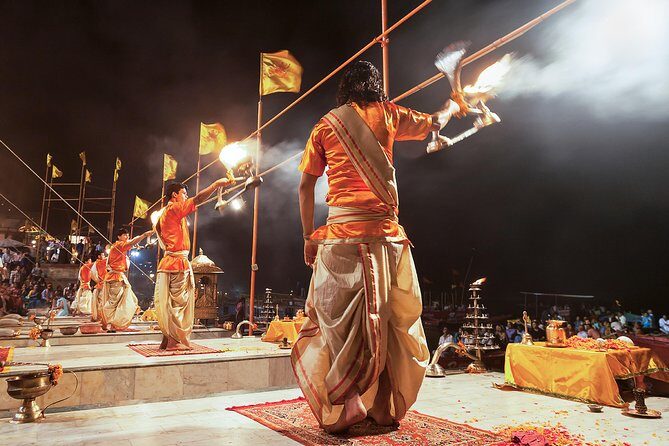
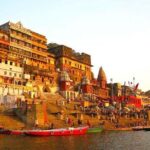
Varanasi’s mysticism isn’t a museum thing. It’s in the timing—sunset to nightfall—when the ghats wake up with prayers, music, incense, and movement. This experience is designed to help you read that timing instead of just watching it. You’ll start with a view over the river and the horizon, then move into the old ghat lanes and the spots where locals gather for spiritual life.
What makes it work is the mix: walking plus a short boat ride, then Ganga Aarti darshan with guided explanations. The goal isn’t to rush through every sight. It’s to help you notice patterns—how people approach the river, how brahmins and sadhus move through the ritual moments, and why the same ghats show up again and again in stories about Kashi.
If you want the city’s spiritual side without spending half a day, this format is strong value. Two hours is long enough to see the transformation of light and mood, but short enough that it doesn’t feel like you’re tethered to a schedule all evening.
You can also read our reviews of more walking tours in Varanasi


Dashashwamedh Ghat: Where the Evening Ritual Takes Center Stage
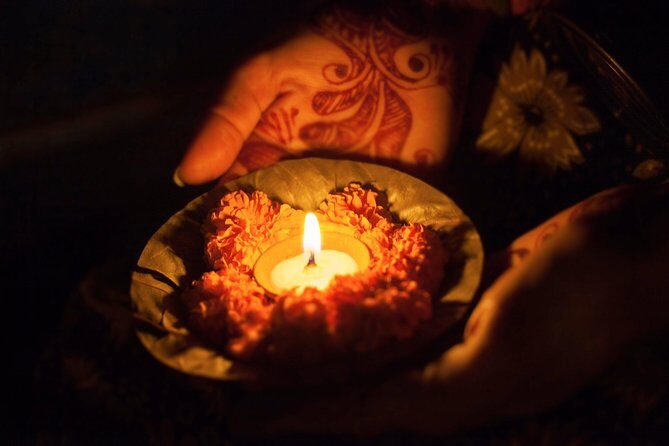
Your tour centers on Dashashwamedh Ghat, described as the oldest and holiest ghat and the heart of the action. Practically, that matters because it’s one of the places where the evening is most visible and most meaningful. If you’re trying to understand why Ganga Aarti is famous, this is where you’ll feel the energy around it.
Before the main ceremony, you’ll walk and orient yourself around Kashi’s riverfront. The guide also shares “life energy” ideas—what the tour describes as energy transformation techniques—meant to help you balance your inner system. Even if you treat these as traditional frameworks rather than something you personally “test,” the explanation helps you make sense of what you’re seeing. You’ll understand why the ritual is taken so seriously, not as entertainment but as worship.
A small drawback of this type of stop: places like Dashashwamedh can get packed, especially around ceremony time. You’ll want to stay calm, keep moving when the guide cues you, and accept that your view might be shared. The trade-off is that you’re there for the core moment.
Banaras Ghats: Serenity, Meaning, and Rituals in Everyday Life
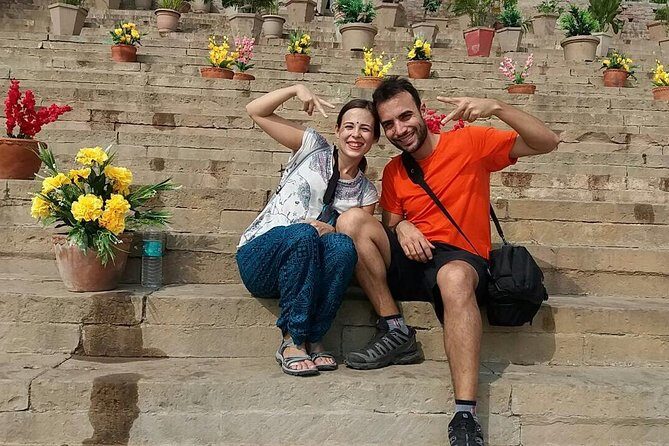
After anchoring at Dashashwamedh, the walk continues around Banaras ghats, where the emphasis is on serenity and the feeling of “life energies” along the riverfront. This is the part of the tour that helps you shift from sightseeing mode into understanding mode.
The guide focuses on how rituals show up in daily life. That’s important in Varanasi because the city’s spirituality isn’t just reserved for ceremonies; it’s tied to routines and beliefs that people carry. You’ll hear explanations that connect the idea of worship and daily practice, so when you later watch the Aarti, it lands more deeply.
The best thing about this segment is the conversation. The experience includes great conversations exploring religious aspects, beliefs, and local importance, and your English- and Hindi-speaking guide can help you ask questions rather than nod along.
What to watch for: because you’re walking around multiple ghats, you’ll likely cover uneven steps and changing ground near the river. Wear shoes you can trust. Even if the tour keeps a steady pace, Varanasi’s ghat terrain isn’t uniform.
Manikarnika Ghat: Moksha Beliefs Right on the Riverfront
Next comes Manikarnika Ghat, often described as the holiest among the sacred riverfronts on the Ganga. The tour context is especially strong here: it’s known for cremation, and the local belief is that the soul reaches salvation, or Moksha.
This is not a stop designed to shock you. It’s designed to give meaning and avoid the “what am I looking at?” confusion. When you understand why Manikarnika holds that spiritual weight in local tradition, the whole evening makes more sense. The city isn’t only about celebration; it’s also about endings, purification, and the belief that life cycles connect to the river.
A practical note: this area can feel emotionally heavy, and the tour keeps it respectful and explanatory. You’ll want to be mindful with cameras and behavior. If you’re the type who prefers a lighter tone, you might find this stop more intense than the Aarti portion—but it’s also one of the most honest parts of the evening if you truly want the city’s original sense.
The Ganga Aarti Moment: Five-Part Worship, Real River Energy
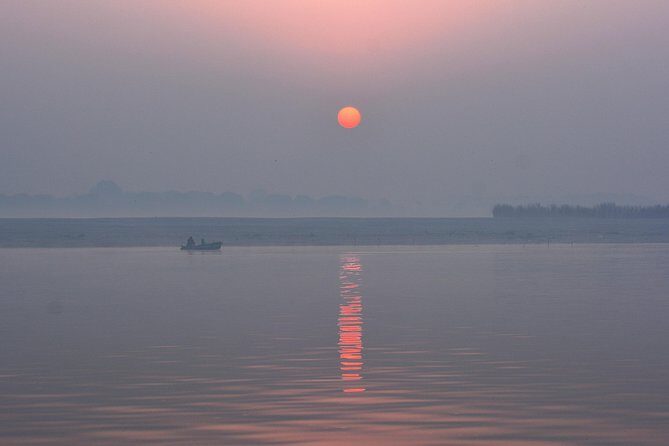
At the heart of the experience is the Ganga Aarti, presented as one of the five rituals performed for the worship of sacred river Ganga. The tour promise here is simple: you’ll witness the mystic Aarti, with darshan included, while your guide narrates what you’re seeing and why it matters.
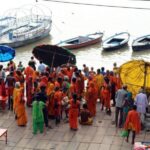
This is where the sunset timing really pays off. The river light changes fast, and the Aarti tends to feel more powerful when the sky is shifting from gold to deeper tones. You’ll see devotees walking toward the ghats with prayers to the Mother Ganges, and you’ll observe the roles of local brahmins and sadhus as part of the ritual scene.
For your best experience, don’t just look at the flames. Watch how people behave around the ritual. Notice the focus, the pacing, and the way attention concentrates on the ceremony. Your guide’s explanations help you connect the actions to meaning instead of treating it like a performance.
Yes, it can get crowded. That’s normal at major ceremony spots. Your advantage is that you’re not going in blind—you’ll have a guide who can help you find a sensible viewing position and keep the group moving at the right time.
You can also read our reviews of more tours and experiences in Varanasi




The Short Boat Ride: Close to the Water, Not a Cruise
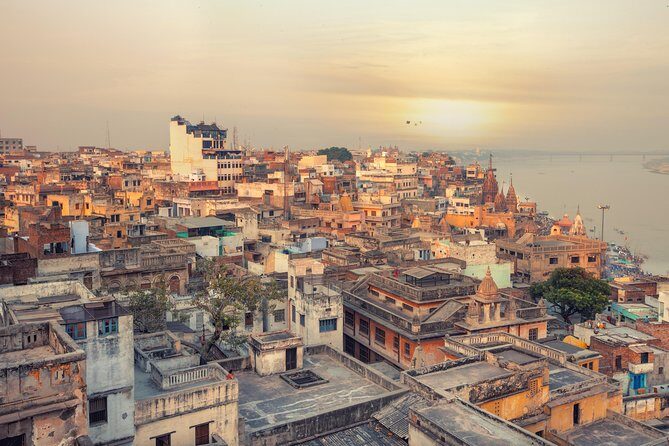
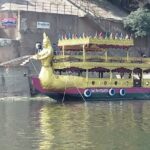
The tour combines the walking parts with a boat ride. That’s a key value point. You get a second viewpoint—different angles on the ghats and the river—without needing a long excursion.
One important clarification: the experience is a boat ride, not a cruise-style sightseeing setup. If you’re expecting a smooth, ticketed “cruise” experience, you may be disappointed. In some cases, people realize after booking that it’s a hand-driven boat, which changes the feel of the ride. It’s not about comfort levels; it’s about closeness to the ceremony atmosphere and the riverfront.
Why I think it’s worth it: when you’re standing at the ghats, you only see the riverfront in one direction. From the water, you get the geometry of the banks—how the ghats line up, where people gather, and how the Aarti area sits within the broader waterfront scene. That perspective helps you build a mental map of Varanasi that sticks.
What you should do: keep expectations realistic. This isn’t about luxury. It’s about seeing the river in motion and letting the evening shift feel physical.
Price and Value: Is $13.16 Actually a Good Deal?
At $13.16 per person for an approximately 2-hour guided experience, the value comes from what’s bundled. You’re paying for:
- a trained storyteller/guide (English and Hindi possible)
- Ganga Aarti darshan
- guided conversations that explain the religious and local importance
- the mix of walking plus boat time
- free admission at stops mentioned
For many first-timers, the cost works because you’re not paying separately for guide interpretation. In places like Varanasi, that interpretation can be the difference between watching strangers and understanding a living tradition.
Also, the tour is designed to run without hotel pickup and without an air-conditioned vehicle. That’s a trade-off. But for a short, evening-focused experience, it often keeps the price sensible.
If you like planning around sunset, this tour’s timing is another value driver. Many people book about 9 days in advance on average, which tells you the timing is popular—especially around the Aarti window.
Logistics That Affect Your Comfort (Meeting Point and Timing)
You meet at St. Thomas Church, Luxa Rd, Luxmanpura, Varanasi. The end point returns you back to the meeting point. That round-trip structure matters because you’re not left figuring out how to get home after dark. Still, you’ll want to arrive a bit early so you’re not stressed while the group forms.
The tour is near public transportation, which helps if you’re already exploring the area on your own earlier in the day. It also uses a mobile ticket, which is convenient if you don’t want paper.
The experience requires good weather. If conditions aren’t right, it’s offered on another date or you get a full refund. Since this is an outdoor walk and river-area evening, weather isn’t a minor detail—it’s part of the experience.
Practical Tips for a Smoother Ganga Aarti Evening
Here’s how to set yourself up for success without overcomplicating it.
First, dress for comfort and respectful coverage. The tour goes through sacred spaces and riverfront areas. You’ll likely want clothing that doesn’t feel too flashy and lets you move easily. Bring a light layer in case the evening cools off.
Second, plan for standing and walking near uneven steps. The ghats are not flat sidewalks. Good shoes beat “cute” sandals.
Third, manage your expectations about crowds. Dashashwamedh and the Aarti areas can be busy. If you come in ready to share space and follow your guide’s cues, the experience feels structured rather than chaotic.
Fourth, charge your phone earlier. You’ll want photos, but keep camera time respectful when ritual focus is strongest.
And last: ask questions. The tour is built around conversation about religious aspect, beliefs, and local importance. If something feels confusing—like the energy talk or the meaning of Moksha at Manikarnika—this is exactly when to bring it up.
Who Should Book This (and Who Might Want a Different Plan)
This tour is a great fit if:
- you’re short on time but want a real evening on the Ganga
- you like guided context so the ritual has meaning
- you want both river views and the main Aarti moment in about 2 hours
- you appreciate storytelling and explanations, especially around Kashi
It might not be your best match if:
- you expect a cruise experience with lots of comfort and minimal walking
- you have little patience for crowded ceremony areas
- you’re avoiding emotionally heavy spaces, since Manikarnika’s cremation context is part of the tour’s meaning
If you’re traveling on a budget, the price-to-inclusion ratio is strong, as long as you’re okay with the outdoor, walking-heavy nature of a ghats evening.
Should You Book It?
If your goal is to experience Varanasi in its original sense—ghats at sunset, Ganga Aarti at the main stage, plus context from a guide—this is an easy yes. The $13.16 price works because the value is in interpretation and in getting you to the right moments, not in fancy extras.
Just go in with the right mental picture: it’s a guided walking + boat ride experience, not a cruise. If you’re comfortable with that, you’ll likely leave with a better understanding of what Kashi means to the people who live with the river every day.
FAQ
How long is the Mysticism of Varanasi with Ganga Aarti tour?
The tour lasts about 2 hours.
Where does the tour start and end?
It starts at St. Thomas Church on Luxa Rd in Varanasi and ends back at the same meeting point.
What is included in the tour price?
It includes Ganga Aarti darshan, conversations with a guide about religious and local importance, and a guide who can speak English and Hindi.
Is hotel pickup or drop-off included?
No. Hotel pickup and drop-off are not included.
Is food and drinks included?
No. Food and drinks are not included.
Is it a cruise or just a boat ride?
It includes a boat ride as part of the experience, not a cruise ride.