REVIEW · VARANASI
Varanasi at Dawn: Boat Ride & Storytelling Walk Through Old City
Book on Viator →Operated by Varanasi Guru · Bookable on Viator
Dawn in Varanasi rewires your brain. This tour starts at Assi Ghat for the morning aarti, then moves you along the river and into old lanes with a guide who explains the meaning behind what you’re seeing, not just the facts.
What I love most is the way Sourabh (your storyteller guide, in the guides’ reviews) makes traditions feel logical and human. I also really liked the promise of underground access, including subterranean temples and private shrines that you normally wouldn’t stumble into.
One consideration: the stop at the cremation ground is powerful and can feel intense. If you’re hoping for a light, purely scenic morning, this may tug at your emotions.
In This Review
- Key highlights at a glance
- Dawn at Assi Ghat: why the morning matters
- Scholar-led storytelling with a local historian in the lead
- Morning ritual walk: Subah-e-Banaras, a stepwell, and an akhada
- The Ganges boat ride to Manikarnika Ghat (and why it’s worth it)
- Cremation ground and moksha: learning how the rituals make sense
- The leaning Shiva temple: iconography you can actually talk about
- Away from the tourist trail: local ghats and raw river life
- Underground temples and private shrines behind unmarked doors
- Kachodi and chai stops: when food supports the story
- Price and value: what $78.96 buys you in 3 hours
- Who should book (and who might skip it)
- Should you book this Varanasi dawn experience?
- FAQ
- FAQ
- How long is the experience?
- Where does the tour start and end?
- Is this a private tour?
- What’s included in the experience?
- Is a ticket needed?
- Who is the tour provider?
- What is the price per person?
- Can I cancel for a full refund?
- Is it easy to reach by public transportation?
Key highlights at a glance
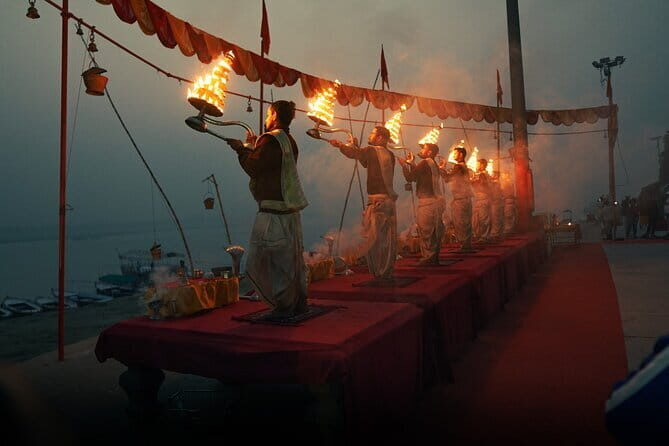
- Subah-e-Banaras morning aarti at Assi Ghat in a quieter, sunrise setting
- Boat ride from Assi Ghat to Manikarnika Ghat with a comfortable view of river rituals
- Storytelling that links rituals to meaning, including references to Vedic philosophy and iconography
- Underground access to subterranean temples and private shrines behind unmarked doors
- Artisanal kachodi and chai at heritage-minded stops
- A mix of major icons and local ghats, including a Shiva leaning temple and quieter riverside scenes
Dawn at Assi Ghat: why the morning matters
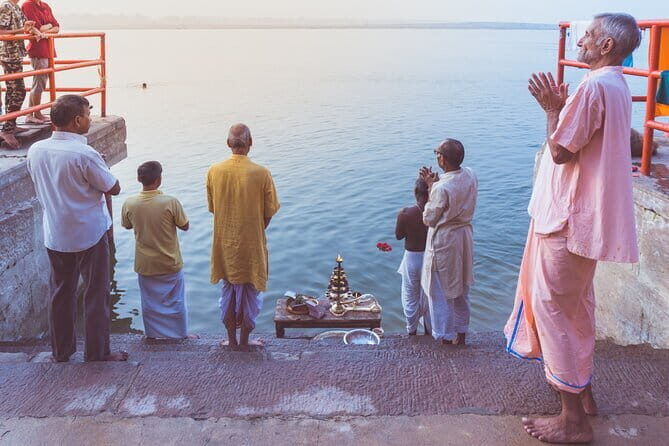
If you only know Varanasi from evening photos, this morning start changes the whole vibe. At sunrise, the city feels more like a place where people are living their faith than a stage for visitors.
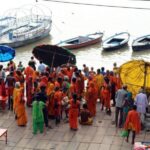
The tour focuses on Subah-e-Banaras, a morning aarti at Assi Ghat. You get that ritual atmosphere early, when it’s generally less crowded than the big evening gatherings—so you can actually watch and absorb what’s happening.
This isn’t just “see a ceremony.” The guide’s job is to translate the why. Expect the kind of talk that connects the symbolism you see—gestures, objects, and temple forms—to the beliefs behind them.
You can also read our reviews of more walking tours in Varanasi


Scholar-led storytelling with a local historian in the lead
You’re paying for more than directions. The experience is designed as a heritage masterclass, led by local historians and conservation-minded experts who’ve spent decades documenting Varanasi’s cultural layers.
Here’s what that means for your day: you’re less likely to get a generic route where the guide rushes from point A to point B. Instead, you’ll hear about Vedic philosophy, the meanings in iconography, and architectural history in plain language.
The best part is the tone. In the guides’ reviews, Sourabh stands out for staying calm and focused while talking through complicated ideas. You’ll get the feeling you’re in the hands of someone who cares about accuracy and context.
Morning ritual walk: Subah-e-Banaras, a stepwell, and an akhada
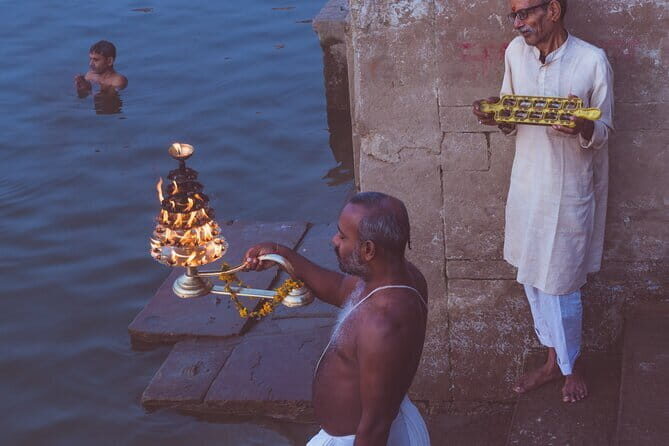
The first chunk of your experience centers on Assi Ghat at sunrise. You’ll witness the morning aarti and then move through nearby heritage sites that most short tours skip.
One stop is an ancient stepwell. Stepwells are easy to overlook from street level, but up close they tell a story about water, community, and how older cities planned for everyday life. Even if you’ve seen stepwells elsewhere in India, this one lands differently because it’s woven into the rhythm of Kashi.
Another stop is a traditional akhada. This is where physical culture and spiritual discipline historically connect. It’s a useful contrast to the religious imagery by the river, because it shows how devotion doesn’t only live in temples—it also lives in training spaces and routine.
If you want a practical tip: arrive ready to stand, walk, and look. This tour works best when you take your time observing and let the guide’s explanations build the picture.
The Ganges boat ride to Manikarnika Ghat (and why it’s worth it)
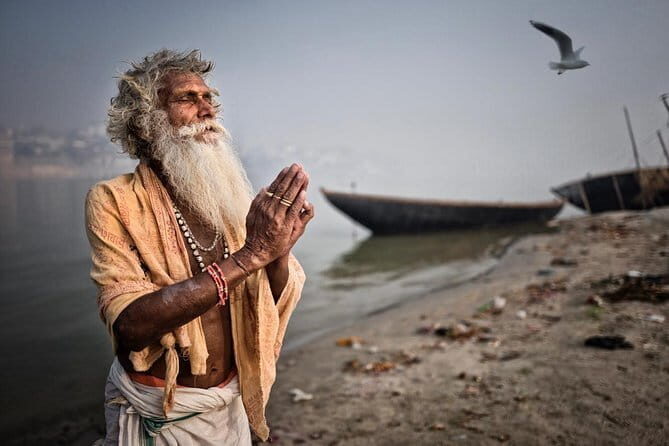
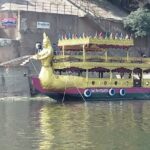
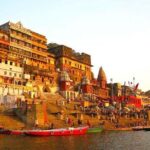
After the land-based start, you’ll take a boat ride from Assi Ghat to Manikarnika Ghat. The river is the visual spine of Varanasi, and being on the water gives you a view you can’t get from the steps.
From the boat, you’ll also watch the Ganga Aarti for about 40 minutes, with admission handled as part of the experience. Watching from the water can feel like you’re hovering just outside the action—close enough to see the ritual clearly, far enough to breathe.
The boat portion also changes how you process the city. As ghats glide past, you begin to notice how each riverside block has its own personality. Your guide’s storytelling helps you read those details instead of treating everything as one long blur.
One drawback to keep in mind: you’ll be on a boat, so plan for time sitting and waiting between scenes. If you get motion-sick easily, it might be worth considering how you typically feel on small rides—nothing is stated here about special arrangements.
Cremation ground and moksha: learning how the rituals make sense
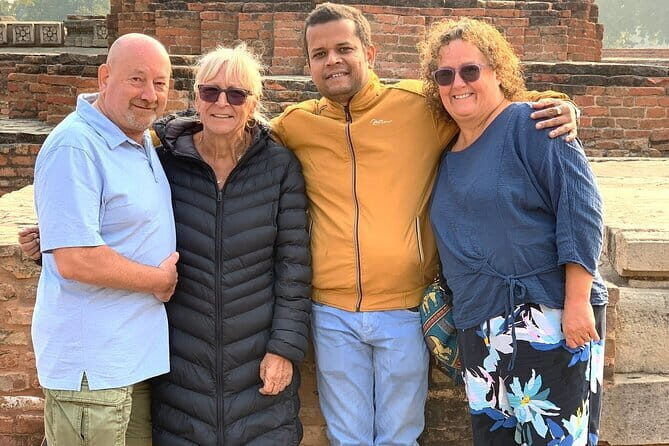
One of the most meaningful stops is at the great cremation ground, where rituals honor the journey of life. This is not a casual sightseeing stop. It’s a place where belief becomes action, and the guide’s explanations matter a lot.
The tour frames what you see through the idea of moksha, which is the spiritual goal of liberation in Hindu thought. In practice, that means you’re not just watching ceremonies—you’re hearing the logic of why this place matters to the living.
I like that the experience doesn’t hide behind vague words. It helps you connect the physical steps of the ritual to the metaphysical layer behind it. You come away understanding the worldview, even if you don’t share it.
This is also where sensitivity matters most. If you’re easily distressed by death-related rituals, go slowly, listen to your guide’s pace, and choose your comfort level.
You can also read our reviews of more boat tours in Varanasi




The leaning Shiva temple: iconography you can actually talk about
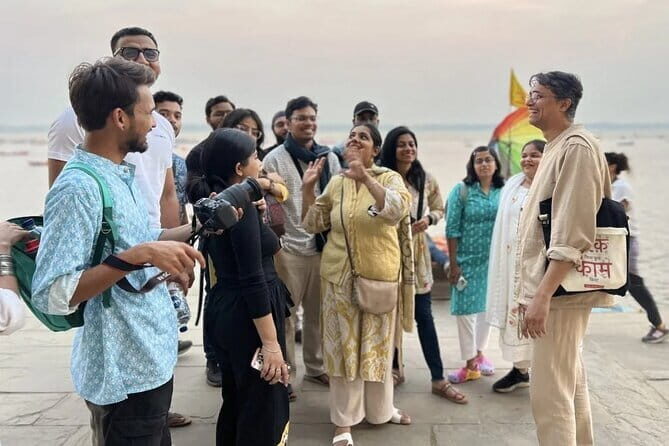
Next you’ll visit the leaning temple dedicated to Lord Shiva. Temples like this are often reduced to one famous visual detail, but the value here is that the guide turns that visual quirk into story.
You’ll learn about the architecture and the legends that make the temple an iconic spiritual site in Kashi. That’s a big deal for first-timers: Varanasi’s sacred landmarks can feel “similar” until someone points out the specific features—angles, structure, and symbolism—and explains what they mean.
If you care about art and sacred design, this stop rewards you. If you just want a quick photo, it can still be interesting, but the payoff is clearer when you let the guide’s context shape how you look.
Away from the tourist trail: local ghats and raw river life
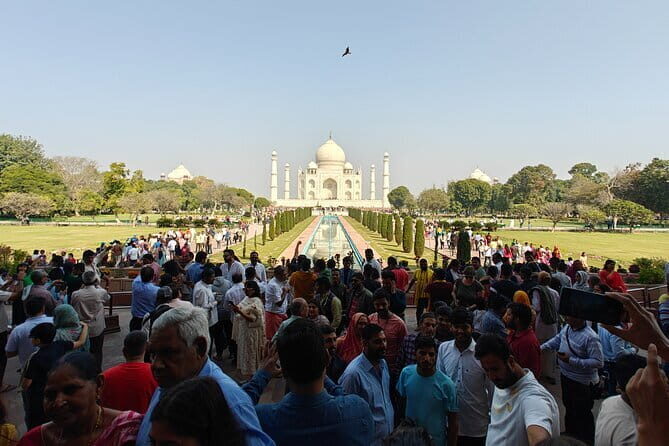
The itinerary includes a calmer ghat scene—one that offers a glimpse into how locals handle morning and daily spiritual life. This part is important because it keeps the experience from becoming only about famous monuments.
The guide helps you notice what’s going on at ground level: how people move, how routines repeat, and how ritual isn’t limited to the biggest “headline” moments. That’s where Varanasi starts to feel real.
I also like that the tour doesn’t pretend Varanasi is a polished museum. The charm here is that it’s lived-in. If you’re the type who hates crowded photo lines, these quieter pockets can be a relief.
Underground temples and private shrines behind unmarked doors
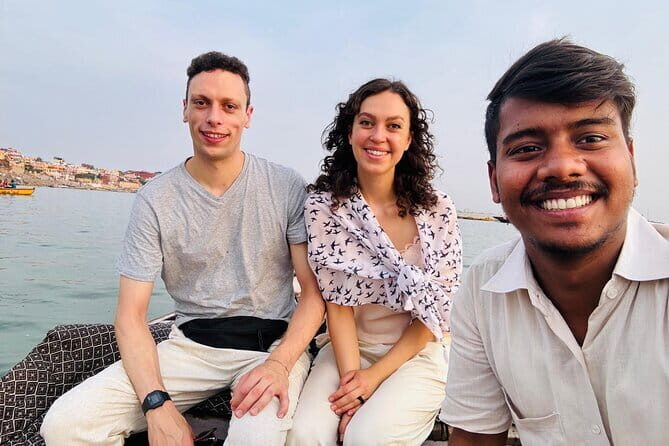
The premium claim isn’t just marketing language. This tour includes underground access—subterranean temples and private shrines hidden behind unmarked doors that aren’t accessible in the usual public way.
In a city like Varanasi, space and secrecy matter. These hidden spaces change how you think about worship, because they show the layers below the surface—physically and spiritually.
You’ll also hear about the metaphysical layers behind rituals, including Sanskrit origins and mythic context. Even if you don’t read Sanskrit, you’ll start to recognize how words and images are linked in Hindu tradition.
One practical note: underground areas can mean tighter spaces, steps, and different lighting. Wear comfortable shoes and expect uneven ground in older lanes.
Kachodi and chai stops: when food supports the story
This experience builds in curated gastronomy, specifically tasting artisanal kachodi and chai at spots vetted for heritage value. That matters more than people think.
Food in Varanasi isn’t only about flavor. It’s about local timing, local routines, and how daily life overlaps with religious rhythm. A good guide helps you understand why certain places are “known” for a reason—without turning it into a gimmick.
Keep expectations realistic: this is a heritage walk, so you’re not doing a long meal. You’re sampling, tasting, and using food as another way to read the city.
Price and value: what $78.96 buys you in 3 hours
At $78.96 per person for about 3 hours, you’re paying for intimacy, not just sightseeing. This is a private tour/activity, so your group is the only group in the experience, and that usually improves the pacing and Q&A time.
You’re also paying for the specialist angle: historians and conservation-minded locals, plus the access component (especially the subterranean and private shrines). In many cities, “premium” means a nicer car or a more famous name. Here, the premium is the content and access.
Is it good value? If you’re the kind of traveler who wants meaning—rituals explained, architecture put into context, and stories that connect dots—yes, the price starts to make sense quickly. If you mainly want quick photos and simple descriptions, you could likely find lower-cost group tours.
Who should book (and who might skip it)
This is a strong match for you if:
- You enjoy cultural context and want explanations that connect ritual to belief.
- You’re curious about Varanasi beyond the postcard spots.
- You like private pacing, guided by someone clearly passionate about accuracy.
You might prefer something simpler if:
- You want a relaxed morning with minimal emotional intensity.
- You dislike tours that include deeper cultural or religious discussions.
- You get uncomfortable in crowded, historic lanes and tight spaces—this tour includes walking and older areas.
Should you book this Varanasi dawn experience?
I think you should book it if your goal is understanding, not just seeing. The early timing, the boat perspective, and the chance to access underground spaces all point to an experience designed for people who care about the meaning behind what they witness.
It’s also a smart pick if you’ve felt frustrated by generic tours in the past. With a guide like Sourabh, the storytelling feels more like learning from someone who knows how everything fits together—architecture, ritual, myth, and daily life along the river.
Just be honest with yourself about the cremation ground stop. If you can handle intense reality with respectful curiosity, this tour is one of the more thoughtful ways to experience Varanasi at dawn.
FAQ
FAQ
How long is the experience?
It runs for about 3 hours.
Where does the tour start and end?
The start point is Assi Ghat, Shivala, Varanasi. The end point is listed near Chowk Police Station on Maidagin Road.
Is this a private tour?
Yes. It’s a private tour/activity, and only your group will participate.
What’s included in the experience?
You’ll enjoy a sunrise morning aarti, a boat ride from Assi Ghat to Manikarnika Ghat, visits connected to the cremation ground and moksha beliefs, the leaning Shiva temple, and a look at quieter local ghats. The experience also includes tasting kachodi and chai at heritage-minded stops, plus storytelling throughout.
Is a ticket needed?
You get a mobile ticket.
Who is the tour provider?
The provider is Varanasi Guru.
What is the price per person?
The price is listed as $78.96 per person.
Can I cancel for a full refund?
Yes. You can cancel up to 24 hours in advance for a full refund. If you cancel less than 24 hours before the start time, the amount paid won’t be refunded.
Is it easy to reach by public transportation?
It’s listed as near public transportation, and most travelers can participate. Service animals are allowed.