REVIEW · VARANASI
7 Days Varanasi to Lumbini Buddhist Expedition ( All Inclusive )
Book on Viator →Operated by yattri · Bookable on Viator
Buddha’s route, packed into a week. What makes this trip click is the mix of iconic locations tied to Gautama Buddha’s life, plus the practical ease of private transportation and 4-star hotel stays built into the schedule. I also like that the key days include a professional English-speaking guide, so you’re not just sightseeing with guesswork. One thing to consider: you’ll spend plenty of hours on the road between regions, and lunch and dinner are not included.
This is a point-to-point journey that starts in Varanasi and finishes in Lucknow, with hotel check-ins and overnights (6 nights) along the way. You’ll hit places such as Sarnath and Ganga Aarti in Varanasi, then move through Bodh Gaya, Rajgir, Nalanda, Kushinagar, and into Lumbini in modern-day Nepal, before ending in Lucknow. It’s offered as a private group experience, with pickup and a mobile ticket to keep things straightforward.
In This Review
- Key highlights
- Entering the “all inclusive” rhythm: what you should expect
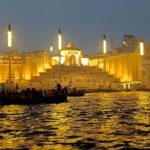
- Day 1 in Varanasi: Sarnath tickets plus Ganga Aarti at night
- Day 2 Bodh Gaya: Great Buddha Statue, Sujata Kuti, and Mahabodhi Temple
- Day 3 Rajgir and Nalanda via Bimbisar Jail, then an overnight in Patna
- Day 4 Vaishali and Kushinagar: Parinirvana Stupa and Ramabhar Stupa
- Day 5 Lumbini: getting to the birthplace location and visiting Maya Devi Temple
- Day 6 Kapilavastu and Shravasti: sermons, miracles, and Angulimala Stupas
- Day 7 Lucknow: finishing with Imam Bara and a Rumi landmark
- Hotels and breakfasts: the downtime that makes the days work
- Value check: is $674.69 fair for this many sacred stops?
- Guide quality and group feel: what to watch for on the ground
- Tips that actually help: dress, patience, and daily planning
- Should you book this Varanasi to Lumbini Buddhist expedition?
- FAQ
- What is the start point and start time for the tour?
- What’s included in the price?
- Are lunch and dinner included?
- Are entrance tickets included?
- Is the tour private?
- What is the cancellation policy?
Key highlights
- English-speaking guide coverage listed for Varanasi, Sarnath, Bodhgaya, Kushinagar, and Lumbini
- 4-star private rooms for 6 nights plus breakfast included (6 breakfasts)
- Major Buddha-related stops from Mahabodhi Temple to Parinirvana Stupa and Maya Devi Temple
- Long but timed drives with specific distances and travel hours between regions
- Admissions handled on-site where marked as included (and some sites are free)
- Dress code reminders: fully covered clothes are expected at maximum religious spots
Entering the “all inclusive” rhythm: what you should expect
Let’s translate the package name into real-life expectations. The trip is all inclusive for the big stuff: private transportation, 4-star hotels for 6 nights, a guide on several core legs, and breakfast each morning. But lunch and dinner are on you, so you’ll want to budget meals and snack breaks on the days with long driving.
Pace is the other big factor. The itinerary strings together serious distances: Varanasi to Bodh Gaya is listed as about 247 km and roughly 7 hours. Later, you’ll do about 182 km in around 8 hours, then about 256 km in around 7 hours, and so on. That’s not a dealbreaker, but it is the difference between a relaxed vacation and a focused pilgrimage.
You also get a start that’s easy to plan around. Pickup is offered from the Varanasi airport or railway station, with a listed start time of 11:30 am. The mobile ticket helps reduce last-minute scrambling.
You can also read our reviews of more tours and experiences in Varanasi
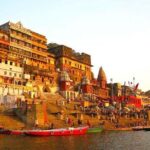
Day 1 in Varanasi: Sarnath tickets plus Ganga Aarti at night
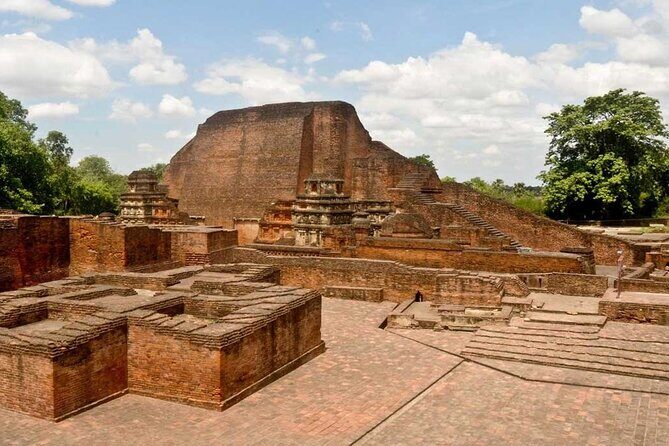
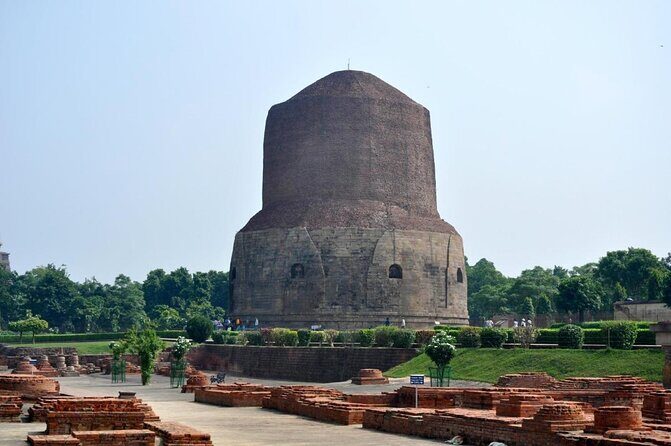
Day 1 is a smooth opener. After pickup from the airport or railway station, you head straight to your hotel for check-in, plus time to freshen up. Then you move on to Sarnath for about 3 hours, with the admission ticket included.
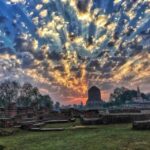
Sarnath works as a first step because it gets you into the Buddhist theme quickly, without starting the day with a marathon drive. It’s also one of those places where going slowly matters—walking, reading plaques, and letting your guide connect the sites with what you’re learning.
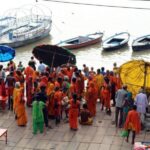
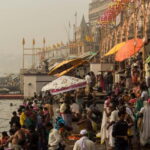
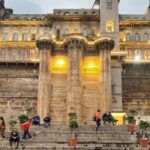
In the evening, you get Ganga Aarti for about 2 hours. The ticket is marked as free, and it’s the kind of moment that changes your whole mood for the trip. Even if you’re not a “ceremony person,” this is where you feel the city’s spiritual energy in real time. Plan to dress appropriately for a religious setting and to arrive with a little patience.
Day 2 Bodh Gaya: Great Buddha Statue, Sujata Kuti, and Mahabodhi Temple
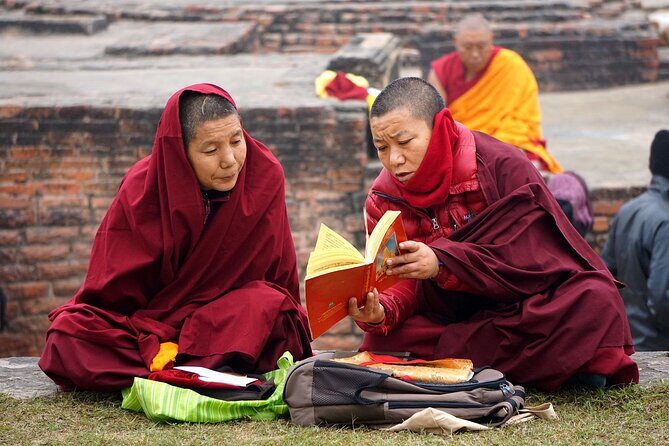
Day 2 starts with a long drive—about 247 km and around 7 hours from Varanasi to Bodh Gaya. When a day begins like that, I like having structure once you arrive, and this itinerary gives you that structure quickly.
You visit the Great Buddha Statue (admission included, about 1 hour). The listing adds context: the consecration ceremony took place on November 18, 1989, and the consecration was graced with the presence of His Holiness the XIV Dalai Lama. That’s the kind of detail that helps a site feel more than just a photo backdrop.
Next up is Sujata Kuti for about 1 hour, with the admission ticket included. Then comes Mahabodhi Temple for about 1 hour, also marked as admission included. The Bodhi Tree is noted as being part of the Mahabodhi Temple complex, so you’re not just seeing buildings—you’re seeing the setting tied to the story’s turning point.
A practical note: this is a day where your feet and attention matter. You’ll want comfortable shoes and a light layer, especially if you’re moving between temple areas. Since lunch and dinner aren’t included, you’ll also want to have your day’s meal timing planned so you’re not scrambling while everyone else is in line for the next stop.
Day 3 Rajgir and Nalanda via Bimbisar Jail, then an overnight in Patna
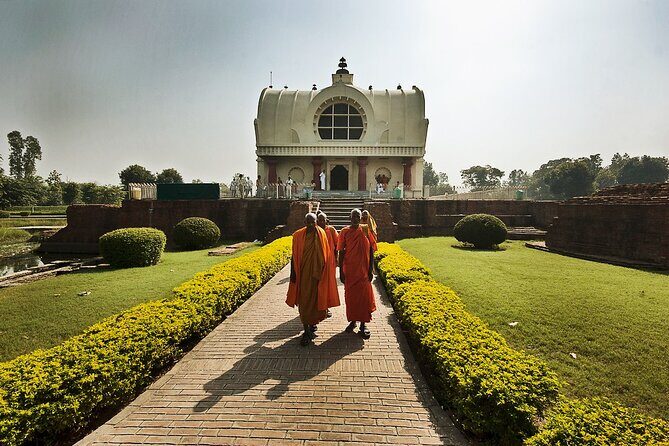
Day 3 is essentially a route day with built-in stops, moving from Bodh Gaya toward Patna by way of Rajgir and Nalanda (about 182 km, roughly 8 hours total driving time listed). Because of that long transit block, the stops you get are your payoffs.
First is Rajgir for about 2 hours, with the ticket marked as free. Then you go to Bimbisar Jail, about 1 hour, with admission included. The listing gives specific context: it’s the jail where King Bimbisara was detained by his son Ajatshatru. Nearby is the Maniyar Math, described as a beautiful spot right on the northern side of the jail.
After Rajgir, you visit the Nalanda University Ruins for about 1 hour, with admission included. The itinerary frames Nalanda as an old center of Buddhist learning and an international center for Buddhist studies. Even if you’re not a “ruins enthusiast,” these places are where you start to see Buddhism as more than a set of temples—you see it as a tradition of study and teaching.
You end the day with an overnight stay in Patna. That hotel night is valuable. After driving days, a proper sleep is what keeps the rest of the pilgrimage from turning into logistical survival.
Day 4 Vaishali and Kushinagar: Parinirvana Stupa and Ramabhar Stupa
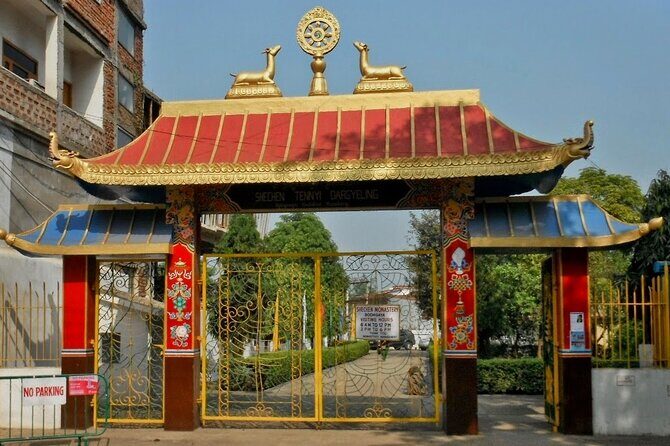
Day 4 starts with another long move: about 256 km and around 7 hours from Patna to Kushinagar, with a stop on the way at Vaishali. Vaishali is listed for about 1 hour with ticket marked as free.
Then you get Kushinagar, listed for about 12 hours and marked as ticket free for the stop block. That long time window matters because it suggests you’re meant to experience Kushinagar as more than one photo stop.
You then visit Parinirvana Stupa (about 2 hours, admission included). The listing calls it a huge brick stupa excavated in 1867 and notes a Brahmi inscription on the walls, plus a reclining Nirvana statue of Buddha inside it. After that comes The Ramabhar Buddhist Stupa (about 1 hour, admission included), tied to the story of where Buddha was cremated and reached Mahaparinirvana after his death.
This is one of the most emotionally weighted parts of the route, so I think it’s worth going slow here too. Don’t treat it like a checklist. The stupa spaces are designed for lingering, and you’ll get more out of it if you give your mind time to settle between walks.


Day 5 Lumbini: getting to the birthplace location and visiting Maya Devi Temple
Day 5 shifts from Indian sites into Lumbini, which is part of Nepal today. You travel about 180 km and roughly 5 hours from Kushinagar to Lumbini. Once you arrive, the schedule says you transfer to the hotel, and then you head to the day’s main visit.
The highlight is Maya Devi Temple for about 2 hours, with admission included. The listing is clear about what makes it special: it sits next to the sacred pool called Pushkarini and a sacred garden, and it marks the spot where Maya Devi gave birth to Gautam Buddha. There are also archaeological remains described as being in the area.
One reason Lumbini hits differently is that the day includes travel time plus an arrival that feels like a change in atmosphere. You’re not just moving locations—you’re moving closer to the start of the story your trip is following.
Also, because you’re at a religious site area, keep dress coverage in mind. The tour info specifically mentions fully covered clothes at maximum religious spots. Bring something you can wear comfortably for walking and for temple entry.
Day 6 Kapilavastu and Shravasti: sermons, miracles, and Angulimala Stupas
Day 6 is another “route plus meaning” day. You travel about 225 km and around 6 hours from Lumbini to Shravasti via Kapilavastu.
Kapilavastu is listed for about 1 hour with admission included, and it’s framed as the childhood place of Buddha. Then you move on to Shravasti District, listed at about 12 minutes with admission included. The listing also notes that Buddha preached many sermons there, including stories about miracles and levitating, with the monsoon stay at Jetavana monastery mentioned in the description.
The main time on the ground comes next with the Angulimala Stupa stops. You visit Angulimala Stupa (about 1 hour, admission included), and then Angulimala Stupa again (about 1 hour, admission included), described with more details as Pakki Kuti or Angulimala Stupa, excavated in 1863. It’s also noted as one of the largest mounds found in the Mahet area of Shravasti. The listing includes a reference to Fa-Hien as well.
Practical tip: when a tour repeats a site name with different sub-areas, it usually means there’s more than one meaningful structure or viewpoint. Be ready for a second round of walking and reading. I like taking a small break in the middle if your legs get tired, because temple context and physical context help you connect the story.
Day 7 Lucknow: finishing with Imam Bara and a Rumi landmark
The final day turns from the Buddhist route to a broader cultural finish in Uttar Pradesh. You travel about 154 km and roughly 4 hours from Shravasti to Lucknow.
Once you arrive, the schedule includes about 5 hours covering Imam Bara and Rumi (the listing cuts off there, so you may want to confirm the exact second stop name before you go). The key point is that this gives you a release valve at the end: you’re not spending the whole day in temple compounds tied to one storyline.
At this stage, I’d also manage expectations. This isn’t a “rest day,” because you still have a drive and sightseeing. But it is a satisfying way to end—especially if you want your final hours to feel like a city experience rather than another stupa.
Hotels and breakfasts: the downtime that makes the days work
The package includes 4-star hotels and private rooms for 6 nights. That’s a big deal on a tour like this, because the driving days can drain you. A quiet room, a reliable shower, and a real bed are what keep you engaged on the next temple day.
Breakfast is included for 6 mornings. Since lunch and dinner aren’t, the best strategy is to treat meals as flexible time buffers. When the itinerary includes long temple visits or long drives, your driver and guide (or your schedule) may leave meal timing tight, so you’ll want to plan simple snacks and water.
Based on the positive notes from past participants, service around transfers and hotel comfort is usually handled well. Some people specifically praised comfortable hotel stays and consistent buffet breakfast. That lines up with what you need most on a schedule like this: steadiness.
Value check: is $674.69 fair for this many sacred stops?
At $674.69 per person for 7 days, this isn’t priced like a bare-minimum tour. You’re paying for private transportation, 4-star lodging for 6 nights, and a professional English-speaking guide on several key regions (listed for Varanasi, Sarnath, Bodhgaya, Kushinagar, and Lumbini). GST is included too.
Where the value shows up most is the “friction you don’t have to solve.” Traveling between places like Bodh Gaya, Patna, Kushinagar, and Lumbini is not just about distance. It’s about timing, finding the right entrances, and keeping everyone on schedule—especially when you’re moving through religious sites where entry flow matters.
Where you should budget extra is obvious: lunch and dinner are not included. Also, if you’re someone who snacks constantly or plans to shop at each stop, you’ll spend more than you might on a standard city break. But even with those extras, the included structure is what keeps the trip from turning into chaos.
Guide quality and group feel: what to watch for on the ground
The tour includes a professional English-speaking guide for several major legs. That matters because these sites are layered with meanings, and the guide can connect dots between the route you’re taking.
In feedback from past guests, names like Arvind came up as a guide who made the trip feel organized and easy, and other in-charge staff like Salman were mentioned for smooth coordination. You’ll also see recognition for the operator team, including Mr. Kasif. Those are good signs for communication and timing.
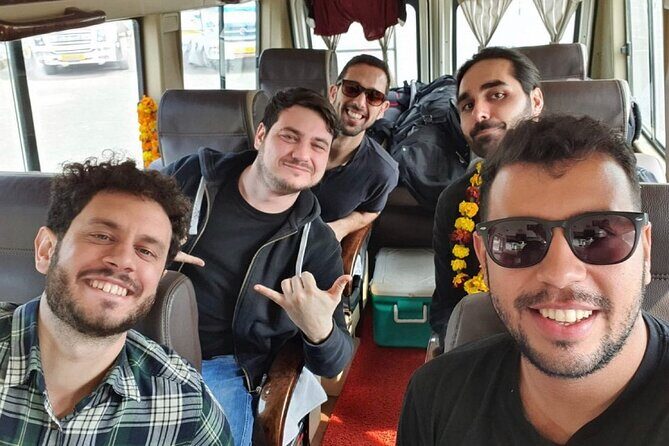
One more point: the experience is listed as private, meaning you shouldn’t be stuck with random strangers or forced pacing. That’s helpful when you’re trying to manage religious-site etiquette and a schedule full of driving.
Tips that actually help: dress, patience, and daily planning
Here’s how to make the trip easier on yourself without overthinking it.
- Bring fully covered clothes for religious spots. The tour info explicitly mentions covered clothing at maximum religious locations, so pack for that even if you’re hot.
- Wear shoes that handle walking. Temple complexes and stupa areas mean uneven steps and long stretches.
- Plan meals as your own responsibility. Lunch and dinner are not included, so keep your schedule mentally open for eating when it’s practical.
- Hydrate on drive days. Long travel hours stack up fast.
- Keep a small buffer for each stop. Even when the schedule lists durations, entry lines and site rules can add time.
If you like thoughtful pacing, this trip rewards it. If you’re the type who wants to sprint from one “must-see” to the next, you might find the road time and temple time both feel heavy. That’s not bad. It’s just a personality match question.
Should you book this Varanasi to Lumbini Buddhist expedition?
I’d book this if you want a guided, structured pilgrimage that hits the core Buddha-related places across India and ends in Lucknow. It’s especially good value if you appreciate having private transport, 4-star hotels, and breakfast handled, while a guide helps you connect what you’re seeing.
You might skip it if you dislike long driving days or if you strongly prefer having all meals included. Lunch and dinner being your responsibility is the biggest trade-off, and the route includes multiple days of 7-8 hours of travel time.
If you do book, you’ll get the best experience by traveling with comfortable clothing for religious sites, planning your own meal budget, and mentally accepting that this is a focused route week—not a slow cruise through history.
FAQ
What is the start point and start time for the tour?
The tour starts in Varanasi at the airport (Varanasi Airport) with a listed start time of 11:30 am.
What’s included in the price?
Included features are pickup offered, professional English-speaking guide coverage for Varanasi–Sarnath–Bodhgaya–Kushinagar–Lumbini, 4-star hotels with private rooms for 6 nights, private transportation, GST, and breakfast (6). Mobile ticket is also listed.
Are lunch and dinner included?
No. Lunch and dinner are not included in the package.
Are entrance tickets included?
Some admission tickets are included and others are marked as free. For example, Sarnath admission is included, Mahabodhi Temple admission is included, and several other listed sites are marked as ticket free.
Is the tour private?
Yes. It is described as a private tour/activity, with only your group participating.
What is the cancellation policy?
Free cancellation is available up to 24 hours in advance of the experience start time for a full refund. If you cancel less than 24 hours before, the amount paid is not refunded.