REVIEW · VARANASI
Serene and beautiful Sarnath Private Half Day Tour
Book on Viator →Operated by Sachan Tours · Bookable on Viator
Sarnath can feel surprisingly calming. In just about four hours, you get a focused look at one of Buddhism’s most sacred sites, with temples, archaeological remains, and a small museum full of meaning. I like that this tour doesn’t rush you with guesswork; you’re guided through Buddhist philosophy and stories tied to Buddha’s previous lives, the Jataka tales.
Two big things I loved: first, the guide experience. In the best way, I found it unusually hands-on because Karan Sachan brings restoration and history perspective to what you’re seeing. Second, the stop mix is efficient—admission tickets are included across the main sights, so you can spend your time looking instead of negotiating entry.
One drawback to plan around: this tour is weather-dependent, and it’s only half a day. If you want slow museum time or you’re the type who needs long pauses for photos and notes, you might wish you had extra hours in Sarnath.
In This Review
- Key highlights from this Sarnath private half day
- Why Sarnath fits a calm half-day plan
- Mool Gandh Kuti Vihara Temple and its Japanese-mural art
- Deer Park ruins: stupas, monastery remains, and quiet archaeology
- The Sarnath site museum: sculptures and meaning in a compact space
- Ashoka Pillar and the lion capital story you’ll recognize later
- The value of a private tour with pickup and included entry
- Price check: is $60 per person worth it in Sarnath?
- Who this Sarnath private half day tour is best for
- Quick practical notes before you go
- Should you book this Sarnath private half day tour?
- FAQ
- How long is the Sarnath private half day tour?
- How much does the tour cost?
- What’s included in the price?
- Is lunch included?
- Do I get pickup?
- Is this tour private or shared?
- What are the main stops during the tour?
- Does the tour use a mobile ticket?
- When does it run on Mondays?
- What is the cancellation policy?
Key highlights from this Sarnath private half day
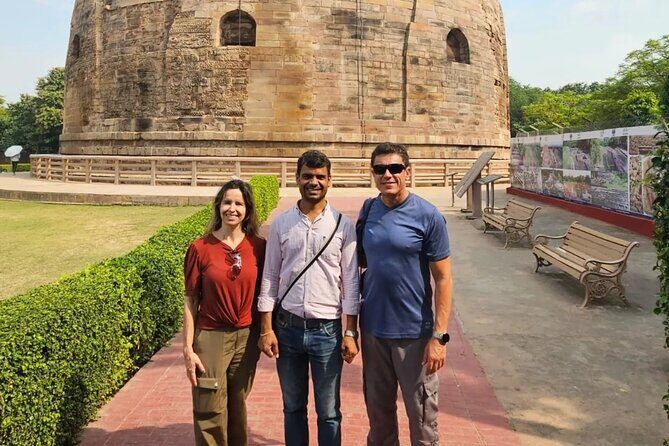
- Karan Sachan as guide: art-restorer and historian approach to temples and objects
- Admission included: entry fees covered for each major stop
- Mool Gandh Kuti Vihara temple murals: Japanese artist murals plus relics connection
- Sarnath Deer Park archaeology: old monastery remains and stupa-rich grounds
- Ashoka Pillar inscription: Pali language and Brahmi script, plus the lion capital link
Why Sarnath fits a calm half-day plan
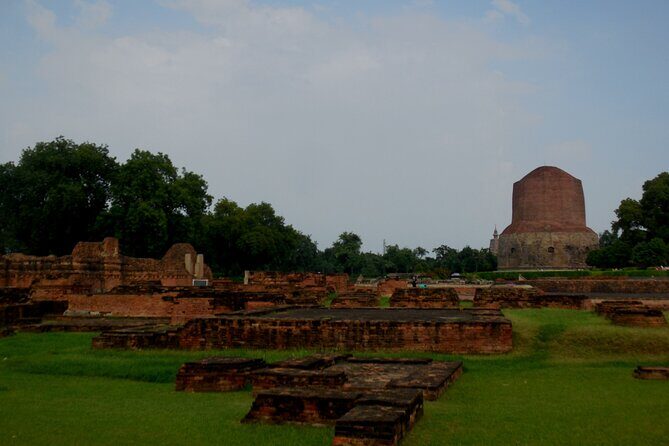
Sarnath matters because it’s tied to key moments in Buddha’s life, and people treat it like a spiritual anchor point among the famous sites connected with him. Today, it’s not one building—it’s a layered setting: temples still in use, plus archaeological remains that let you see how older Buddhist communities lived and worshipped.
This private format is what makes the half day feel lighter. Instead of jumping between sights on your own, you get a smooth flow of stop-to-stop time. You also get context as you go, so the place doesn’t feel like random stone and plaques. That combination is exactly why a 4-hour window works here.
The other smart choice is the pace: each stop is roughly one hour, with walking and orientation built in. If you’re visiting Varanasi and you want one structured day that stays focused, this is a strong way to do it without exhausting your whole schedule.
You can also read our reviews of more private tours in Varanasi



Mool Gandh Kuti Vihara Temple and its Japanese-mural art
Your first major stop is Mool Gandh Kuti Vihara, a temple with a special origin story and an art detail that’s easy to miss if you’re only skimming. The temple was built by the Mahabodhi Society based in Sri Lanka, and that international connection matters because it shows how Buddhism’s networks traveled and reappeared in new places over time.
What really grabs attention is the mural work. The temple has beautiful murals painted by a Japanese artist, and the guide can help you connect the artwork to the bigger spiritual ideas you’re hearing about. I found it useful because you’re not just staring at paint—you’re learning what the imagery is trying to communicate.
This temple is also tied to relics connected with the Buddha. Even if you’re not sure what you’re looking at, the explanations give you enough footing to understand why relics are so significant in Buddhist practice. That’s the difference between seeing a temple as an interior decoration and seeing it as part of a living religious meaning system.
What you’ll likely like most here: you’ll get a strong first impression of Sarnath that feels both visual and story-driven, without needing extra reading time. Potential watch-out: if you prefer a totally silent visit, the guided explanation might feel like a lot at first. It settles once you understand the rhythm.
Deer Park ruins: stupas, monastery remains, and quiet archaeology
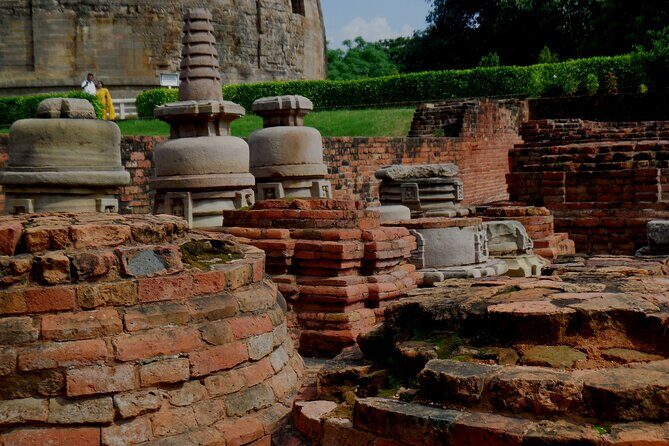
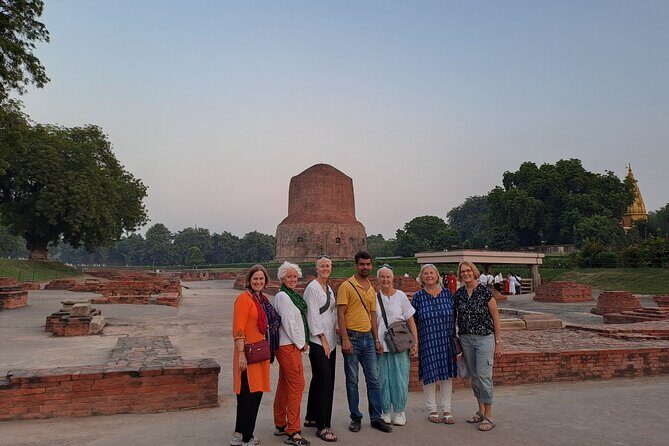
Next up is Sarnath Deer Park, an archaeological park where you can see the physical leftovers of older Buddhist monasteries. The ground is dotted with stupas, and the feeling changes as you move from temple interior to open-air remains.
This stop works well because it’s not only about big monuments. It’s about how the site shows continuity: worship spaces, religious buildings, and the stupa tradition all layered into one place. Even when you’re looking at ruins, you’re also seeing how communities organized sacred life around these structures.
If you’re the type who enjoys turning “old” into “understandable,” you’ll appreciate how the guide connects the remains to what Buddhism teaches about the mind and practice. That’s where the earlier talk about philosophy and stories can start to click. The Deer Park section becomes more than a scenic stroll—it becomes a way to understand how Buddhism took shape over centuries in this location.
What to consider: this part is outdoors, so it can feel more exposed if weather is iffy. Since the tour requires good weather, this is one reason the organizers take it seriously. When the conditions are right, the ruins feel calm rather than harsh.
The Sarnath site museum: sculptures and meaning in a compact space
After the open-air ruins, the museum is a smart reset. It’s where you can slow down mentally and see objects tied directly to the themes you just heard about.
The Sarnath Museum houses a few items you can use as anchors for the whole visit: it contains the national emblem of India, it has an image of Buddha described as one of the most beautiful images, and it also displays several other important sculptures. Even though the museum is part of a heritage site, it feels practical—like it’s there to help you interpret what you saw outside.
I like that you can connect the symbolic objects to the earlier temple and archaeological themes. A museum stop can sometimes feel like optional background, but here it’s more like the places outside are the pages, and the museum is where the guide helps you read the text.
One small reality check: museum time is still only about an hour. If you love sculpture details and could spend longer, use that hour to focus on the most significant pieces the guide points out, and plan extra time later if you want deeper viewing.
Ashoka Pillar and the lion capital story you’ll recognize later
The final stop is the Ashoka Pillar area, a place where language, script, and symbolism all show up in one relatively focused viewpoint. What makes it special is that it contains an inscription in Pali language written in Brahmi script.
That combination is the kind of detail that turns a monument into a document. You’re not just looking at ancient stone; you’re looking at writing that once carried messages to real people.
The pillar’s lion capital is another reason this stop sticks in your memory. The lions stand back to back, and that design was adopted as part of India’s national emblem. When you’ve just seen the museum’s emblem connection earlier, you start noticing how identity, empire, and religious art intersect in a single object.
Why it matters for your understanding: this is where the visit stops being only spiritual and starts being cultural in a tangible way. The stone connects Buddhism’s world to the wider story of Indian history—without turning the tour into a lecture that loses the point.
As a finale, it’s strong because it’s not only visual. It gives you a clear takeaway: inscriptions and symbols survive because someone preserved them long enough for you to learn from them now.





The value of a private tour with pickup and included entry
Let’s talk about the practical side, because it affects how enjoyable Sarnath feels. You’re getting private transportation, and pickup is offered. That matters in Varanasi, where moving around can eat time fast. With private transport, you keep your half-day on track and don’t burn energy negotiating each transfer.
Also, admission is included for the major stops. When entry fees are covered, the itinerary runs smoothly. You’re not waiting in lines while everyone tries to figure out what needs tickets and what doesn’t.
One more advantage: it’s a private activity, meaning it’s only your group. That helps if you want the guide’s attention for questions about specific details, like why certain art styles were used or what the inscriptions tell you to look for.
Small caution: the tour is about four hours total, and each stop is around an hour. That’s plenty for a solid overview, but it’s not the time for marathon pacing. If you want a slower, deeper personal rhythm, consider adding independent time before or after.
Price check: is $60 per person worth it in Sarnath?
$60 per person for a 4-hour private tour in Varanasi can be a fair deal—mainly because the tour includes all fees and taxes and the key entrances. You’re not just paying for a car. You’re paying for guided context, private transport, and admission covered across multiple sites.
Here’s how I’d measure the value for you:
- You get a compact Sarnath overview that hits the temple, archaeological park, museum, and Ashoka Pillar in one plan.
- You’re not responsible for figuring out entry costs at each stop.
- You have a guide who can explain what you’re seeing, including art and historical context.
If you were to do Sarnath on your own, you might save money upfront, but you’d likely spend more time sorting logistics and more effort piecing together meaning from signs alone. For many people, $60 is a smart trade for time and understanding—especially if you’re fitting Sarnath into a broader Varanasi schedule.
One extra detail from the overall impression of the experience: the guide’s background impressed me. The quality of interpretation can be the difference between looking at temples and actually grasping why specific elements matter.
Who this Sarnath private half day tour is best for
This tour is a good match if you want:
- A structured half day that covers the core Sarnath sights
- Guided explanations that connect Buddhism themes to what you see on site
- A private plan with pickup and included entry
It’s also a strong fit if you enjoy art and want someone to point out the kind of details that make monuments more than photo backdrops—like the Japanese mural element at Mool Gandh Kuti Vihara.
Where it may not be ideal: if you’re trying to pack multiple long stops into one day and you hate anything that feels time-boxed. The tour is designed as an overview, not a slow, do-everything pilgrimage.
Quick practical notes before you go
A few things that matter when you plan:
- The experience requires good weather, so keep flexibility if conditions look uncertain.
- Lunch isn’t included, so plan your food situation around the four-hour visit.
- It’s near public transportation, which can help if you need an alternate way to get back to your base after the tour.
If you’re staying in Varanasi and you want one calm, meaningful outing rather than a high-stress day of transfers, this format makes that easier.
Should you book this Sarnath private half day tour?
I’d book it if you want a focused, guided way to see Sarnath without turning your day into a logistics puzzle. The mix of temple art, archaeological remains, a compact museum, and the Ashoka Pillar inscription makes the whole visit feel coherent. Add private transport with pickup and included admission, and the price feels reasonable for what you get.
I’d skip or adjust if you’re looking for an ultra-slow pace, or if weather is unpredictable and you can’t flex your schedule. If you can match the right day and keep your expectations aligned with a half-day overview, this is a satisfying way to experience Sarnath.
FAQ
How long is the Sarnath private half day tour?
It lasts about 4 hours.
How much does the tour cost?
The price is $60.00 per person.
What’s included in the price?
The tour includes private transportation and all fees and taxes. Admission tickets for the stops are also included.
Is lunch included?
No. Lunch, food, and drinks are not included.
Do I get pickup?
Yes, pickup is offered.
Is this tour private or shared?
It’s private. Only your group participates.
What are the main stops during the tour?
You’ll visit Mool Gandh Kuti Vihara temple, Sarnath Deer Park, the Sarnath Museum, and the Ashoka Pillar.
Does the tour use a mobile ticket?
Yes, a mobile ticket is used.
When does it run on Mondays?
The listed hours for Monday are 9:00 AM to 5:00 PM.
What is the cancellation policy?
You can cancel for a full refund up to 24 hours before the experience starts.