REVIEW · VARANASI
Varanasi: City Highlights of the Day Tour & Ganges Dirfting
Book on GetYourGuide →Operated by Taj One Day Tour · Bookable on GetYourGuide
Varanasi starts before sunrise. What I like most is the sunrise Ganges boat ride and the way the day mixes major sights with real routines along the river. One thing to weigh up: it begins early (pickup at 5:30 am) and stays full until about 8 pm.
You’ll get door-to-door transport (if you choose pickup/drop-off) with cooling, plus bottled/filtered water so you’re not scrambling for hydration. The other big pull is the balance of Hindu pilgrimage stops and Buddhist Sarnath, so the day doesn’t feel like one long repeat of temples.
The spiritual intensity is real, especially near the cremation grounds and during the Ganga Aarti. If you’re sensitive to sights and smells there, plan your comfort level before you go.
In This Review
- Key highlights that make this day tour worth it
- Early 5:30 Pickup: Getting Into Varanasi at Dawn
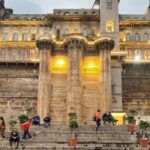
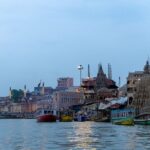
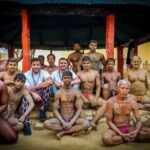
- Sunrise on the Ganges: Boat Ride and Morning Rituals
- Kashi Vishwanath Temple Walk: Old Lanes and Holy Atmosphere
- Banaras Hindu University at 10 am: Bharat Kala Bhavan and Birla Vishwanath Replica
- Bharat Mata Mandir and Silk Weaving: Meaningful Stops Before Lunch
- Sarnath by the Afternoon: Dhamekh Stupa and the Museum
- Manikarnika Ghat and Dashashwamedh Ghat: Cremation Grounds and Ganga Aarti
- Price and Value: What $21 Gets You in a 10-hour Day
- Who Should Book This Varanasi Highlights Tour
- Should You Book? My honest take
- FAQ
- What time does pickup happen?
- How long is the tour?
- Is the morning boat ride guaranteed?
- What’s included in the price?
- Are meals included?
- What language is the live guide available in?
- Is this tour suitable for everyone?
Key highlights that make this day tour worth it
- 5:30 am sunrise timing so you see Varanasi before crowds and heat kick in
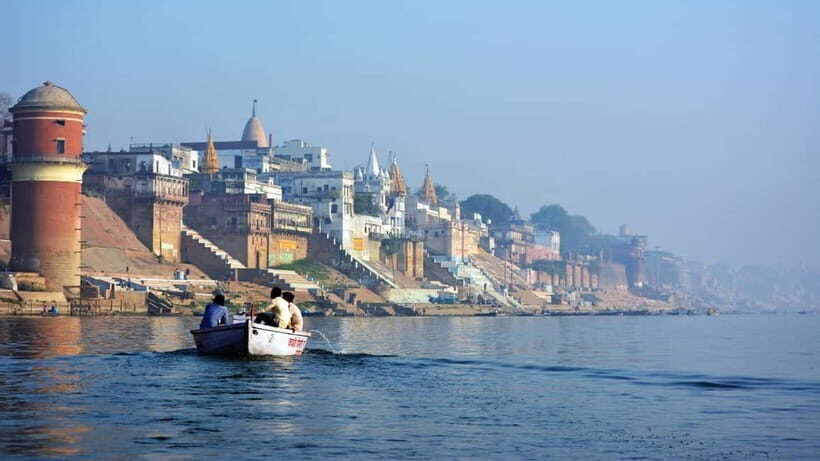
- Morning boat ride on the Ganges paired with riverside rituals for context, not just photos
- Kashi Vishwanath temple visit plus a short walk through old-city lanes
- Banaras Hindu University (BHU) stop with Bharat Kala Bhavan and the Birla Vishwanath Temple replica
- Sarnath focus with Dhamekh Stupa and the Archaeological Museum (closed Fridays)
- Evening Ganga Aarti at Dashashwamedh Ghat after a late-day view of Manikarnika cremation area
Early 5:30 Pickup: Getting Into Varanasi at Dawn
This tour is built around a simple idea: see Varanasi when it’s still waking up. Pickup happens at 5:30 am, and your driver reaches your pickup spot about 15 minutes before the stated time, which helps you avoid that last-minute panic in a big hotel.
From a value standpoint, the early start matters. You’re in motion while the city is quieter, which usually makes temple visits and the riverside experience less stressful. It also helps you fit in the whole route—Ganges, old city, BHU, Sarnath, and the evening Ganga Aarti—without feeling like you’re constantly playing catch-up.
One practical note: the day is long, and breakfast and lunch are not handled the same way. Breakfast is a stop with time allotted (your expense), and lunch is also on your own, so budget for at least those two meals.
You can also read our reviews of more city tours in Varanasi
Sunrise on the Ganges: Boat Ride and Morning Rituals
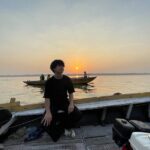
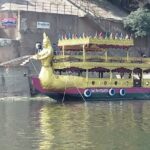
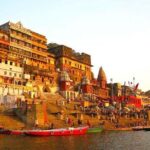
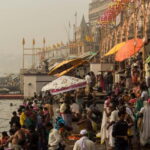
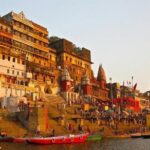
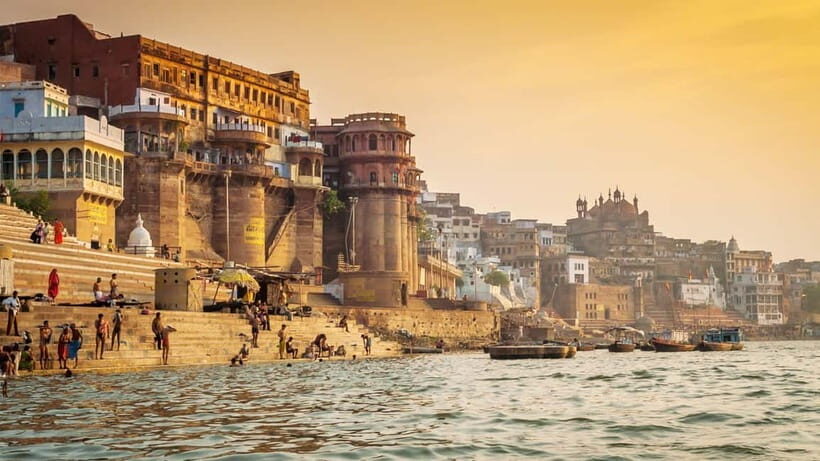
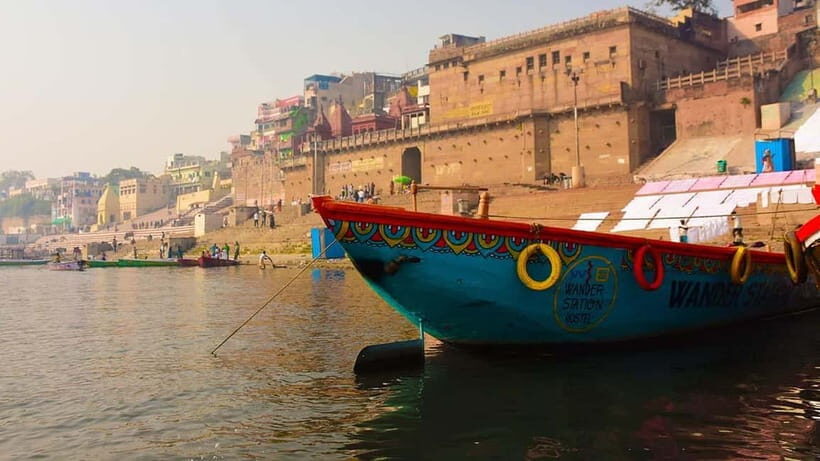
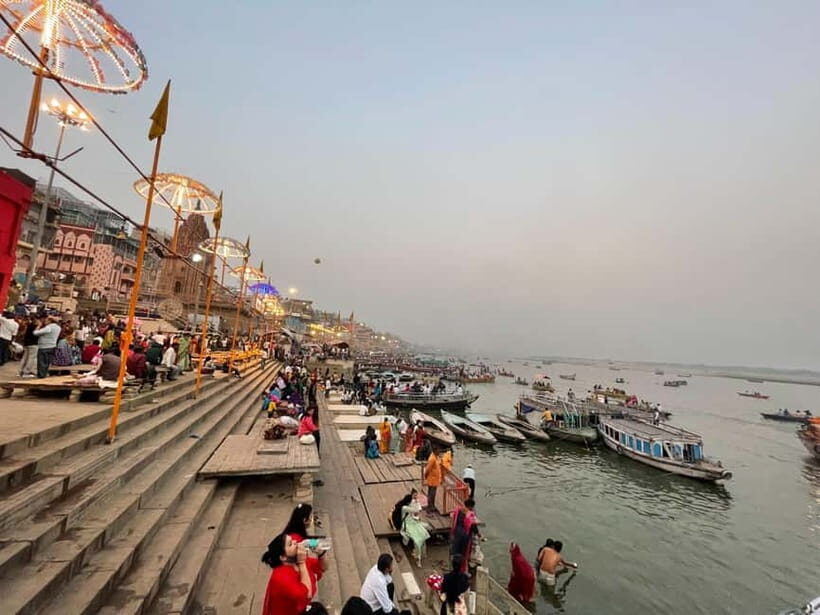
You start with a boat ride on the Ganges for about an hour, timed for sunrise. The exact boat schedule can vary because it runs based on weather conditions, but the goal stays the same: get a calm, early view of the river and the activity along its edges.
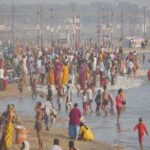
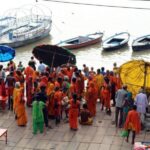
This is the moment where Varanasi feels different from any other city. You’re not just looking at buildings—you’re seeing how daily life and religion share the same space. Morning rituals on the riverside can be intense, but they also make the rest of the day’s temple stops make more sense.
Bring patience for the river itself. It’s active, it’s crowded in places, and it’s not a controlled tourist set. The upside is that you’re witnessing real rhythm, not a performance built for visitors. Also, the tour includes filtered water/bottled water, which is a small thing that can save you later in the day.
Kashi Vishwanath Temple Walk: Old Lanes and Holy Atmosphere
After the boat, you’ll move from river to old city. The next block focuses on Shri Kashi Vishwanath Temple, one of the holiest Hindu temples, and it includes sightseeing time.
A big part of the experience isn’t only entering the temple—it’s the short walk through alleyways with a guide. Those lanes are where you get your bearings fast: you see how tightly the neighborhood is stitched together and how people move around temple life. It also helps to have a local guide for navigating what can feel like a maze if you show up alone.
A practical tip: dress for temple comfort. You’ll likely want covered, breathable clothing that works for walking and standing. If you’re trying to take photos, do it respectfully; temple spaces and crowds don’t reward “stop in the middle” behavior.
Banaras Hindu University at 10 am: Bharat Kala Bhavan and Birla Vishwanath Replica
By around 10:00 am, you’ll head to Banaras Hindu University (BHU). It was established in 1916 and is described here as the largest university campus in Asia, so even if you’re not a campus person, it’s worth seeing because it’s a major landmark in modern Varanasi.
You’ll tour the campus and have time at Bharat Kala Bhavan, plus a stop at the new Vishwanath Temple (Birla Temple), noted as a replica of the original Vishwanath Temple. This stop adds a useful angle: Varanasi isn’t only about ancient pilgrimage—it also shows how tradition is carried forward in newer forms and buildings.
Timing-wise, this part of the day is a relief valve. Compared with the early river start and the dense old-city feel, a campus visit often gives your feet a slightly different kind of walking. You’ll still be on the move, but it feels more structured.
Breakfast happens before BHU, and it’s own expense. I’d treat that as your chance to refuel without rushing. If you’re sensitive to spicy food, pick something simple and familiar so you don’t feel wiped out before Sarnath.
Bharat Mata Mandir and Silk Weaving: Meaningful Stops Before Lunch
Midday brings two distinct sights. First is the Bharat Mata Mandir (Mother India Temple), built in 1918. It’s known for housing an unusual marble relief map of the Indian subcontinent—one of those objects that instantly shifts your thinking from “places” to “ideas of nation and identity.”
Right after that, there’s time to learn about silk weaving traditions of Varanasi. This matters because it connects everyday craft to the city’s religious and cultural life. Even if you don’t shop, understanding why silk matters helps you notice details you might otherwise miss.
Then you get a lunch break (again, own expense). This is where I’d plan around the heat and your energy. If you wait too long to eat, you’ll feel it later when the afternoon becomes more about driving and then Sarnath sightseeing.



Sarnath by the Afternoon: Dhamekh Stupa and the Museum
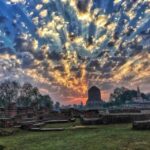
You drive about 8 miles (13 km) to Sarnath, where the tour focuses on Buddhist highlights. The key stop is Dhamekh Stupa, tied here to the moment the Buddha delivered his first sermon.
Sarnath is a contrast to Varanasi in a good way. It gives your mind a different story line: you’re not only moving through one faith tradition today, you’re stepping into another tradition with its own sacred geography. And because the visit is guided, you’ll likely get explanations that connect the stupa and surrounding area to the broader narrative of early Buddhism.
You’ll also visit the Archaeological Museum, which includes treasures dating to the 3rd century BC. There’s one planning note: it’s closed on Fridays. If your travel dates land on a Friday, expect the tour to adjust what you can see there.
This segment lasts about two hours, so it’s not rushed. You’ll want comfortable shoes for the walking and time to sit with the views. If you’re the kind of person who likes a few minutes of quiet between major stops, Sarnath is a good place to do it.
Manikarnika Ghat and Dashashwamedh Ghat: Cremation Grounds and Ganga Aarti
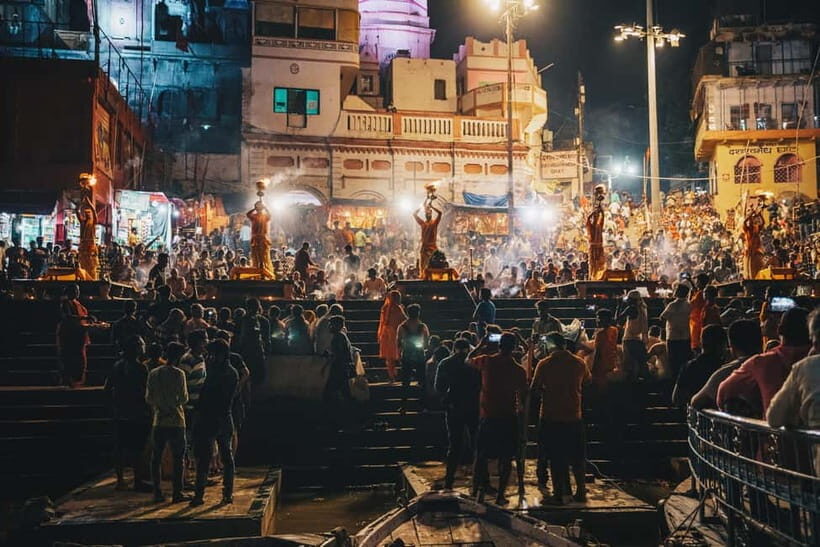
Late day shifts back to the Ganges. At 5 pm, you view the cremation grounds from the area around Manikarnika Ghat. This part isn’t subtle, and it’s not meant to be. I’d call it an honest moment of Varanasi: life, death, ritual, and river all in the same frame.
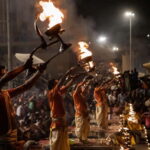
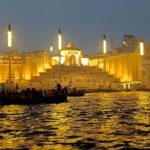
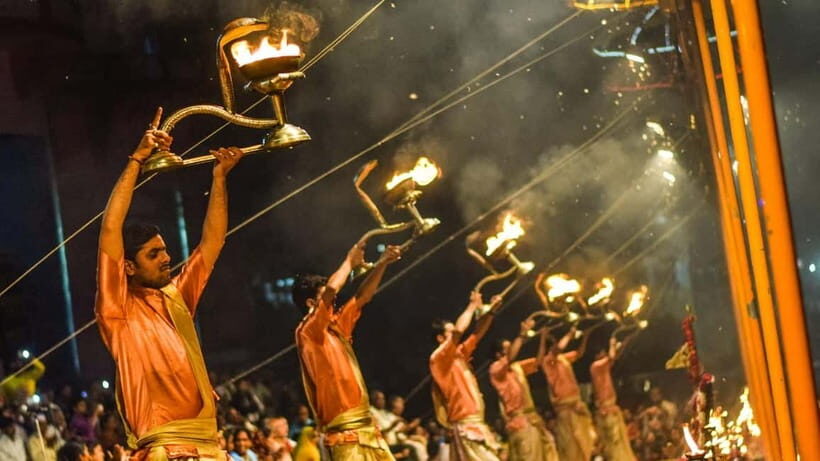
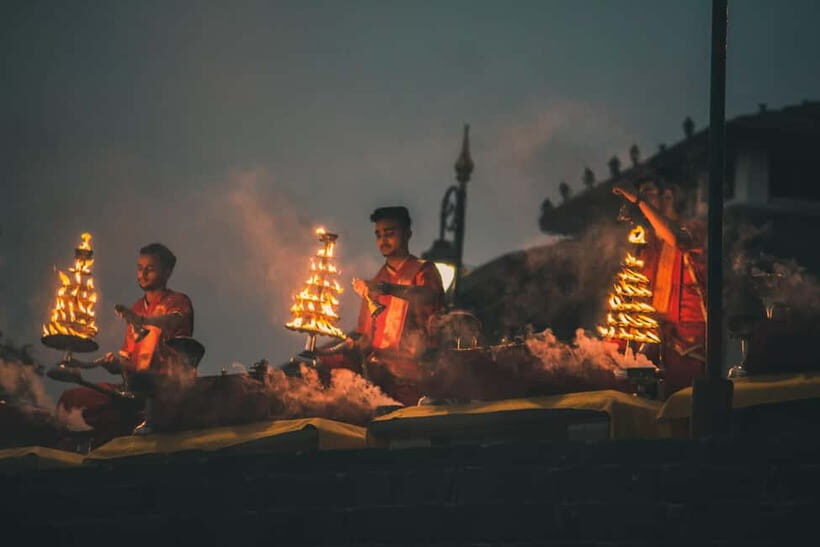
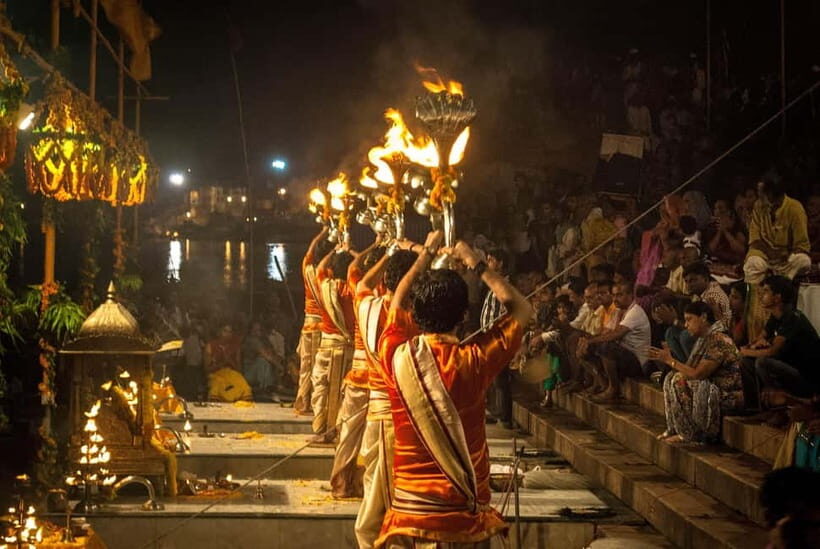
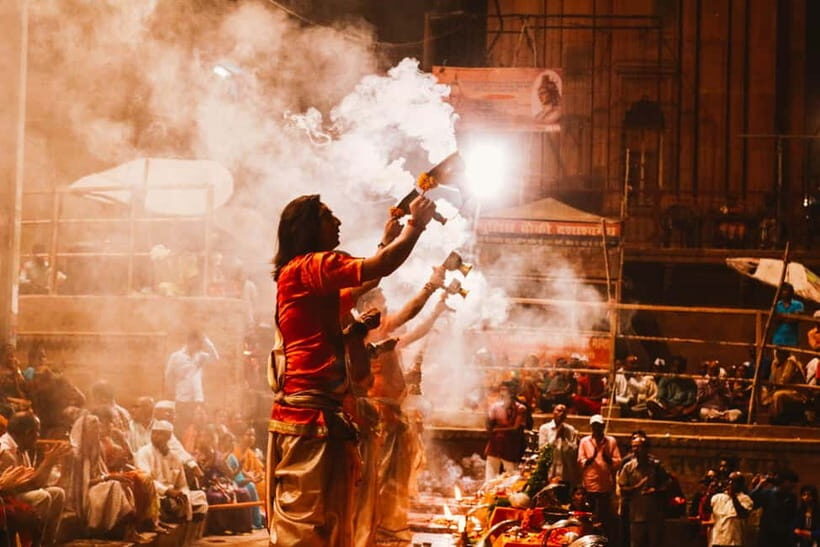
After that, you return to Dashashwamedh Ghat to watch the evening Ganga Aarti. This is the ceremony that many people come for, but the tour’s sequencing makes it more powerful: by seeing the cremation area first, the ceremony lands as something bigger than a show.
The tour ends with your return to your hotel around 8 pm. That gives you enough time to decompress—so you’re not stuck thinking about logistics when you’d rather just absorb the day.
If you’re worried about stamina, this is the point where you’ll feel it most. Dress in layers if it cools down after sunset, and keep your water plan simple. The tour includes bottled/filtered water, but after a long day you may still want to pace yourself during standing time.
Price and Value: What $21 Gets You in a 10-hour Day
At about $21 per person for a 10-hour day, the best value isn’t one single “cheap” item—it’s the way the day is packaged.
For that price range, you get:
- a live guide (English, German, Spanish)
- local monument fees under A.S.I buildings when the relevant option is chosen
- hotel pickup and drop-off if you selected that option
- transport in an air-conditioned vehicle and/or private transportation if you chose those options
- a morning boat ride (weather-dependent)
- bottled water (and filtered water is also mentioned)
That’s why it feels like a solid deal for first-timers. You’re not spending hours building routes or negotiating time across multiple parts of the city. You also avoid the “which ticket, which entrance, where do we meet” confusion that can eat up a day on your own.
The main cost you should plan for is lunch (not included), plus breakfast at your own expense. If you keep meals simple, the total outlay stays reasonable. If you’re expecting the tour to pay for everything, you’ll be surprised—but the tradeoff is that you’re still getting guide time plus coordinated transport for a low base price.
Who Should Book This Varanasi Highlights Tour
This works well if you want a structured day that still feels like you’re seeing the real city. I’d especially recommend it if you:
- want an easy way to hit Varanasi’s top spiritual stops plus Sarnath in one day
- like having a guide for old lanes and temple areas
- prefer sunrise river time rather than only late-morning crowds
- want a practical day plan with filtered/bottled water included
It’s not a fit if you’re pregnant. Also, if you’re uncomfortable with the cremation-ground viewing portion or you don’t want intense ritual sights, you may prefer a different style of tour.
Should You Book? My honest take
Book it if you want a tight 10-hour route that covers the major spiritual beats, plus BHU and Sarnath, with a guide and transport already handled. The early Ganges sunrise plus the evening Ganga Aarti bookend the day in a way that makes the city feel coherent.
Skip it if you hate early wakeups, you’re aiming for a slow, flexible pace, or you’d rather not include the Manikarnika cremation viewing moment. Also remember: breakfast and lunch are your expense, so budget those meals.
If your goal is value, structure, and seeing the most important Varanasi landmarks without turning it into a logistics project, this one is a strong match.
FAQ
What time does pickup happen?
Pickup is at 5:30 am from your hotel or chosen pickup destination, with the driver arriving about 15 minutes early.
How long is the tour?
The total duration is 10 hours.
Is the morning boat ride guaranteed?
The boat ride is included but it runs based on weather conditions.
What’s included in the price?
The tour includes a local guide, bottled water, and the morning boat ride (weather-dependent) plus monument fees under A.S.I buildings if that option is chosen, along with pickup/drop-off and transport if you select those options.
Are meals included?
Lunch is not included. Breakfast is also listed as own expense.
What language is the live guide available in?
The live tour guide is available in English, German, and Spanish.
Is this tour suitable for everyone?
It’s not suitable for pregnant women.