REVIEW · VARANASI
Private Half-Day Tour in Sarnath from Varanasi
Book on Viator →Operated by Keeper Landwey · Bookable on Viator
Sarnath hits hard, in four hours. This private half-day plan takes you from Varanasi to key Buddhist sites, starting with Dhamek Stupa, then moving to Chaukhandi Stupa, a Tibetan Temple, and the Archaeological Museum with artifacts and scriptures going back to the 3rd century.
I like how this tour is set up for efficiency without feeling like a checklist. I also like the door-to-door pickup and drop-off across Varanasi, plus the fact that entrance fees for the stops are included, so you don’t have to scramble for tickets at each place. Bottled water is included too.
One thing to consider: the schedule is tight. Each main site is about 40 minutes, so if you want slow browsing and lots of lingering, you may feel a bit rushed in a few sections.
In This Review
- Key things to know before you go
- Why Sarnath Is a smart use of your Varanasi time
- Pickup, timing, and what the 4-hour pace really means
- Dhamek Stupa: a first stop with a story behind the stones
- Chaukhandi Stupa: relic-shrine vibes and the burial-mound origin
- Tibetan Temple: 20th-century monastic connections in Sarnath
- Archaeological Museum: Gupta-era preaching and Ashoka’s Lion Capital
- What’s included in the price, and what you should budget for
- How to get the most out of each 40-minute stop
- Who this private Sarnath tour fits best
- Practical note on communication and smooth pickups
- Should you book this Private Half-Day Tour in Sarnath?
- FAQ
- What sites are included in the private half-day Sarnath tour?
- How long is the tour?
- Is pickup and drop-off included?
- Are entrance fees included?
- Do I need photo ID for monument entry?
- What’s the cancellation policy?
Key things to know before you go
- Private means only your group: it’s not mixed with strangers, so the pace stays under your control.
- Door-to-door pickup in Varanasi: the driver can collect you from any location or from the airport, then bring you back.
- Four 40-minute stops: you’ll see Dhamek Stupa, Chaukhandi Stupa, Tibetan Temple, and the Archaeological Museum with a compact timeline.
- Dhamek Stupa’s chaitya detail matters: it’s described as linked to pre-Buddhist tumuli where ascetics were buried seated.
- The museum highlights major names and periods: expect items including the Lion Capital of Ashoka and images connected to the Gupta period.
- Bring a valid photo ID: a photo ID in your mobile is needed for monument entry.
Why Sarnath Is a smart use of your Varanasi time
If you only have a half day in Varanasi, Sarnath is a very efficient choice. You get a concentrated visit to several standout religious sites plus a museum stop that gives context you can’t really get by looking at stones alone.
What I like most is the “layers” feeling of the itinerary. You start at places tied to early Buddhist-era structures and relic-shrine traditions, then you shift to a Tibetan-influenced temple setting, and finally you end in a museum where artifacts and historical objects (including references to the 3rd century and the Gupta period) put what you saw into clearer perspective.
This tour also keeps the logistics simple. You’re in a car with pickup and drop-off in Varanasi, and all the main entry fees are included. That means more time looking, less time figuring out how to do it.
You can also read our reviews of more private tours in Varanasi



Pickup, timing, and what the 4-hour pace really means
This is a private tour with a total duration of about 4 hours. The driving portion is short: you’ll spend roughly 35 minutes getting from Varanasi to Sarnath, then another 35 minutes back after the last stop.
The visiting rhythm is straightforward:
- one drive to Sarnath (about 35 minutes)
- four main stops, each about 40 minutes
- one return drive to Varanasi (about 35 minutes)
That timing makes sense for a half-day outing. You can see each place without getting stuck in one location for so long that everything else turns into a sprint. Still, it does mean there’s no slow, hour-long wandering.
If you’re the type who takes a lot of photos, reads every label, or wants extra quiet time at religious sites, I’d plan to be selective. Pick your “must-see” angles and move calmly from one stop to the next.
Dhamek Stupa: a first stop with a story behind the stones
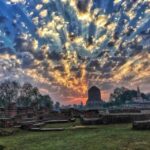
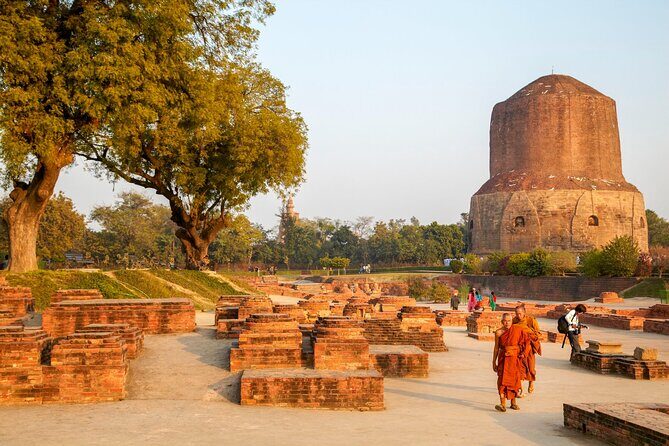
Dhamek Stupa is your first major site once you reach Sarnath city. It’s described as a massive stupa that originated as pre-Buddhist tumuli. Even more interesting is how the description connects it to burial practices: ascetics were buried in a seated position, called chaitya.
That detail is why this stop works so well early in the tour. You’re not just seeing a large structure. You’re getting a sense of continuity: a sacred site that evolved over time rather than a single moment in history.
Plan for around 40 minutes here. With that time, you should be able to walk, take photos, and listen to your guide’s explanation without feeling like you’re rushing through the meaningful parts. Entrance fees are included for this stop, so you don’t waste time on ticket hassles.
The main practical consideration is clothing and comfort. It’s a religious site, and you’ll likely do a decent amount of walking and standing. Wear shoes you’re happy to get a bit dusty, and keep water handy, since bottled water is included but you’ll still want it on hand.
Chaukhandi Stupa: relic-shrine vibes and the burial-mound origin
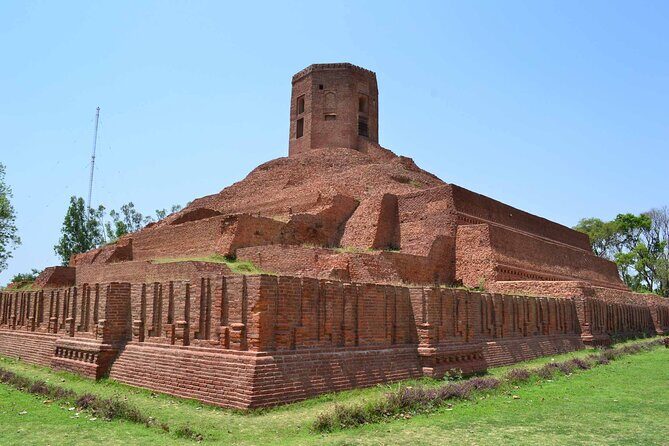
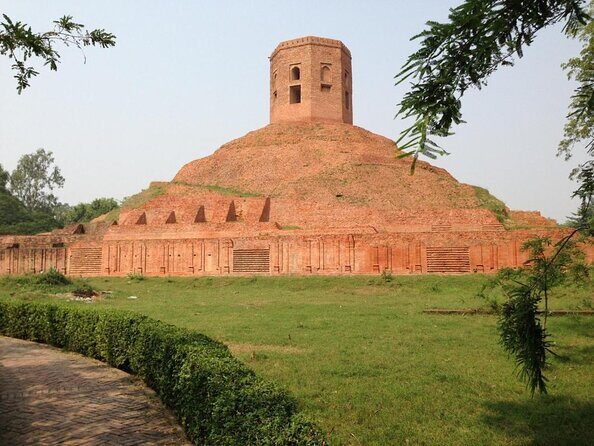
After Dhamek, you’ll go to Chaukhandi Stupa. This stop is also described as having evolved from burial mounds and serving as a shrine for a relic of the Buddha.
That origin story matters. It gives you a way to look at the structure without treating it like a random monument. You can mentally connect the “burial mound” idea to why the site functions as a shrine—something meant for reverence, not just architecture.
You’ll get about 40 minutes at Chaukhandi, and entrance fees are included here too. That’s enough time to get your bearings, take in the overall shape, and absorb the explanation from your private guide.
A drawback to keep in mind: because this is still a relatively short stop, you might not have time to fully “study” every corner. If you’re especially detail-obsessed, use your first few minutes to choose where you want to focus your attention—front view angles, specific carvings or areas your guide points out, and then photos before moving on.
Tibetan Temple: 20th-century monastic connections in Sarnath
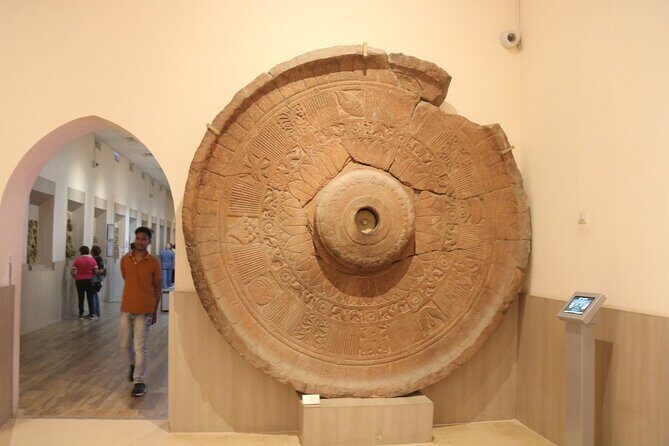
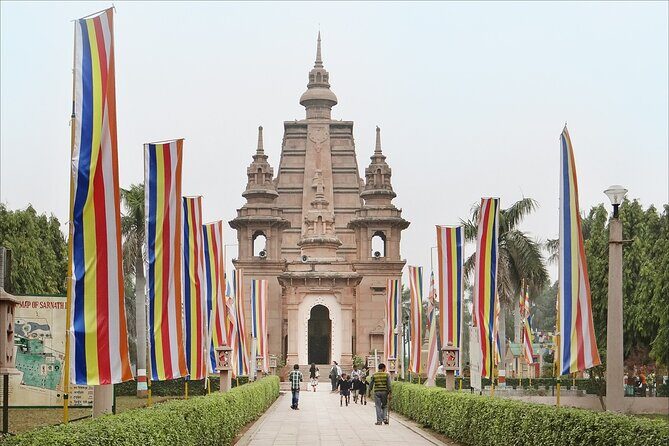
Next up is the Tibetan Temple. The tour description highlights that Sarnath has a number of 20th-century Buddhist temples built and maintained by Tibetan, Chinese, and Japanese monks. This is one of the reasons the day feels balanced: you’re not stuck only in one era or one cultural expression.
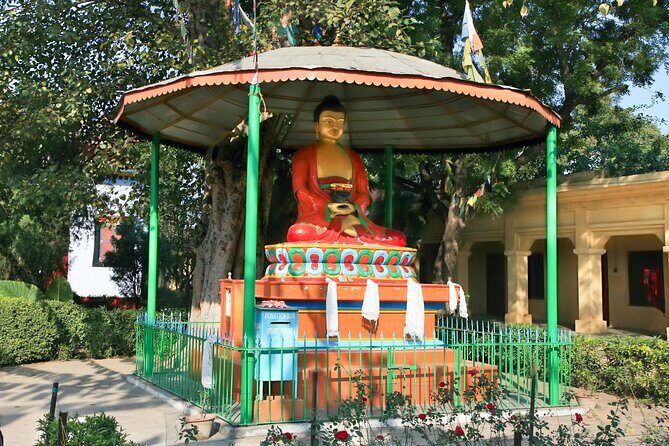
This temple houses a statue of Shakyamuni Buddha (the Buddha). You’ll spend about 40 minutes here, with admission included.
What makes this stop valuable is the contrast. Dhamek and Chaukhandi give you a deep sense of ancient stupa tradition and relic-shrine context. Then the Tibetan Temple brings you into a more living, devotional environment, with monastic stewardship described across multiple communities.
You’ll likely appreciate this stop most if you like comparing how Buddhist practice shows up in different styles and time periods. It’s also a good place to slow down for a moment during the half-day schedule, even if the official stop time is the same.
You can also read our reviews of more tours and experiences in Varanasi
Archaeological Museum: Gupta-era preaching and Ashoka’s Lion Capital
Your last stop is the Archaeological Museum, and this is where the visit gains a strong educational backbone.
The museum is described as holding artifacts and scriptures dated back to the 3rd century. You’ll also see notable images connected to Buddha preaching from the Gupta period, plus the Lion Capital of Ashoka. The description even calls out figures of birds among the objects.
This museum stop helps you connect three dots:
1) what the sites represent religiously
2) how the art and objects reflect Buddhist themes
3) how different time periods show up in the same broader story
Plan on about 40 minutes here. If you like museums, you may wish you had more time, since the listed highlights (3rd-century materials, Gupta-period preaching imagery, Ashoka’s lion capital) are the kind of things that reward close looking. But 40 minutes can still be enough to see the main displays and get a solid sense of what’s important.
If you’re traveling with someone who gets museum-fatigue quickly, the private guide helps. You can focus on the objects you care about most—especially those major named pieces—then finish with a quick look at the rest.
What’s included in the price, and what you should budget for
At $46.00 per person, the value comes from what’s bundled. Here’s what you get:
- pickup and drop-off to anywhere in Varanasi
- a private live tour guide following the itinerary
- entrance fees for all the attractions
- parking, toll taxes, and fuel
- bottled water
Not included: tips and gratuitudes.
For many people, that inclusion list is the real selling point. Paying separately for a guide plus separate entrances can turn “a half-day tour” into an unpredictable day. Here, your major costs are already handled.
Also watch the private angle. Because it’s private, it’s only your group. That often makes the per-person cost feel more reasonable when you’re traveling with friends or family and can share the expense. The listing also notes group discounts, which can help even more if your travel party is larger.
My practical tip: budget a bit for tips. The tour covers a lot, but gratuities are explicitly not included.
How to get the most out of each 40-minute stop
This tour is well-paced for a half-day, but you’ll still get better results if you come prepared.
A simple strategy that works well:
- Ask your guide at the start what to look for at the first two sites (you’ll remember the details later).
- Take photos early at each stop, then spend the second half of the time listening and walking slowly.
- At the museum, don’t try to read everything. Pick the highlights that match what you saw outdoors (relic-shrine ideas, preaching imagery, major named objects like the Lion Capital of Ashoka).
One more important detail: bring a valid photo ID in your mobile. That’s required for monument entry, so don’t count on getting through smoothly without it.
Who this private Sarnath tour fits best
This is a smart fit if you want:
- a private half-day with pickup and drop-off from Varanasi
- a plan that hits Dhamek Stupa, Chaukhandi Stupa, Tibetan Temple, and the Archaeological Museum
- a guide who explains what you’re looking at, not just a driver who gets you from point A to point B
The tour is also described as something most travelers can participate in. It’s not pitched as extreme, but it does involve walking and moving between sites, so comfortable shoes help.
If you’re traveling solo, this can be a calm way to avoid confusing logistics. If you’re traveling in a group, it’s one of those tours where private time can actually feel like good value—especially with group discounts.
Practical note on communication and smooth pickups
One nice thing about having an operator involved is communication. The tour is described as responsive on WhatsApp when issues came up, so if your pickup details change or timing gets weird, you have a channel to sort it out.
That matters in Varanasi, where schedules can shift for lots of small reasons. A responsive operator helps you keep the day from turning into stress.
Should you book this Private Half-Day Tour in Sarnath?
Book it if you want a focused, low-stress Sarnath day with a private guide, included entrance fees, and a tidy schedule that still covers the key religious sites plus the museum.
Skip it (or adjust your expectations) if you’re the type who needs long, slow stays at monuments and prefers to read everything in depth without time pressure. This tour is built for efficiency, so you’ll get a strong hit of the main sights, not an all-day, ultra-slow exploration.
Also make sure you’re ready for the museum and stupa mix. If you love seeing how religious sites connect to artifacts, especially items linked to the 3rd century and objects like the Lion Capital of Ashoka, you’ll likely come away feeling like the day made sense.
FAQ
What sites are included in the private half-day Sarnath tour?
You’ll visit Dhamek Stupa, Chaukhandi Stupa, a Tibetan Temple, and the Archaeological Museum, with pickup and drop-off in Varanasi.
How long is the tour?
The tour runs about 4 hours, including driving time between Varanasi and Sarnath and time at each main stop.
Is pickup and drop-off included?
Yes. The driver can pick you up from any location or from the airport in Varanasi, and drop you back to your preferred location in Varanasi.
Are entrance fees included?
Yes. Entrance fees for all attractions are included, and admission is listed as included for Dhamek Stupa, Chaukhandi Stupa, the Tibetan Temple, and the Archaeological Museum.
Do I need photo ID for monument entry?
Yes. You’re asked to carry all travelers’ valid photo ID in your mobile for monument entry.
What’s the cancellation policy?
You can cancel for a full refund up to 24 hours in advance of the experience start time. If you cancel less than 24 hours before, the amount paid isn’t refunded.