REVIEW · NEW DELHI
Private 3 Day Golden Triangle Delhi Agra Jaipur Tour From Delhi
Book on Viator →Operated by Radhika Holidays · Bookable on Viator
Three days, three UNESCO stops.
This private Golden Triangle route is built for efficiency without feeling like a checklist. You start with a guided Delhi loop, then roll to Agra for sunrise at the Taj Mahal, and finish in Jaipur with major sights and photo stops, all with a private AC car doing the hard work.
I especially like two things: having a car and driver means you skip public-transport stress, and a guide keeps the days coherent so you spend your time seeing, not figuring. I also liked the personal, respectful vibe from the driver-guide team I learned about, including Mohammed, who made the trip comfortable for a solo traveler while keeping things easy and well organized.
One drawback to plan around: monument tickets are not included for most major stops, so you’ll want cash/card ready for admissions. And one site note matters—Lotus Temple is closed on Mondays, so if your dates line up, your guide will need to adjust the timing.
In This Review
- Key things that make this tour practical
- Private car, real schedule: why this Golden Triangle feels easier
- Day 1 in Delhi: Humayun’s Tomb, Qutub Minar, and the polite grand finale
- Humayun’s Tomb: a strong first impression
- Qutub Minar: the towering landmark you can’t ignore
- Lotus Temple: calm contrast, unless it’s Monday
- India Gate and Rashtrapati Bhavan: big monuments, quick context
- Late drive to Agra: the day ends with forward motion
- Sunrise Taj Mahal + Agra Fort: the heart of the Golden Triangle
- Taj Mahal at sunrise: timing is everything
- Agra Fort: the palace-fort perspective
- Transfer to Jaipur and Day 3 in Rajasthan: forts, water photos, and geometry
- Amber Palace: big Rajput architecture, serious views
- Jal Mahal: quick stop, great photo moment
- Hawa Mahal / City Palace area: architecture for the eye
- Jantar Mantar: the geometry stop people remember
- Return drive toward Delhi
- Price and value: what you’re paying for, and what you still need to budget
- Solo-friendly comfort: the human touch that matters
- Who this private Golden Triangle is perfect for
- Should you book this private Golden Triangle tour?
- FAQ
- What time do they pick me up on Day 1?
- Does this tour include entrance tickets for monuments?
- Is the Lotus Temple included, and are there any closures?
- What’s included in the price?
- Where does the tour end?
- How long are the drives between cities?
Key things that make this tour practical
- Pickup at 9 am from Delhi, Gurugram (Gurgaon), or Noida saves you from scrambling for meeting points
- UNESCO-heavy days (Delhi monuments, Taj Mahal, Agra Fort, Jaipur’s Jantar Mantar) give strong value for short time
- Sunrise Taj Mahal timing helps you experience the iconic building when it’s at its best
- City driving + guided stops means you avoid logistics work and keep moving at a human pace
- Hotel options (3- or 5-star) let you match comfort level without changing the core itinerary
- Monuments are mostly ticketed while a few stops are free, so budget for admissions and skip surprises
Private car, real schedule: why this Golden Triangle feels easier
The biggest win here is simple: you’re not wrestling buses, trains, and transfers across three major cities. With a private AC car and guide, you get direct rides between sights, and you can pace yourself based on your own energy level.
The itinerary is also designed around timing that’s hard to manage on your own. That sunrise visit to the Taj Mahal is the kind of thing that gets pushed back by traffic or ticket lines if you’re flying solo. With a driver handling the route and a guide handling the flow, you spend less time waiting and more time looking.
You can also read our reviews of more private tours in New Delhi



Day 1 in Delhi: Humayun’s Tomb, Qutub Minar, and the polite grand finale
Your day starts with pickup at 9 am from Delhi, Gurugram, or Noida, and then you work your way through classic Mughal and early Delhi-era landmarks.
Humayun’s Tomb: a strong first impression
You begin at Humayun’s Tomb, a UNESCO World Heritage site. Expect a focused visit (about 45 minutes) that sets the tone for the Mughal style you’ll see again in Agra.
Practical tip: this is an early anchor stop, so it’s a good time to slow down and look at the symmetry and gardens before the day gets more fast-moving.
Qutub Minar: the towering landmark you can’t ignore
Next is Qutub Minar, another UNESCO World Heritage site. It’s described as an Afghan-style victory tower and minaret, commissioned in 1193, and it dominates the complex visually.
Your guide will likely point out how the structure’s scale changes as you move through the grounds. Even if you don’t know the story line by heart, the size and vertical lines make it easy to appreciate.
Lotus Temple: calm contrast, unless it’s Monday
Then you go to the Lotus Temple, an architectural symbol designed by Iranian-Canadian architect Fariburz Sahba in 1986. It’s a peaceful break in the middle of a busy day, with about 30 minutes here.
Important planning note: the Lotus Temple is closed on Mondays. If your tour date lands on a Monday, you’ll want to be flexible and trust your guide to adapt the sequence.
You can also read our reviews of more tours and experiences in New Delhi





India Gate and Rashtrapati Bhavan: big monuments, quick context
After that, the tour moves into central Delhi landmarks:
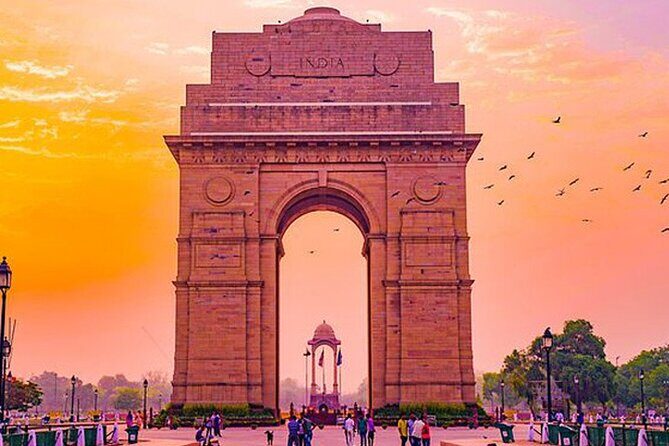
- India Gate (about 30 minutes): a 42-meter stone memorial arch designed by Lutyens in 1921, honoring around 90,000 Indian army soldiers connected to World War I and related conflicts.
- Rashtrapati Bhavan (about 30 minutes, free): the President of India’s residence, formerly the British Viceroy’s home, with 340 rooms and roughly 2.5 kilometers of corridors.
These are shorter stops, but they’re useful for “getting your bearings fast.” You’ll understand how the city’s power and planning shows up in the architecture.
Late drive to Agra: the day ends with forward motion
In the late afternoon, you’ll drive about 3 hours to Agra, then check into your hotel. This is a smart way to fit everything into three days: you don’t waste the daylight with unnecessary back-and-forth.
Sunrise Taj Mahal + Agra Fort: the heart of the Golden Triangle
Day 2 is where the trip earns its name. You start early with a sunrise Taj Mahal visit, then move on to Agra Fort.
Taj Mahal at sunrise: timing is everything
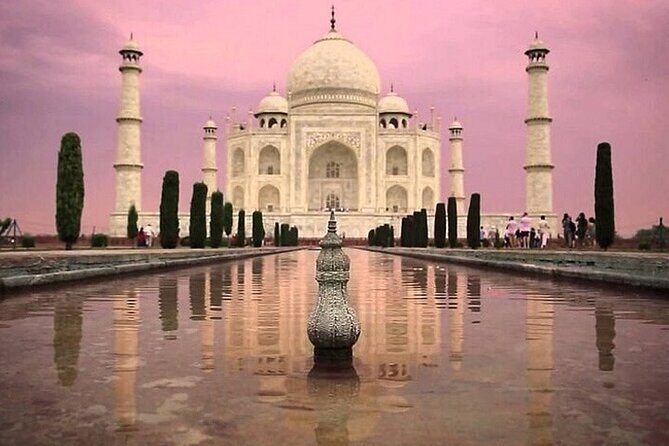
You’ll begin with the Taj Mahal (about 2 hours). It’s UNESCO-listed, and it was built by Shah Jahan in memory of his third wife, Mumtaz Mahal.
Why sunrise matters: the light changes the look of the marble and the overall mood. It’s also typically less chaotic than later in the day, which makes it easier to enjoy details instead of fighting crowds.
Plan around tickets: the Taj Mahal admission ticket is not included, so you’ll need to pay at the site. Your guide and driver keep the day smooth, but you still should budget for entry fees.
Agra Fort: the palace-fort perspective
After the Taj, you visit Agra Fort (about 45 minutes, UNESCO-listed). It sits on the Yamuna River and served as the Mughal emperors’ main residence until 1638.
This stop complements the Taj Mahal. Instead of focusing on one monument and leaving, you get a broader picture of how emperors lived and ruled. From a practical standpoint, it’s also a “shift gears” moment: you’ll spend less time photographing one view and more time exploring a complex.
Transfer to Jaipur and Day 3 in Rajasthan: forts, water photos, and geometry
Day 2 continues with travel from Agra toward Jaipur, and Day 3 is your full Jaipur sightseeing day. The tour description notes about 4 hours for the Agra-to-Jaipur drive, and then you’ll finish by heading back toward Delhi/Gurugram/Noida.
Amber Palace: big Rajput architecture, serious views
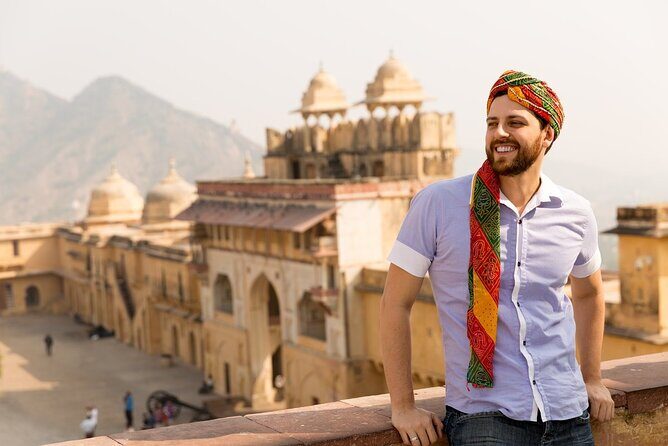
On Day 3, you start at Amber Palace (about 2 hours). It’s about 11 km northeast of Jaipur and is a major example of Rajput architecture and palace complexes built from pink sandstone.
This is the kind of site where the setting matters as much as the buildings. Give yourself time to wander the courtyards and ramp-like spaces, not just stand and take a quick photo.
Jal Mahal: quick stop, great photo moment
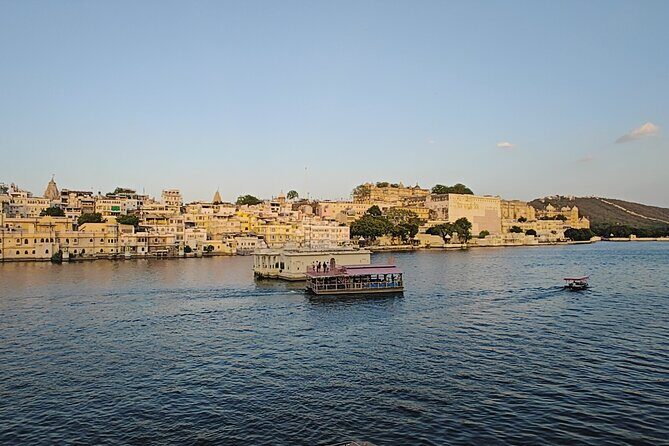
Next is Jal Mahal (Water Palace) (about 30 minutes). You’ll pause for photos at the palace located in Man Sagar Lake.
The tour notes origins are uncertain, but it’s believed to have been restored or built by Jai Singh II (1734). Even if you don’t go into the full story, the visual contrast of water and palace is usually worth the brief stop. Admission is listed as free here.
Hawa Mahal / City Palace area: architecture for the eye
Then you reach Hawa Mahal (Palace of Wind) (about 20 minutes). The description also references the City Palace, home to the royal family, describing a blend of Rajasthani and Mughal architecture and multiple building periods.
This is a short architectural stop, so it works best if you treat it like a photo-and-stroll moment rather than a long museum-style visit.
Jantar Mantar: the geometry stop people remember
Your final major sight is Jantar Mantar (about 40 minutes), a UNESCO World Heritage Site made of geometric instruments used to track celestial movements.
This is a fun change from palaces and forts because it helps you see the city’s scientific mindset in stone and angles. It’s also easy to enjoy within a tight schedule—perfect for a three-day itinerary.
Return drive toward Delhi
After Jaipur, you’ll drive back to Delhi/Gurugram/Noida. The tour description estimates about 5 hours for this final leg, and you’ll be dropped at your location such as your airport or preferred point.
Price and value: what you’re paying for, and what you still need to budget
At around $117 for roughly 3 days, the value depends on what you compare it to. This price includes the parts that are hard to manage solo: private AC transport, a tour guide, and hotel accommodation in your selected option, plus parking, fuel surcharge, and breakfast (2 times).
What’s not included is equally important:
- Monument tickets are not included for many stops (including major ones like the Taj Mahal and several Delhi and Agra sites).
- Lunch is not included.
So think of the tour as paying for structure and comfort—getting you to the sights with less friction—while admissions are the separate, on-the-ground spending. If you’re budgeting carefully, this tour is usually easiest to plan when you set aside an extra amount for entry fees.
Also note the hotel choice: you can opt for 3- or 5-star accommodations depending on what you want from your downtime. That flexibility is part of why this works well for different travel styles.
Solo-friendly comfort: the human touch that matters
A private tour only works if your guide-driver relationship feels solid. In the experience I learned about, Mohammed stood out as respectful and helpful, and he made the trip feel comfortable for a solo traveler.
That kind of comfort isn’t a small thing in North India. When you’re alone (or even just tired), having someone who’s calm, attentive, and respectful makes logistics feel lighter. With a private car, you also get the quiet advantage: you can focus on sights instead of constantly scanning maps and schedules.
Who this private Golden Triangle is perfect for
This tour is a great fit if you:
- Want a short, efficient Delhi–Agra–Jaipur visit without the planning headache
- Care about seeing the Taj Mahal at sunrise
- Prefer private transport and a guide who can shape the day around your pace
- Are traveling with family or as a couple and want “just you” time
It’s also a solid choice if you don’t want to commit to one city longer than a few days. Golden Triangle tours can feel intense, but private logistics help keep the stress down.
Should you book this private Golden Triangle tour?
I’d book it if you want an organized, three-day sweep with the major landmarks and minimal friction. The combination of private AC car, a guide, hotel, and breakfast makes it easy to focus on the sights that truly matter: Humayun’s Tomb, Qutub Minar, Taj Mahal at sunrise, Agra Fort, Amber Palace, and Jantar Mantar.
Skip booking only if you already have your own plan for transportation and you’re comfortable handling admission logistics yourself. If that’s your style, you might customize cheaper on your own—but you’d be trading away a lot of convenience that this tour handles for you.
FAQ
What time do they pick me up on Day 1?
Pickup is scheduled for 9 am from Delhi, Gurugram (Gurgaon), or Noida.
Does this tour include entrance tickets for monuments?
No. Monument tickets are not included for many stops, including major sites like the Taj Mahal.
Is the Lotus Temple included, and are there any closures?
Yes, the itinerary includes the Lotus Temple, but it is closed on Mondays.
What’s included in the price?
The tour includes a tour guide, private AC car, hotel accommodation (selected option), parking fees, fuel surcharge, and breakfast (2 times).
Where does the tour end?
After the Jaipur sightseeing, the tour returns you to Delhi/Gurugram/Noida, such as your airport, hotel, or another location.
How long are the drives between cities?
The tour estimates about 3 hours from Delhi to Agra, about 4 hours from Agra to Jaipur, and about 5 hours from Jaipur back to Delhi/Gurugram/Noida.