REVIEW · NEW DELHI
All Inclusive Full Day Old and New Delhi Tour with Entrance
Book on Viator →Operated by Holy India Tours · Bookable on Viator
Old Delhi and New Delhi in one day is the smart move. This guided private tour strings together major landmarks like Jama Masjid, Humayun’s Tomb, and Qutub Minar, then rounds it out with New Delhi’s big monuments and a classic spice-market stop. You’ll also get hotel pickup and an air-conditioned car, so you’re not spending your day dodging traffic on your own.
What I liked most is the mix of “wow” monuments and street-level sensory stops. The rickshaw ride in Old Delhi adds a fun, low-effort way to experience narrow lanes, and the day includes entrance fees for key sites like Jama Masjid, Humayun’s Tomb, and Qutub Minar (exact inclusions can vary by option, but these are specifically listed). I also like that the tour company is often praised for guides such as Shubhi (also called Shubham Pandey/Shubi in reviews) and Saney Pandey—people who explain what you’re seeing rather than just getting you from A to B.
One thing to consider: it’s a long day (about 6 to 8 hours), and food isn’t included. If you hate rushing between sites or you need full meal control, plan snacks or budget for lunch, because the tour focuses on sights and transport.
In This Review
- Quick hits to know before you go
- How this Old and New Delhi combo makes sense
- Comfort and logistics: the real “all inclusive” part
- Jama Masjid: Mughal scale that still works today
- Khari Baoli spice market in Old Delhi
- Raj Ghat: the memorial you can feel in your walk
- Gurudwara Bangla Sahib and the calm rhythm of worship
- India Gate and the Presidential Palace area: monuments with a wide-angle view
- Humayun’s Tomb: UNESCO calm and a garden-tomb idea
- Qutub Minar: the brick tower that defines the skyline
- Lotus Temple and Birla Mandir: modern shapes and classic devotion
- The rickshaw ride through Old Delhi: small time, big payoff
- What entrances are included (and where you should confirm)
- Guide quality: why names matter here
- Who should book this Old and New Delhi highlights tour
- Should you book?
- FAQ
- How long is the Old and New Delhi tour?
- Is hotel pickup and drop-off included?
- What entrance fees are included?
- Is food included in the tour price?
- Is this tour private?
- What is the cancellation policy?
Quick hits to know before you go
- Air-conditioned private vehicle + hotel pickup/drop-off means less time “figuring out Delhi”
- Rickshaw (tuk-tuk) ride in Old Delhi turns the spice-market area into a quick hands-on experience
- UNESCO stops are a big part of the day, including Humayun’s Tomb and Qutub Minar
- Water bottles and umbrellas are provided, which is practical in Delhi weather swings
- A government-licensed guide keeps explanations consistent across multiple religious and historic sites
- Food isn’t included, so you’ll want to plan for lunch on your own
How this Old and New Delhi combo makes sense
Delhi is two cities layered on top of each other. Old Delhi hits you with Mughal-era architecture, crowded lanes, and the spice-market energy of Chandni Chowk’s wider world. New Delhi feels more spread out, with broad avenues and monumental buildings you can see from a distance.
This tour’s value is how it stitches those different moods into one loop. Instead of picking only one side of the city, you’re seeing Jama Masjid and the spice market, then moving toward places like India Gate, Rashtrapati Bhavan (the Presidential Palace), and major landmarks around Humayun’s Tomb and Qutub Minar. That means you’re not spending extra days just to get the “full Delhi feeling.”
The day also includes both religious and civic landmarks: a mosque, a Sikh gurdwara, and major tomb and temple sites, plus government-focused stops. That variety is the point. It’s not just photos—it’s how different communities and eras shaped the city.
You can also read our reviews of more tours and experiences in New Delhi



Comfort and logistics: the real “all inclusive” part
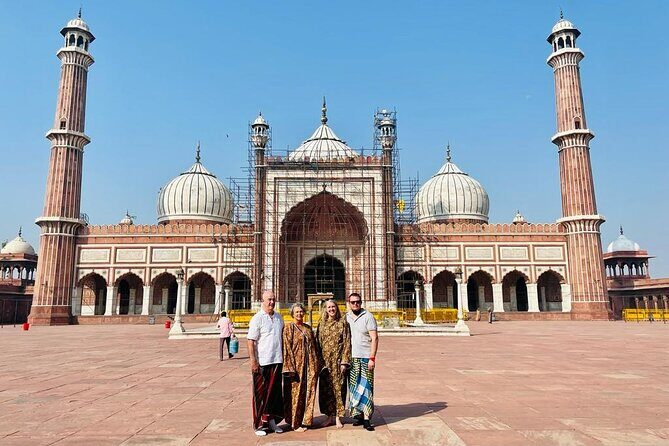
The tour includes hotel pickup and drop-off, plus transport by an air-conditioned private vehicle. In a city where traffic can be unpredictable, this matters more than people expect. You’ll also get complimentary water bottles and umbrellas, which is a small inclusion but a big relief once you’re out in the day.
You’ll be with a private group (only your group participates), and the tour uses a government-licensed guide. In plain terms: you’re getting one person whose job is to keep the day moving and explain what you’re looking at, not a free-for-all where you’re guessing what’s important.
Timing-wise, plan on the full 6 to 8 hours. That’s enough time to do serious sightseeing without turning it into a marathon that eats your entire day—still, it will feel busy. Build in the mindset that this is a highlights circuit.
Jama Masjid: Mughal scale that still works today
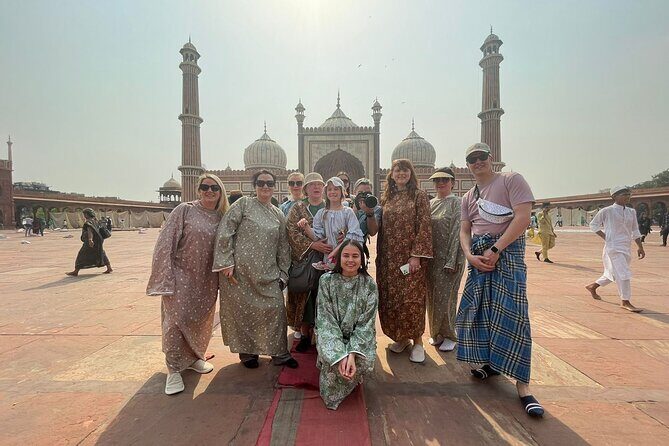
Your first major stop is Jama Masjid, one of India’s largest mosques. The guide will point out it was built by Mughal Emperor Shah Jahan between 1644 and 1656, at a cost of one million rupees—a reminder that religion and empire were tightly linked here.
A key detail is that it’s not just a monument. It has been a working mosque from the 17th century to today, which gives the visit a different energy than a tomb complex or a museum. You’re seeing architecture, yes, but you’re also seeing a place that still has purpose.
Budget note: admission for Jama Masjid is listed as included in the tour package. Still, if you’re booking with an option toggle anywhere, double-check that your specific ticket includes it—because the itinerary notes can sometimes separate “admission not included” from package inclusions.
Khari Baoli spice market in Old Delhi
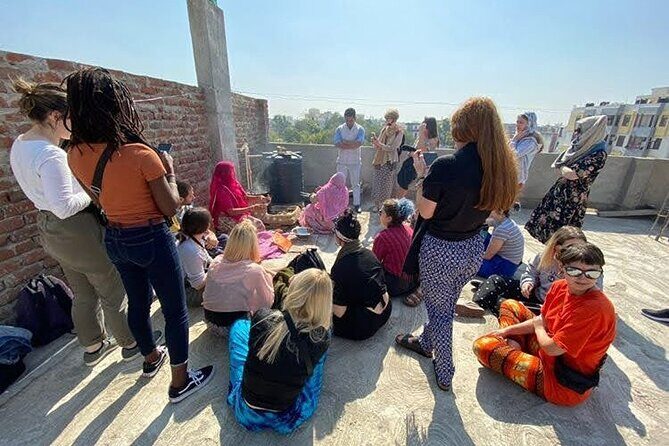
Next up is Khari Baoli, described as Asia’s largest spice market within the broader Chandni Chowk area. This is the sensory break from stone-and-skyline sightseeing. You’ll learn how spices are used and you’ll have time to sample different spices as part of the experience.
What I like about this stop is that it slows you down in a productive way. After a big monument, the spice market gives you something tactile and immediate: smells, colors, and explanations you can actually connect to everyday cooking. It’s also a great place for shopping if that’s your plan, since you’re already there and your guide can steer you toward legitimate vendor spots.
One practical consideration: markets are crowded and can be noisy. Keep your belongings secure and be ready for close quarters.
Raj Ghat: the memorial you can feel in your walk

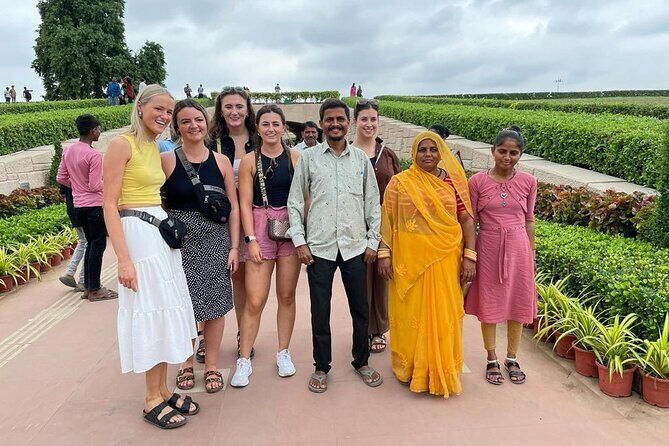
Raj Ghat is a memorial dedicated to Mahatma Gandhi. The tour also frames it as originally the name of a historic ghat in Old Delhi, which helps you understand it as more than a statue in a park. You’re walking through a space designed for remembrance, not spectacle.
This stop gives the day a necessary emotional reset. After temples and markets, Raj Ghat is quieter and more grounded. Even a short visit here can change how the rest of the day lands—especially since you’ll later see grand architecture that was built to impress.
Admission is listed as free for Raj Ghat.





Gurudwara Bangla Sahib and the calm rhythm of worship
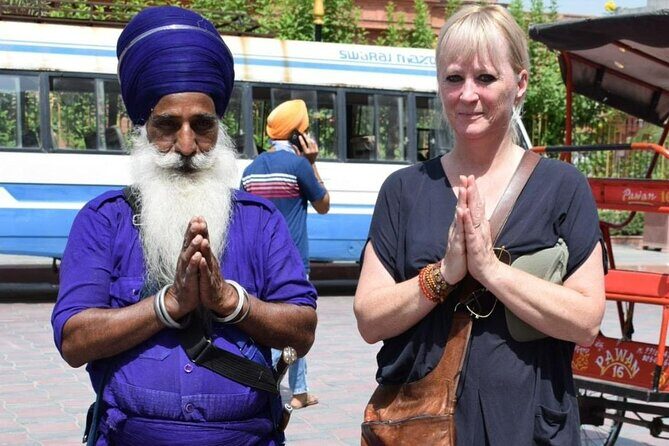
Then you’ll head to Gurudwara Bangla Sahib, a well-known Sikh temple. The tour notes that in 1664, the eighth Sikh Guru visited the king and helped people during a smallpox and cholera epidemic by distributing care—an origin story that explains why the place is more than a sightseeing label.
For me, the value is the pacing. The day includes heavy historic stops—this one slows things down again. It’s also a different kind of architecture experience than a fort or a tomb complex. You’re watching worship and daily life, which makes the city feel lived-in.
This stop is on the schedule for about an hour, and the admission listing for the stop is not marked as included in the general itinerary notes. So if you care about guaranteed entry, confirm with your booking details.
India Gate and the Presidential Palace area: monuments with a wide-angle view

India Gate is next, built as a 1921 tomb of the unknown soldier. The key detail here is the names of 13,300 Indian army servicemen carved on the wall who died during the First World War. Even if you don’t read every name, that scale makes the war memorial feel human and specific.
The tour also includes time around Rashtrapati Bhavan, described as the world’s biggest Presidential Palace and the home and office complex for India’s President. Most likely, you’re viewing it from outside or from designated areas. Still, it’s a strong marker of New Delhi’s power geometry: wide roads, big buildings, and an intentional sense of space.
India Gate is listed as a shorter stop, and the itinerary marks admission as not included. That’s typical for exterior monument viewing.
Humayun’s Tomb: UNESCO calm and a garden-tomb idea
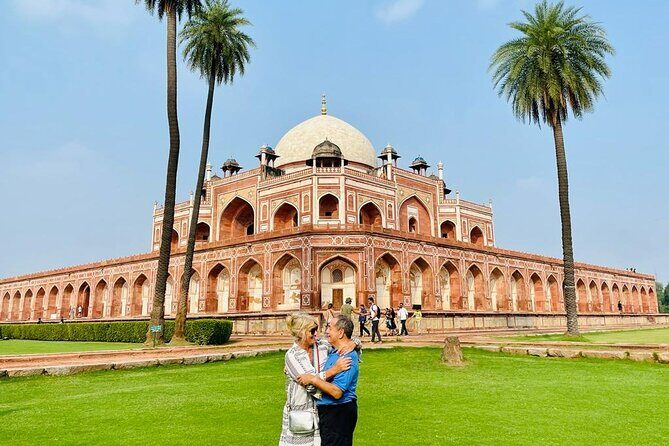
The big leap into UNESCO territory comes with Humayun’s Tomb. It’s listed as a UNESCO World Heritage Site and described as the first Garden Tomb of India. The explanation is that Humayun’s wife built it after his death, which adds a personal motivation to a monumental structure.
Here’s what you’ll feel when you go: this isn’t just height and stone. It’s design meant for walking, sightlines, and slow looking. Garden tombs are about atmosphere—space, symmetry, and a kind of quiet pause in the middle of a busy city.
Admission for Humayun’s Tomb is listed as included in the tour package.
Qutub Minar: the brick tower that defines the skyline
After Humayun’s Tomb, the schedule brings you to Qutub Minar, part of the Qutub complex and another UNESCO World Heritage site. The tour notes it as the tallest minaret built in 1192 with bricks, and that it sits in Mehrauli.
This stop works well after Humayun’s Tomb because you see a different side of Indo-Islamic architecture. Instead of a garden designed for a specific kind of remembrance, you get a towering vertical statement that dominates the surrounding area. It’s the kind of place where a guide’s pointing matters—without context, you can miss what you’re actually looking at.
Qutub Minar entry is listed as included.
Lotus Temple and Birla Mandir: modern shapes and classic devotion
The tour includes two more spiritual stops as optional timing allows.
First, Lotus Temple, a Bahá’í House of Worship dedicated in December 1986. It’s famous for its flower-like shape, and the design has become one of Delhi’s recognizable attractions. This is the kind of site where the architecture does the storytelling. You’ll appreciate it most if you take a few minutes to look around rather than treat it as a quick photo stop.
Then there’s Birla Mandir (Lakshmi Narayan), a Hindu temple with Lakshmi Narayan as the presiding deity (Vishnu). The itinerary frames it as a short additional stop—about 20 minutes—if there’s time.
Admission for both stops is listed as not included in the itinerary notes. Still, a short visit often still delivers the visual payoff, since so much of what you’ll experience is the structure and setting.
The rickshaw ride through Old Delhi: small time, big payoff
One included extra is the tuk-tuk ride in Old Delhi (rickshaw ride). This is one of those inclusions that sounds minor until you’re actually in the lanes.
You’re getting a gentle transportation experience inside the dense part of the city, which can be stressful to navigate on foot. Plus, it breaks up the sightseeing day with a fun, slightly old-school movement—without forcing you to do all the walking in crowds.
Keep expectations realistic: it’s a ride, not an hour-long tour of every lane. But it helps you feel Old Delhi faster than a straight drive.
What entrances are included (and where you should confirm)
This tour is marketed as “with entrance,” but there’s an important nuance. The included list states entry tickets to monuments are included if the option is selected, and it also explicitly lists admission for Jama Masjid, Humayun’s Tomb, and Qutub Minar.
Meanwhile, other stops on the itinerary show admission as not included. That doesn’t mean you’ll be shut out of everything, but it does mean your exact experience could vary depending on what’s treated as an entry-ticket site versus an exterior visit.
My advice: before you go, confirm which monument entries are guaranteed for your booking and which ones are time-permitting or option-based. That’s the difference between a smooth day and an expensive surprise.
Guide quality: why names matter here
From the feedback patterns tied to Holy India Tours, the biggest praise isn’t for monuments alone—it’s for people. Guides such as Sanjay, Saney Pandey, Shubham Pandey (Shubhi/Shubi), and Shubhi show up repeatedly in positive comments, with people highlighting friendly service, strong explanations, and an ability to keep the group feeling safe with the driver.
I like that this kind of guiding shows up across different trip styles. When a company is consistent with guide personalities—passionate about culture, good at handling the route, and willing to add small extras—it tends to make a short Delhi day feel bigger.
Also, you’ll be with a licensed tour guide, which supports the expectation that you’ll get real explanation, not just directions.
Who should book this Old and New Delhi highlights tour
I think this tour is a good fit if you want:
- A single full day that hits both Old Delhi and New Delhi
- UNESCO World Heritage sites without planning your own routes
- A guided day that includes practical help like pickup/drop-off, water, and an Old Delhi rickshaw ride
- A mix of historic, civic, and religious stops, rather than only forts or only temples
You might want to skip it (or shorten expectations) if:
- You need a slower pace and lots of free time at each monument
- You’re strict about meals and prefer full meal inclusion in the price
- You dislike long days with packed logistics
Should you book?
For the price point—$19.10 per person for a full guided day with hotel transfers and major site admissions—that’s strong value if you want a highlights circuit. The “all inclusive” angle is mostly about transport, guiding, and selected entrance fees, not about meals, so plan for lunch.
I’d book it if you want maximum Delhi impact in one go, especially with the mix of Jama Masjid, Humayun’s Tomb, Qutub Minar, and the Khari Baoli spice market plus the included rickshaw ride.
If you can handle a busy 6 to 8 hours and you’re okay paying for food separately, this is an efficient, friendly way to see the city’s highlights without the headache.
FAQ
How long is the Old and New Delhi tour?
It runs about 6 to 8 hours.
Is hotel pickup and drop-off included?
Yes. The tour includes hotel pick-up and drop-off.
What entrance fees are included?
Admission is specifically listed as included for Jama Masjid (Friday Mosque), Humayun’s Tomb, and Qutub Minar. The tour also notes that entry tickets to monuments are included if an option is selected.
Is food included in the tour price?
No. Food and drinks are not included.
Is this tour private?
Yes. It’s a private tour/activity, and only your group will participate.
What is the cancellation policy?
You can cancel for a full refund up to 24 hours in advance of the experience start time. If you cancel less than 24 hours before, the amount paid is not refunded.