REVIEW · NEW DELHI
3-Day Private Luxury Golden Triangle Tour to Agra and Jaipur From New Delhi
Book on Viator →Operated by Crystal India Holidays · Bookable on Viator
Delhi to Jaipur in three days sounds intense. That’s exactly why this private Golden Triangle tour feels so useful: it strings together the big-ticket sights of Delhi, Agra, and Jaipur with a private car, local guides in each city, and built-in timing (including an early Taj Mahal sunrise start). The goal is simple: you spend less time figuring out logistics and more time seeing the places that earn the postcards.
I like two things a lot here. First, the on-the-ground support is strong—drivers are repeatedly praised for handling hectic traffic safely, and guides are praised for keeping the day moving and pointing you to great photo angles. Second, the pacing is tight but organized, with the day broken into bite-size stops (Qutub Minar, Lotus Temple, Old Delhi rickshaw ride, then Forts and palaces) instead of one long blur. One thing to consider: this is a packed itinerary, so if you want lots of unplanned downtime, shopping-free wandering, or a slow travel style, you’ll feel the schedule.
In This Review
- Key Highlights You’ll Actually Feel on the Ground
- The Real Value: Why a Private Golden Triangle Works in 3 Days
- Delhi Day 1: Qutub Minar, Humayun’s Tomb, and Old Delhi Without the Guesswork
- Agra Day 2: Taj Mahal Sunrise Plus the Forts That Explain It
- Jaipur Day 3: Amer, Jal Mahal, City Palace, Jantar Mantar, Hawa Mahal
- Getting from Place to Place: Private Car Comfort, Driver Skills, and Guide Timing
- Budget Reality: Entrance Fees, Shopping Stops, and What’s Included
- Hotels and the Pace: 2 Nights, Twin-Sharing, and a Rest Button
- Who This Tour Suits Best (And Who Should Skip It)
- Should You Book This Private Luxury Golden Triangle Tour?
Key Highlights You’ll Actually Feel on the Ground
- Taj Mahal sunrise timing with weather sensitivity noted up front, so you’re not gambling blindly
- Private air-conditioned transport plus experienced drivers who handle traffic stress (people highlighted drivers like Surinder, Ashok, Rajesh, Sharwan, and Devender Ji)
- Local guides in each city who focus on meaning, not just dates (names that came up often: Pinky, Manoj, Singh, Himanshu, Varun, Jitu)
- Old Delhi firsthand with a included rickshaw ride and time in Chandni Chowk and Jama Masjid area
- Tight but workable routes that keep you moving while still giving hotel check-in and rest breaks
- Jal Mahal and Jaipur astronomy (Man Sagar Lake palace + Jantar Mantar UNESCO site) instead of only the most obvious spots
The Real Value: Why a Private Golden Triangle Works in 3 Days
A Golden Triangle route is popular because it hits three UNESCO-heavy regions—Delhi’s power-and-faith landmarks, Agra’s Mughal monuments, and Jaipur’s Rajput style. The catch is that doing it on your own can turn into a planning headache: bookings, entrance lines, transport between cities, and figuring out which sights pair well by distance and time.
This tour’s value is that it handles the moving parts for you: private, climate-controlled car; hotel pick-up and drop-off; local guides at the sights; and even a battery bus included for the Taj Mahal parking approach. You’re not doing “one landmark per day and lots of travel stress.” You’re doing a deliberate circuit where your guides help you get your bearings fast.
Another practical win: private doesn’t mean chaotic. Reviews repeatedly mention smooth communication and feeling supported—people gave credit to the coordinator (often named Amit) for keeping the plan clear and for giving updates during the trip. That matters in India, where traffic, security checks, and monument rules can affect timing.
You can also read our reviews of more private tours in New Delhi


Delhi Day 1: Qutub Minar, Humayun’s Tomb, and Old Delhi Without the Guesswork
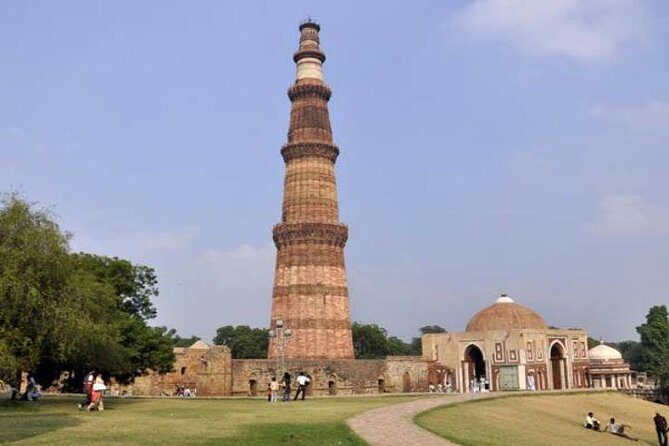
Day 1 starts with the kind of landmarks that quickly show you how Delhi layers time. Qutub Minar is your first UNESCO stop: a tall minaret with a spiral staircase and origins tied to Delhi Sultanate beginnings. What makes it worth your time is the structure itself—this isn’t just a viewpoint. You get a sense of how early Islamic architecture shaped Delhi’s skyline.
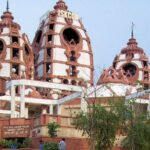
Next is Lotus Temple, known for its flower-like form and modern construction (built in 1986). It’s short and relaxing compared with the taller monuments. Note the one important schedule detail: Lotus Temple is closed every Monday, so if you’re traveling on a Monday, plan around that.
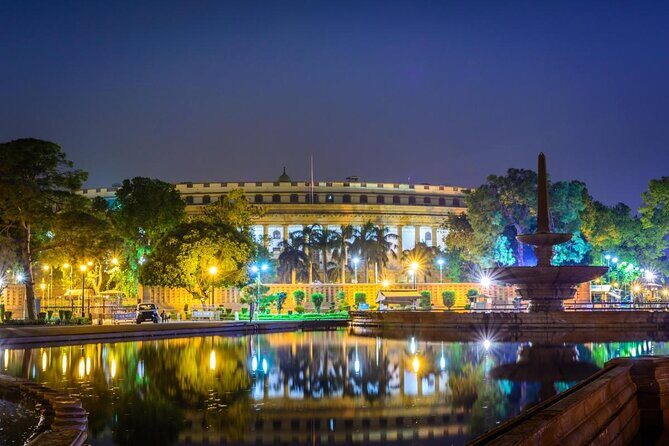
You’ll then move toward iconic Delhi symbols like India Gate (war memorial near Rajpath) plus stops at/near major government buildings such as Parliament House (Sansad Bhavan) and Rashtrapati Bhavan. These are usually more about atmosphere and architecture from the outside than long internal visits, but they help you understand Delhi’s layout: where the ceremonial core sits compared with the older Mughal and Sultanate zones.
Then you shift toward Mughal-era gravitas with Agrasen ki Baoli (a protected stepwell) and Humayun’s Tomb. The tomb experience is often where people slow down. It’s a masterclass in symmetry and how gardens and water features frame monumental buildings—especially useful if you’ve been rushing through big cities.
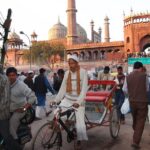
Old Delhi is the payoff for the senses. Chandni Chowk comes next: a busy shopping lane area with spices and textiles, plus a real crowd-energy vibe. Jama Masjid follows—one of the largest mosques in the region, with construction dated between 1650 and 1656. After that, you get the included rickshaw ride through the Old Delhi market area. It’s not just fun; it compresses what would otherwise take you hours to navigate at street level.
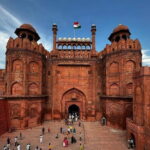
The day closes with Red Fort (historic Mughal residence for nearly 200 years). Depending on your pace and the day’s timing, you’ll likely experience Red Fort as a major visual anchor within the old city circuit rather than an ultra-deep, every-room walkthrough. Finally, you drive toward Agra via the Yamuna Expressway, with dinner and rest handled by your hotel check-in.
Drawback to keep in mind: Delhi day is full. If you’re the type who likes to linger and sketch, you’ll need to choose between lingering and moving on schedule. That’s not a bad thing—it just means you’ll want to bring patience for crowds and changeable traffic.
Agra Day 2: Taj Mahal Sunrise Plus the Forts That Explain It

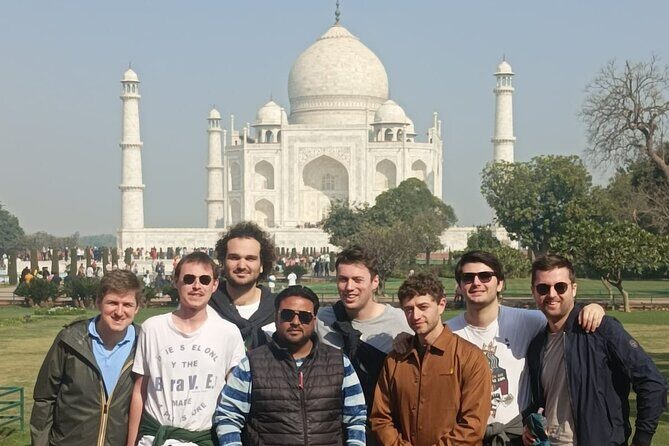
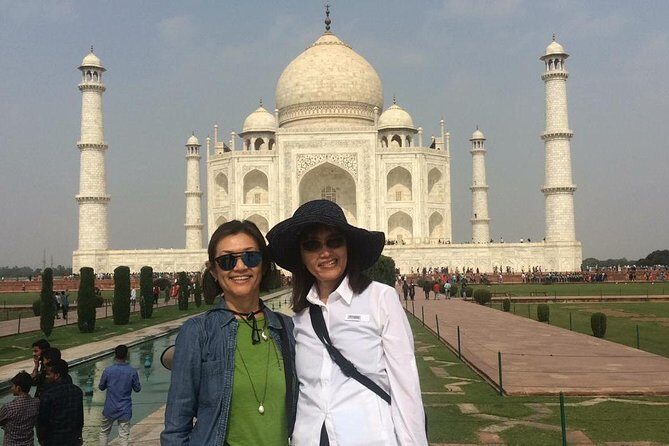
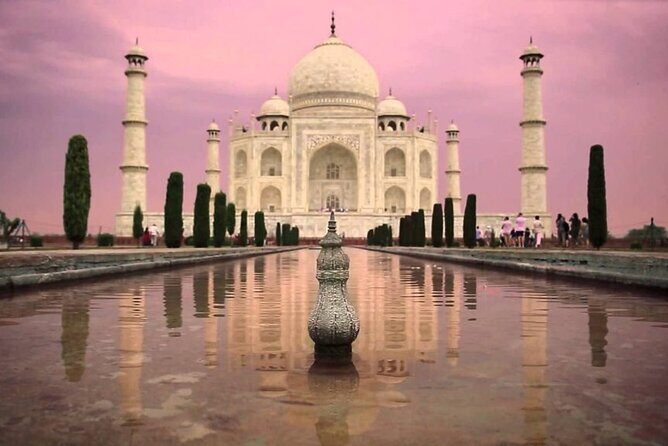
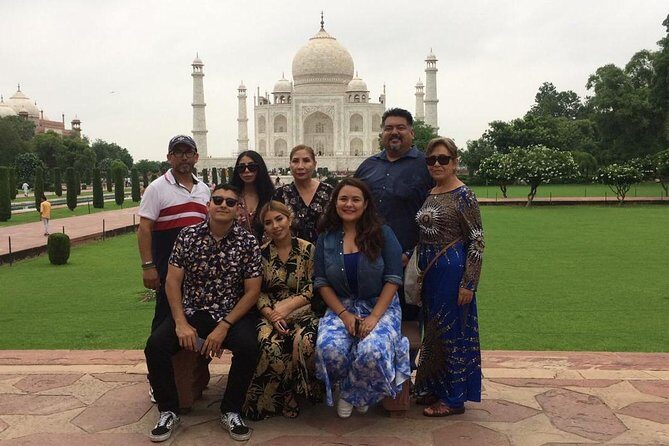
Agra lives or dies by one stop: the Taj Mahal. Here, you start early for sunrise, and the tour is structured around that reality. The sunrise visit is subject to weather conditions, so your best strategy is simple: come with the mindset that timing can shift a little, and your guide team will adjust as needed.
You’ll spend time at the Taj Mahal itself, with an inside visit of roughly two hours. What makes this timing smart isn’t just the photos. It also means the monument is experienced before the full crush of daytime heat and crowds. Guides also tend to direct you to photo points that make the structure look right—people specifically praised guides for getting perfect photo spots and angles.
After the Taj, you go to Agra Fort, a UNESCO World Heritage site and a major historical fortification. It’s where the Taj starts to make more sense. The Taj is about ideals and beauty, but Agra Fort shows you the defensive and administrative side—how power worked in a city that was always strategic.
Then you visit Itmad-ud-Daula, often called the Baby Taj. Even though it’s smaller, it’s a great stop for noticing craft details and how Mughal tomb design developed into something highly refined. It’s also a strong contrast point after two bigger hits: your eyes get a chance to reset.
Once sightseeing finishes, you move onward to Jaipur for hotel check-in overnight.
One consideration: Taj Mahal entrance fees are not included in the base price, and entrance fees for monuments are typically expected as an additional budget item (the tour notes about $65 per person for entrances). Your guide can help you buy entry tickets so you don’t waste time at the wrong counters.
Jaipur Day 3: Amer, Jal Mahal, City Palace, Jantar Mantar, Hawa Mahal
Jaipur is where the architecture turns into a personality. Day 3 starts with Panna Meena ka Kund, a stepwell near Amer Fort. It’s brief, but it works as an opener because it’s unusual and very “Jaipur.” It primes your eyes for the patterned stonework that continues throughout the day.
Next is Amer (often spelled Amber in casual speech). You’ll visit Amer Fort, built by Raja Man Singh I, with its artistic elements and a view shaped by Maota Lake in front of the monument. Amer is the big emotional peak for many people, because it feels like a whole mini world. It’s also more than a photo stop: you get a sense of how the fort sits in the landscape.
Then comes one of the more unique stops on this itinerary: Jal Mahal, the palace in the middle of Man Sagar Lake. The important practical note is that the itinerary marks it as an included entry stop. Even if you mostly view it from vantage points, it’s a change of pace from fort walls and palace courtyards.
You’ll then reach City Palace of Jaipur, constructed in 1721 as an administrative and ceremonial seat. This is the kind of place where your guide’s explanations help you connect rooms to what people used them for. If you tend to enjoy symbolism and design choices, this stop pays off.
Next: Jantar Mantar, another UNESCO UNESCO site. It’s a collection of nineteen architectural astronomical instruments built by Sawai Jai Singh II. This isn’t “science museum” in the modern sense, but it’s a reminder that measurement and observation were built into serious architecture.
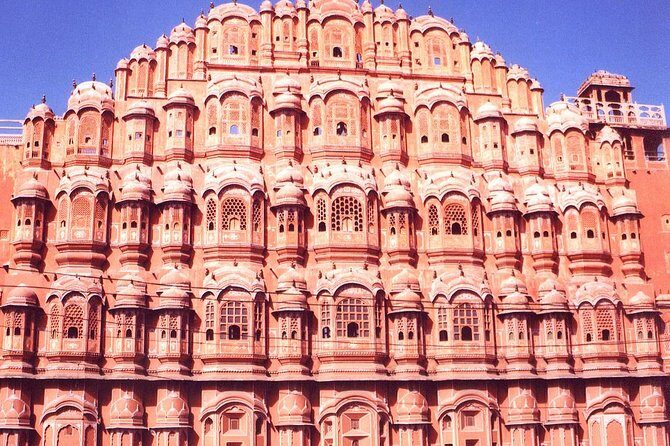
Then you hit Hawa Mahal, the Palace of Wind. It’s famous for its red and pink sandstone façade and the way it rises like a screen. The visit is short, but it’s one of those moments where the city’s style becomes instantly readable.
A quieter stop closes the day: Gaitore Ki Chhatriyan. These are royal cremation cenotaphs in a peaceful valley, with intricate carved memorials. It’s a nice emotional contrast after the busy-palace sequence.
Finally, you return to Delhi, arriving around 9 PM. If you prefer, you can be dropped off at Jaipur airport for onward flights. That flexibility matters if your trip continues beyond the Golden Triangle.
Getting from Place to Place: Private Car Comfort, Driver Skills, and Guide Timing
This is where the tour earns its “luxury” framing, even when the day is packed.
You travel in a private air-conditioned car. The car type depends on group size: a sedan for smaller groups, an SUV for a middle group size, or a van for larger parties. The real point isn’t the exact model—it’s that you’re not sharing a long-distance ride with strangers and you’re not stuck improvising transport when traffic changes.
Drivers get real praise in the reviews for safe, calm navigation in intense traffic. Names that came up included Surinder, Ashok, Rajesh, Sharwan, Madan, Devender Ji, Jeet, Paramjeet, and Rajinder Singh. If you’ve ever been a passenger in India’s traffic flow, you know why that matters. A good driver buys you mental energy back.
Guides are the other half. You get local guides at major stops in Delhi, Agra, and Jaipur. Reviews consistently mention guides being patient, enthusiastic, and helpful with explanations and photo timing. That shows up in small ways: where to stand, what to look for in the stonework, and how to avoid wasting time.
There’s also a practical bonus: the guide team helps you buy monument entrance fees so you’re not standing around wondering which line to take.
You can also read our reviews of more tours and experiences in New Delhi






Budget Reality: Entrance Fees, Shopping Stops, and What’s Included
The published price covers the core logistics and guidance, but entrance fees to monuments are not included. The tour indicates an expected entrance cost around $65 per person. That means you should budget for it even if you’re choosing a hotel package.
The good news: the itinerary includes one “transport easing” element for Taj Mahal—battery bus rides to and from the Taj parking area up to the monument. That helps reduce walking strain and saves time.
Then there are shopping stops. This tour can include optional shopping, and the tour notes clearly that you can skip or add shopping. Some people like browsing local crafts. Some don’t. In reviews, I saw both sides: one complaint mentioned feeling pushed into long sales pitches and higher shop prices, while others said they never felt pressured and were glad the guides kept the tour moving without forcing purchases.
My advice is simple. If you hate shopping pitches, say no politely but early, and pick your one indulgence (maybe one market stop) rather than letting every stop turn into a conversation. If you do want crafts, go in with a “fun souvenir” budget, not a “find deals” mindset.
Also pack for walking. Comfortable shoes and sunscreen are recommended. That’s not just generic advice—Delhi forts and Jaipur palaces involve real uneven surfaces.
Hotels and the Pace: 2 Nights, Twin-Sharing, and a Rest Button
Hotel inclusion depends on which package you choose. With hotels, you get two nights accommodation and daily breakfast. Options range from 4- or 5-star properties, with examples listed like Holiday Inn / Royale Sarovar Portico Agra for 4-star, and Intercontinental / Hilton / Radisson Jaipur City Center for 5-star in Jaipur. Your exact hotel may vary.
Rooming is generally twin-sharing, and for three travelers, triple-sharing is the default unless you arrange otherwise with an extra charge. That’s one more reason the “private luxury” framing matters: the comfort is built around your after-sightseeing recovery.
One pacing reality: day-by-day sightseeing is full. You’ll have some leisure time, especially after arriving in Agra on day 1, but the overall schedule is designed to cover major highlights efficiently. Reviews described it as intense but worth it.
Who This Tour Suits Best (And Who Should Skip It)
This tour is a strong fit if you are:
- First-time to India and want a protected introduction to Delhi, Agra, and Jaipur
- Short on time but determined to hit the “musts” (Taj Mahal, Amber Fort, Hawa Mahal)
- Traveling as a couple or solo and want private driver support and guide explanations
- The type who wants guidance on timing and photo spots rather than self-planning every step
It may not suit you if you:
- Want lots of free time and low structure
- Dislike early starts (Taj Mahal sunrise is the signature)
- Hate any shopping stops or sales pitches, even if they’re optional
If you’re solo and you worry about navigating cities alone, the reviews include clear praise for drivers and guides making people feel at ease and supported.
Should You Book This Private Luxury Golden Triangle Tour?
I’d book it if your priority is getting the major sights done with less stress. The private car, local guides, and safety-first driving make it feel like you’re traveling with a plan, not gambling with traffic and ticket rules. The Taj Mahal sunrise slot is the headline—and when it runs, it’s a genuinely special way to experience Agra.
I’d think twice if you want a slow travel rhythm. This is a three-day sprint. Add in monument entrance fees not included, and possibly shopping stops you may want to skip, and you’ll want to enter with the right expectations.
If you’re ready for an organized, high-impact Golden Triangle circuit from Delhi, this is the kind of tour that turns “big dreams” into a timed itinerary you can actually enjoy.