REVIEW · NEW DELHI
Award-Winning 3-Day Private Golden Triangle Tour of India
Book on Viator →Operated by Pacific Classic Tours India · Bookable on Viator
Three days, three icons, one smooth plan. This private Golden Triangle trip strings Delhi, Agra, and Jaipur together with hotel pickup, licensed local guides, and entry fees handled for you. The big payoff is timing—especially the sunrise Taj Mahal—plus a chauffeur-driven schedule that keeps you moving without turning the trip into a logistics project.
I really like two things. First, the guides bring the sites to life fast, with practical details and stories you can actually use on-site (I noticed this most with guides like Dilip in Delhi and Seema in Agra, plus Mahesh and Ashok in their cities). Second, the trip tends to feel like an all-in-one package because entrance fees are included for the monuments in the itinerary.
One drawback to plan for: this is a driving-heavy route. You’ll lose half days to road time, and there can be optional “artisan” workshop stops that may feel like sales if you’re not in the mood.
In This Review
- Key highlights that matter
- Golden Triangle pacing: the real feel of three days
- Day 1 in Delhi: Tomb, minaret, lotus, and Lutyens-era landmarks
- Night in Agra: why location and rest matter for Taj morning
- Day 2: Sunrise Taj Mahal plus Agra Fort (the must-do combo)
- Day 3 Jaipur: Amber Fort, photo stops, City Palace, and Jantar Mantar
- Private transport and guides: why it feels smoother than DIY
- Entry fees, tickets, and the hidden costs you avoid
- Hotels and breakfast: how to pick the option that fits you
- Price and value: what $350.71 is really buying
- Weather, sunrise security, and what could shift
- Who should book, and who should think twice
- Should you book this Golden Triangle tour?
- FAQ
- What cities are included in this 3-day Golden Triangle tour?
- What time does the tour start and how does pickup work?
- Are entrance tickets included for the monuments?
- Is the Taj Mahal actually visited at sunrise?
- Does the tour price include hotel stays?
- Is transportation private and air-conditioned?
- What is the cancellation policy?
Key highlights that matter
- Sunrise Taj Mahal visit, with golf-cart help from the Taj parking area
- Licensed guides in each city (Delhi, Agra, Jaipur) so you’re not just walking with audio
- Entrance tickets included for the listed sites, including the Taj Mahal
- Private AC transportation with bottled water and refreshments along the way
- Flexible optional stops (cultural workshops, plus photo stops at Jal Mahal and Hawa Mahal)
- Weather-sensitive morning: sunrise timing can shift if visibility is poor
Golden Triangle pacing: the real feel of three days
This tour works best if you want the big hits of India fast, with someone else handling the calendar. You’ll start in the Delhi area around 9:00am, then move to Agra, then to Jaipur, and finally back toward Delhi/Gurugram/Noida. It’s private, so it’s your group, your schedule, and your guide—not a shared bus with random drop-offs.
But let’s be honest about the rhythm. Day 1 includes a full Delhi sightseeing block and then a drive to Agra. Day 2 starts very early for the Taj and ends with a drive into Jaipur. Day 3 is a mix of forts, palaces, and observatory, then a long return drive. In practice, the driving can turn into the main “activity,” so you’ll want comfortable clothes, water, and a good playlist.
The tradeoff is time saved. You’re not hunting tickets, translating rules, or trying to figure out where each monument sits in relation to traffic. The chauffeur and guides are there to keep the plan smooth.
You can also read our reviews of more private tours in New Delhi



Day 1 in Delhi: Tomb, minaret, lotus, and Lutyens-era landmarks
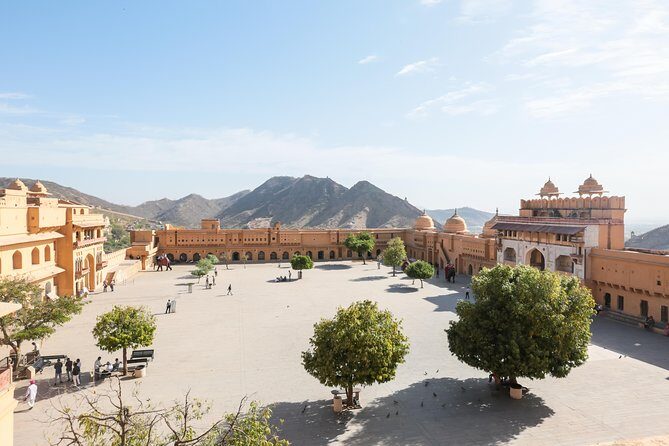
Day 1 is built for first-time bearings. You’ll start with Humayun’s Tomb, a UNESCO garden-tomb that set the pattern for Mughal architecture. If you’ve ever wondered where the Taj Mahal style comes from, this is the place to see the “family resemblance” in the layout and design.
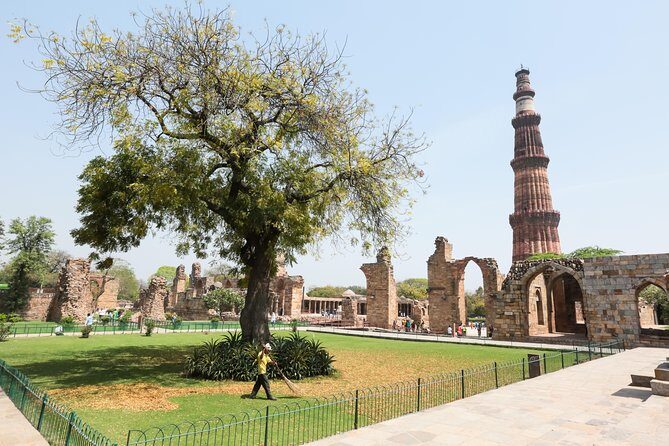
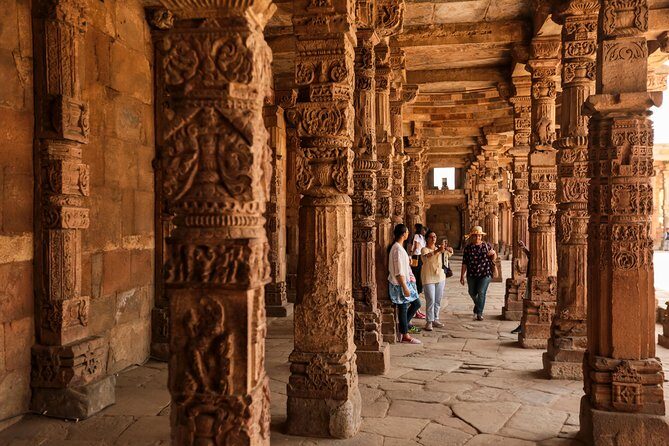
Next is Qutub Minar, the UNESCO-listed minaret tied to medieval Delhi. The carved pillars, inscriptions, and surrounding ruins make this more than a single tall tower photo. You’ll get context for what the place meant in its era, not just the height number.
Then you visit the Lotus Temple. It’s a modern landmark with a serene setting and a lotus-petal look that photographs well. Since admission is free, it’s a low-cost stop that still changes the pace after the older monuments.
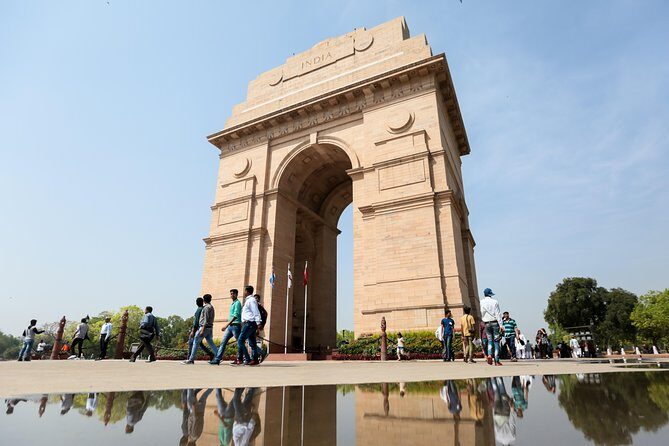
After that, you’ll see India Gate—a 42m-high memorial designed by Lutyens. It’s short on time in the schedule, so the guide’s job is key: pointing out what it commemorates and why it matters in India’s modern story.
You also get a look at Parliament House and Rashtrapati Bhavan from the route. These are more “architectural and civic sighting” stops than deep museum time, but they help show how Delhi layers the old with the official.
Finally, you drive about 3 hours to Agra and check into your hotel. This is the day to keep expectations realistic: Delhi is big, so the goal is highlights with understanding—not exhaustive touring.
Night in Agra: why location and rest matter for Taj morning
Your Agra check-in is what sets up your next morning. Sunrise at the Taj Mahal means you’re getting up early, so sleep quality is not a luxury—it’s part of the experience.
In the options used by the tour, the Agra hotel selection has gotten praise for being close to the Taj Mahal area. That’s useful because it reduces friction when you’re leaving at an early hour. Still, hotel comfort can vary by room and building, so I’d treat “hotel tier” as important. If you’re paying for 4- or 5-star lodging with breakfast, you’re buying back energy for the day that matters most.
Even if meals aren’t included beyond breakfast, the tour typically keeps small things covered: bottled water and refreshments during transfers, plus the day’s planned timing. That helps when you’re operating on early-morning stamina.
Day 2: Sunrise Taj Mahal plus Agra Fort (the must-do combo)
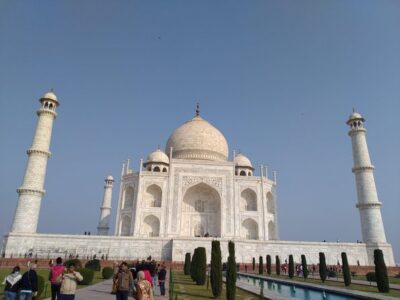
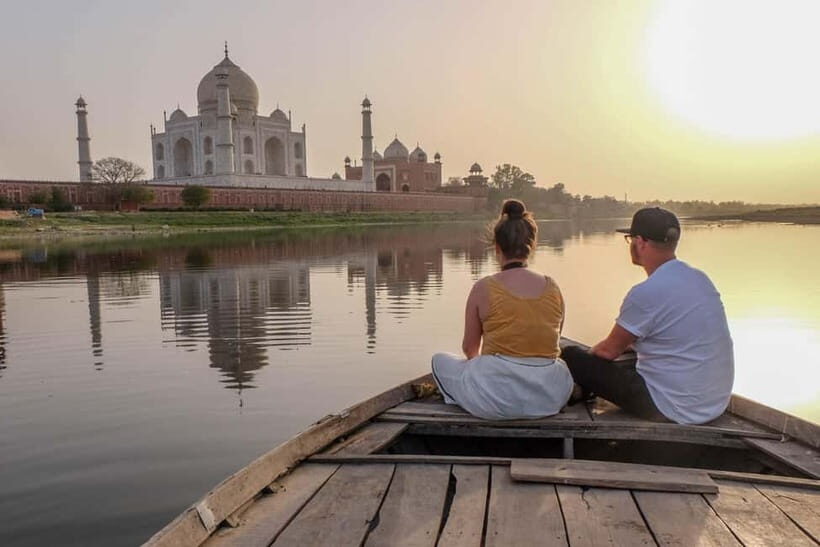
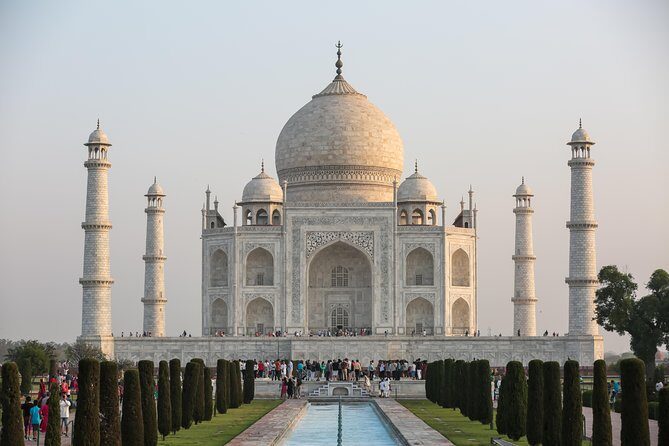
Day 2’s centerpiece is the Taj Mahal at sunrise. This is a totally different experience from midday sightseeing. The light is softer, the crowd energy is calmer, and the white marble has that glow effect people chase—without you having to fight peak lines.
Your guide’s role here is more than narration. They’ll help you understand what you’re looking at while you’re standing there—especially along the symmetry lines, the garden design, and how the complex is laid out. You’ll also have golf cart access from the Taj parking area, which saves a chunk of walking when you’re rushing the sunrise schedule.
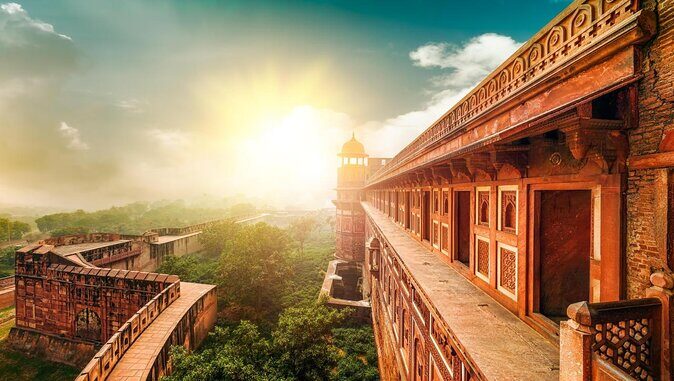
After the Taj, you move to Agra Fort, another UNESCO site. This is a fortress with Mughal-era power vibes—red sandstone walls, palaces, audience halls, and strong views of the Taj across the river. It’s a great pairing because it shows the Taj isn’t just an isolated masterpiece; it sits in a wider imperial landscape of rulership and defense.
There’s also a planned optional window labeled for shopping in Agra (no obligation to buy). If you’re not shopping, you can treat it as a low-pressure stroll time.
The day ends with a drive to Jaipur of about 4 hours, then check-in. If you’re the type who wants a quick reset before a big sightseeing day, this transfer day layout is smart.
Day 3 Jaipur: Amber Fort, photo stops, City Palace, and Jantar Mantar
Jaipur day balances iconic exteriors with “inside the rules” history.
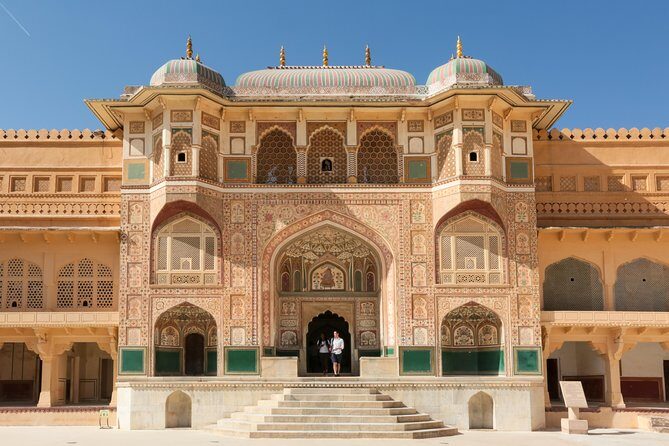
You start with Amber Palace / Amber Fort. This is a hill-fort stop with Rajput architecture, mirrored halls, courtyards, and views over Maota Lake. The schedule gives you about 2 hours, which is usually enough for the main experience without turning it into a marathon. If you’re in a larger group, there may be an additional jeep ride option at an extra cost (jeep at Amber applies for 5+ travelers and is not included).
Next is Jal Mahal for photos. You don’t get long here—about 15 minutes—but it’s worth it if you like “the famous image” shot. It’s a calm break between bigger interiors.
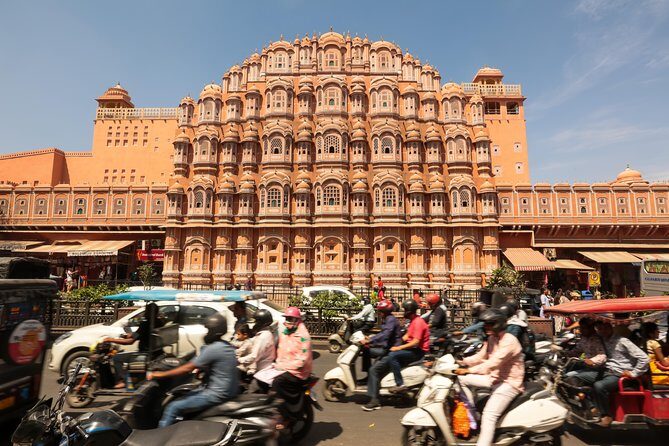
Then Hawa Mahal for a photo stop. You’ll see the famous façade with its 953 latticed windows, designed so royal women could observe street life unseen. It’s a short stop by design, so aim to get your angles early.
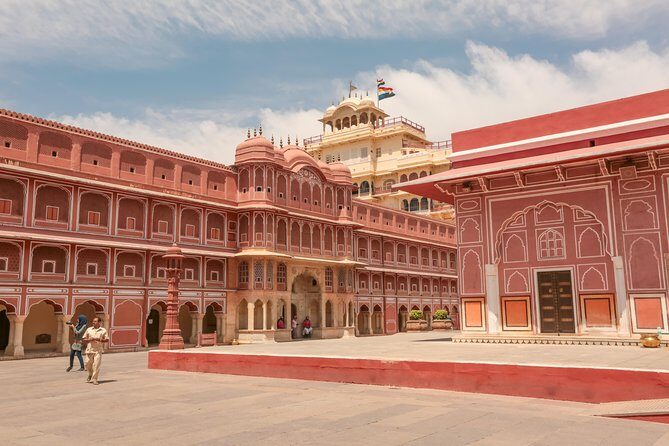
You’ll then visit City Palace, with about 1 hour inside. This is the more museum-like section of the day: courtyards and rooms tied to Jaipur’s royal family and a collection of artwork, costumes, and royal objects.
The final big-ticket “thinking stop” is Jantar Mantar, the UNESCO astronomical observatory. Giant stone instruments used for time and astronomical calculations make this one of Jaipur’s most interesting breaks from forts and palaces. It’s not just scenery—you can actually spot how measurements were done.
Then you’re free for optional shopping, and you finish with a drive back toward Delhi/Gurugram/Noida (around 5 hours depending on traffic).
You can also read our reviews of more tours and experiences in New Delhi





Private transport and guides: why it feels smoother than DIY
The value here is in the “friction removed.” You’re in a private air-conditioned car with a professional chauffeur, and you get a licensed local guide in each city. That means you’re not guessing where to stand, which entrance to use, or what matters most in each stop.
One detail I’d call out: some people report the car included helpful extras like a Wi‑Fi hotspot, plus cold water stocked in the vehicle. You shouldn’t assume every car has the same setup, but it’s a sign the operator thinks about comfort on the long drives.
Safety and confidence matter on this route. The driving is intense around Delhi traffic, and the long highway legs can feel long even when conditions are good. Many guests specifically praised drivers like DK Sharma and K.K. Sharma for careful, steady driving and keeping you on schedule even when roads get chaotic.
You also get 24/7 assistance via phone or WhatsApp during the journey. That matters when you’re dealing with early mornings, security rules, or timing shifts.
Finally, the guides are usually willing to tailor small parts of the day. If shopping stops don’t interest you, tell the guide you want to skip those moments. That small request can protect the best hours for monuments and photos.
Entry fees, tickets, and the hidden costs you avoid
This tour handles the money you’d otherwise juggle on your phone. Monument entry tickets for all listed sites are included, including the Taj Mahal. That’s not a flashy line item, but it’s a real time saver. You’re also more likely to get into the right queue and follow the right entry rules without detours.
There’s still your personal spending to think about. Meals and drinks aren’t included unless specifically mentioned, and lunch/dinner costs vary by what you choose. The schedule leaves you enough time for lunch breaks and rest, but you’ll want a daily budget for food.
Also, note what’s optional. Artisan workshop stops in Agra and Jaipur are cultural stops with no obligation to purchase. That said, the “sales pressure” level can vary based on how you feel about shopping. If you don’t want that time, ask to skip.
Hotels and breakfast: how to pick the option that fits you
Lodging is the big lever for comfort. The tour includes 2 nights of twin-sharing accommodation with breakfast if you book with the hotel option. Higher tiers typically mean more predictable comfort during the long driving days.
Some hotel experiences have been praised as very close to the Taj area and good quality for a comfortable wake-up. Other reports mention rooms or properties that felt less ideal (like strong smells from bug spray), which is a reminder that even good hotels can vary by room.
My advice: treat the upgrade tier as part of your “energy budget.” If you’re getting up early for sunrise Taj, a better room can make the day enjoyable instead of exhausting.
Price and value: what $350.71 is really buying
At about $350.71 per person, you’re paying for a bundle: private AC car, chauffeur, licensed guides across three cities, and entry fees for the key monuments. For a route that would be hard to plan in advance (Delhi traffic, Taj sunrise timing, and the city-to-city schedule), that bundled structure is the value.
The biggest “bang” is the avoided hassle. Entry tickets and golf cart support at the Taj reduce the number of moving parts. Bottled water and refreshments during transfers also keep the day from feeling penny-pinched.
The other big consideration is meals. Since lunch and dinner aren’t included, you’ll still spend money daily. So your real trip cost is “tour bundle + food + any optional extras” like shopping stops or additional jeep transport at Amber Fort (if applicable).
If you’re comparing DIY costs, remember DIY adds hidden time costs: planning, booking tickets, sorting transport, and dealing with security rules. This tour spends money where it saves stress.
Weather, sunrise security, and what could shift
The sunrise Taj visit depends on weather and visibility. Fog or poor visibility can change the plan. This is normal for the Taj sunrise experience, and it’s built into the tour expectations.
Security rules also affect timing. The good part: your guide is there to help you handle the flow efficiently. In at least one case, a guide (Seema) helped with entrance organization by sex, which can reduce confusion when lines are split. Not every visitor will notice that detail, but it’s an example of why having a local guide can improve the experience.
Dress code is smart casual, and comfortable walking shoes are a must. You’ll be on your feet in Delhi monuments and again in forts and palaces.
Who should book, and who should think twice
This tour is a strong fit if you want a high-impact Golden Triangle overview in three days without doing the heavy planning. It’s also a good choice if you’re traveling solo and want a driver you can trust, plus guides who stay with you through each site block. Many solo travelers report feeling safe and well taken care of with the private setup.
It’s also a smart option for first-timers who want a guided explanation of what they’re seeing in Delhi, Agra, and Jaipur.
Think twice if you strongly dislike long car days. This route can feel like a constant cycle of “morning sightseeing, then road time, then more sightseeing.” If you have mobility limits or a medical condition that makes long travel days hard, you’ll want to plan carefully.
Also think about shopping. Artisan stops are optional, and you can request not to do them. But if you know you won’t enjoy that time at all, you should communicate your preference early.
Should you book this Golden Triangle tour?
Yes—if your priority is seeing the key monuments (Taj Mahal at sunrise, Amber Fort, City Palace, Jantar Mantar, and Delhi highlights) with less planning and fewer entry-fee headaches. The private guide setup, included tickets, and chauffeur-driven schedule make it a practical way to experience the Golden Triangle in a short window.
If you prefer a slower trip with fewer drives, or if you hate any hint of shopping stops, you might be happier with a longer itinerary or a version that reduces optional cultural stops.
My quick check before booking: bring comfy shoes, expect early mornings, budget for meals, and tell your guide what you do and don’t want to see. Do that, and you’ll get the best part of this tour—the moments when the monuments really land.
FAQ
What cities are included in this 3-day Golden Triangle tour?
You’ll visit Delhi, Agra, and Jaipur. The route starts in the Delhi area, goes to Agra for the Taj Mahal and Agra Fort, then moves to Jaipur for Amber Fort, City Palace, and Jantar Mantar, and finally returns toward Delhi/Gurugram/Noida.
What time does the tour start and how does pickup work?
The tour start time is 9:00am. Pickup is offered from your desired location in Delhi, Gurugram, or Noida (including airport, train station, or accommodation). You confirm your exact pickup and drop-off details with the operator after booking.
Are entrance tickets included for the monuments?
Yes. The tour includes monument entry fees for the sites listed in the itinerary, including the Taj Mahal.
Is the Taj Mahal actually visited at sunrise?
Yes, the schedule calls for a sunrise Taj Mahal visit. However, it’s subject to weather conditions, and the visit may be adjusted if visibility is poor.
Does the tour price include hotel stays?
The tour includes 2 nights of accommodation with breakfast only if you book the option that includes hotels. If you choose not to include hotels, you should plan for your own lodging.
Is transportation private and air-conditioned?
Yes. You travel in a private air-conditioned vehicle with a professional chauffeur for all transfers.
What is the cancellation policy?
Cancellation is free up to 24 hours in advance of the experience start time, with a full refund. If you cancel within 24 hours of the start time, the amount paid is not refunded.