REVIEW · JODHPUR
Blue city heritage walk
Book on Viator →Operated by Blue city wonders · Bookable on Viator
Jodhpur wakes up early for a reason. This Blue City heritage walk at 7:00 am takes you through Jodhpur’s tucked-away corners—starting at Toorji Ka Jhalra step well and moving into blue-painted streets and temples—while your guide tells you what you’re actually looking at. Blue lanes and temple stops come fast, plus you get a complimentary coffee or tea to make the start feel like a treat instead of a chore.
One heads-up: you’re walking on older, uneven streets early in the morning. If you hate early starts or you need very smooth ground underfoot, plan accordingly.
You’ll finish back at the same meeting point after about an hour to an hour and 10 minutes. Along the way, you’ll focus on four major stops—Toorji Ka Jhalra Bavdi, Achal Nath Shivalaya, Shri Gangshyam Ji Maharaj Mandir, and Navchowkiya—and the stories connect the Blue City to Mehrangarh Fort, including the twin lakes of Ranisar and Padamsar within the fort grounds. Mehrangarh Fort and Ranisar and Padamsar are part of the big-picture context you’ll hear.
In This Review
- Quick highlights before you set your alarm
- A 7:00 am Blue City walk that actually beats the heat
- Toorji Ka Jhalra Bavdi: starting with Jodhpur’s step-well
- Achal Nath Shivalaya and the blue lanes you’d miss alone
- Shri Gangshyam Ji Maharaj Mandir: temple life and local rhythm
- Navchowkiya and the stories behind local beliefs
- Mehrangarh Fort context and the twin lakes of Ranisar and Padamsar
- What you get from a guide named Ram (and why it matters)
- The coffee or tea moment and why the pacing works
- Price and value: why $11.19 feels like a bargain
- Practical tips so the walk stays fun, not fussy
- Who should book this Blue City heritage walk
- Should you book this Blue City Heritage Walk?
- FAQ
- What time does the Blue City heritage walk start in Jodhpur?
- How long is the walk?
- Where do I meet for the tour?
- Where does the tour end?
- What’s included in the price?
- Is there a guide tip expected?
- What’s the group size?
Quick highlights before you set your alarm
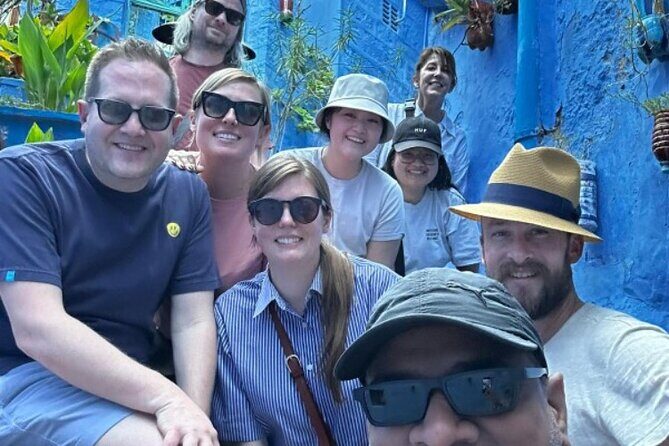
- Small group size (max 21) so you’re not shouting over a crowd.
- 7:00 am start to beat heat and later street traffic.
- Real landmarks, not just photos: Toorji Ka Jhalra, Achal Nath Shivalaya, Shri Gangshyam Ji Maharaj Mandir, and Navchowkiya.
- Coffee or tea included to keep the morning easy.
- Guide-led storytelling with Ram plus plenty of back-and-forth questions.
A 7:00 am Blue City walk that actually beats the heat
Jodhpur’s Old City can feel like a maze. The smartest move is to tackle it early, when the streets are calmer and the light is more forgiving. This walk is timed for that sweet spot: you’re out at 7:00 am and done soon after, so you’re not spending your morning sweating through long stretches with no shade.
What makes the early timing feel practical is that it also changes how you experience the Blue City. You’re not just passing walls; you’re moving at a human pace through working neighborhoods, where temples and daily life sit right alongside the famous color. And when your guide points things out, the small signs and details land better when you’re not rushing to escape the heat.
You can also read our reviews of more walking tours in Jodhpur



Toorji Ka Jhalra Bavdi: starting with Jodhpur’s step-well
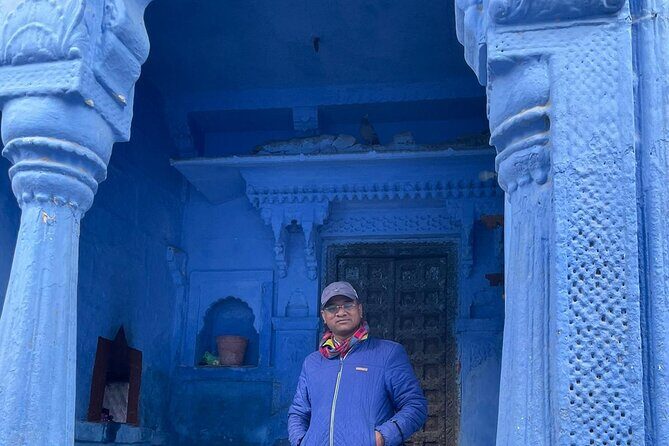
You begin at Toorji Ka Jhalra Bavdi, a step well that sets the tone for the entire walk. Step wells aren’t just scenic objects—they’re functional structures tied to water storage, architecture, and how communities organized their lives. Starting here is smart because it gives you a foundation for everything else you’ll see: the Blue City isn’t random decoration; it’s a living neighborhood with history embedded in design.
This is also a good place to settle in. The tour starts with an orientation that helps you understand what you’re about to notice in the streets ahead. If you’re the type who likes to know what you’re looking at (and not just take photos and hope), this first stop is an easy win.
Achal Nath Shivalaya and the blue lanes you’d miss alone
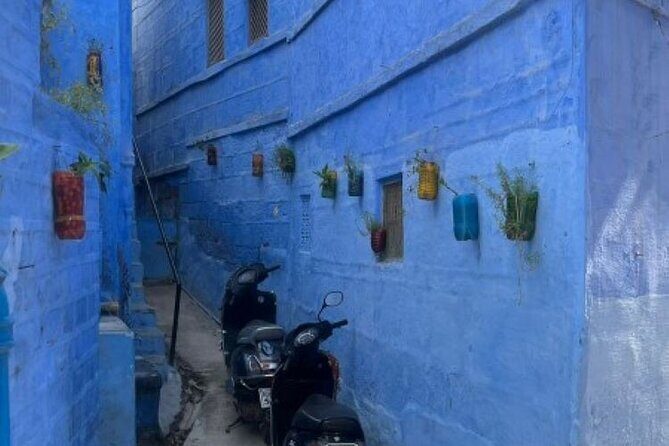
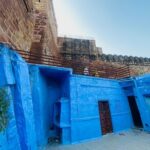
From the step well, you head into the blue-painted streets, passing homes and moving toward Achal Nath Shivalaya. This segment is where the Blue City branding starts to feel real. You see how the color works on doorways, walls, and narrow lanes—often in ways that are hard to spot when you’re wandering without direction.
Achal Nath Shivalaya also adds a different kind of interest. Temples don’t just look ancient; they shape movement. You’ll see how the street bends around religious spaces and how people interact with these places in everyday ways. It’s the kind of contrast—ordinary street life and sacred space—that makes this walk feel like you’re getting the city from the inside.
A practical note: religious sites often mean you’ll want to keep your voice low and dress respectfully. If your plan for the day includes lots of temple stops, this is a solid early warm-up.
Shri Gangshyam Ji Maharaj Mandir: temple life and local rhythm
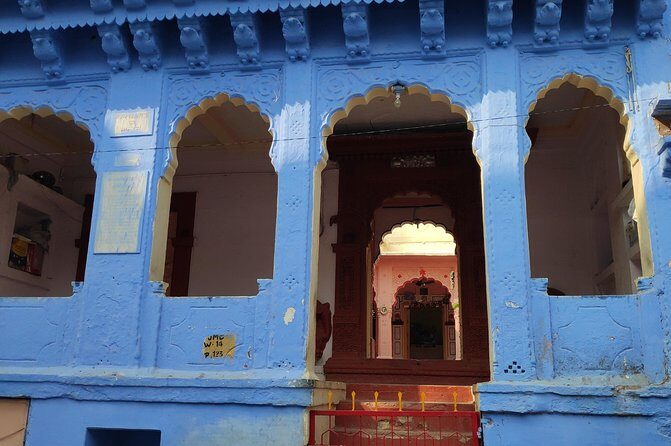
The walk continues to Shri Gangshyam Ji Maharaj Mandir, where the focus shifts even more toward local life. This is one of those stops that works well even if you’re not a temple-spotter, because the guide’s job is to translate what the space means for the people using it.
You spend about 20 minutes here, and the time matters. It’s long enough to ask questions and get a feel for how the mandir fits into community life, not just how it looks in a picture. If you tend to rush through religious places, give yourself permission to slow down just enough to absorb what’s happening around you.
Also, this stop is a good point in the walk to check your energy. By the time you reach this temple, you’ve already started the morning right, and the pace stays manageable.
Navchowkiya and the stories behind local beliefs
Next comes Navchowkiya, described as one of the oldest parts of the Blue City. This is where the walk shifts from sightseeing to meaning. You don’t just move through a historic neighborhood—you learn the kinds of local stories that get passed along through temples, symbols, and beliefs.
There’s a specific element here that stands out in the tour description: you’ll also get knowledge about the god of sex. That’s not a detail most generic heritage tours bother with, and it’s the kind of topic that can turn a standard photo stop into something memorable—because it answers the question you didn’t know you had, like why certain symbols or references exist in daily conversation.
To keep the experience comfortable, treat this part like a conversation, not a trivia quiz. If you’re curious, this stop will feel like the best payoff of the morning. If you’d rather avoid sensitive topics, you might want to ask your guide how they frame it before you get too far in.
You can also read our reviews of more city tours in Jodhpur





Mehrangarh Fort context and the twin lakes of Ranisar and Padamsar
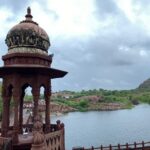
Even though the walking stops are concentrated in the older parts of the city, the tour also ties your experience to the larger picture of Jodhpur. The highlight includes the hilltop fort—Mehrangarh Fort—and the twin lakes of Ranisar and Padamsar within the fort area.
Why does that matter while you’re still in the Old City? Because it helps you connect what looks like separate attractions into a single story: how forts, water systems, neighborhoods, and religious life all link up in Jodhpur’s geography. When you later look at the fort from outside viewpoints, you’ll have context ready.
If you like “follow the thread” travel, you’ll probably enjoy how the walk builds from street-level details to that big landmark.
What you get from a guide named Ram (and why it matters)
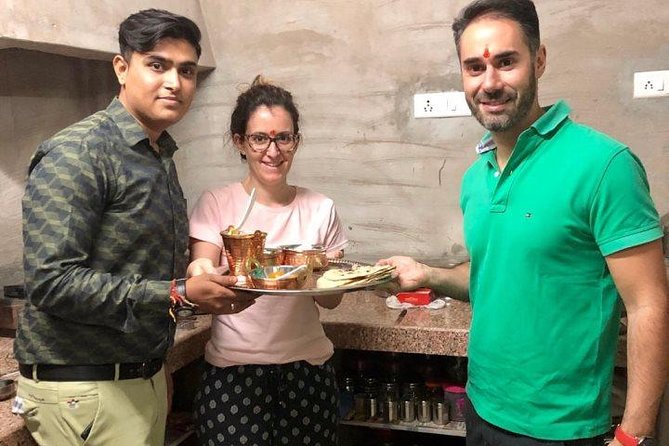
The biggest strength of this experience is the guide’s role in turning a route into an understanding of place. With Ram, the vibe comes across as friendly, funny, and genuinely engaged—plus he’s known for answering lots of questions instead of brushing them off.
That matters for you because Jodhpur’s Old City is easy to get wrong. If you wander alone, you might see blue walls and miss why they exist, or you might miss quieter pockets altogether. A good guide makes your walk feel faster, even though it isn’t rushing. It’s the difference between looking at the city and reading it.
Also, if you’re into photos, it helps to have someone pointing out where the angles are and what’s worth stopping for. The tour is structured so you’re not spending half your time asking strangers where to go next.
The coffee or tea moment and why the pacing works
You get a complimentary coffee or tea during the tour. That sounds small, but in practice it’s a big part of why early morning plans feel doable. It gives you a quick reset so you can keep walking with a clear head.
The overall duration—about 1 hour to 1 hour 10 minutes—also keeps the experience from dragging. It’s long enough to cover multiple stops and get context at each one, but short enough that it won’t steal your whole morning. That makes it a strong opener for the day, especially if you’ve got fort views or other sightseeing later.
Price and value: why $11.19 feels like a bargain
At $11.19 per person, this is priced like a value-forward local walk. You’re not paying for a big bus tour or a long, heavy itinerary. You’re paying for a guided route with several meaningful stops, plus coffee or tea included.
The value is strongest if you fall into one of these groups:
- You want orientation in Jodhpur’s Old City without spending hours wandering.
- You like learning why places look the way they do, not just what they’re called.
- You’d rather pay a small amount than risk getting lost and wasting time.
One cost consideration: guide tips are not included, so plan to budget extra if you feel the guide earned it. For a short walk, that’s usually an easy add-on rather than a major expense.
Also, the group size cap of 21 people helps keep the experience feeling personal. You’re not paying to stand behind a crowd.
Practical tips so the walk stays fun, not fussy
Here are the things I’d plan for based on how Old City walks usually work and what this one emphasizes:
- Wear comfortable walking shoes. Expect older pavement and tight lanes.
- Keep water and sun protection in mind. It’s early, but Jodhpur heat can still build quickly.
- Be ready for religious spaces. Move respectfully, and keep your voice down.
- Arrive on time at Toorji Ka Jhalra Bavdi. The tour starts at 7:00 am, and the whole schedule is built around that early window.
You’ll also receive confirmation at booking, and you’ll use a mobile ticket. One more practical factor: this experience requires good weather, so if conditions are poor, expect it to be adjusted or refunded under the operator’s weather rule.
Who should book this Blue City heritage walk
This tour is a great fit if you:
- Want a low-cost introduction to the Blue City with guided storytelling
- Prefer walking over buses and schedules
- Like temples, local neighborhood scenes, and cultural context
- Would enjoy a guide who answers questions and keeps things light
It’s less ideal if you:
- Don’t do well with early starts
- Have mobility limits that make uneven Old City streets hard
- Prefer a purely scenic walk with no discussion of beliefs and symbols
Should you book this Blue City Heritage Walk?
I think it’s an easy yes if you want the Blue City to feel understandable, not just photographed. For the money, you get a structured route through key places—step well, temples, and an old neighborhood section—plus a guide named Ram who’s known for being friendly, engaged, and happy to answer questions. The early start and small group size help you enjoy the city while it’s still at its most pleasant.
If you’re only in Jodhpur for a short time, this is a high-value way to get your bearings fast. If you’re staying longer and want more depth later, it also works as a setup tour—so you know what to look for when you explore on your own.
If you do book, bring good shoes, show up a few minutes early, and come with at least a couple of questions. That’s where a guided Blue City walk pays off the most.
FAQ
What time does the Blue City heritage walk start in Jodhpur?
The tour starts at 7:00 am.
How long is the walk?
It runs about 1 hour to 1 hour 10 minutes.
Where do I meet for the tour?
You meet at Toorji Ka Jhalra Bavdi, Makrana Mohalla, Sutharo Ka Bass Rd, Gulab Sagar, Jodhpur, Rajasthan 342001, India.
Where does the tour end?
The tour ends back at the same meeting point.
What’s included in the price?
Coffee and/or tea are included.
Is there a guide tip expected?
Guide tips or gratuities are not included.
What’s the group size?
The tour has a maximum of 21 travelers.