Sunrise at the Taj sets the pace. This 4-day Golden Triangle runs on private comfort and guided time at the big names, from Old Delhi streets to Agra’s Mughal icons. You get a planned route and local expertise, not a stressful self-guided scavenger hunt.
I really like the pickup-to-drop-off convenience and the way the schedule groups sights by area so you’re not zigzagging across town all day. I also like that the tour includes the battery bus ride up to the Taj Mahal for less walking in early-morning crowds.
One thing to consider: the price looks low, but monument entry/admission fees are not included, and sunrise timing plus long drives through the corridor can feel intense in heat.
In This Review
- Key things I’d prioritize on this tour
- Price and comfort: why this Golden Triangle feels easier than DIY
- Delhi Day 1: Old Delhi markets, a mosque stop, and the big-city rhythm
- Chandni Chowk Market: your crash course in everyday Delhi
- Jama Masjid: power, politics, and active worship
- India Gate and Lotus Temple: balance after the old-city buzz
- Delhi Day 1 continues: Humayun’s Tomb and Qutub Minar for UNESCO-level scale
- Humayun’s Tomb: a Mughal mausoleum with serious presence
- Qutub Minar: Delhi’s older fortified-city story
- The smooth transfer to Agra: less hassle, more actual viewing time
- Taj Mahal sunrise: included battery bus and why timing is everything
- What you’re actually doing at sunrise
- After sunrise: breakfast, check-out, and the Agra Fort day
- Agra Fort and Itmad-ud-Daula: the Taj’s quieter side quests
- Agra Fort: a UNESCO-grade backdrop for Mughal power
- Itmad-ud-Daula (often called the jewel-box): “Bachcha Taj” energy
- Jaipur Day 1: the stepwell, Amber Fort access, and a royal-photo route
- Panna Meena ka Kund: Jaipur’s stepwell stop
- Amber Fort: jeep access and the elephant question
- Jal Mahal: water palace, but entry is off-limits
- Jaipur Royal circuit: City Palace, Jantar Mantar, and Hawa Mahal
- City Palace of Jaipur: museums and courtyards
- Jantar Mantar: stone instruments that track the sky
- Hawa Mahal: quick hit with big visual payoff
- Who the private guides help you most (and what to ask)
- Is this Golden Triangle tour good value for you?
- FAQ
- Is pickup included for this Golden Triangle tour?
- Are monument entrance tickets included?
- What about transport and group size?
- Does the tour include sunrise access logistics for the Taj Mahal?
- Are hotel nights and breakfast included?
- Is elephant activity part of the tour?
Key things I’d prioritize on this tour
- Private, AC transport that matches your group size (sedan, wagon, or van)
- Sunrise Taj Mahal with included battery bus access
- Hotel breakfast included when you book the hotel option
- Guides at each stop to help you buy entrance tickets and avoid ticket lines
- No elephant activity, with alternatives like jeep access to Amber Fort
- A mix of iconic landmarks and “everyday India” through Old Delhi markets
Price and comfort: why this Golden Triangle feels easier than DIY
For $20 per person, the big value here is not the monuments themselves. It’s the built-in structure: private car, local guides, and organized pickup from your hotel/airport/rail in the Delhi area. Even if you end up paying extra for tickets, you still save time and energy figuring out routes, timing, and where to stand.
The comfort part matters more than people think. The tour uses an air-conditioned private vehicle, sized to your group (4-seater sedan for 1–2 people, 6-seater wagon for 3–4, 10-seater van for 5–10). That means you’re not squeezed into a random shared vehicle with strangers, and you’re not stuck waiting while someone else negotiates tickets or directions.
Also, this is set up as a private tour, meaning only your group participates. It’s quieter, easier to ask questions, and you can pace yourself a bit during museum-like stops versus the “rush-rush” vibe you sometimes get on big bus tours.
The practical catch: the itinerary includes several UNESCO sites and major attractions, but entry fees aren’t included. Your budget should assume additional costs once you’re on the ground. If you’re traveling on a strict budget, that’s the main thing to price-check before you book.
Delhi Day 1: Old Delhi markets, a mosque stop, and the big-city rhythm
Delhi can feel like a motion blur on your first day. The smart move is to anchor your trip with a tight set of landmarks in the same general slice of the city. This tour does that with Old Delhi and nearby highlights.
Chandni Chowk Market: your crash course in everyday Delhi
Chandni Chowk is one of the city’s classic contrasts: centuries-old lanes with an all-day pulse. The tour schedules a full hour here, which is just enough time to see the market’s scale without feeling like you’re only rushing past shops.
What I’d do with that hour: don’t try to buy everything. Instead, use it to get your bearings—look for food smells, fabrics, metalwork stalls, and the way street life flows around the lane corners. This is also a good place to practice “slow walking” because the market can make your brain sprint even when your feet don’t.
Admission is free for the market stop, so you’re really paying for guide time and timing, not ticket entry.
Jama Masjid: power, politics, and active worship
Next is Jama Masjid, where the tour gives you context beyond a quick photo stop. The mosque has long been tied to major moments in India’s political story, and it’s still an active place of worship. The visit is scheduled for about 45 minutes.
Practical note: you’ll want to dress respectfully and plan for people moving through the space. This isn’t a “walk-in, walk-out” tourist site. Treat it like you’re stepping into a living place, not a stage prop.
Admission is not included here, so plan for ticket cost.
India Gate and Lotus Temple: balance after the old-city buzz
After Old Delhi intensity, the tour shifts toward calmer, more open landmarks.
- India Gate gives you a breather and a classic New Delhi landmark at about 30 minutes. It’s free, so it’s a low-cost way to add a major symbol to your photos.
- Lotus Temple is a 30-minute stop and also free to enter. Its lotus-like shape makes a strong visual break from the older stone styles you’ll see elsewhere.
If you’re sensitive to noise and crowding, I’d treat these two stops as your “reset” portion of the day. Your head needs it.
Delhi Day 1 continues: Humayun’s Tomb and Qutub Minar for UNESCO-level scale
The tour’s second wave of Delhi sights leans Mughal and early Sultanate, which is perfect if you want variety without turning the day into a marathon.
Humayun’s Tomb: a Mughal mausoleum with serious presence
Humayun’s Tomb is a UNESCO World Heritage site, and the schedule gives you about an hour. The monument was built in 1570 by Empress Bega Begum, which helps you place it in time, not just view it as a pretty complex.
Admission is not included, so again: budget for tickets. But the payoff is the scale and the symmetry—this is one of those sites where photos help, yet walking the paths helps more.
Qutub Minar: Delhi’s older fortified-city story
Qutub Minar (with its “victory tower” concept) ties into the Qutb complex and the site of Delhi’s earliest fortified city, linked to Lal Kot. The tour gives you about an hour, which is long enough to notice details instead of only staring upward.
Admission is not included for this stop as well. Still, if you like architecture and you want the big landmark to feel more than a silhouette, this stop is worth giving full attention.
The smooth transfer to Agra: less hassle, more actual viewing time
Once Delhi sightseeing wraps, you shift into the transit phase. The tour builds in time for lunch at a local restaurant during the day, then you drive about three hours via the Yamuna Expressway to reach your Agra hotel.
That drive time matters. Many Golden Triangle trips waste half a day with stop-start city traffic. A planned route helps you arrive earlier, so your sightseeing day in Agra doesn’t feel squeezed.
The tour also states the hotel is in a 5-star or 4-star option depending on what you book (examples given include Fern Residency or Hilton / Holiday Inn Jaipur City for the region options). If you’re booking without hotels included, you’ll want to confirm what your lodging plan is on your side. If you do include hotels, the tour includes daily breakfast.
Taj Mahal sunrise: included battery bus and why timing is everything
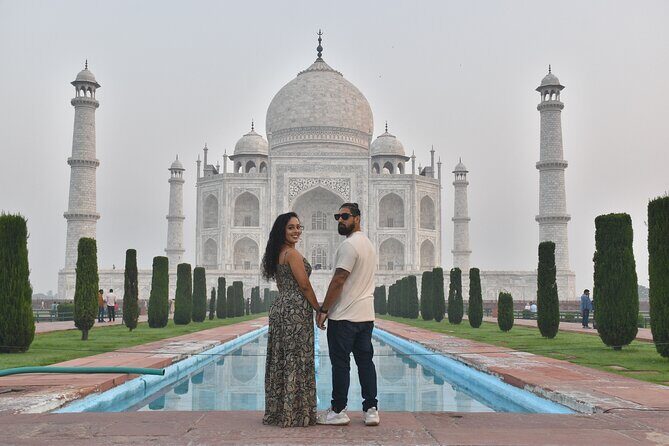
This is the centerpiece: sunrise at the Taj Mahal. The tour allocates time for the sunrise window and schedules a total block that supports the early start. The included detail I really like is the battery bus ride to and from the Taj Mahal parking lot up to the monument.
That means less walking right when your day is starting cold and early, and it reduces the hassle of navigating lots and crowds before sunrise fully kicks in.
What you’re actually doing at sunrise
Sunrise doesn’t just mean pretty light. It means fewer tour groups, a quieter feel in the moment, and a more magical first look at the marble. You’re watching the monument’s color and reflections shift as the light changes, and you’re there before the midday heat makes everyone move slower.
Admission is not included for the Taj Mahal itself. But if you’re budgeting for the experience, keep the included battery bus in mind—it helps offset at least part of the “how do we get in” friction.
After sunrise: breakfast, check-out, and the Agra Fort day
After the sunrise visit, the tour returns you to your hotel for breakfast, then check-out, followed by sightseeing at Agra’s next major icon: Agra Fort. The schedule gives about an hour here.
If you’re wondering how to avoid feeling rushed: this sequence helps. Taj first, then transition to a different Mughal atmosphere at Agra Fort. Your eyes reset between marble glamour and the fort’s heavier stone and ramparts.
Agra Fort and Itmad-ud-Daula: the Taj’s quieter side quests
Most people plan the Taj and then sprint through the rest of Agra. This tour gives you two strong alternatives that help the Taj make more sense.
Agra Fort: a UNESCO-grade backdrop for Mughal power
Agra Fort is scheduled for about an hour. The tour frames it as a UNESCO World Heritage experience, and in practice, it works because it shows you a broader power base, not just a single monument.
Even if you don’t memorize dates, you’ll feel the logic of walls and access points. It’s also a good contrast after the Taj’s smooth, open visual style.
Itmad-ud-Daula (often called the jewel-box): “Bachcha Taj” energy
Next is Itmad-ud-Daula, scheduled for about 45 minutes. The tour notes it as the Tomb of I’timād-ud-Daulah and even mentions a nickname sometimes used for its jewel-box look.
This stop is shorter, but that’s a plus if you’ve already had a full Taj sunrise. You get details and craftsmanship without needing a long endurance block.
Admission is not included here either, but the time allocation feels fair.
Jaipur Day 1: the stepwell, Amber Fort access, and a royal-photo route
Once you drive from Agra to Jaipur (about 280 km, roughly 4 to 5 hours), you check into your hotel and get a little time to settle in.
Then the schedule starts with a mix of “crowds and calm,” which helps Jaipur feel less like a checklist.
Panna Meena ka Kund: Jaipur’s stepwell stop
Panna Meena ka Kund near Amber Fort is described as a 16th-century stepwell with symmetrical staircases, and the tour gives you about 30 minutes. This is the kind of stop I like because it’s not always the top line item for first-time visitors.
It also breaks up the more famous royal sites by giving you a different kind of architecture story—water engineering as design.
Admission is free for this stop.
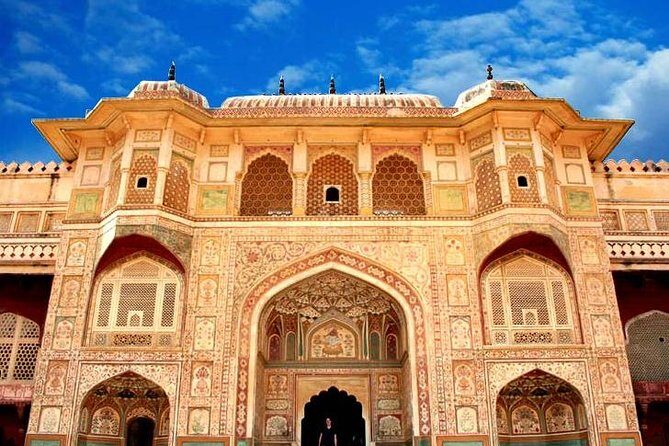
Amber Fort: jeep access and the elephant question
Amber Fort is one of the main Jaipur draws, and the tour gives about two hours. The critical detail: the tour provider states it does not organize elephant activity.
In one of the guide/driver experiences shared in feedback, they even arranged a jeep ride instead of an elephant ride for Amber Fort access. That’s a huge quality-of-life point for you if you’d rather avoid animal rides and still get to the viewpoint area without burning up your legs.
Admission is not included for Amber Fort, so plan for tickets.
Jal Mahal: water palace, but entry is off-limits
The tour includes Jal Mahal for about 20 minutes, but it clearly states entry is prohibited. That means you’re mostly sightseeing from outside and enjoying the setting view across the lake.
I’d treat this as a “photos and perspective” stop, not a museum-like visit. It’s still a nice break between larger ticketed sites.
Admission is free (as listed for this stop), which helps.
Jaipur Royal circuit: City Palace, Jantar Mantar, and Hawa Mahal
After Amber and the lakeside pause, you move into Jaipur’s royal-institution zone: museums, science instruments, and that unmistakable pink facade style.
City Palace of Jaipur: museums and courtyards
City Palace Jaipur is scheduled for about an hour. It’s described as a grand royal residence with museums, courtyards, and the Peacock Gate. Even if you’re not a deep museum person, this stop helps connect the dots between Jaipur’s fort-based power and the urban royalty life.
Admission is not included here, so this is another ticket cost to keep in your mental budget.
Jantar Mantar: stone instruments that track the sky
Jantar Mantar (UNESCO World Heritage) is about an hour in the plan. The tour calls out the world’s largest stone sundial and 19 astronomical instruments built by Maharaja Sawai Jai Singh II in 1734.
If you like science made visible, this is a fun stop. You don’t have to know the math to feel the purpose: these structures were meant to measure and predict, using the sky as the reference.
Admission is not included.
Hawa Mahal: quick hit with big visual payoff
Finally, Hawa Mahal (Palace of Winds) is about 20 minutes. The iconic 953 jharokhas are part of what makes it instantly recognizable. The tour notes the window design allowed royal women to observe city life.
Admission is not included here either. If you want more time, you may wish you had it, but for most people this is still a good “stop, see, photos, move on” pace.
Who the private guides help you most (and what to ask)
A private car tour is only half the value. The other half is the local guide who can explain what you’re seeing in plain language.
Your guides on different parts of the trip may include names like Ali, Adin, Kapil, Sujal, Faiz, and Arbab (and drivers such as Kapil and Hermant were specifically praised for being punctual and helpful). The consistent thread in the feedback is that guides were friendly, answered questions, and made picture-taking easier.
Here are smart questions to ask so you don’t just collect photos:
- What is the one detail most visitors miss at this site?
- Is there a best time to photograph the building from a certain angle?
- What should I notice first when I walk through the complex?
Also, the tour states your guide helps you buy entrance fees so you don’t waste time in ticket lines. That matters if you’re traveling in peak season.
Is this Golden Triangle tour good value for you?
If you want a Golden Triangle that feels organized and low-stress, this fits well. It’s especially good for you if:
- You hate negotiating logistics and want pickup and private AC transport
- You want a sunrise Taj Mahal moment with less walking thanks to the included battery bus
- You care about comfort and clear explanations from local guides
- You don’t want elephant rides, since the provider states no elephant activity
I’d think twice if:
- You’re very sensitive to early starts and heat, because sunrise means an early day
- You’re trying to keep costs extremely tight, since monument admissions are extra and can add up quickly across multiple major sites
- You prefer lots of free time to wander without a schedule, since the tour is structured around set stops
FAQ
Is pickup included for this Golden Triangle tour?
Yes. Pickup is offered from your airport, railway station, hotel, or any pickup location in Delhi/Noida/Gurugram.
Are monument entrance tickets included?
No. The tour notes that entry/admission fees are not included for monuments. Your guide can help you buy the tickets.
What about transport and group size?
You’ll have private transport in an air-conditioned vehicle, with car type based on group size (sedan for 1–2, wagon for 3–4, van for 5–10). Only your group participates.
Does the tour include sunrise access logistics for the Taj Mahal?
Yes. The tour includes a battery bus ride up to the Taj Mahal monument (and back) from the parking area.
Are hotel nights and breakfast included?
Three nights of accommodation and daily hotel breakfast are included if you book the option that includes hotels. Room setup is generally twin-sharing, with triple-sharing by default for three people unless you pay extra for two rooms.
Is elephant activity part of the tour?
No. The tour states it doesn’t organize elephant activity.