Three cities. Two nights. One smooth plan.
This 3-day Golden Triangle tour is built for speed without feeling rushed in the car, with private transportation and guided stops that cover Delhi’s old-and-new contrasts, Agra’s Mughal icons, and Jaipur’s royal landmarks.
I especially like the way the day is structured: you get breakfasts and lunches built in, plus a full day of sightseeing on Day 1 and then city-focused time in Agra and Jaipur. And the guides can really make the places click—names like Mohammed Kadir (clear Delhi explanations and great photo help), Danish (high-energy facts), and Kamran or Prish (more than the usual “check-the-box” tour) show up in the strongest feedback.
One key consideration: monument entry fees aren’t fully wrapped into the price, even though some admissions are included. Plan on budgeting for the remaining tickets (the tour notes an approximation of about $45 per person total), and double-check what’s included for your specific booking so you’re not caught paying on-site.
In This Review
- Key highlights to know before you go
- Why this Golden Triangle works when you have limited North India time
- Price and what $130 gets you (and what it doesn’t)
- Day 1 in Delhi: Old Delhi energy, Mughal landmarks, and a fast reset
- Old Delhi highlights you’ll feel right away
- New Delhi landmarks that give context
- Qutub Minar and Lotus Temple keep the rhythm
- Timing reality check
- Qutub Minar and Lotus Temple: UNESCO drama plus a calm pause
- Day 2 Agra: Taj Mahal time, then Fort and Baby Taj
- The value of the full Agra loop
- Day 3 Jaipur: Amber Fort views, Jal Mahal on the lake, and royal math at Jantar Mantar
- Amber Fort: the big hill stop
- Jal Mahal gives you the scenic break
- City Palace, Jantar Mantar, and Hawa Mahal
- Ending back toward Delhi (or airport)
- How private guides and drivers shape the experience
- Monument entry fees: the part that can feel confusing
- Optional shopping stops: how to handle them without derailing your day
- Who this private luxury Golden Triangle suits best
- Should you book this Golden Triangle tour?
- FAQ
- How long is the Golden Triangle tour?
- Which cities are included?
- What time does pickup usually happen in Delhi?
- What meals are included?
- Does the tour include hotel accommodation?
- Are monument entry fees included?
- Is this a private tour?
- What’s the cancellation policy?
Key highlights to know before you go
- Private hotel pickup around 9AM from Delhi, Gurgaon, Noida, or the airport keeps Day 1 from wasting time
- Two nights of 5-star accommodation plus a private car means you spend less energy on logistics
- Old Delhi with a rickshaw ride and major Mughal sites gives you the “real streets” feeling fast
- Taj Mahal time is planned in (about 3 hours), then you shift to Agra Fort and Itmad-ud-Daula
- Jaipur in one day hits Amber Fort, City Palace, Jantar Mantar, and Hawa Mahal with a tight but doable route
- Some admissions are included, but not all—so you should budget for remaining monument fees
Why this Golden Triangle works when you have limited North India time
If your trip window is short, this kind of Golden Triangle is a smart way to get the big three—Delhi, Agra, and Jaipur—without spending half your vacation figuring out trains, tickets, and transfers. The tour is paced as a classic loop: start in Delhi, work your way to Agra, then finish in Jaipur before returning toward Delhi.
The real value is the balance between “must-sees” and “enough guidance.” You’ll have private local guides for the sightseeing days, and the car travel is handled end-to-end. That matters in North India, where a half-hour detour can turn into a headache fast.
You also get a luxury-style baseline: air-conditioned private transport and 5-star hotel nights. It doesn’t mean the days are effortless, but it does mean you’re not doing this route in a crowded bus or doing walk-backs after a long day.
You can also read our reviews of more private tours in New Delhi


Price and what $130 gets you (and what it doesn’t)
At $130 per person, the standout value isn’t just that it’s a “tour.” It’s that you’re bundling several costly time-savers into one price:
- Two nights of 5-star accommodation (when you book the hotel-inclusive option)
- Private transportation with fuel surcharge and an air-conditioned vehicle
- Guided sightseeing across Delhi, Agra, and Jaipur
- Meals included: 2 breakfasts and 2 lunches
Then there’s what you should expect to pay separately:
- Tips/gratuities for guide and driver
- Dinner and drinks (not included)
- Monument entry fees on top of what’s explicitly included (noted as approximately $45 per person total)
For planning, I’d treat the all-in cost as “$130 plus monument fees plus your personal spending.” If you prefer eating out at night or want extra snacks, budget for that too. The tour covers the core meals that stop you from getting hungry at the wrong times—breakfast before the big sights and lunch before the afternoon travel pushes.
Day 1 in Delhi: Old Delhi energy, Mughal landmarks, and a fast reset
Day 1 is your Delhi launch pad, and it’s packed in a way that’s actually useful. You start with pickup around 9AM from your hotel in Delhi, Gurgaon, or Noida, or from the Delhi airport. Then you move straight into an Old + New Delhi mix.
Old Delhi highlights you’ll feel right away
Old Delhi is where Delhi becomes a sensory experience: crowds, markets, and historic architecture close together. This tour includes several anchor stops that don’t require you to guess your way around:
- Jama Masjid (admission included): One of the biggest mosques in India, built between 1650 and 1656.
- Chandni Chowk (free): The famous market area—spices, jewelry, and narrow streets that make the city feel alive.
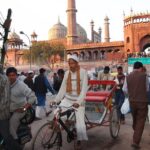
- Rickshaw ride in Old Delhi (ticket-free): About 30 minutes. This is often the fastest way to get your bearings without tiring your legs early.
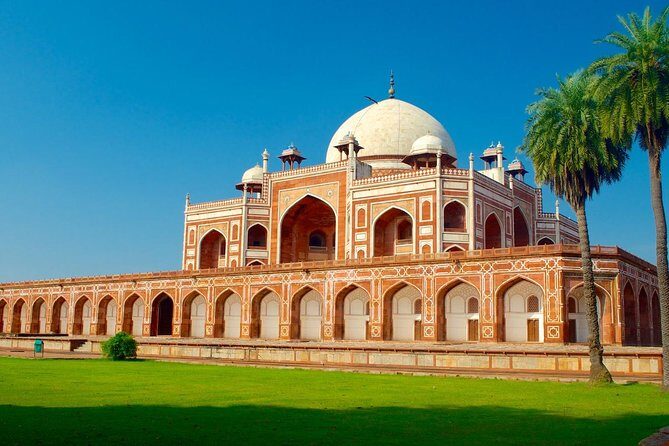
You’ll also pass key monumental landmarks like the Red Fort area (described as a major Mughal residence), plus you’ll work through additional heritage sights such as Agrasen Ki Baoli (step wells; free) and Humayun’s Tomb (ticket not included).
New Delhi landmarks that give context
After Old Delhi, you shift to a more modern ceremonial layout:
- India Gate (included): A war memorial on Rajpath with a very recognizable architectural style.
- Parliament House (Sansad Bhavan): Shaped around the Ashoka Chakra concept.
- Rashtrapati Bhavan: The President’s residence complex, with major gardens and open grounds.
This mix is great because Delhi can feel split into “old street life” and “new government geometry.” Here, you see both in one day.
You can also read our reviews of more tours and experiences in New Delhi






Qutub Minar and Lotus Temple keep the rhythm
The day also includes:
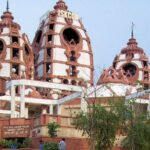
- Lotus Temple (admission included; open to everyone regardless of religion): Built in 1986 and known for its flower-like shape. It’s a good calm break after busier streets.
- Qutub Minar (UNESCO; ticket not included): A tall 73-metre minaret constructed in 1193. If you’re into architecture, this is one of the best “wow” moments of the day.
Timing reality check
Day 1 is long—about 8 hours—because Delhi sightseeing is dense. The tradeoff is you don’t waste your first day figuring out routes.
Lunch is included, and the tour notes lunch at a local restaurant before heading to Agra via an expressway. Expect long-road moments, but the private car keeps it controlled.
At the end of Day 1, you check in to your Agra hotel and get the rest of the evening free.
Qutub Minar and Lotus Temple: UNESCO drama plus a calm pause
These two stops do a great job of changing pace.
Qutub Minar is your dramatic vertical landmark: UNESCO status, five-storey design, and a construction history connected to the Delhi Sultanate. It’s the kind of sight where you look up a lot, and it helps justify the travel hours.
Lotus Temple is the mood shift. It’s open to everyone, built in 1986, and its distinctive flower form makes it feel different from the Mughal-era structures you’ll see later. Even if you’re not the spiritual type, it’s a visually soothing break.
One planning note: Qutub Minar’s admission is listed as not included, while Lotus Temple is listed as included. That’s why it pays to keep a small budget ready for tickets as you go.
Day 2 Agra: Taj Mahal time, then Fort and Baby Taj
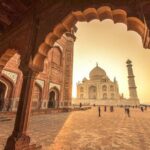
Agra is your “Mughal masterpieces” day, and it’s centered around the Taj Mahal. The schedule assigns about 3 hours for Taj Mahal. Tickets for it are listed as not included, so treat this as the big moment where you’ll want to be ready to pay admission.
After that, you’ll tour the rest of Agra’s key historic sites:
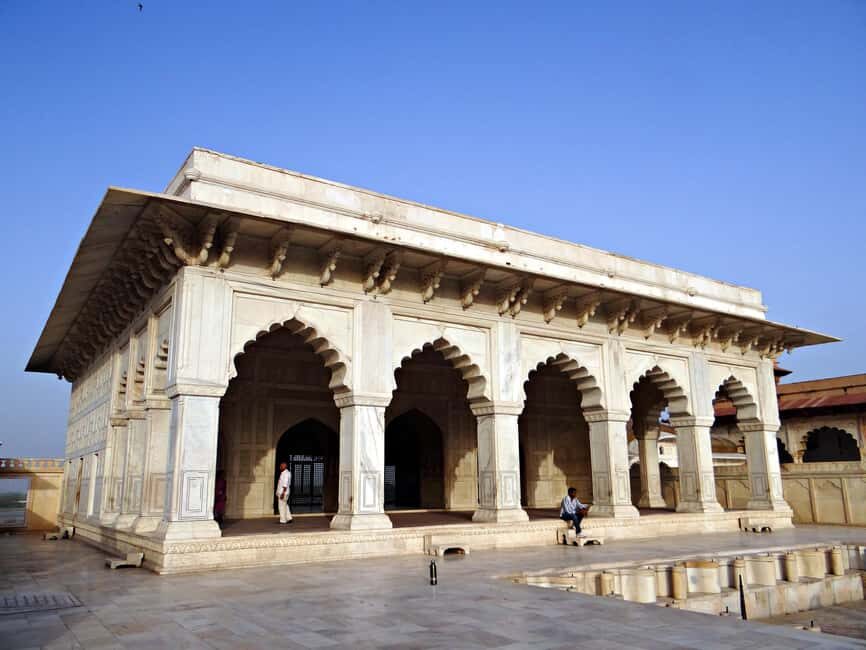
- Agra Fort (ticket not included; about 2 hours): A UNESCO-listed fort with different apartments and standout architecture.
- Itmad-ud-Daula (Baby Taj; about 30 minutes; ticket not included): A Mughal mausoleum that’s often less crowded and easier to take in slowly.
The value of the full Agra loop
Taj Mahal alone is incredible, but it can be hard to appreciate if it’s the only thing you see. This route pairs it with Agra Fort and Itmad-ud-Daula so you get the broader Mughal building style—fortifications, mausoleums, gardens, and the way symmetry and marble detailing show up across sites.
Day 2 also follows a travel-and-rest rhythm: you arrive, check in at your Agra hotel, and then the day’s sights take over. Your hotel stay is your buffer against fatigue.
Day 3 Jaipur: Amber Fort views, Jal Mahal on the lake, and royal math at Jantar Mantar
Jaipur is designed for “one-day wonder,” and this route hits a clean set of classics without pretending you can do everything.
You start with a short step-well stop:
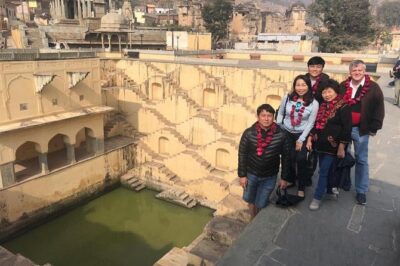
- Panna Meena ka Kund (admission included; about 15 minutes): A step well near Amber Fort. It’s the kind of stop that feels small until you see the scale of the stairs.
Amber Fort: the big hill stop
Next is Amber Fort (about 2 hours; ticket not included). It’s built on the hill and associated with Raja Man Singh I, with artistic elements and a lake view (Maota Lake) in front of the monument. This is where you slow down a bit, because it’s a place you need time to walk through.
Jal Mahal gives you the scenic break
Then comes Jal Mahal (about 30 minutes; admission included). This is the palace located in the middle of Man Sagar Lake, renovated and enlarged by Maharaja Jai Singh II in the 18th century. Even if you don’t spend a long time here, it’s a strong visual stop—and it breaks up the heavier fort and palace segments.
City Palace, Jantar Mantar, and Hawa Mahal
After the scenic pause, you transition into Jaipur’s royal and scientific landmarks:
- City Palace (about 1 hour; ticket not included): Constructed in 1721, once the administrative and ceremonial seat of the Maharajas.
- Jantar Mantar (UNESCO; about 1 hour; ticket not included): Nineteen astronomical instruments built in 1734 by Sawai Jai Singh II.
- Hawa Mahal (about 15 minutes; ticket not included): The Palace of Breeze, known for its distinctive red and pink sandstone design.
This last cluster is great because Jaipur has more than just buildings. It shows how rulers used architecture for ceremony, observation, and identity.
Ending back toward Delhi (or airport)
After Jaipur, the tour notes an approximately 5-hour journey back to Delhi, or drop-off at Jaipur airport depending on your plans.
How private guides and drivers shape the experience
This tour’s success depends a lot on your guide and driver, and the strongest feedback names a few people who consistently deliver what you want on a tight schedule: clarity, energy, and practical help.
You’ll see guides like Mohammed Kadir (detailed explanations in Delhi and even photography help), Danish (high-energy, fact-rich storytelling), Kamran and Prish in Jaipur (good English and going beyond the standard stops), and Shamin in Agra (professional, story-focused monument guiding). On the driving side, names like Sonu, Vimal, and Rahul show up with repeated praise for careful driving and feeling safe.
Even with the best plan, this route can feel “long day after long day.” The right driver helps you stay calm on the roads, and the right guide helps you stay engaged once you step out of the car.
Monument entry fees: the part that can feel confusing
The tour is clear that monument entry fees are not fully included, with an approximate total of $45 per person. But the itinerary also lists several inclusions (like Lotus Temple, India Gate, Jal Mahal, Panna Meena ka Kund, Jama Masjid, and the rickshaw ride) while other big-ticket items are marked as not included (like Qutub Minar, Humayun’s Tomb, Taj Mahal, Agra Fort, Itmad-ud-Daula, Amber Fort, City Palace, Jantar Mantar, Hawa Mahal).
So here’s the practical move:
- Before you go, confirm what the provider says is included for your exact package.
- Carry cash or a payment option you can use for on-site tickets.
- Keep some flexibility in your timing if ticket lines or local procedures add minutes.
This isn’t a “gotcha” if you plan for it. It becomes stressful only when you expect everything to be bundled and then you hit the ticket gate.
Optional shopping stops: how to handle them without derailing your day
One piece of feedback worth taking seriously: sometimes add-on stops or shopping pitches happen that aren’t part of your must-see list. If that would annoy you, set expectations early with your guide.
The easy approach is simple and calm:
- If you want to skip it, say you’ll pass and continue with the planned sights.
- Keep your priorities clear: monuments and photo stops, not detours.
You’re on a 3-day schedule. Every extra stop costs time and energy.
Who this private luxury Golden Triangle suits best
This tour fits best if you want:
- A private car for comfort and time control
- Major sights across Delhi–Agra–Jaipur without planning every transfer
- A guided experience with local explanations
- A higher-comfort travel baseline (air-conditioned transport and 5-star nights)
It’s also a good match if you travel as a couple or solo and want safety and structure—especially for long days where independent navigation would drain you.
If you hate paying on-site for tickets, then this might feel like a letdown unless you budget ahead. And if you prefer slow travel, the schedule is intense by design.
Should you book this Golden Triangle tour?
If you want the Golden Triangle highlights with a clear plan and a comfortable private ride, I think this is a strong option. The structure makes sense for short trips: Day 1 anchors Delhi old + new, Day 2 focuses on Agra’s Mughal icons, and Day 3 delivers Jaipur’s top landmarks in a single day.
I’d book it if:
- You’re okay paying the remaining monument fees (budget about $45 per person total as noted)
- You want guidance for the meaning behind what you’re seeing
- You value 5-star accommodation plus included breakfasts and lunches
I’d hesitate if:
- You need every single admission included in the base price
- You’re very sensitive to detours or shopping pitches and want zero flexibility
FAQ
How long is the Golden Triangle tour?
It’s 3 days, with 2 nights.
Which cities are included?
The tour covers New Delhi, Agra, and Jaipur.
What time does pickup usually happen in Delhi?
Pickup is scheduled around 9AM from your hotel (Delhi, Gurgaon, Noida) or from the Delhi airport.
What meals are included?
The tour includes 2 breakfasts and 2 lunches.
Does the tour include hotel accommodation?
Yes, it includes two nights of 5-star accommodation if you book with the option including hotels.
Are monument entry fees included?
Some admissions are included at specific stops, but monuments entry fees are not fully included. The tour notes an approximate total of about $45 per person in monument fees.
Is this a private tour?
Yes. It’s private, and only your group participates.
What’s the cancellation policy?
You can cancel for free up to 24 hours in advance of the experience start time for a full refund.