REVIEW · NEW DELHI
Spice & Stories: 3-Hour Old Delhi Heritage Food Walk Guided Tour
Book on Viator →Operated by Go City Adventures · Bookable on Viator
Old Delhi in 3 hours is enough chaos. This guided food walk strings together street-food variety and landmark-sight stops so you don’t spend your time just figuring out where to turn. I especially love the mix of tasting chances and the metro-to-rickshaw setup that keeps things moving. One thing to plan for: it’s a fairly fast, crowded-lane experience, so you’ll want stamina and patience.
The route starts in Connaught Place, then slips into Old Delhi by public transit and short walks. You’ll get snacks (including both vegetarian and meat options like chole bhature, aloo chaat, chicken tikka, and mutton seekh kebab) plus bottled water, and the group stays small (max 12), which helps you actually talk with your guide instead of just shoulder-to-shoulder. If you hate noise, tight streets, and smells of spices, this may feel like too much.
In This Review
- Key things that make this walk work
- Old Delhi, paced for people with real schedules
- Getting started at United Coffee House in Connaught Place
- Chawri Bazaar: the chaos you came for, with a plan
- Naughara (Row of Nine Houses): a short calm break
- Paranthe Wali Gali: parathas that play by their own rules
- Chandni Chowk: markets, temples, and sweet-salty variety
- Khari Baoli spice market by rickshaw: smell and scale
- Jama Masjid and Sis Ganj: seeing worship spaces without the rush
- What you actually eat, and how to avoid surprises
- Metro, rickshaw, and walking: why the transport mix is part of the value
- Group size, guides, and the kind of day this is
- Price check: is $44.83 worth it?
- Who should book this Old Delhi heritage food walk
- Should you book Spice & Stories Old Delhi?
- FAQ
- How long is the Spice & Stories Old Delhi Heritage Food Walk tour?
- Where does the tour start?
- Is hotel pickup available?
- What transport is used during the tour?
- What food is included?
- Are there vegetarian options?
- Are there shopping stops or sales pitches?
- How big is the group?
- What should I bring or wear?
Key things that make this walk work
- Small group, big bite list: max 12 travelers, so the guide can keep the pace organized.
- Multiple transit styles: metro for speed, then rickshaw and on-foot for the real lanes.
- Old Delhi food hits, not a single-note menu: paranthas, chaats, sweets, yogurt drinks, plus spice-market stops.
- Landmarks without the museum marathon: exterior views of Jama Masjid and a stop at Sis Ganj.
- Snack coverage is built in: all tastings and bottled water included, so you’re not constantly paying out of pocket.
- No forced shopping: the tour is about eating and seeing, not sales.
Old Delhi, paced for people with real schedules
Old Delhi can overwhelm you fast—visual overload, traffic noise, and lane after lane that looks identical. This tour is designed to solve that problem. In a half-day, you get guided navigation through the neighborhood’s main food zones, plus quick sight stops that keep the experience from turning into only a food crawl.
I like the structure because it respects your time. You’re not wandering for hours trying to connect “this alley” to “that mosque.” Instead, you move with a guide who knows where to go and how to keep the group from stalling out. You also get to experience the city’s rhythm: the subway ride out of the tourist bubble, the sudden surge of street-life in Old Delhi, then the rickshaw ride that feels like a scene change.
The value angle is also straightforward. At about $44.83 per person for a 3–4 hour experience, you’re paying for organization and guided access—not just for food. Snacks, bottled water, and transit pieces (metro tickets and the rickshaw ride) are included, which matters when you’re comparing this to trying to recreate the same route on your own without local know-how.
You can also read our reviews of more walking tours in New Delhi



Getting started at United Coffee House in Connaught Place
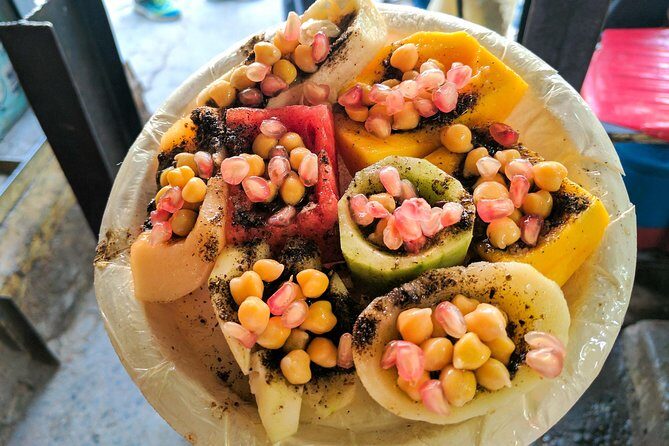
Your tour begins at United Coffee House near Connaught Place. This matters because Connaught Place is a practical starting point: you can link up with it easily, and it acts like a calmer “base” before the energy spikes.
From there, you ride the metro into Old Delhi to Chawri Bazaar. I like this approach. Taking the metro first helps you avoid spending your limited time stuck in street traffic. It also gives you a quick transition from modern Delhi logistics into Old Delhi’s dense street layout.
The meeting point also sets expectations. Comfortable shoes are recommended, and you should assume you’ll be doing lots of short walking segments. Even with a guide, you’re still moving through a place where sidewalks can narrow and surfaces can be uneven.
Chawri Bazaar: the chaos you came for, with a plan
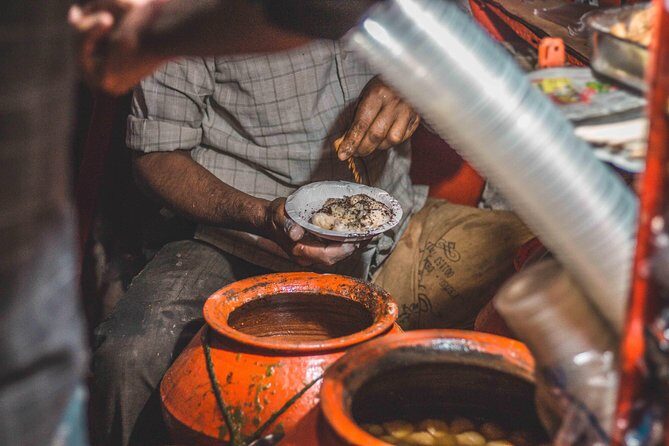
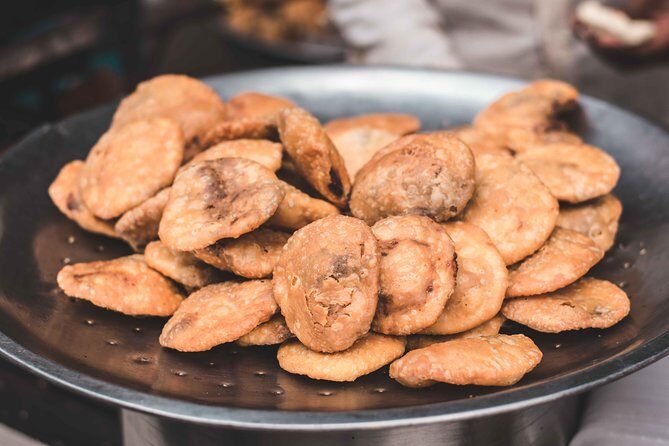
At Chawri Bazaar, you’re stepping into one of Old Delhi’s core street-food zones. This is where the tour shifts from transit to tasting. You sample iconic favorites like Kuliyan ki Chaat, kachoris, and kulfi—and you’ll likely notice how quickly you go from ordering mindset to eating mindset.
Why this stop works: it’s early enough that you haven’t tired yet, but it’s deep enough into Old Delhi that you feel the atmosphere right away. The guide’s job here is key. You’re in a high-stimulation area, and the guide helps you focus on what’s worth trying and how to navigate the crush without slowing everyone down.
A practical consideration: Old Delhi lanes are crowded. If you’re traveling with kids, or if you’re sensitive to tight spaces, keep your expectations realistic. This is a guided group experience, so you’ll move as a unit.
Naughara (Row of Nine Houses): a short calm break
Next comes Naughara, often described as a row of nine preserved Jain havelis. In a food tour, this kind of pause can sound odd—but it’s a smart reset.
Here you get a photo break in a more contained setting. It also breaks the sensory pattern: eat, move, eat, move. Even 15 minutes of “stand and look” can help you enjoy the next rounds of food instead of just rushing through them.
If your travel style leans more toward architecture and city life than tasting, this stop gives you a visual souvenir beyond photos of plates. If you’re strictly a foodie, it’s still useful because it prevents the walk from turning into a nonstop sugar-and-spice sprint.
Paranthe Wali Gali: parathas that play by their own rules
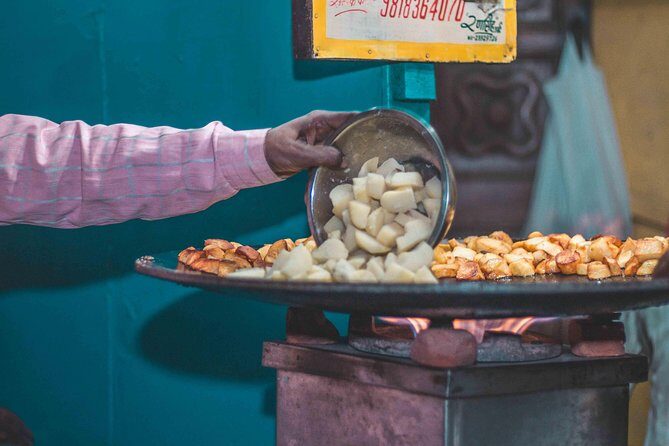
Then you hit Paranthe Wali Gali, one of Old Delhi’s famous paratha lanes. The point here isn’t subtlety—it’s variety. You’ll savor paranthas with options that go beyond the standard fillings. Think veggies, dry fruits, even bananas, fried in ghee, and typically served with curry and pickles.
This is a place where the guide’s timing matters. Paranthe stands can run fast and loud. Having a plan helps you get served without turning your group into a traffic jam. It also helps you understand what you’re tasting. You’ll get context on what makes these parathas distinct, and you’ll be guided through how to eat them in the most satisfying way—usually that means combining with curry and pickles rather than treating it like a single component snack.
One drawback to keep in mind: if you’re very calorie-sensitive, this stop can feel like a lot. This is a half-day where the food is the main event. If you prefer light snacking, ask yourself whether you want a “test and taste” style tour or a “this is basically lunch on fast-forward” style tour.
You can also read our reviews of more food & drink experiences in New Delhi




Chandni Chowk: markets, temples, and sweet-salty variety
At Chandni Chowk, you’re in a larger, more layered zone—wedding markets and temples all in the same area. This is a good place to see Old Delhi beyond food lanes, because it shows how daily life and commerce overlap.
The tastings here include classics such as samosa, jalebi, dahi bhalla, and lassi. I like how this selection covers multiple taste categories in one stop: fried crunch, syrupy sweetness, yogurt-based comfort, and a cool drink that helps reset your palate after richer bites.
This stop also adds variety in texture and temperature. Jalebi and fried samosas hit hot. Lassi cools things down. Dahi bhalla lands somewhere in between. That balance makes the rest of the walk feel more comfortable.
If you’re someone who enjoys people-watching, Chandni Chowk is a bonus. Even if you don’t shop, you get a front-row seat to the city’s pace. Just remember you’re still in a busy commercial area, so focus on staying with the group when the lanes get narrow.
Khari Baoli spice market by rickshaw: smell and scale
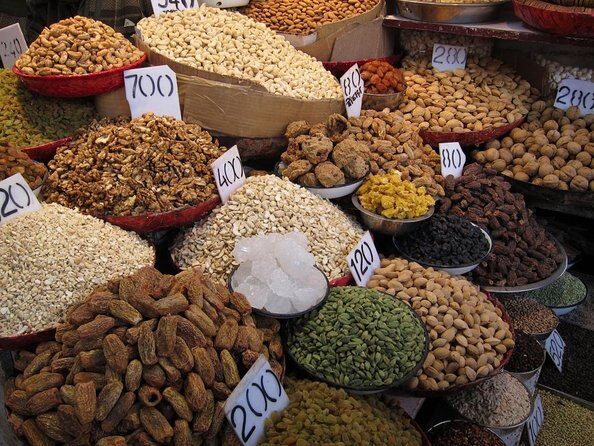
Now you get a real Old Delhi transit moment. You hop on a traditional rickshaw and ride through the lanes to Khari Baoli, known as a legendary spice market and described as the largest in Asia.
This is one of the most memorable parts of the tour because it’s sensory. You’re not just eating flavors you can name; you’re seeing and smelling where those flavors come from. Spices in bulk don’t behave like the small jars in your grocery store. The scale can surprise you, and the guide helps you interpret what you’re looking at.
The rickshaw ride also changes your pace. After walking and standing, the short ride feels like a breather—something between movement and stillness. It’s also a practical way to cover distance without adding more strain to your legs.
Here’s how to prepare: if you’re sensitive to strong smells or dust, keep your scarf or mask option in mind. The market is active and fragrant, and it’s worth taking a second before you inhale deeply.
Jama Masjid and Sis Ganj: seeing worship spaces without the rush
The overview of this tour includes exterior views of Jama Masjid, described as India’s most important mosque, plus time connected with the Sikh Gurudwara Sis Ganj. Even when you’re only getting exterior moments and a quick look, these stops add meaning.
Why that matters on a food walk: it prevents Old Delhi from becoming just a snack route. You’re seeing how religion, neighborhood life, and street commerce coexist. That context also helps you understand why the area feels so alive.
A practical note: if you’re visiting places of worship as part of your itinerary, dress modestly and be ready for a change in tempo around sacred spaces. Even a photo stop can come with guidelines and gentle reminders from your guide.
What you actually eat, and how to avoid surprises
The tour is built around street-food favorites with options for both vegetarian and meat-eaters. Your tasting list can include items like:
- Chole bhature (filling, comforting)
- Aloo chaat (tangy, savory)
- Chicken tikka (grilled spiced meat option)
- Mutton seekh kebab (meat kebab option)
You’ll also get classics from the market stops like kulfi, kachoris, parathas, plus the sweet-salty combos of jalebi, samosa, and the cooling balance of lassi.
Dietary fit: the tour asks you to advise specific dietary requirements at booking. That’s the best time to tell them what you avoid. If you don’t eat meat, mention it clearly. If you have allergies, do the same.
Also, pace matters. This isn’t a slow strolling picnic. It’s a structured food walk where tastings happen in sequence. If you want to save room, avoid a heavy breakfast before you meet—then let the tour do the work.
Metro, rickshaw, and walking: why the transport mix is part of the value
Some food tours are just walking and hoping you don’t get lost. This one layers transport methods so you can cover more ground without burning out.
- Metro gets you into Old Delhi efficiently.
- On foot lets you experience lanes where cars can’t.
- Rickshaw gives you a slower, old-school view of the spice-market lanes.
When transport is included—metro tickets and the rickshaw ride—it affects real value. It’s not only about convenience. It means your time is protected. You’re not adding extra rides between stops, and you’re less likely to waste energy backtracking in a maze-like neighborhood.
Group size, guides, and the kind of day this is
The tour runs with a maximum of 12 travelers, and it includes an English-speaking guide. A smaller group changes the feel of the day. You’re more likely to hear explanations, ask questions, and keep the flow when you hit crowded sections.
Guides also come up in feedback as kind and well-informed. One guide name you might see attached to positive experiences is Raj, noted for being attentive and supportive—especially around pickup and drop-off care. Your guide may not be Raj, but the bigger point is that the tour seems to prioritize a guide who pays attention to the group, not just the route.
If you’re traveling solo, especially if you want confidence with pickup and logistics, this structured approach tends to be comforting. If you hate group pacing, you might find the schedule feels tight. You’re still given a half-day block, but it’s not a choose-your-own-adventure.
Price check: is $44.83 worth it?
At $44.83 per person for roughly 3–4 hours, the price feels fair when you factor in what’s included:
- all snack tastings
- bottled water
- metro tickets
- the rickshaw ride
- an English-speaking guide
- hotel pickup/drop-off if you choose it
So you’re paying for local navigation, included food, and included transit components. If you tried to recreate it yourself, you’d spend time figuring out which stalls are worth it, and you’d likely pay for transit and food anyway. This tour compresses the decision-making into a single outing.
Timing also matters. On average it’s booked about 11 days in advance, which suggests it’s popular. If you’re traveling during peak season, booking earlier can help lock in a spot.
Who should book this Old Delhi heritage food walk
I think this tour fits best if you:
- want to see Old Delhi without spending hours getting oriented
- like street food but prefer a guide to point you to good stops
- enjoy a mix of food and quick cultural context
- want a half-day activity that leaves you time after for other plans
It may not be your best match if you:
- need a very slow pace or quiet environment
- have strict limitations around strong smells, crowds, or walking time
- hate tasting menus and would rather choose dishes one at a time
Should you book Spice & Stories Old Delhi?
Yes, if your goal is a structured, high-reward Old Delhi taste-and-sight experience. The strongest reason to book is the combination of included tastings and included transport pieces, which protects your time. The second reason is the balance: you get paratha and sweets, spice-market intensity, and quick views of significant religious landmarks without a long sightseeing marathon.
If you’re on the fence, here’s my quick decision test: can you handle a lively, crowded neighborhood for a few hours and eat multiple small bites? If that sounds like your kind of day, this is a solid value pick for a first trip to Old Delhi.
FAQ
How long is the Spice & Stories Old Delhi Heritage Food Walk tour?
It runs about 3 to 4 hours.
Where does the tour start?
The meeting point is United Coffee House, Inner Cir, E-15, Block E, Connaught Place, New Delhi.
Is hotel pickup available?
Yes. Hotel pickup and drop-off are available if you choose that option.
What transport is used during the tour?
You’ll use the metro, walk through Old Delhi lanes, and take a traditional rickshaw in Old Delhi.
What food is included?
The tour includes food tastings and bottled water, with options that can include items such as chole bhature, aloo chaat, chicken tikka, and mutton seekh kebab.
Are there vegetarian options?
Yes. The tour includes vegetarian or meat snacks, and you should advise dietary requirements when booking.
Are there shopping stops or sales pitches?
No. The experience notes that it’s about discovery and delight, without shopping stops or hidden sales pitches.
How big is the group?
This tour has a maximum of 12 travelers.
What should I bring or wear?
Wear comfortable walking shoes or slippers, and the tour notes you should have a moderate physical fitness level.