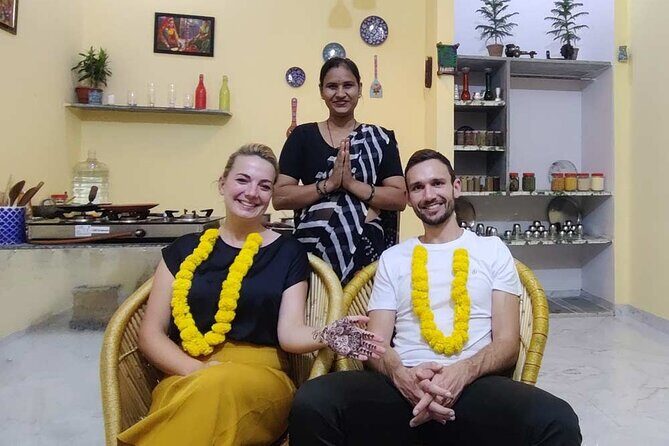
Dinner starts with dough in Jaipur. This hands-on cooking class feels like a real family meal, not a staged demo, with you cooking alongside the host in their home. I love the private, maximum-8-person setup, and I also like that pickup and drop-off are included so you don’t waste time figuring out logistics. One thing to consider: it is only about two hours, so you will learn key skills and make several dishes, but you should not expect a full-day culinary workshop or a market stroll.
In plain terms, you show up, you cook, you eat. You’ll make staples like roti/chapati and a mix of lentils, curries, and dessert, with guidance at every step. If you pick the breakfast option, you get classics like masala tea and breads-on-the-table style meals.
You also get a small taste of everyday India: shopping lists are not on display, and you are working in a real kitchen. Just remember you are in a home setup, so timings can feel flexible in a good way, not like a strict restaurant schedule.
In This Review
- Key Points Worth Planning For
- Price and What You’re Really Paying For in Jaipur
- How the Class Timeline Works (What Happens From Pickup to Dinner)
- 1) Pickup and arrival at the home kitchen
- 2) A quick start to cooking basics
- 3) Hands-on cooking: bread, curries, and dessert
- 4) Dinner and beverages with your host
- What You’ll Cook: Lunch and Dinner vs Breakfast Menus
- Lunch and Dinner class: the mix that builds a full Indian plate
- Breakfast class: lighter cooking with familiar favorites
- The Real Cultural Value: Cooking Like People Actually Cook
- Transport, Group Size, and Mobile Ticket: The Stuff That Saves Your Vacation
- Meal Included Means You Don’t Leave Hungry
- When This Experience Might Feel Less Perfect
- Who Should Book This Cooking Class (And Who Might Skip It)
- Should You Book? My Practical Recommendation
- FAQ
- How long is the Jaipur cooking class?
- Is pickup and drop-off included?
- How many people are in each class?
- What dishes can I learn in the lunch or dinner class?
- What dishes can I learn in the breakfast class?
- Are meals and beverages included?
- Can I request a specific dish to learn?
- Are tips included in the price?
Key Points Worth Planning For
- Private class atmosphere with a maximum of 8 people, so questions actually get answered
- Pickup and drop-off included, which makes this one of the least stressful cooking classes in Jaipur
- You cook multiple dishes, not just watch, including chapati/roti and a dessert like kheer
- Meals and beverages are built in, so the class ends with a proper sit-down meal
- Seasonal substitutions are normal, so you may not get the exact same vegetable every time
- You can request a dish to learn, and the host will try to accommodate before you arrive
Price and What You’re Really Paying For in Jaipur
At $29.98 per person, this is priced like a value-focused experience, and the biggest reason is what comes bundled. You are not just paying for recipes on a clipboard. You’re paying for a chef-hosted home class, guidance while you cook, your meal plus beverages, and transport for pickup and drop-off.
In many places, “cooking class” can mean a short tasting with lots of standing around. Here, the structure is built around doing the work: making bread like roti/chapati, building savory dishes with spices and timing, and finishing with dessert. For a short, two-hour window, that kind of hands-on time is the real product.
One more value point: taxes and handling charges are included. That means the price you see is usually closer to what you end up paying, without surprise add-ons creeping in.
If you want to make it smooth, book early. The typical booking pattern is about 18 days in advance, which suggests you can lock in a slot by planning a couple of weeks ahead.
How the Class Timeline Works (What Happens From Pickup to Dinner)
The day is simple: you get picked up, you head to the host’s home, and you spend roughly two hours cooking and eating. The exact timing can vary by the class type you book, but the flow stays consistent.
1) Pickup and arrival at the home kitchen
Pickup and drop-off are part of the deal, so you’ll likely start the experience already in motion. When you arrive, the host sets expectations and guides the pace. Expect a home-kitchen layout, so you may stand close while you work rather than spreading out in a commercial studio.
2) A quick start to cooking basics
You will learn the dish goals first, then start building. For lunch and dinner classes, the core items usually include roti/chapati and several savory dishes, plus a sweet. For breakfast classes, the focus shifts to lighter but still practical cooking, with items that are common in Indian morning meals.
This is where the class feels most useful: you are not memorizing instructions for later. You are doing the motion while someone corrects and explains what matters.
3) Hands-on cooking: bread, curries, and dessert
Your hands get involved across multiple recipes. For lunch and dinner, you should expect a combination of:
- Roti/Chapati (Indian bread)
- A potato-onion sabji like Aloo Pyaaj Sabji (a local favorite)
- Daal Fry (lentils)
- Chana Masala or another seasonal or spice-forward vegetable dish like Bhindi Masala
- Khoya Paneer (when included in your selected set)
- Rice pudding, usually kheer as the sweet
You do not necessarily cook every single item listed. The class is designed so you learn four items for lunch/dinner (and three items for breakfast, depending on the package details shown). Still, the outcome is a meal you can actually eat at the end.
4) Dinner and beverages with your host
After the cooking, you sit down with what you made. Dinner and beverages are included, and coffee and/or tea are also part of the package. This is one of the most underrated parts of home cooking classes: it turns the experience into a real shared meal instead of a take-it-or-leave-it tasting.
Some hosts also share contact details so you can reach out after you return home if you try the recipes later. That can be handy if you run into trouble recreating spice balance or dough texture.
What You’ll Cook: Lunch and Dinner vs Breakfast Menus
This matters because the class you choose changes the skills you leave with.
Lunch and Dinner class: the mix that builds a full Indian plate
During the lunch/dinner experience, you will learn four items. In practice, you can expect:
- Roti/chapati (bread that anchors the meal)
- Two vegetable-style dishes, depending on what’s seasonal
- A lentil dish such as daal fry
- A sweet such as rice pudding/kheer
Other possible dishes included in the menu mix are Aloo Pyaaj Sabji, Chana Masala, and Khoya Paneer. If a particular vegetable like bhindi is chosen for your set, you’ll learn how to cook it in a spiced style that fits Indian home cooking.
Here’s the practical win for you: roti + daal + a vegetable curry + dessert covers the most common Indian home-combination. Even if you do not recreate every single dish exactly, you’ll understand how the pieces fit together.
Breakfast class: lighter cooking with familiar favorites
If you choose breakfast, the class is geared toward morning comfort foods and tea. You can learn items like:
- Masala tea
- Upma
- Idli
- Poha
- Aloo paratha
- Vegetable spring roll
- Vegetable cutlet
Depending on the selected package, you’ll learn a set number of items. The theme is still hands-on and practical: these are recipes that don’t require a huge kitchen or rare ingredients, so you are more likely to cook them again later.
If you want one class to match your tastes, pick breakfast if you like tea and snack-style food. Pick lunch/dinner if you want the full “family meal” vibe with bread, curries, and dessert.
The Real Cultural Value: Cooking Like People Actually Cook
Food classes can go two ways. Some are all technique and no context. Others are a dinner party with a cooking lesson stuck in the middle.
This one leans toward the second—but in a good way. You are learning in a local home and seeing how ordinary Indians live through what they cook and how they structure a meal.
That means your questions matter. You can ask about what you are making and even request dishes you want to learn before joining. The class is presented as family-style teaching with expert guidance from the chef host, which often results in more conversation than you would get in a formal cooking school.
Also, because the class is limited to a maximum of 8 people, the host can keep an eye on everyone’s hands. In home cooking, the difference between a good result and a tough one is often small adjustments you learn on the spot: dough texture, spice timing, and how long to let ingredients cook before adding the next step.
Transport, Group Size, and Mobile Ticket: The Stuff That Saves Your Vacation
Let’s be honest: the best cooking class is the one you can actually reach without stress. Here, the included pickup and drop-off removes the biggest friction point in Jaipur.
This also helps if you are pairing the class with sightseeing. When transport is handled, you can plan your day around the class rather than building your whole itinerary around getting back to a pickup point.
The group size is capped at 8. That is small enough for you to feel like you are participating, not watching a performance. It’s also big enough that you might see different people working on different stations, which helps you understand the process even faster.
You’ll also get a mobile ticket. For many short experiences, this matters because it reduces time spent figuring out paperwork. Just keep the ticket accessible on your phone.
Meal Included Means You Don’t Leave Hungry
A lot of classes promise food. Fewer actually make it feel like a meal.
Here, dinner and beverages are provided for the evening experience, and coffee and/or tea are included. For other class types, breakfast, lunch, or dinner is provided depending on what you booked.
That changes how you should plan the rest of your day. You can schedule your morning or afternoon knowing you’ll finish with a full meal. It also means you don’t have to decide where to eat at the last minute, which is a real value in a busy travel schedule.
One more practical detail: tips are not compulsary, but a good driver tip is suggested at 200 to 500 Rupees. If your budget is tight, you can still keep this in mind rather than guessing later.
When This Experience Might Feel Less Perfect
No tour is flawless, and this one has a couple of considerations worth knowing upfront.
First, time is tight. With about two hours, you will learn and cook, but you may not get unlimited repetition of each step. If you love a specific dish and want to master it fully, you may want to request that dish in advance so the class can prioritize it within the allowed set.
Second, because this is hosted in a home environment, the exact focus can shift. On special occasions, a host might change last minute due to local events, and your experience could differ slightly from what you expected. That’s not inherently bad, but it does mean you should come with flexibility and trust that you’ll still cook the core dishes promised for your selected class type.
Finally, if you were hoping for a market tour, it is not described as part of this experience. The cooking happens at the host house, so your main value is the kitchen time and the meal afterward.
Who Should Book This Cooking Class (And Who Might Skip It)
This is a great fit if you want:
- A hands-on class with small group size up to 8 people
- Pickup and drop-off so your Jaipur day stays easy
- Real home-cooked food where you eat what you make
- A practical selection of dishes like roti, daal fry, sabji, chana-style curries, and kheer/rice pudding
It may be less ideal if you:
- Want a long, step-by-step “spice school” with deep theory and lots of extra dishes
- Expect a separate market tour before cooking
- Need a class that repeats one recipe in depth for advanced technique
If you’re a first-time visitor to Jaipur and you want something that feels local without being complicated, this is a strong choice. It’s also a nice add-on if you’re planning a food-focused trip but don’t want to spend your whole evening hunting for dinner.
Should You Book? My Practical Recommendation
Yes, you should book it if your goal is simple: learn how to cook common Indian classics in a real home setup and leave with a meal you helped make. The value is strongest because you get transport, guided cooking, and food and beverages, all within a compact time window.
Book it with confidence if you’re comfortable with a class that covers several dishes rather than one dish at an advanced level. Also, if there is a specific item you care about—something from the menu list—send that request ahead of time so the host can steer your set.
Skip or reconsider if your idea of a cooking experience is mostly shopping, lots of formal instruction, or a long multi-hour workshop. For those styles, you’d likely want a different format.
FAQ
How long is the Jaipur cooking class?
The class runs for about 2 hours.
Is pickup and drop-off included?
Yes. Transport for pickup and drop-off is included.
How many people are in each class?
There is a maximum of 8 travelers per booking.
What dishes can I learn in the lunch or dinner class?
You learn any 4 items from the lunch/dinner set, which includes options like daal fry, seasonal vegetables, khoya paneer, chana masala or bhindi masala, rice pudding, and chapati or puri. Roti/chapati and rice pudding are expected within the set.
What dishes can I learn in the breakfast class?
For breakfast, you learn items like masala tea, upma, idli, poha, aloo paratha, vegetable spring roll, or vegetable cutlet, with the set focused on a specified number of items.
Are meals and beverages included?
Yes. The class includes dinner and beverages, and it also includes coffee and/or tea. Breakfast, lunch, or dinner is provided depending on what you book.
Can I request a specific dish to learn?
Yes. You can request dishes you would like to make before joining, and the host will try to accommodate.
Are tips included in the price?
Tips are not compulsory. A driver tip of 200 to 500 Rupees is suggested.