REVIEW · AMRITSAR
Amritsar Heritage Walking Tour of Old City & Golden Temple Area
Book on Viator →Operated by Vivamos India · Bookable on Viator
Old city lanes can change your pace.
This 2–3 hour walk is built to show you Amritsar beyond the Golden Temple—through narrow lanes, old bazaars, and a string of landmarks that connect Sikh, Mughal, and British-era layers. I like that it starts with big-picture anchors (like the Town Hall) and then keeps moving into smaller places where daily life and faith overlap.
Two things I particularly love: the stop at Saragarhi Memorial Gurudwara, where the story of 21 Sikh soldiers turns history into something you can actually feel, and the guidance style you’ll get from a guide such as Paramjeet of Vivamos India, who focuses on weaving the whole city narrative into one clear, human storyline. One consideration: this walk depends on good weather and you’re moving through the Old City for a few hours—so plan your energy and wear shoes that won’t punish you.
In This Review
- Key highlights before you set off
- Why this Old City walk matters (even if you already plan the Golden Temple)
- Town Hall (1866) as your first anchor on Katra Ahluwalia
- Saragarhi Memorial Gurudwara: 1897 bravery, told where it belongs
- Qila Ahluwalia: a fort stop that explains resistance in plain terms
- Chowk Katra Ahluwalia and Jalebian Wala Chowk: history you can smell
- Udasin Akhara Sangal Wala Road: education and meditation, not just worship
- Chitta Akhara and Baba Shri Chand Ji: an Udasi link tied to Guru Nanak’s family
- Darshani Deori: the gateway story behind the view of Harmandir Sahib
- Gurudwara Churasti Attari and the Batti Hatta shop origin
- Baba Bohar Shivala at Bartan Bazaar: myth, banyan, and utensils
- The guide factor: what Paramjeet’s storytelling can change for you
- Timing and pace: starting at 8:00 am and walking the Old City lanes
- Price and value: how $17 adds up when admissions are part of it
- Who should book this heritage walk (and who might skip it)
- Should you book? My honest take
- FAQ
- FAQ
- What’s included in the Amritsar Heritage Walking Tour?
- How long is the walking tour?
- Where does the tour start and end?
- What time does the tour begin?
- Is the tour private?
- Do I need to pay for the Golden Temple area sites separately?
- Is the Partition Museum included?
- Do I need good weather?
- What ticket format do I receive?
- What’s the cancellation policy?
Key highlights before you set off
- Town Hall (1866): a British-era building that gives you an easy starting point before the Old City tightens around you.
- Saragarhi Memorial Gurudwara: a focused memorial stop with the 1897 Battle of Saragarhi at its center.
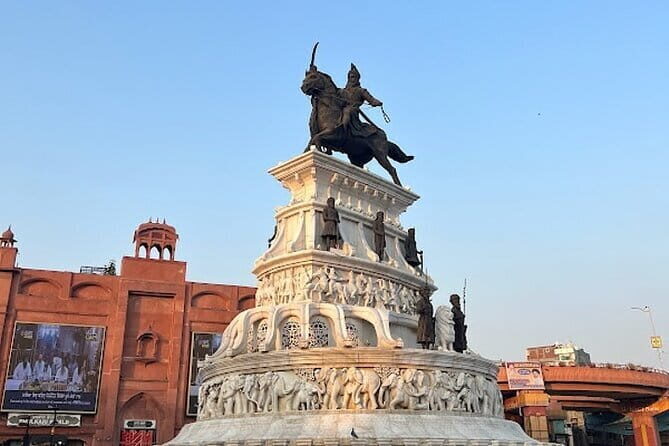
- Qila Ahluwalia: a fort tied to Sardar Jassa Singh Ahluwalia and Sikh resistance during foreign invasions.
- Market pulse at Jalebian Wala Chowk: named for a sweet shop history tied to jalebi culture.
- Udasi akharas: stops like Udasin Akhara Sangal Wala Road and Chitta Akhara connect faith with learning and meditation.
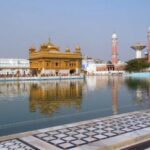
- Darshani Deori + Golden Temple area context: a gateway where Sikh Gurus traditionally viewed Harmandir Sahib.
Why this Old City walk matters (even if you already plan the Golden Temple)
The best part of this experience is the order of things. You don’t just arrive at the Golden Temple and call it a day—you get context first, so what you see later makes more sense. The tour is designed to reveal the surrounding city as living heritage, not just a background.
You’ll also get a “map for meaning.” The guide links Sikh, Mughal, and colonial threads in a way that turns street-level walking into a guided story. That matters because Old City Amritsar is easy to wander through without fully understanding why certain buildings, memorials, and bazaars exist where they do.
And because you’re walking (not riding in a bus), you notice the small things: how lanes funnel people, how markets shape timing, and how religious sites sit close to everyday commerce. That’s where the city starts to feel practical, not just impressive.
You can also read our reviews of more walking tours in Amritsar



Town Hall (1866) as your first anchor on Katra Ahluwalia
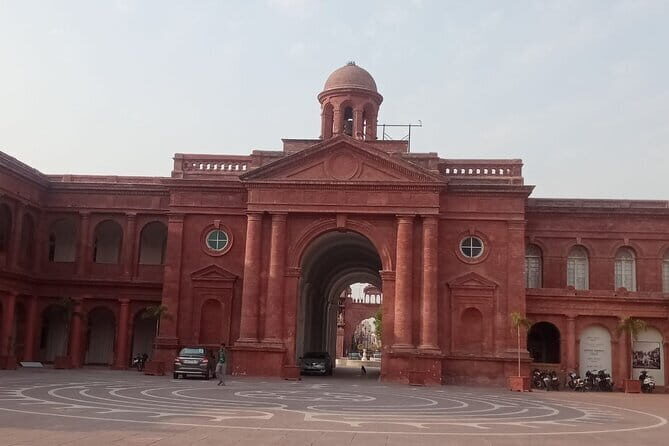
You start at Town Hall on Katra Ahluwalia, a British-era landmark built in 1866. It’s a smart first stop because it gives you an immediate “frame” for later layers—colonial administration on the outside, and older community structures continuing around it.
From here, the tour’s tone shifts from architecture to lived space. The guide uses this starting point to help you understand how power and governance changed over time, without turning the walk into a classroom. It’s also free and quick, so you’re not stuck standing still before you begin the real lane-walking.
If you’re the kind of traveler who wants orientation fast, this is a good opening move. You’ll get your bearings fast before the Old City starts doing what Old Cities do—closing in, rewarding patience, and making directions feel like a puzzle.
Saragarhi Memorial Gurudwara: 1897 bravery, told where it belongs
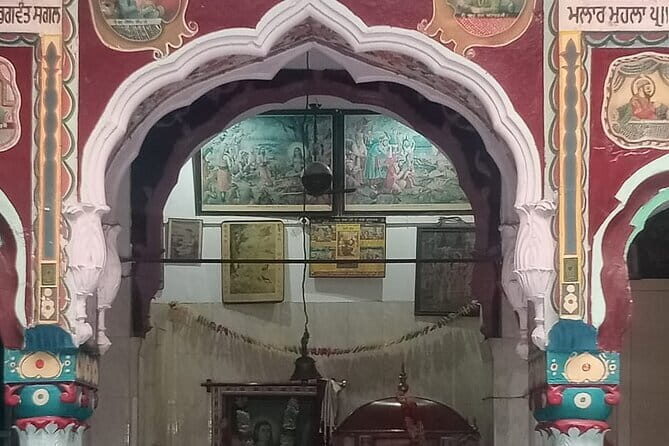
The Saragarhi Memorial Gurudwara is one of the emotional centers of the walk. This is where the story of 21 Sikh soldiers of the 36th Sikh Regiment is honored in connection with the historic Battle of Saragarhi (1897).
What makes this stop powerful is its focus. Instead of a long list of dates, you get a clear narrative about sacrifice and courage. Memorials like this are meant to be understood in person, and the guide helps you notice details that you might otherwise miss when you’re just passing by.
Practical tip: plan a few minutes of quiet attention. This stop is only about 20 minutes, but it’s the kind of 20 minutes you’ll remember when you walk back out into the market noise.
Qila Ahluwalia: a fort stop that explains resistance in plain terms
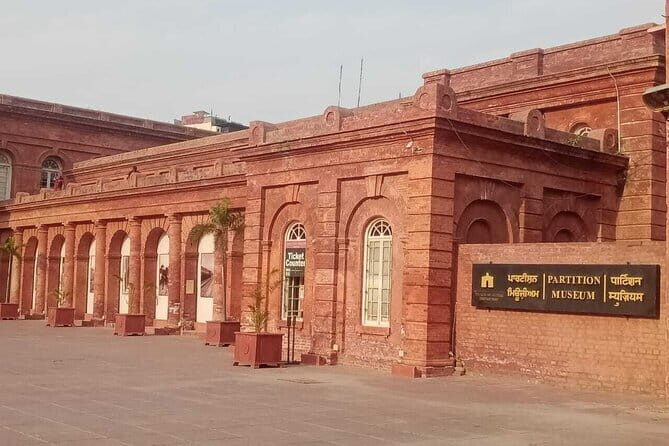
Next you’ll explore Qila Ahluwalia, in the heart of the Old City. Built by Sardar Jassa Singh Ahluwalia, it’s tied to the broader story of Sikh leadership and resistance during a period of foreign invasions.
A fort can sound like a “look but don’t touch” monument. Here, the tour approach is different: the fort is used as a way to understand strategy, territory, and protection—why communities needed strongholds when outside pressure increased.
You’ll spend around 20 minutes here, and that’s enough time to connect the building to the larger narrative without dragging the tour into extra museum territory.
Chowk Katra Ahluwalia and Jalebian Wala Chowk: history you can smell
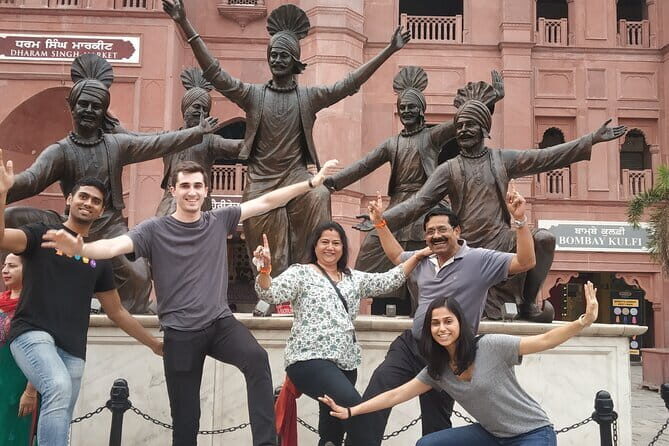
Then you get a burst of everyday culture at Chowk Katra Ahluwalia, including Jalebian Wala Chowk. This lane is named for a famous sweet shop that’s been operating since 1956.
The tour focuses on jalebi as more than a snack. You learn about how it’s prepared and why it holds a special place in Punjab’s food culture. That kind of detail is useful because it anchors history in taste—and because markets in Amritsar move at a different speed than tourist sites.
Even if you don’t buy anything, this is a great pause to experience Old City rhythms. You’ll see how people shop, talk, and navigate narrow lanes during market hours.
You can also read our reviews of more city tours in Amritsar





Udasin Akhara Sangal Wala Road: education and meditation, not just worship
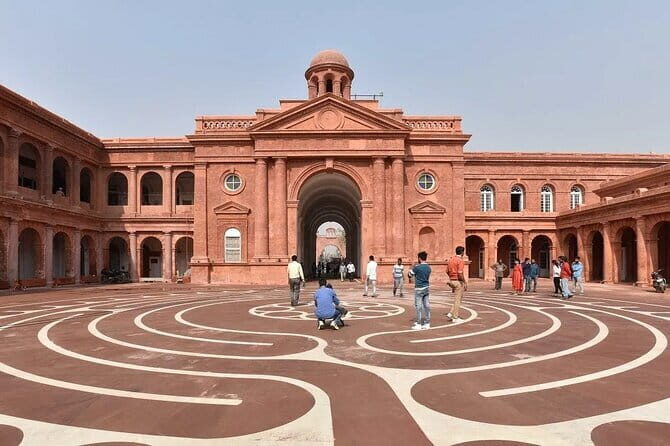
At Udasin Akhara Sangal Wala Road, you’ll visit a sacred site founded in 1771 by Nirvan Priyatam Dass. This akhara (spiritual center) historically functioned as a place for education, meditation, and spiritual learning for ascetics and holy men.
This stop is a reminder that Sikh and related spiritual traditions in the region weren’t only about rituals. They also supported instruction, discipline, and reflective training. The guide helps connect what you’re seeing to that broader purpose, so the site doesn’t feel random in the route.
It’s about 20 minutes and free, so it’s a balanced slot: enough time to understand what an akhara is, without eating your whole schedule.
Chitta Akhara and Baba Shri Chand Ji: an Udasi link tied to Guru Nanak’s family
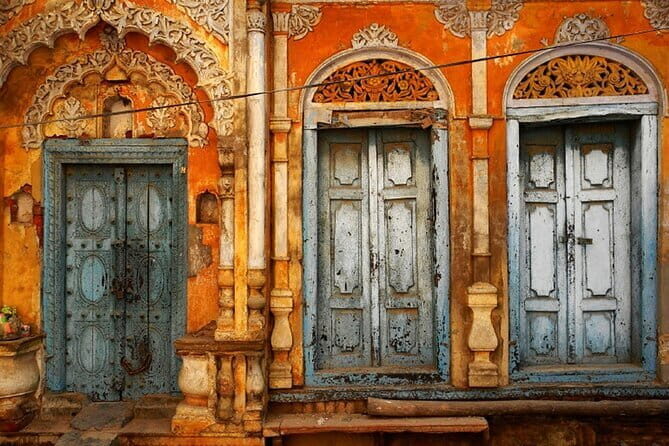
Next comes Chitta Akhara, associated with Baba Shri Chand Ji, the elder son of Guru Nanak Dev Ji. Udasi sites like this one are often quietly significant, and this stop explains why the space has served as a center for meditation and spiritual learning for a long time.
The tour handles this respectfully and clearly. Instead of turning the stop into religious trivia, it frames the connection in a way that helps you understand why communities kept these centers active across generations.
You’ll spend about 15 minutes here and you’ll likely feel a different tone in your own pace. That’s part of the value: the walk isn’t just moving from landmark to landmark—it’s shifting your attention.
Darshani Deori: the gateway story behind the view of Harmandir Sahib
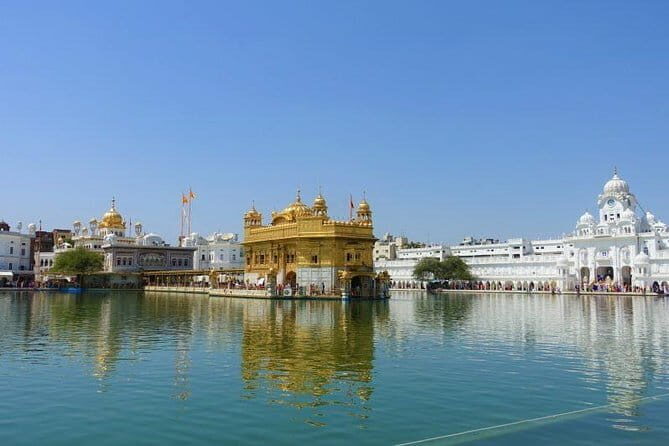
One of the key “Golden Temple area” moments is Darshani Deori. This is a historically important gateway from where Sri Guru Arjan Dev Ji and Sri Guru Hargobind Ji would view Harmandir Sahib (Golden Temple).
This is the kind of stop that changes how you interpret a place. When you reach the Golden Temple area, you’ll remember that there’s a tradition of looking outward from specific points—not only arriving inside the most famous space.
The stop is about 10 minutes and free, but it carries a lot of meaning for why certain gateways matter. It’s also a great moment for photos—just be mindful of the sacred surroundings and the flow of people around you.
Gurudwara Churasti Attari and the Batti Hatta shop origin
The walk ends with Gurudwara Churasti Attari, established by Sri Guru Hargobind Ji in the early 1600s. This is where the tour connects religion to commerce in a very specific way: it explains the origin of the Batti Hatta Market, created when the Guru encouraged traders to set up 32 shops.
That detail is a reminder that old cities are social systems. You’re not only walking past religious buildings—you’re seeing how faith, work, and community organization were designed to coexist.
This stop is about 20 minutes and has included admission. It’s also a good capstone because it ties multiple themes together: leadership, daily life, and the way markets become part of a city’s sacred geography.
Baba Bohar Shivala at Bartan Bazaar: myth, banyan, and utensils
To finish strong, you’ll reach Baba Bohar Shivala at the end of Bartan Bazaar (Utensil Market). Here, an ancient banyan tree (Bohar) has religious significance in Hindu mythology, symbolizing the Trimurti—Brahma, Vishnu, and Mahesh.
This is a fascinating contrast in the route because you’re moving through Sikh-related landmarks and then into a Hindu myth-centered sacred marker within the market setting. The point isn’t to blur differences—it’s to show how layered communities share space and memory in the Old City.
You’ll spend about 15 minutes here with included admission. If you like the idea of walking through how a city organizes itself around both spiritual and practical needs, this stop delivers.
The guide factor: what Paramjeet’s storytelling can change for you
A big reason this tour works is the quality of the local guide. If your guide is someone like Paramjeet from Vivamos India, you’ll likely notice a specific skill: he connects cultural and historical elements into a coherent narrative that’s easy to follow.
That’s not just “good explaining.” It changes your experience. When the guide tailors the route and tone to you, you stop thinking of the walk as a checklist. Instead, you start thinking: I understand why this lane matters, why this site exists, and how these different time periods overlap on the ground.
Also, the tour language options—English or Spanish—help a lot. It’s easier to ask quick questions and stay engaged when you’re not guessing at meaning.
If you want the Golden Temple area to feel less like a blur and more like a story with roots, this kind of guiding makes a real difference.
Timing and pace: starting at 8:00 am and walking the Old City lanes
This tour starts at 8:00 am and runs about 2 to 3 hours. That early start helps you beat some of the day’s heat and gives you a calmer feel before the city fully turns into its busiest rhythm.
The route includes multiple religious and market stops, so your walking time will vary. Plan on a steady pace and expect some narrow-lane navigation. Bring comfortable shoes because you’ll be on your feet for the whole experience.
And remember the tour has a good weather requirement. If conditions are poor, it may be rescheduled or refunded, so don’t leave it as your “last-possible-day” plan.
Price and value: how $17 adds up when admissions are part of it
At about $17 for a short guided walk, this is strong value—especially because you’re not only getting a guide’s time. Several stops include admission tickets, and bottled water is included.
Compared to paying separately for individual sights or guide services, the structure here is efficient. You’re paying for a curated route with a local who explains what you’re seeing, plus access to the places that require entry.
The one extra cost to know about is the Partition Museum, which is optional. If you want it and there’s time, it’s ₹250.00 per person and it’s not included in the base price.
My practical advice: if you care about first-time context, focus on this walking tour alone and consider the Partition Museum only if it genuinely fits your interests. Otherwise, you’ll keep your schedule light and let the Old City do the talking.
Who should book this heritage walk (and who might skip it)
This tour is a great match if you:
- want history told through real places, not just plaques
- like walking and learning at a human pace
- plan to visit the Golden Temple area and want the surrounding city explained
You might consider skipping if you:
- dislike walking for a few hours or worry about heat and weather
- want a slower, sit-down museum-style experience only
Because the tour is private (just your group), it also suits couples and small groups who want questions answered without feeling rushed.
Should you book? My honest take
I’d book this if you’re looking for meaningful context in a short window. It’s low-cost, guide-led, and built around a route that connects memorials, forts, spirituality, and market life. That combination makes it more than a Golden Temple warm-up—it’s a way to understand why Old City Amritsar feels the way it does.
The main “watch it” item is weather and comfort for walking. If you can handle a few hours on your feet, this is one of the best ways to turn Amritsar into more than one landmark stop.
FAQ
FAQ
What’s included in the Amritsar Heritage Walking Tour?
The tour includes a professional local guide (English or Spanish speaking) and bottled drinking water. Admission is included for certain stops along the route, while others are free.
How long is the walking tour?
It’s listed as about 2 to 3 hours.
Where does the tour start and end?
It starts at Town Hall, Katra Ahluwalia, Amritsar, Punjab 143006, India and ends back at the meeting point.
What time does the tour begin?
The start time is 8:00 am.
Is the tour private?
Yes. It’s a private tour/activity, so only your group participates.
Do I need to pay for the Golden Temple area sites separately?
Some sites have included admission and others are free during the walk. The tour is designed so you don’t have to manage separate ticketing for most of the planned stops.
Is the Partition Museum included?
No, the Partition Museum visit is optional. If you choose to add it, it costs ₹250.00 per person and depends on time availability.
Do I need good weather?
Yes. The experience requires good weather, and if it’s canceled due to poor weather, you’ll be offered a different date or a full refund.
What ticket format do I receive?
You get a mobile ticket.
What’s the cancellation policy?
Free cancellation is available. You can cancel up to 24 hours in advance for a full refund.