REVIEW · VARANASI
Day Trip from Varanasi to Triveni Sangam: A Sacred Day in Prayag
Book on Viator →Operated by Varanasi Day Tours · Bookable on Viator
Sacred water, tight timing. This day trip hits Prayagraj’s most spiritually charged spots, especially the confluence at Triveni Sangam, where the Ganga and Yamuna meet and the Saraswati is remembered in local belief. I also love the mix of devotion plus culture, with Anand Bhavan giving you a calm, human-scale break after the temples. The main drawback is simple: it’s a long day with a lot of walking, so plan for sore feet.
What makes it easier is how the day is paced by a local guide, and in particular I’ve heard strong things about Mr. Shiva for staying patient and helping people understand what’s happening on the ground. You also get a smooth comfort buffer with an air-conditioned vehicle and bottled water, which matters when you’re traveling between Varanasi and Prayagraj in one push.
In This Review
- Quick Hits: What You’ll Actually Remember
- The Sacred Confluence at Triveni Sangam
- Shri Bade Hanuman Ji Mandir: A Quick Stop With Big Devotion
- Akshayavat Temple (Patalpuri): The Immortal Banyan Idea
- Allahabad Fort Exterior Views: Architecture, Not Access
- Anand Bhavan: Nehru’s Ancestral Home Turned Museum
- How the Day Flows From Varanasi (and Why the Timing Matters)
- Price and Value: What Your $90 Covers (and What It Doesn’t)
- Who This Day Trip Fits Best
- Should You Book This Triveni Sangam Day Trip?
- FAQ
- How long is the day trip?
- Is pickup included?
- Is this tour private?
- What does the tour include?
- Are any tickets or entrances included?
- What should I budget for if food isn’t included?
- Is the tour suitable for most travelers?
- How soon should I book?
- What is the cancellation policy?
Quick Hits: What You’ll Actually Remember

- Triveni Sangam in Prayagraj: the meeting point of the Ganga, Yamuna, and the mythic Saraswati, with the option to participate in or witness puja
- A reclining Hanuman idol at Shri Bade Hanuman Ji Mandir: a short stop, but memorable and very devotional
- Akshayavat Tree (Akshayavat Temple, Patalpuri): a banyan believed to symbolize eternal life
- Allahabad Fort exterior views: Mughal-era architecture by the Yamuna, with entry restricted since it’s a military area
- Anand Bhavan museum time: the Nehru family home turned museum, with admission included
- Licensed guiding and a set plan: you get safe, structured navigation instead of guessing your way between sacred sites
The Sacred Confluence at Triveni Sangam
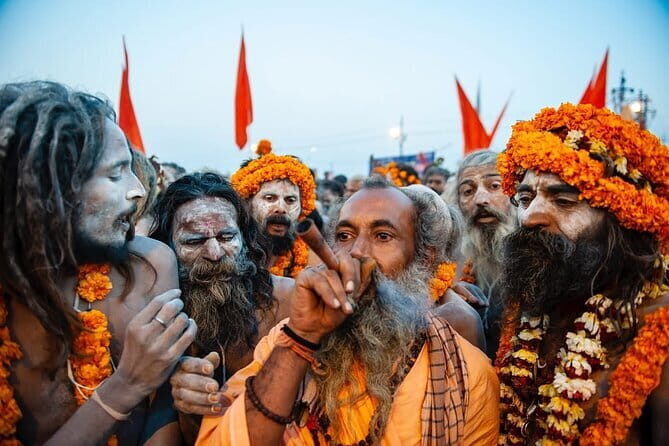
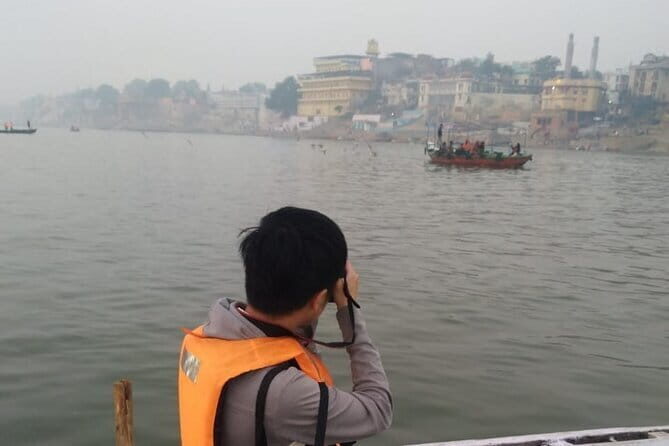
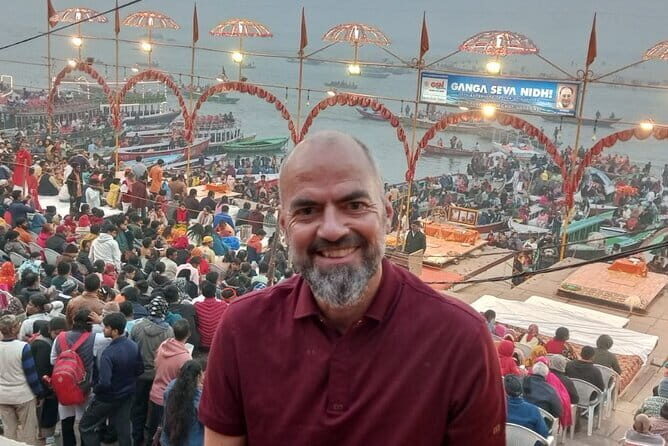
Triveni Sangam is the reason most people make this trip. It’s the spiritual center of Prayagraj, marked by the confluence of the Ganga and Yamuna, with Saraswati added into the story as a mystical third river. The idea is straightforward and powerful: a dip or a visit here is believed to cleanse sins and bring blessings.
You’ll typically have around two hours for this stop. That time window is important because the place can feel intense in the best way. Even if you don’t plan to take a dip, you’ll still be close enough to feel the atmosphere—people arriving with rituals, chanting, and a steady sense that this is more than sightseeing.
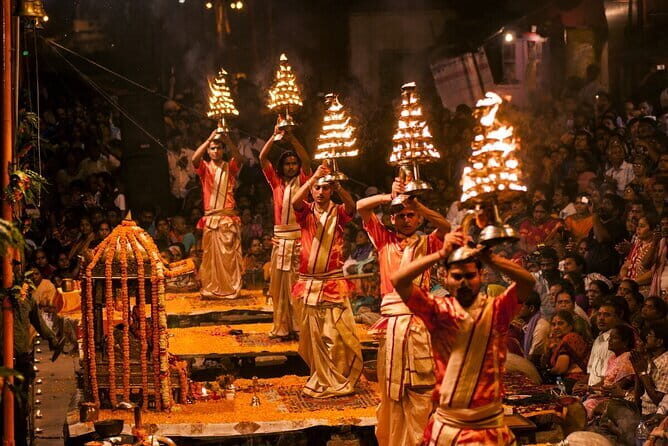
Here’s the practical tip I’d give you: treat this as both a spiritual moment and a logistics checkpoint. Arrive mentally ready to move, respect the flow of worshippers, and keep your hands free. If you want to participate in or witness a traditional puja, you’ll get the chance here, but remember you may also want a bit of breathing room to step back, watch, and understand what’s happening rather than rushing to the center.
Why it’s worth it: Triveni Sangam is one of those places where the meaning is visible. You don’t have to work to understand it—you just have to slow down enough to notice.
What to watch for: If you’re not a fan of crowds or loud chanting, you’ll need patience. Also, the rest of the day is structured around more walking, so don’t try to do every possible activity at once here.
You can also read our reviews of more tours and experiences in Varanasi



Shri Bade Hanuman Ji Mandir: A Quick Stop With Big Devotion
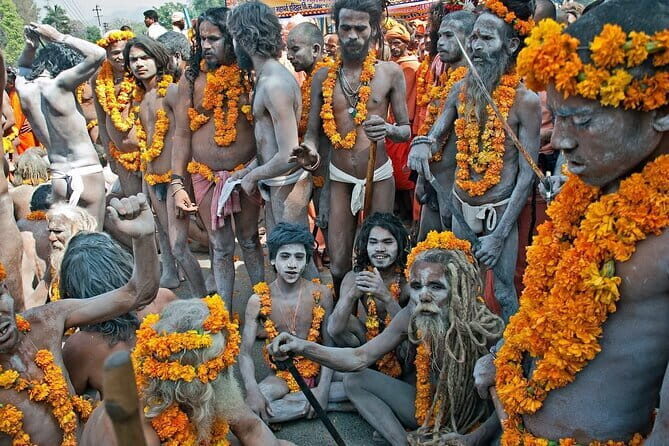
Right near the Sangam area, you’ll visit Shri Bade Hanuman Ji Mandir, a temple known for a reclining idol of Lord Hanuman. The important detail is that the idol is believed to be self-manifested, which is the kind of local belief that explains why people treat the stop as meaningful even when it’s short.
This is a brief stop—listed at about 3 minutes—so treat it like a spiritual pit stop. You’re not going to hang around for a long museum-style visit. Instead, you’ll have just enough time to take in the setting, bow or show respect if that’s your practice, and ask your guide what makes this Hanuman form special.
Why it works for your day: The stop acts like a reset. After the intensity of the confluence, this is more focused and compact. You can absorb the devotion without burning time.
A practical consideration: Since this is a temple visit, you’ll want to be mindful of how close you get to worshippers and ritual actions. If your group is moving quickly, follow your guide’s pacing rather than trying to linger in the exact middle of the action.
Akshayavat Temple (Patalpuri): The Immortal Banyan Idea
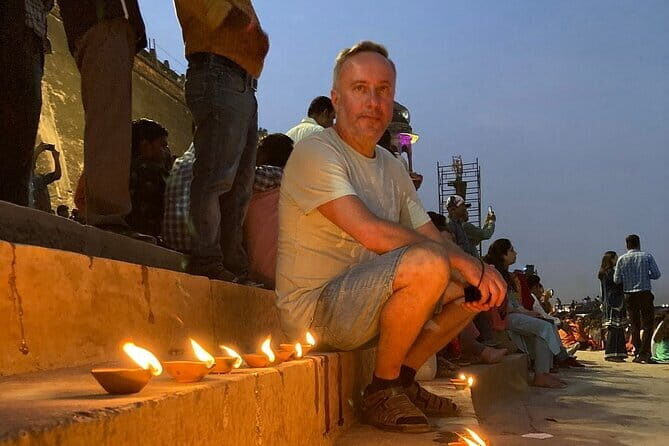
Next comes the Akshayavat Tree at the Akshayavat Temple, also described as being in Patalpuri. The tree is known as the Immortal Banyan Tree, and local legend ties it to liberation and eternal life.
In terms of time, you’ll have about 30 minutes here. That’s enough for a focused visit: find the area around the tree, take in the symbolism, and (if you’re inclined) spend time in quiet thought or meditation. The belief is that anyone who meditates under this sacred tree attains liberation, which helps explain why people treat the space with care and calm.
Why it’s memorable: Triveni Sangam is emotional and public; Akshayavat feels more contemplative. Even if you don’t share the belief, the way the site draws people into stillness can be surprisingly grounding.
Where you might feel the limitation: Thirty minutes is not long. If you’re the type who wants slow, private time, you might feel slightly rushed at the end of the session. Your best move is to use the earlier minutes for observation, then save the last part for your quiet moment.
Allahabad Fort Exterior Views: Architecture, Not Access
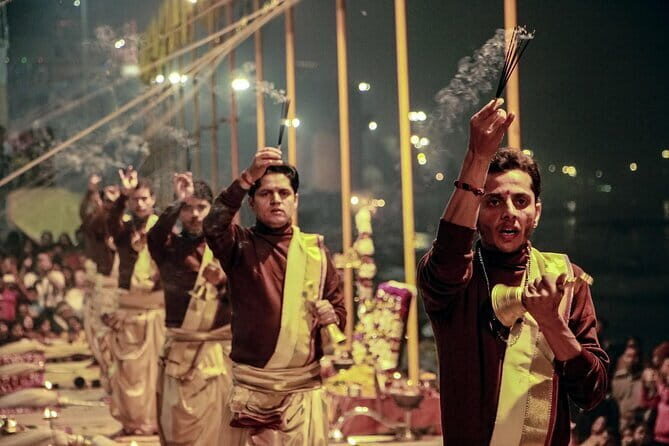
Then you’ll get a look at the Allahabad Fort exterior. Built by Emperor Akbar in 1583, it sits beside the Yamuna River and is a strong visual anchor for how layered the area is—religion in one direction, imperial history in the other.
One thing to understand early: entry is restricted because it’s a military area. So you’re not walking around inside. What you’re doing is more visual than exploratory. You’ll see the fort’s presence, appreciate the Mughal architecture from the outside, and connect that architecture to the way Prayagraj has been important for centuries.
Why this stop is valuable: Even without entry, the exterior gives context. It helps you place modern religious life against older power and geography. You’re learning how the river bends through history.
What to expect: This is a photo-and-gaze stop. If you’re expecting a full fortress walkthrough, temper that expectation. You’ll get the impression of scale and style, but you won’t get the interior experience.
Anand Bhavan: Nehru’s Ancestral Home Turned Museum
After temples and river symbolism, Anand Bhavan offers a different kind of meaning. This colonial-era mansion is the ancestral home of the Nehru family and now functions as a museum. You’ll have about one hour here, and admission is included.
This stop works because it changes the emotional temperature. Instead of chants and crowd movement, you get a calmer pace and a chance to see artifacts and personal items that bring history down to human scale. The museum includes things like rare photographs and memorabilia, which helps you understand how the family life and the political era overlap.
Why I like this as a final segment: If your earlier stops left you mentally saturated, Anand Bhavan gives you a place to reset. It also helps you walk out with more than just spiritual impressions. You leave with a cultural storyline: how the region’s identity connects religion, heritage, and national history.
Small drawback to consider: It’s museum time, not temple time. If you want your day to stay strictly devotional, you may find you’re ready to move on a bit sooner than the hour. If you like variety, the museum portion is one of the best “value-per-hour” stops on the route.





How the Day Flows From Varanasi (and Why the Timing Matters)
This is built as an all-day effort—listed at about 8 to 14 hours. That range is a clue. Depending on traffic, crowd levels, and how your group pace matches up with the guide’s timing, the day can feel either efficient or stretched.
Here’s how to think about it:
- Triveni Sangam is your anchor time (around 2 hours).
- The temple stops are short and intentional (a few minutes here, half an hour there).
- Anand Bhavan gives you the longer break (about 1 hour).
- The fort is an exterior look, which reduces time spent but limits access.
The best part of a structured schedule like this is that you don’t waste hours figuring out route gaps or trying to translate signs on the fly. You’re traveling with an air-conditioned vehicle, bottled water, and a guide who keeps you moving between points that are all spiritually and historically meaningful.
And yes, I’m going to say it plainly: bring comfortable walking shoes. Even with short stops, the day adds up. One guide from prior visits was noted for staying patient and guiding guests through what’s going on in the area, which matters when you’re trying to coordinate movement in active sacred spaces.
Value check: At $90 per person, you’re paying for a full-day package with licensed guidance, transport, and included water and taxes. What you still control is your spending on food/drinks, any personal ritual costs, and tips.
Price and Value: What Your $90 Covers (and What It Doesn’t)
The price is $90.00 per person, with an average booking timeline of about 13 days in advance. That timing suggests it’s a popular day trip, so earlier planning tends to reduce stress.
What’s included:
- Professional licensed guide
- Air-conditioned vehicle
- Bottled water
- All applicable taxes
What’s not included:
- Food and drinks
- Any entrance fee or personal expenses tied to temple/ritual activities
- Tips
One subtle but important point: some stops list free admission tickets, and Anand Bhavan includes admission. Still, the tour price is not designed to cover everything people might choose to do around rituals or personal expenses. If you’re the type who likes to make offerings or buy small devotional items, you should budget for that separately.
My value verdict: This is a fair price if you want guided navigation plus comfortable transport for a full-day circuit. It’s less of a deal if you’re trying to do it all independently, because independent costs add up quickly once you factor in transport, time, and guidance between temples.
Who This Day Trip Fits Best
This tour fits best if you want a single-day hit of sacred meaning plus cultural context. I’d especially recommend it if:
- You care about the spiritual sites but also want history and museum time
- You prefer having a guide explain rituals and local mythology in plain language
- You like structured itineraries that prevent “where do we go next” anxiety
It may feel less ideal if:
- You don’t handle long days well (it’s listed up to 14 hours)
- You dislike walking through active religious spaces
- You want lots of free time to wander slowly on your own
Because it’s described as a private tour/activity with only your group participating, it can also feel calmer than a big open crowd day—assuming your group size is manageable.
Should You Book This Triveni Sangam Day Trip?
Book it if you want a guided day that connects the confluence’s sacred power with a few of Prayagraj’s standout landmarks—Hanuman’s temple form, the Akshayavat tree’s liberation symbolism, a fort exterior that anchors you in Mughal-era geography, and Anand Bhavan’s museum reset.
Don’t book it if you want a fully flexible, slow travel day with minimal walking. This is more “move through the key sites with a guide” than “linger wherever you feel like.”
If you do book, go in ready for a spiritual itinerary that’s also practical: follow the guide, wear shoes you trust, and plan to spend extra only on food and any personal ritual choices.
FAQ
How long is the day trip?
The experience runs about 8 to 14 hours.
Is pickup included?
Yes, pickup is offered.
Is this tour private?
It’s listed as a private tour/activity, meaning only your group participates.
What does the tour include?
It includes a professional licensed guide, an air-conditioned vehicle, bottled water, and all applicable taxes.
Are any tickets or entrances included?
Admission tickets are listed as free for Triveni Sangam, Shri Bade Hanuman Ji Mandir, and Akshayavat. Anand Bhavan admission is included. Entrance fees for temple/ritual activities or personal expenses are not included.
What should I budget for if food isn’t included?
Food and drinks are not included, so you’ll need to pay for meals and refreshments on your own. Tips are also not included.
Is the tour suitable for most travelers?
It says most travelers can participate, and children must be accompanied by an adult.
How soon should I book?
On average, this is booked about 13 days in advance.
What is the cancellation policy?
You can cancel for free up to 24 hours in advance for a full refund. Changes made less than 24 hours before the start time aren’t accepted, and cancellations within 24 hours aren’t refunded.