REVIEW · AMRITSAR
Amritsar: Small Group 3 hour Guided Heritage Walk
Book on GetYourGuide →Operated by Go City Adventures · Bookable on GetYourGuide
A great walk tells you more than where to go. It gives you a reason to look closely. This Amritsar heritage walk threads together administrative history, Sikh courage, and spiritual architecture in just three hours. Two stops in particular make it click fast: the Golden Temple finale and the memorial-focused stops that explain why certain streets feel so heavy.
I also like that the route builds in context, not just sightseeing. You start at the Town Hall built by the British in 1866, then move through Sikh battalion remembrance, forts tied to the Ahluwalia Misl, and the prayer-and-training world of akharas and ashrams. One possible drawback: it is a walking tour with mosque and gurdwara etiquette, so you will need to plan for shoe removal and keep your pace steady.
If you’re curious about how Amritsar works as both a religious center and a city shaped by conflict, this walk is a strong way to get your bearings fast. You’ll learn names and places you can’t easily piece together on your own.
In This Review
- Key things you will love on this walk
- Starting outside Town Hall: a smart first step
- Gurdwara Saragarahi: the 1897 battalion memorial lesson
- Ahluwalia Misl Fort: defense, leadership, and local power
- Jalebiwala Chowk: street life and a food break
- Udasin Ashram Akhara Sangalwala and Chitta Akhara: faith plus training
- Darshani Deori: positioning yourself for the Golden Temple
- Baba Bohar and Thakurdwara Dariana Mal: the city’s old-to-new layers
- Chowrasti Atari, the mint, and power in everyday places
- Crawling Street to the Golden Temple: memory you can’t walk past
- The Ancient Passage and the Golden Temple finale
- Price and value for a 3-hour guided heritage hit
- Who this walk is best for
- Should you book this Amritsar heritage walk?
- FAQ
- Where do I meet for the tour?
- What time does the walk start?
- How long is the guided heritage walk?
- Is the guide English-speaking?
- What does the price include?
- Is hotel pick-up and drop-off included?
- What should I wear?
- Do I need to remove my shoes?
- What’s the cancellation policy?
- Is there a way to reserve without paying right away?
Key things you will love on this walk
- Town Hall (1866): Start at the administrative heart with British-era roots.
- Gurdwara Saragarahi memorial: The story honors 21 troops from the Sikh Battalion tied to Sept 12, 1897.
- Ahluwalia Misl Fort (Qila Ahluwalia): Power and defense from the 18th century, explained on foot.
- Akharas and Udasin Ashram (1771): Training and spiritual practice through named historic sites.
- Darshani Deori Golden Temple viewpoint: You see the Golden Temple from a classic arrival gate viewpoint.
- Crawling Street after Jallianwala Bagh: The route doesn’t skip the difficult parts.
Starting outside Town Hall: a smart first step
You meet outside the Town Hall in Amritsar, and that matters. Starting at a civic landmark gives you a frame for the rest of the walk. The Town Hall was built by the British in 1866, and the guide uses it as a way to explain how the city’s governance, identity, and public space developed over time.
This is also where the practical stuff clicks. You get your bearings, you learn the basic flow of the route, and you’re not left guessing where the Golden Temple story will land. It’s a calm opener before you hit more emotional, more spiritual sites later.
If you want a simple strategy for the next stops: listen for how the guide connects each place to a larger theme—rule, resistance, faith, and memory.
You can also read our reviews of more walking tours in Amritsar



Gurdwara Saragarahi: the 1897 battalion memorial lesson
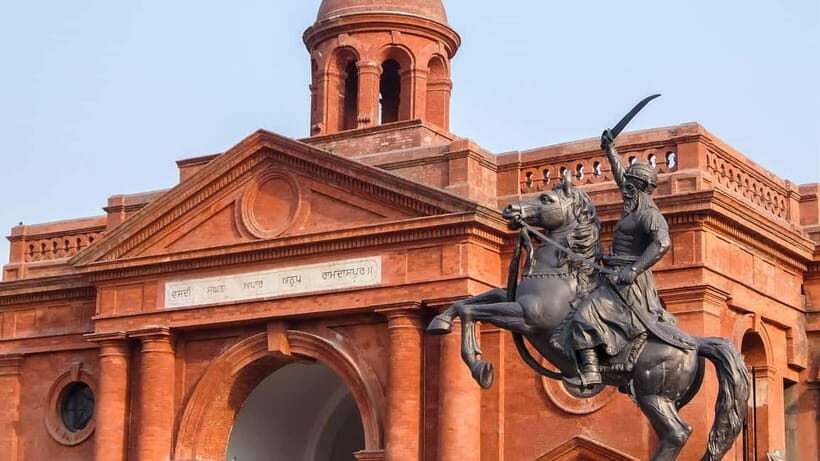
From the Town Hall area, you head to Gurdwara Saragarahi, a moving monument tied to a specific moment: Sept 12, 1897. This site honors twenty-one Sikh Battalion troops who protected their positions that day.
The value here isn’t just the fact of the memorial. It’s that you learn how Sikh history is often preserved through living religious places. That means you are not only reading about conflict; you’re seeing how communities keep remembrance integrated into everyday spirituality.
Practical tip: this is a site where you’ll likely be asked to follow worship etiquette, including taking shoes off. Wear shoes that are easy to slip off and back on without making it a whole production.
Ahluwalia Misl Fort: defense, leadership, and local power
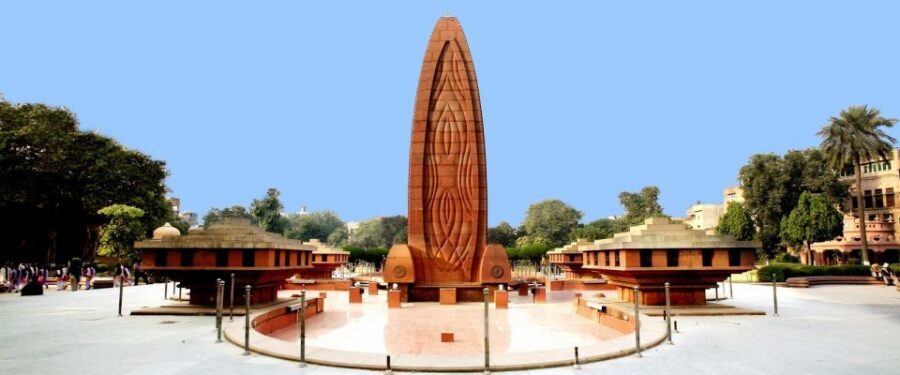
Next comes Qila Ahluwalia, the fort connected to the Ahluwalia Misl. This is one of those stops that helps you understand that Amritsar history isn’t one long timeline—it’s a chain of local leadership and regional defense.
The guide’s emphasis (and it’s a good one) is on the Ahluwalia Misl leader Jassa Singh Ahluwalia, described as instrumental in thwarting foreign incursions in the 18th century. Even if you know very little going in, you’ll leave with a clearer sense of why forts, governance, and alliances mattered on the ground.
A heads-up: forts can feel abstract if you only look at stone. The trick is to let the guide point out what the location suggests—why that spot, why those walls, and what threats were being planned for.
Jalebiwala Chowk: street life and a food break
At Jalebiwala Chowk, you pause in the center of Amritsar’s business district. This is your chance to savour regional cuisine. The walking pace and the tight three-hour window make this stop feel useful, not random.
For me, this is one of the best “real city” moments. You see where commerce and daily life meet heritage. It turns the tour from a set of monuments into a walk through a living city.
If you’re sensitive to spice or you’re cautious about street food, ask the guide what is easiest and most common there. You’ll get better odds of finding something you actually enjoy.
Udasin Ashram Akhara Sangalwala and Chitta Akhara: faith plus training
Then you shift into a quieter, deeper layer of the story with the Udasin Ashram Akhara Sangalwala, established in 1771. It was once called Nirban Akhara, named for its creator.
Close by is Chitta Akhara, also known as Ganga Raam Akhara, founded in 1781 by Mahant Ganga Raam. These are not just “old buildings.” The way the guide frames them, they represent the link between devotion and discipline—places where community life, religious practice, and training traditions intersected.
Why this matters for you: it helps explain Amritsar beyond the Golden Temple headline. The city’s spiritual identity isn’t only about one landmark. It’s also about the institutions that supported people day to day.
Dress note: smart casual is the standard. You don’t need formalwear, but you do want to look respectful since you’re moving through worship spaces.
You can also read our reviews of more guided tours in Amritsar



Darshani Deori: positioning yourself for the Golden Temple
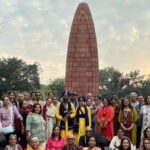
Next is Darshani Deori, the viewpoint gate where you observe the Golden Temple. This stop is a key piece of the route because it changes how you see the main shrine.
Instead of rushing straight to the water’s edge, you arrive through a classic threshold. The guide uses this moment to explain what you’re seeing and why devotees approach this way—like the city is teaching you how to look.
Take your time here. If you’re prone to checking your phone every two minutes, pause and turn your attention back to the architecture. The Golden Temple is visually powerful, but it makes more sense when you learn what you’re meant to notice.
Baba Bohar and Thakurdwara Dariana Mal: the city’s old-to-new layers
As you stroll toward the end of Bartan Bazaar, you come across Baba Bohar, a revered banyan tree. It’s a small stop on paper, but it’s a smart one on the ground. Big trees like this often anchor local memory—places where people have gathered for years, long before you arrived with your camera.
Then you visit the courtyard of Thakurdwara Dariana Mal, noted for colonial-style architecture that influenced much of Amritsar’s downtown. This is a useful balance point. You get spiritual spaces, then you get a look at the way older colonial-era design habits left marks on the urban fabric.
The drawback? If you’re only interested in Sikh religious history, colonial architectural notes might feel like a detour. But it’s exactly this mix—faith, street life, and outside influence—that helps the city feel real.
Chowrasti Atari, the mint, and power in everyday places
Your route then takes you to Chowrasti Atari, a complex with 32 stores and four passageways, said to be built by Sri Guru Hargobind Sahib in the 1600s. On a guided walk, this is where you start realizing that sacred leadership also shaped commerce and movement through the city.
From there, you move to Taksal (mint) in Katra Hari Singh, described as the first mint in Amritsar and linked to coin production under the Sikh regime. Coins sound boring until the guide connects them to sovereignty and identity—control isn’t only swords and walls; it’s also the ability to define systems.
Near it is Thakurdwara Raja Tej Singh, built in 1851 in Katra Jamadar by Raja Tej Singh. So you’re looking at three layers of authority in a small radius: religious leadership, economic power, and regional rulers.
If you like “how cities run,” these stops are the payoff.
Crawling Street to the Golden Temple: memory you can’t walk past
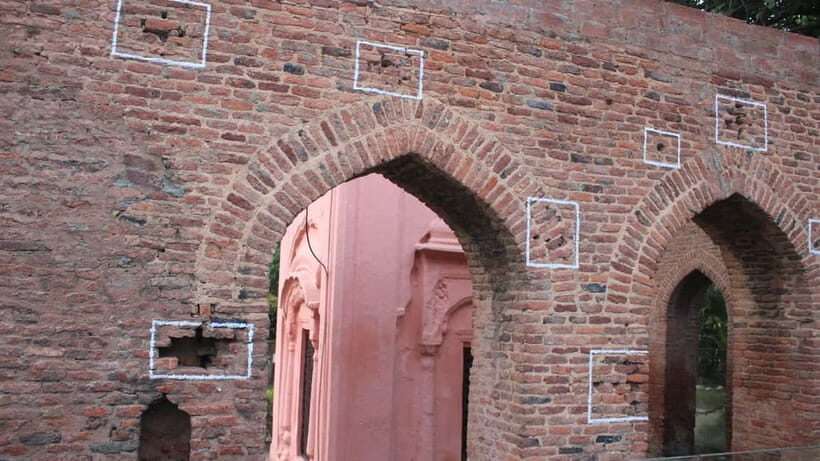
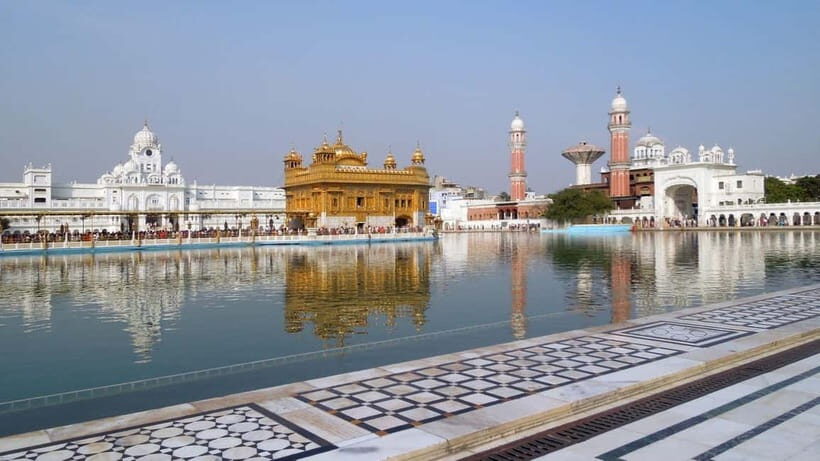
As the tour draws to a close, you stroll down Crawling Street, described as a somber reminder of the Jallianwala Bagh shooting. This was ordered by General Dyer, and the guide frames it as deaths of hundreds of Sikhs.
This is where the tour earns its higher rating. The Golden Temple is serene, but a heritage walk is also about truth. Knowing what happened nearby changes how you experience the city’s dignity and restraint.
One review highlight also pointed out how the emotional arc can extend beyond early 20th-century events into later Sikh history, including the 1984 drama. That kind of context matters. Without it, you can see buildings and still miss the meaning.
If your emotions run high with dark history, plan a short decompression moment after the walk. You’ll need it.
The Ancient Passage and the Golden Temple finale
You end with the Golden Temple, but not before one last connecting detail: the Ancient Passage, described as a traditional archway built by Sikh Misls to connect several mohallas and katras of old Amritsar.
That stop is more than architectural trivia. It’s the idea of continuity: how communities moved, how neighborhoods connected, and how the city shaped daily routes.
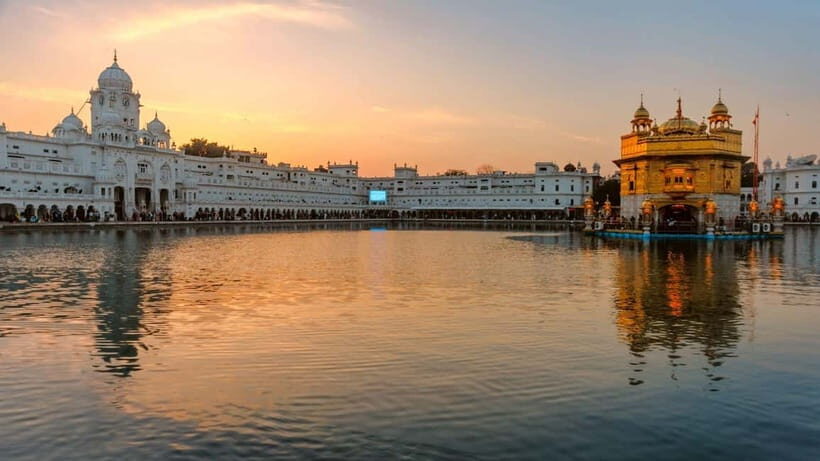
Then you reach the Golden Temple, presented as both an architectural wonder and a spiritual symbol of devotion and serenity. This is the finish line for the themes you’ve just learned—power, faith, and remembrance—focused into one place.
If you want to make the most of your final moments, keep your pace slow near the shrine. This is not the time to win a photo race.
Price and value for a 3-hour guided heritage hit
At $44 per person for a 3-hour small-group walk, you’re paying for two things: an English-speaking local guide and a carefully planned route that links sites together with context.
Here’s the value math that matters: you get multiple high-importance stops in a compact time block, and you don’t need to figure out how each place connects to the next. In a city like Amritsar, that saves time and helps you avoid missed context.
It also beats the cost of piecing things together with no guide, because some locations make more sense when you know what to listen for—like memorials tied to specific dates and leadership stories tied to specific names.
One note for planning: there’s no hotel pick-up and drop-off, and you meet outside Town Hall. So factor in getting yourself to the start on time.
Who this walk is best for
This experience fits best if you want:
- A guided route through major Sikh heritage sites without juggling transit.
- A city story that includes both beauty and painful memory.
- Names, dates, and place connections explained in plain language.
It’s also a good choice for first-time visitors who feel overwhelmed by Amritsar’s range of sites. The three hours are short enough to stay energetic, but long enough for real learning.
Should you book this Amritsar heritage walk?
Yes, if you want a focused introduction to Amritsar that doesn’t just skim the surface. The biggest reasons to book are the Golden Temple finale and the way the walk handles remembrance sites with care, including the Jallianwala Bagh context and later Sikh history that comes up in the explanation.
Skip it (or think twice) if you dislike walking for three hours, or if shoe-removal and worship etiquette will stress you out. Also, if your only goal is sightseeing photos and you don’t want historical context, you might feel the pacing is more reflective than “fast and fun.”
If you’re the type who enjoys hearing why places matter, this is a solid use of your time in Amritsar.
FAQ
Where do I meet for the tour?
Meet outside of Town Hall, Amritsar. Exact details and guide information are shared the day before.
What time does the walk start?
The tour begins at 8:00 AM.
How long is the guided heritage walk?
It lasts 3 hours.
Is the guide English-speaking?
Yes. The tour includes an English-speaking local guide.
What does the price include?
The tour includes the local guide and sightseeing as per the itinerary.
Is hotel pick-up and drop-off included?
No. Hotel pick-up & drop-off are not included, so you’ll need to get to the meeting point yourself.
What should I wear?
The dress code is smart casual.
Do I need to remove my shoes?
Yes. Shoes must be removed at places of worship.
What’s the cancellation policy?
You can cancel up to 24 hours in advance for a full refund.
Is there a way to reserve without paying right away?
Yes. The tour offers Reserve now & pay later, so you can book and pay nothing today.