REVIEW · AMRITSAR
Amritsar Heritage Walk
Book on Viator →Operated by Discover Punjab Tours · Bookable on Viator
Old Amritsar tells its story up close.
This Amritsar Heritage Walk takes you into the city’s narrow lanes and by-lanes of the 400-year-old core, where you’ll spot katras, akharas, havelis, and hatties and hear how trade and town planning worked for centuries.
I love two things most on this kind of walk: the way the guide turns streets into a timeline, and the small-group feel. In particular, the guides listed for this tour, including Gurinder Singh Johal and Ajay, are praised for sharing clear, small historical anecdotes that make stops click fast, without turning it into a lecture.
One possible drawback: you’re choosing a walking-style tour through tight old-city lanes, so if you dislike long stretches on foot, this might feel like hard work rather than a relaxing stroll.
In This Review
- Key highlights before you go
- Why this heritage walk feels different from a temple-and-fort day
- The 9:00 am flow through Old Amritsar’s lanes
- Town Hall built in 1866: administration as a starting point
- Saragarhi Memorial Gurudwara: a memorial with a precise date
- Katra Ahluwalia and Qila Ahluwalia: the misl story you can walk
- Hall Bazaar’s archways: reading old trade routes by foot
- What the small-group format really buys you
- Price and value for a 3-hour guided old-city walk
- Who this tour suits best (and who might want a different plan)
- Should you book this Amritsar Heritage Walk?
- FAQ
- How long is the Amritsar Heritage Walk?
- What are the main stops on the tour?
- Is admission included for the stops?
- How many people are in the group?
- Where does the tour start and end?
- Is free cancellation available?
Key highlights before you go
- A guided route through the 400-year-old city’s lanes with real places you can picture from maps
- Town Hall (built by the British in 1866) as your first landmark and local-administration anchor
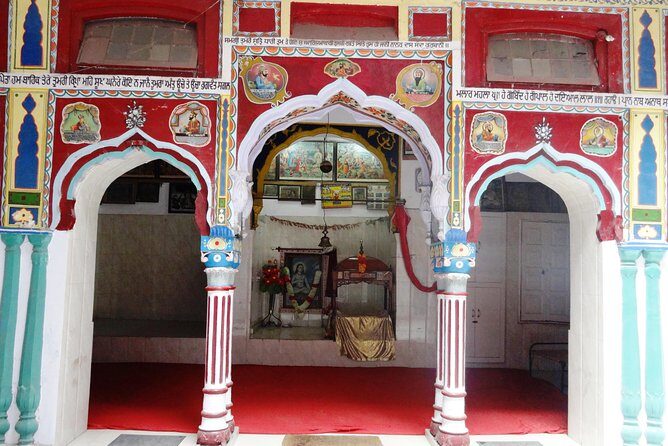
- Saragarhi Memorial Gurudwara honoring the 21 soldiers of the 36 Sikh Battalion (Sept 12, 1897)
- Qila Ahluwalia and Katra Ahluwalia connected to Ahluwalia Misl and Jassa Singh Ahluwalia
- Hall Bazaar’s archway passages linking mohallas and katras, shaped by Sikh Misls
- Small group size (max 10) for easier pace control and questions
Why this heritage walk feels different from a temple-and-fort day
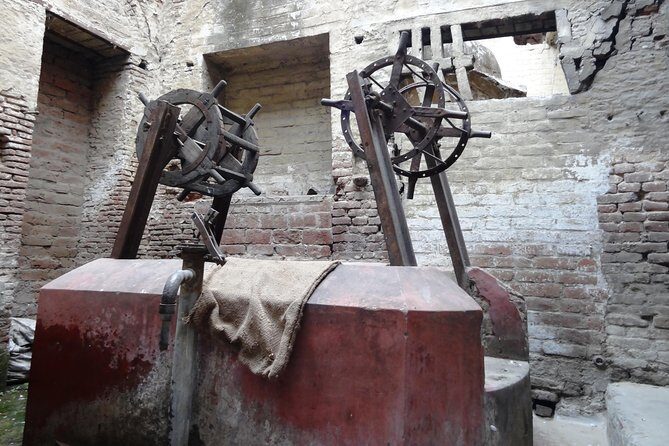
If your Amritsar plan is only about the big-name sights, you’ll miss the city’s working bones. This walk is built around the back alleys and connecting lanes that people actually used for shopping, living, and moving through neighborhoods. That makes the experience feel like you’re learning how the city functioned, not just seeing monuments.
I also like that the tour is framed as a time-travel route without being weird about it. You’re not asked to pretend you’re in another century. Instead, you walk the same kind of corridors—katras and by-lanes—and the guide helps you read what’s in front of you.
Finally, the small group matters. With a maximum of 10 people, the walk stays flexible enough that the guide can slow down when something deserves a second look, especially on corners where old-city layouts can be confusing.
You can also read our reviews of more walking tours in Amritsar



The 9:00 am flow through Old Amritsar’s lanes
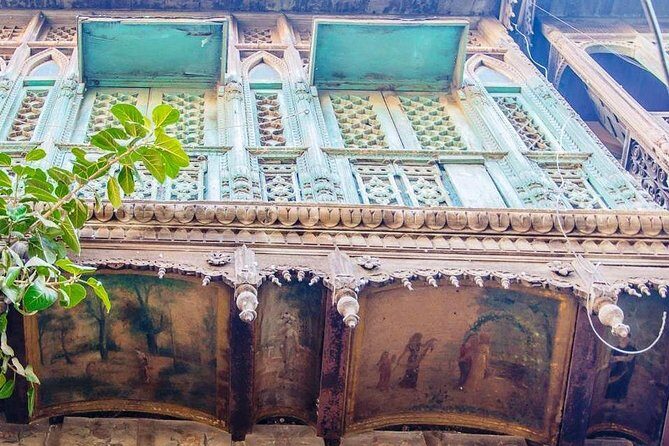
The tour starts at 9:00 am near the Town Hall area, with meeting points described around the Way into Golden Temple Road area and Katra Ahluwalia. It ends near S23/398, Katra Ahluwalia, Amritsar Cantt, so you’re not stuck returning exactly the same way.
Expect a compact, 3-hour route that moves through four main stops. The best way to think about it is as a guided loop of old-city identity: administration, memorial space, fort-and-misl storytelling, then a passageway that hints at everyday routes between neighborhoods.
Because the lanes are narrow, your day can feel more efficient if you keep your other plans light. I’d treat this as one of your main city experiences, not a quick add-on between appointments.
Town Hall built in 1866: administration as a starting point
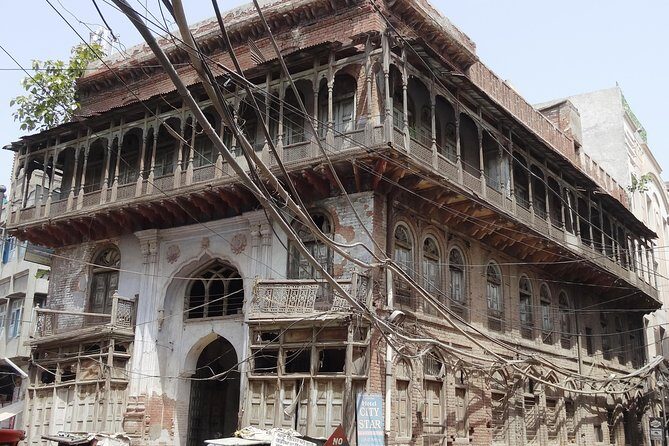
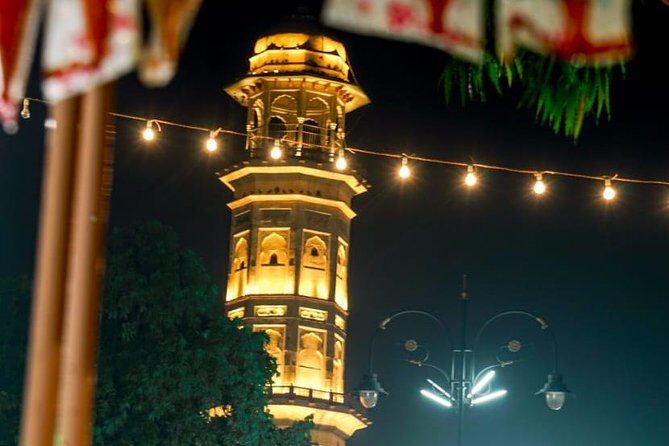
You begin at Town Hall, a historic building constructed by the British in 1866 and described as the centre of Amritsar’s local administration. Starting here is smart. It signals that this isn’t only a religious heritage walk. It also looks at how Amritsar was managed, structured, and represented in different eras.
From a visitor’s perspective, Town Hall can do something practical: it helps you get your bearings fast. Even if you’ve seen famous places in Amritsar, town administration buildings help you understand the city’s layout around governance and civic space.
What you should watch for is the contrast. As you leave Town Hall and move toward older lanes, the focus shifts from formal structures to the dense, human-scale network of neighborhoods. That change is part of what makes the route satisfying.
Saragarhi Memorial Gurudwara: a memorial with a precise date
Stop two is the Saragarhi Memorial Gurudwara, dedicated to the 21 soldiers of the 36 Sikh Battalion who lost their lives defending their posts on September 12, 1897. This stop doesn’t just add a religious element. It adds a clear historical anchor with specific names and a specific moment in time.
Memorial sites can sometimes feel distant when you’re sightseeing. Here, the wording of the dedication gives you something solid to hold onto, which makes the visit feel more grounded. You’re not trying to interpret it from vibes alone—you’re being guided toward the event the memorial marks.
For me, what works best on this stop is the way it balances reverence with context. You get a story tied to courage, and you also get a sense of how that story belongs in the city’s geography—not off in some separate museum world.
Katra Ahluwalia and Qila Ahluwalia: the misl story you can walk
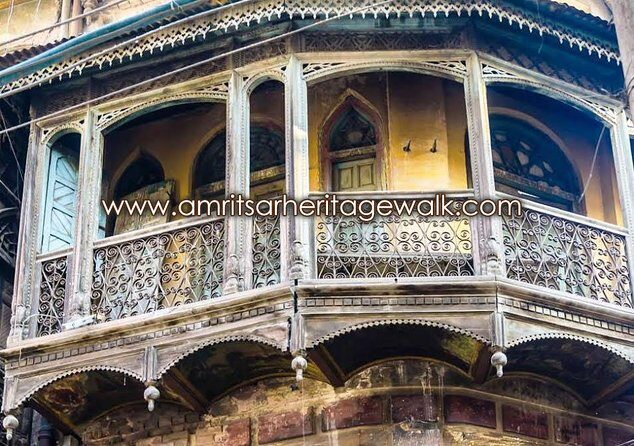
Next comes Katra Ahluwalia, with Qila Ahluwalia connected to the Ahluwalia Misl. You’re told the fort once belonged to the Ahluwalia Misl, and that Jassa Singh Ahluwalia played a crucial role in repelling foreign invasions during the 18th century.
This is where the walk becomes more than a checklist. A misl wasn’t just a name; it shaped power, territory, and local identity. When you hear that connection and then stand in the neighborhood tied to it, the story feels less abstract than it does in a book.
A practical tip: on stops like this, let the guide’s short anecdotes do their job. The most memorable parts tend to be the little bridges—how a fort and a neighborhood name connect, how leadership and defense shaped what people built and where they lived.
Time-wise, you get about 15 minutes here. That’s enough to absorb the main storyline and take in the feel of the area without feeling rushed into the next stop.
You can also read our reviews of more historical tours in Amritsar




Hall Bazaar’s archways: reading old trade routes by foot
The final main stop is Hall Bazaar, described as an ancient passage and a typical archway between mohallas and katras of old Amritsar. It’s established by Sikh Misls, which adds another layer: this wasn’t only where people lived. It was also where people moved through the city to trade, meet, and connect between neighborhoods.
I love the way bazaar passages can act like a living map. Even when you don’t know every name, the shape of the passage helps you understand how communities were linked. Archways like this often signal controlled access—places that channel movement while still keeping daily life close.
If you’re the kind of traveler who likes to understand how cities worked, Hall Bazaar is a high payoff stop. It helps you picture routes that might not show up clearly on big attraction days.
There’s about 20 minutes at this stop. In that time, you can usually do two things well: look slowly, then ask one or two follow-up questions so the guide can connect the bazaar to what you saw earlier.
What the small-group format really buys you
This tour lists a maximum of 10 travelers, and that changes the feel more than people expect. In a small group, the guide can adjust pacing in narrow lanes and keep the story coherent even if you stop to take photos or ask something unexpected.
The reviews for this walk specifically highlight that the guides—such as Gurinder Singh Johal and Ajay—bring the information in a clear, courteous way, with small historical anecdotes that make the route more interesting than just reading plaques. That style matters because many old-city heritage walks can turn into a blur if the guide speaks only in big facts.
On this one, the tone seems tuned for normal humans. You’re meant to walk, look, and understand—without needing a history degree.
Price and value for a 3-hour guided old-city walk
The price is listed at $35 for about 3 hours, with a mobile ticket. The best value argument isn’t only the duration. It’s the combination of guided context plus included admission tickets at stops.
You’ll have ticket inclusion at each of the four main stops, and that means your money is paying for access and local guidance at the same time. For a city like Amritsar, where the old lanes can be hard to interpret solo, a good guide is usually where the value lives.
If you like practical learning—how to connect one place to the next, and how to understand the city’s internal logic—this feels like a fair deal. If you’re hoping for a long, sightseeing-heavy day with lots of standalone photo spots, you might find four main stops feel compact. But for its style, it’s good value.
Who this tour suits best (and who might want a different plan)
This tour is a strong fit if you enjoy:
- walking through older neighborhood lanes and learning how cities functioned
- heritage stories that connect power, administration, and everyday routes
- memorial history tied to specific dates and named units
It may be less ideal if you want only famous landmarks with minimal walking, or if you prefer a relaxed pace with lots of free roaming. This is structured, and the lanes mean you’re moving as a group.
Also, because it’s described as most travelers can participate, it’s generally workable for many people—but it’s still a walking tour, so choose a day when you’re comfortable with about 3 hours on foot.
Should you book this Amritsar Heritage Walk?
Yes, if you want the Amritsar you can’t easily get from a single viewpoint. I’d book it when you care about understanding the city’s layout—how neighborhood corridors, memorial spaces, forts, and older markets fit together.
If your trip is short and you’re deciding between a quick highlight route and something more interpretive, this one wins for value. You get four meaningful stops, guided context at each one, and a route through the city’s real interior lanes. You’ll come away with a mental map that makes your later visits easier.
If you want only major sights and don’t like walking, you might skip it. But if you like guided sense-making in a place where the streets matter, this is a great use of a morning.
FAQ
How long is the Amritsar Heritage Walk?
The walk runs for approximately 3 hours.
What are the main stops on the tour?
The tour includes Town Hall, Saragarhi Memorial Gurudwara, Katra Ahluwalia (Qila Ahluwalia), and Hall Bazaar.
Is admission included for the stops?
Yes. Admission tickets are included for the listed stops on the route.
How many people are in the group?
This experience has a maximum of 10 travelers.
Where does the tour start and end?
It starts at the Way into Golden Temple Road area near Town Hall and Katra Ahluwalia, and ends near S23/398, Katra Ahluwalia, Amritsar Cantt.
Is free cancellation available?
Yes, you can cancel for a full refund if you cancel up to 24 hours in advance of the experience start time.