REVIEW · VARANASI
Prayer,rituals,Creamation and Boat Ride
Book on GetYourGuide →Operated by Season Holidayz · Bookable on GetYourGuide
The Ganges wakes up fast.
This 2-hour experience is one of the most direct ways to understand Varanasi through daily Hindu ritual and river life, with a morning Ganga aarti ceremony, a boat ride, and an on-the-spot explanation of what you’re seeing along the way.
I especially like two things: first, the way the guide talks you through what Ganga aarti means, so it’s not just watching lights and chanting but understanding the purpose. Second, the small group set-up (up to 10) makes it easier to hear the English explanations clearly, even when the ghats get busy. The main drawback is timing and context: this starts early, and you’ll be close to a cremation ghat view, so it can feel intense and emotional for some people.
In This Review
- Key things that make this tour worth your time
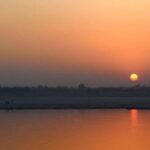
- Sunrise at Assi Ghat: where Varanasi starts making sense
- Ganga aarti: what you’re really watching at the river
- The Assi Ghat boat ride: a calmer view with a clearer story
- Cremation ghat viewing with explanation: intense, but better understood
- Why Varanasi matters to Hindus and Buddhists (and how rituals connect)
- The guide experience: clear English storytelling in a small group
- Price and value: is $16 per person a fair deal?
- What to bring and how to handle the crowd and customs
- Who this tour suits best (and who should skip it)
- Should you book this early morning Ganga aarti and boat tour?
- FAQ
- How long is the tour?
- Where does the tour start?
- Is hotel pickup and drop-off included?
- What is included in the tour price?
- What should I bring?
- Is smoking allowed, and is the tour suitable for wheelchair users?
Key things that make this tour worth your time
- Sunrise watch at Assi Ghat with a clear start-of-day perspective on Varanasi
- Ganga aarti with live explanation so you understand the ritual, not just the spectacle
- Boat ride to cremation ghat and back for big river views and a different angle on the city
- Cremation process context that helps you make sense of the place and why it matters
- English guide storytelling (often praised for preparation and warmth, including guides named Karan and Nikhil)
Sunrise at Assi Ghat: where Varanasi starts making sense
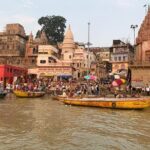
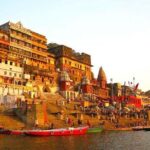
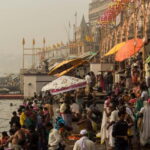
You meet by the riverside at Assi Ghat, near the palace area on the Ganges. The vibe here is practical and real: people are moving, vendors are setting up, and the city is already in motion long before you feel fully awake. That early start is part of why this tour works. You’re not arriving at a random moment—you’re catching the rhythm of the day.
Assi Ghat itself is a smart base because it’s lively without being as chaotic as some other riverfront spots. You’ll spend time on the ghat in the morning, which sets you up to understand why so many pilgrims treat the river like a living center of daily life.
If you’re the kind of traveler who wants more than photos, this is your lane. You get to watch first, then hear what it all means—so your brain has something to hang onto besides wow.
You can also read our reviews of more boat tours in Varanasi

Ganga aarti: what you’re really watching at the river
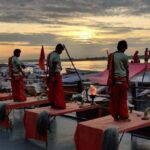
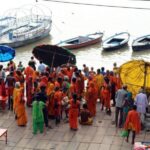
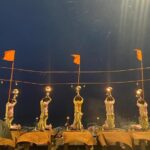
The main ritual moment is the daily prayer ceremony known as Ganga aarti. Expect a riverside scene where devotion is expressed through coordinated actions, prayer, and light. The key difference on this tour is that you don’t just stand there squinting at moving hands. Your English guide explains the significance as it happens, including why Varanasi matters to Hindus and how the river is central to that worldview.
I like this format because it turns confusion into understanding fast. Instead of trying to guess what different gestures or objects represent, you’re guided through the meaning. You come away with a framework for interpreting what you saw—especially helpful in Varanasi, where tradition can look both familiar and completely foreign depending on your background.
Practical note: religious sites in Varanasi can get crowded quickly, even at sunrise. You’ll want comfortable shoes, and you’ll want to stay flexible if people need to pass or if your viewing angle changes.
The Assi Ghat boat ride: a calmer view with a clearer story
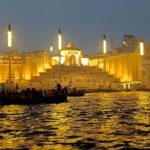
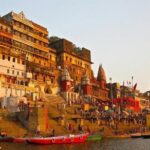
After the ceremony, you shift from walking to a river boat ride. The boat takes you from Assi Ghat toward the cremation ghat area and then returns. This stretch of the river is one of the best ways to see Varanasi as a connected system rather than a set of isolated photo stops.
What I like about the boat portion is the pacing. On land, you’re negotiating crowds. On the water, you get a steadier perspective. You also tend to spot details you’d miss while standing shoulder to shoulder. One of the standout notes from guides and visitors is the chance to look at Hindu pillars along the river route—small elements that add texture to the scene.
You’ll also get a kind of built-in interpretation. As the boat moves, your guide can explain the layout and significance of the ghats you’re approaching. That makes the ride feel like part of the lesson, not just transport.
If you’re sensitive to motion, go easy on caffeine and keep your footing mindfully. The tour focuses on meaning, but it’s still a boat on a working river.
Cremation ghat viewing with explanation: intense, but better understood
This tour includes a view connected to the cremation process, along with an explanation of its significance. I’m going to be straight with you: this part can be emotionally heavy, even if you came out of curiosity rather than belief. You’re not being pushed into sensational details, but you are being shown a reality that’s central to how Varanasi functions for many people.
The value here is not the shock factor. The value is understanding. Your guide talks through the cremation process and why Varanasi holds importance for Hindus—and also for Buddhists. That context matters, because without it, the scene can feel like a mystery you’re watching from behind glass.
A practical tip: keep your expectations grounded. This is a cultural and spiritual explanation experience, not a calm sightseeing cruise. If you prefer distant viewpoints only, or if emotional topics wear you down quickly, you may find this portion challenging.
Still, if you want authenticity and context—the kind that actually changes how you see the city—this is one of the most meaningful parts of the whole outing.
Why Varanasi matters to Hindus and Buddhists (and how rituals connect)
You’ll hear Varanasi framed as one of the oldest cities in the world and also as a place of deep religious importance. That’s not trivia. It’s the reason the ghats are packed, the reason the river rituals happen daily, and the reason so many people see life and death as part of a continuous spiritual cycle.
What helps most on this tour is how the guide links the dots between major rituals and everyday purpose. You learn about the importance of Ganga aarti, you get context for the cremation view, and you hear about the broader ritual culture that shapes how Hindus—and in different ways, Buddhists—understand the world.
One of the reasons the English guide matters here: the cultural logic is complex. Even when you don’t share the beliefs, you can follow the structure. That makes your time feel worthwhile instead of like you’re collecting impressions with no meaning attached.
Also, the tour avoids being purely academic. You see actual places, not just explanations of concepts. That mix is the sweet spot.


The guide experience: clear English storytelling in a small group
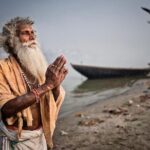
This is a live guided tour in English, and it runs as a small group with a limit of 10 participants. That cap matters more than you’d think. When things get busy at ghats, bigger groups become a blur. Here, you’re more likely to hear the explanation and stay oriented.
Some visitors specifically mention guides named Karan and Nikhil as warm, friendly, prepared, and passionate about Varanasi. Even if your guide is someone else, the overall style you should expect is guided clarity: the ritual is explained, the significance is connected, and you’re given enough context to understand why you’re being shown what you’re shown.
If you like guided tours, you’ll probably appreciate the pacing too. It doesn’t feel like a rush from one sticker to the next. It’s built around a morning flow: prayer first, then river view, then the cultural meaning that ties it together.
Price and value: is $16 per person a fair deal?
At $16 per person for a 2-hour morning tour, the value is strong—mainly because you’re getting three big components together. You get a daily prayer ceremony watch, a boat ride from Assi ghat to the cremation ghat area and back, and an English guide explanation of Hindu rituals and Varanasi’s importance.
What you should note is what’s not included. There are no meals and no beverages, and there’s no hotel pickup/drop-off. That means you’ll either walk or arrange your own way to the meeting point near the palace area on the Ganges. If you’re already staying close enough to reach Assi Ghat early, the price feels especially reasonable.
If you’re trying to cram in multiple Varanasi experiences without paying for transport between them, this tour is a good efficiency play. You’re basically buying a guided morning route with the key spiritual and river elements built in.
What to bring and how to handle the crowd and customs
This is an early start, so pack for comfort more than style. Bring comfortable shoes, a camera if you want photos, and water. Dress modestly. You’ll be around religious activity, and it’s respectful to keep your shoulders and legs covered.
Photography can be restricted in certain areas, especially where rituals are happening closely. Plan to shoot less and observe more. The best photos usually come from understanding when you should step back to let the moment breathe.
One more reality check: religious sites here can get crowded. You’ll want patience and a calm mindset. The tour runs smoothly, but you’re in Varanasi, not a museum. People will move, and you’ll share the space.
And no, smoking isn’t allowed during the experience. It’s a cultural and practical rule—easy to follow.
Who this tour suits best (and who should skip it)
This tour is a good match if you:
- Want a guided morning introduction to Hindu culture in Varanasi
- Appreciate explanations more than silent sightseeing
- Feel comfortable with emotionally serious context, especially around cremation sites
- Prefer a small group tour with live English guidance
It may not fit you if you’re:
- Pregnant
- Dealing with back problems (the nature of standing and walking at ghats can be rough)
- Relying on a wheelchair
There’s an important note you should pay attention to: the activity is described as wheelchair accessible, but it’s also flagged as not suitable for wheelchair users. If you’re in a wheelchair, I strongly recommend confirming details with the provider before booking so you don’t get surprised by the on-the-ground conditions at the ghat and boat.
Should you book this early morning Ganga aarti and boat tour?
Book it if you want an authentic, guided window into Varanasi that goes beyond surface-level sightseeing. The best reason is the structure: Ganga aarti first, then a boat ride view, then cremation context, all explained by an English guide. That combination turns what could be overwhelming into something you can actually understand.
Skip it or think twice if you’re looking for a relaxed morning with minimal emotional weight, or if you can’t handle early starts and crowded religious spaces. Also, only book if you’re okay with no meals, no pickup, and the fact that you’ll likely walk a bit on uneven, ghat-side ground.
If you want to leave Varanasi with meaning in your head—not just images in your camera roll—this tour is a very solid pick.
FAQ
How long is the tour?
The tour duration is 2 hours.
Where does the tour start?
The meeting point is the stay area near the parking by the palace on the Ganges at Assi Ghat.
Is hotel pickup and drop-off included?
No. Hotel pickup and drop-off are not included.
What is included in the tour price?
It includes the morning prayer ceremony at Ganga aarti, the boat tour from Assi ghat to cremation ghat and back, panoramic views of Varanasi, and explanations of Hindu rituals and the importance of Varanasi.
What should I bring?
Bring comfortable shoes, a camera, and water.
Is smoking allowed, and is the tour suitable for wheelchair users?
Smoking is not allowed. The information provided lists wheelchair accessibility, but it also notes that wheelchair users are not suitable, so you should confirm details before booking if you use a wheelchair.