REVIEW · VARANASI
Highlights of the Varanasi & Sarnath (Guided Fullday Sightseeing Tour by Car)
Book on Viator →Operated by Yo Tours · Bookable on Viator
Varanasi is the kind of place that sticks. This full-day guided tour strings together Sarnath’s Buddha connection and Varanasi’s riverfront life, temple spires, and tight alley energy, so you don’t just see landmarks—you get the meaning behind them. I like the story-led guide format and the way the route is arranged to make the day feel logical instead of chaotic.
Two things I’d call out as especially strong: Sarnath’s key Buddhist stops (including the first-sermon sites) and then the Varanasi ghats circuit that includes both everyday devotion and high-meaning rituals like Manikarnika Ghat. One consideration: several important sites have entrance fees listed as not included, and the pricing may feel steep if you’re comparing it to arranging parts of the day on your own.
In This Review
- Key things you’ll notice on this tour
- Why pairing Sarnath and Varanasi in one day makes sense
- Getting around in a car with an English/Hindi storyteller
- Sarnath first: the Buddha origin trail and the museum stop
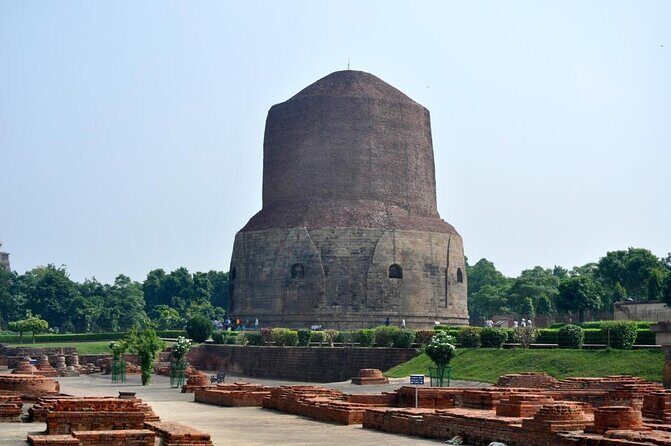
- Buddha’s first-sermon ground at Dhamek Stupa
- Archaeological Buddhist remains at the Sarnath Museum
- Chaukhandi Stupa: reunion with the five companions
- Sarang Nath temple stop tied to Shiva
- Switching from Sarnath calm to Varanasi’s riverfront world
- Ramnagar Fort: palace power and astronomy claims
- The ghats: Dashashwamedh, Harishchandra and the meaning of riverfront steps
- Dashashwamedh Ghat: where the action centers
- Manikarnika Ghat: cremation rituals at the most sacred riverfront
- Other ghats: Assi and older steps like Dashashwamedh-area sights
- Shri Kashi Vishwanath Temple: the Golden Temple complex and what to expect
- The price: what $131.60 per group really buys
- What this tour is best for (and who should rethink it)
- A note on guides and the “infotainment” style
- Should you book this Varanasi & Sarnath day tour?
- FAQ
- How long is the Varanasi & Sarnath guided tour?
- Is pickup offered, and is it limited to within the city?
- Is this tour private?
- What’s included in the price?
- Are entrance tickets included for every stop?
- Is lunch or bottled water included?
- What language can the guide speak?
- What if the weather is bad?
Key things you’ll notice on this tour
- Sarnath’s Buddhism origin story: from Buddha’s first sermon location to the trail-like sequence of sites
- Museum time with context: a stop at the Sarnath Museum to see Buddhist remains (ticket not included)
- A full Varanasi ghat loop: Dashashwamedh, Manikarnika, Harishchandra-area sights, and Assi
- Golden Temple visit built into the route: Shri Kashi Vishwanath Temple timing and complex exploring
- Car comfort plus snacks: air-conditioned vehicle and snacks keep the pace realistic
- Entrance fees are mixed: some are free, some are extra, so plan a little cash
Why pairing Sarnath and Varanasi in one day makes sense
This tour works because it treats the region like one connected story. Sarnath is where Buddhism’s early chapter turns into places you can physically stand on—like the spots tied to Buddha’s first sermon and his reunion with five companions. Then the day shifts to Varanasi, where Hindu worship, temple architecture, and the Ganges ghats create a very different rhythm, but still grounded in spirituality and devotion.
If you only do Varanasi, you can miss how religion evolves across places and time. If you only do Sarnath, you can miss how living faith looks when it’s happening right now along the river. This route tries to give you both views without making you do endless backtracking.
Also, the tour doesn’t assume you only care about religion or architecture. It’s designed as infotainment, so you get explanations, but not in a dry, lecture-only way.
You can also read our reviews of more guided tours in Varanasi



Getting around in a car with an English/Hindi storyteller
The day is set up for a smooth ride: an air-conditioned vehicle, pickup offered, and a guide who speaks English and Hindi. That matters in Varanasi because distances feel longer when you’re navigating narrow lanes and crowds on foot.
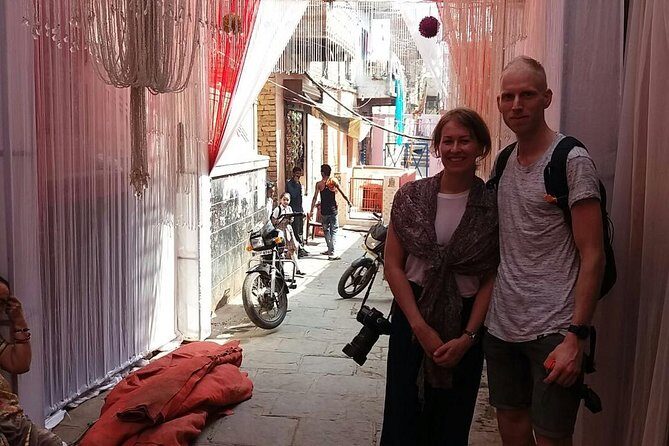
The tour is also private (your group only, up to 3). For a place as intense as Varanasi, that’s a real quality-of-life upgrade. You can move when the guide says move, pause for photos when it makes sense, and avoid getting boxed in by strangers’s pace.
You’ll also get snacks, which sounds basic, but it helps on a long 8-hour day. Bottled water is listed as not included, so plan to buy or refill yourself during the day.
Sarnath first: the Buddha origin trail and the museum stop
The day starts in Sarnath, an important Buddhist pilgrimage site tied to Buddha’s first sermon after enlightenment. The order matters here: you get the founding idea early, then you travel through the physical clues of that story.
Buddha’s first-sermon ground at Dhamek Stupa
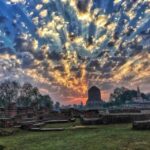
Dhamek Stupa is visited as the exact spot associated with Buddha’s first sermon and the teachings connected with the eightfold path leading to nirvana. Even if you don’t call yourself a religion buff, this stop gives you a clear framework: what Buddhism is pointing toward, and why this area became a pilgrimage destination.
Archaeological Buddhist remains at the Sarnath Museum
Next comes the Sarnath Museum, described as the oldest site museum of the Archaeological Survey of India. It houses a collection of Buddhist remains. This is a useful contrast to the outdoor sites: you see how objects and remnants help confirm the story, not just how tradition describes it.
The museum ticket is not included, and the visit time is short (about 30 minutes). If you’re the type who wants to read every plaque, set expectations. This stop is for a focused look, then moving on.




Chaukhandi Stupa: reunion with the five companions
Chaukhandi Stupa is tied to a specific moment—Buddha being reunited with the five companions (panchavargiya bhikshus). It’s a reminder that Buddhism isn’t only about ideas; it’s also about people, relationships, and the beginnings of a community.
Sarang Nath temple stop tied to Shiva
There’s also a stop at Sarang Nath, dedicated to Shiva (with the name associated as the deer lord). This is interesting because it shows how religious geography in India isn’t always one monolithic “this belongs only to Buddhism” story. It’s more like layers—sometimes overlapping—and that’s part of what makes the region worth visiting.
Possible drawback here: several of the Sarnath stops have entrance fees listed as not included. If you prefer to minimize surprise costs, check what you’ll need before you go.
Switching from Sarnath calm to Varanasi’s riverfront world
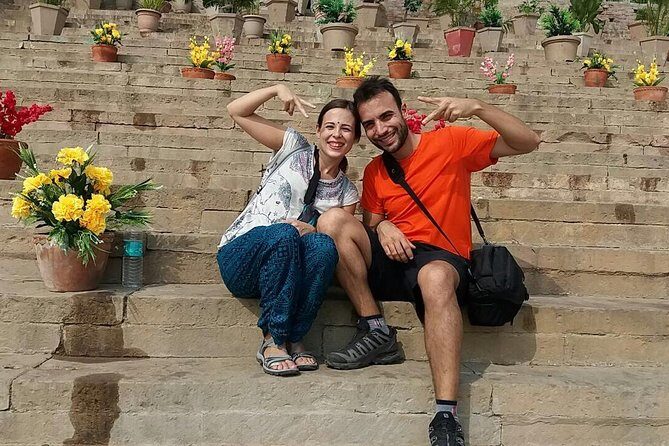
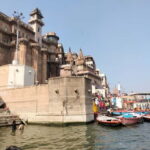
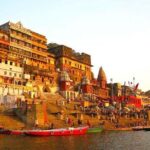
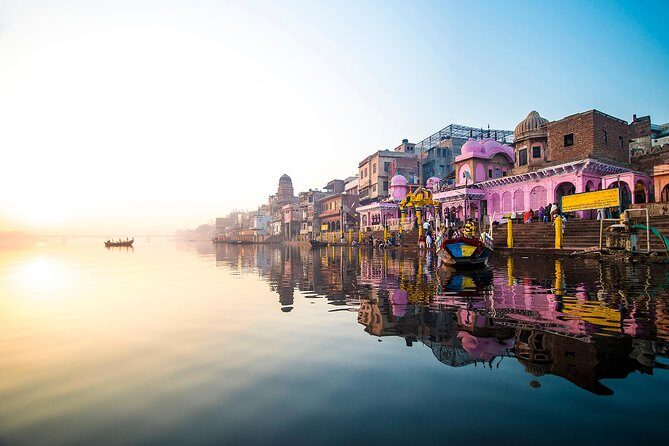
After Sarnath, the day becomes all about Varanasi—ghats, temple spires, and the winding alley energy. The itinerary is built to move you through different zones rather than repeating the same view.
This is where the guided format pays off. Varanasi is famous for its intensity. Without context, you can end up with a series of photos but little understanding of why each place is important.
The guide’s “storyteller” role is especially useful in this stretch. You’re not just looking at old stone and temple carvings; you’re being given a mental map of how devotion, architecture, and daily life connect.
Ramnagar Fort: palace power and astronomy claims
Ramnagar Fort is one of the more distinct “non-ghat” stops in the day. It’s described as a majestic palace with architectural excellence and astronomical brilliance, built by the King of Banaras in 1750 AD.
This stop is a good breather. After the spiritual focus of Sarnath, and before the dense riverfront religious activity, you get a different lens on Varanasi—royal patronage and the way rulers wanted knowledge (including astronomy) embedded into impressive stone and design.
Entrance is not included here, and time is about an hour. Plan for a quick, high-level visit rather than a slow museum-style day.
The ghats: Dashashwamedh, Harishchandra and the meaning of riverfront steps
You’ll spend time along multiple ghats, with a total feel that you’re moving across different “chapters” of Varanasi’s river worship.
Dashashwamedh Ghat: where the action centers
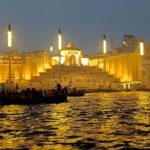
Dashashwamedh Ghat is described as the oldest and holiest ghat, the heart of the action where Ganga aarti takes place every evening. In other words, this is where you see devotion as performance—bells, lamps, chants, and a crowd that turns the riverfront into a focal point.
You get about 30 minutes here, plus time to walk around other nearby ghats and learn energy transformation techniques. The idea isn’t for everyone, but it can be a useful way to understand why people describe these rituals as something more than scenery.
Manikarnika Ghat: cremation rituals at the most sacred riverfront
Manikarnika Ghat is visited as the burning ghat, described as regularly conducting cremations and considered the holiest sacred riverfront alongside the Ganga. It’s presented with the idea of moksha—salvation for the soul.
This is a powerful stop, and it can also be heavy. If you’re sensitive to death-related rituals, go with respect and a mindset prepared for the reality that Varanasi’s spirituality includes life’s end as part of the sacred riverfront system.
Other ghats: Assi and older steps like Dashashwamedh-area sights
Assi Ghat is visited on the south end, along with Shri Durga Temple. This gives you a slightly different mood than the most central ghat areas—still spiritual, but not the exact same “everyone crowds here” feel.
The tour also references classic, older ghats such as Dashashwamedh, Manikarnika, and Harishchandra Ghat as some of the oldest and most popular. What you get isn’t just names—it’s a tour order that helps you feel how the ghats function across the day.
Shri Kashi Vishwanath Temple: the Golden Temple complex and what to expect
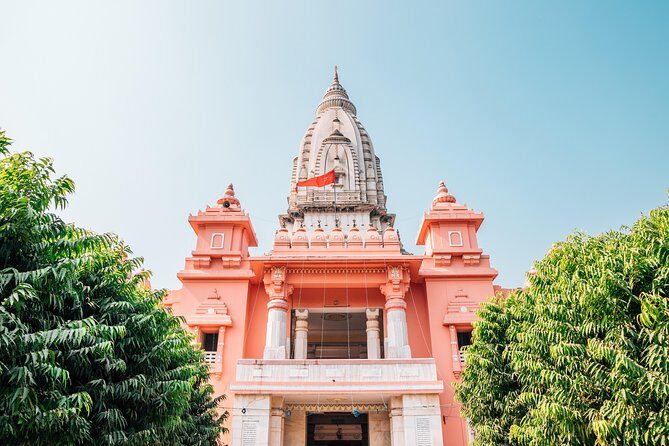
The tour includes a visit to Shri Kashi Vishwanath Temple, described as the holiest Shiva temple where the main deity is Vishwanatha, meaning ruler of the universe. You’ll explore other small temples inside the complex and also a small well known wisdom well.
Entrance is not included for this stop, and time is set at about 30 minutes. That means you’ll get a meaningful visit, but not enough time to treat it like a full-on slow worship day. If temple rules require waiting, you may feel the schedule tighten.
This is also a good stop to remember etiquette basics: dress modestly and keep your movements respectful. In a high-reverence place, small behavior choices matter more than you think.
The price: what $131.60 per group really buys
This tour is priced at $131.60 per group (up to 3) for roughly 8 hours, with pickup offered, an air-conditioned car, snacks, and taxes/fees covered by the operator.
Value-wise, you’re paying for four things:
- Time and logistics: the guide builds a route that connects Sarnath and Varanasi without you doing route planning or negotiating every hop
- Interpretation: the storyteller approach helps you understand what you’re seeing, especially at Buddhism origin sites and the temple/ghat stops
- Comfort: air-conditioned transport helps keep the day manageable
- Partial inclusion of costs: some admission is listed as free at several stops, but some major sites are not included
One caution from real-world pricing experience: one past booking complained about a markup compared to arranging a similar day elsewhere, arguing it could cost less if organized directly. I can’t verify that exact comparison, but it’s a useful reminder: if you’re price-sensitive, ask your operator (or check what’s included) so you’re not hit with extra entrance costs later in the day.
My practical tip: do the math in advance. Since some sites are explicitly listed as admission free while others are not included, you’ll know whether the final “all-in” day feels fair.
What this tour is best for (and who should rethink it)
This tour is a strong fit if:
- you want a single-day structure connecting Sarnath’s Buddhist roots with Varanasi’s living devotion
- you prefer a car-based day with minimal navigation stress
- you like guides who explain and keep the pace from turning boring
You might want a different approach if:
- you hate paying multiple small entrances throughout the day
- you’re uncomfortable with the cremation-ghat reality at Manikarnika
- you’re planning to spend long hours at only one site (this tour is designed for coverage, not slow immersion)
A note on guides and the “infotainment” style
The guide is the heart of this experience. The tour description emphasizes infotainment, and past feedback highlights guides named Jain and Jin as friendly and funny while still informative. That blend—light touch plus context—is exactly what you want in Varanasi, where attention can wander when your senses are overloaded.
Should you book this Varanasi & Sarnath day tour?
Yes, if you want a guided, car-based way to connect two major spiritual destinations in one day, and you like understanding what you’re seeing as you go. The combination of Sarnath’s first-sermon storyline with Varanasi’s ghats and Shri Kashi Vishwanath Temple is a smart route for first-timers who don’t want to piece together a plan.
Before you commit, do two quick checks:
- confirm which entrances are free versus not included (so you can budget)
- decide if Manikarnika Ghat feels like the kind of stop you can handle respectfully
If those fit your comfort level and budget, this is the kind of day that leaves you with more than photos—it gives you a clearer sense of why this region inspires people year after year.
FAQ
How long is the Varanasi & Sarnath guided tour?
It runs for about 8 hours.
Is pickup offered, and is it limited to within the city?
Pickup is offered. Airport or outside city limit transfers are not included.
Is this tour private?
Yes. It’s a private tour/activity, and only your group participates (up to 3).
What’s included in the price?
Included items are an air-conditioned vehicle, a guide (English & Hindi), all fees and taxes, and snacks. A mobile ticket is provided.
Are entrance tickets included for every stop?
Not for every stop. Some sites list admission as free, while others list admission as not included, including the Sarnath Museum, Dhamek Stupa, Chaukhandi Stupa, Ramnagar Fort, and Shri Kashi Vishwanath Temple.
Is lunch or bottled water included?
Lunch is not included, and bottled water is not included.
What language can the guide speak?
The guide can speak English and Hindi.
What if the weather is bad?
This experience requires good weather. If it’s canceled due to poor weather, you’ll be offered a different date or a full refund. You can cancel for a full refund up to 24 hours in advance.