REVIEW · JAIPUR
Guided Jaipur Heritage & Food Walk with Shopping
Book on Viator →Operated by India Guided Tours · Bookable on Viator
Three hours can change how you see Jaipur.
This guided heritage and food walk threads you through the Pink City’s old lanes with a mix of landmarks, gates, temples, and market corners. I especially liked the street-food rhythm (lassi, masala tea with kachori and samosa, and kulfi) and the fact that your guide can tailor the route if you want extra time at a stop. The only drawback to flag up front: with just 3 to 4 hours, you get highlights, not everything (so skip this if you want a slow, deep dive into one site).
The logistics are friendly for a short day. You get pickup and drop-off, plus a private tuk-tuk or car depending on what you choose, along with tea, coffee, snacks, street food, and bottled water. And yes, you also get that classic in-between moment where you watch everyday Jaipur life from the street level, not from a bus window.
You’ll move through iconic points like Raj Mandir Cinema, Ajmeri Gate, Choti Chaupar, Tripolia Gate, and Tadkeshwar Mahadev Temple, then end up with a Hawa Mahal view from Wind View Café and museum time at Albert Hall. If you like your travel with good eating and good stories in the same package, this is a strong value play.
In This Review
- Key things I’d circle before you go
- Why this Jaipur heritage-and-food walk feels like smart value
- Getting around: pickup, private tuk-tuk or car, and a rickshaw moment
- Raj Mandir Cinema to sweet lassi: starting with a landmark and a snack
- Ajmeri Gate and Choti Chaupar: the Pink City’s street-level crossroads
- Tripolia Gate and Tadkeshwar Mahadev Temple: royal entrances and sacred quiet
- Sahu Tea to Badi Chaupar markets: snacks, shopping energy, and craft details
- Wind View Café for Hawa Mahal views: a terrace break that keeps you moving
- Hawa Mahal Road and Pandit Kulfi: from iconic architecture to cooling sweetness
- Jal Mahal drive and Albert Hall Museum: ending with contrast and culture
- What you should watch out for (so the day stays pleasant)
- Who this Jaipur walk is perfect for
- Should you book this guided Jaipur heritage & food walk?
- FAQ
- How long is the Jaipur heritage and food walk?
- Is pickup and drop-off included?
- What’s included for food and drinks?
- Do I need to pay admission tickets for the stops?
- Is this tour private or shared?
- What is the cancellation policy?
Key things I’d circle before you go
- Old City gates and chowks with context: Ajmeri Gate, Choti Chaupar, and Tripolia Gate make more sense when someone connects the dots.
- Serious food stops in a short route: sweet lassi, masala tea, snacks, and kulfi are built into the flow.
- Private transport that keeps you comfortable: pickup, drop-off, and tuk-tuk or car reduce wasted time.
- Hawa Mahal viewpoint that feels like a break: Wind View Café gives you a terrace-style pause while you snack.
- A day that mixes royal-era and everyday Jaipur: temples, royal entrances, and market crafts all show up.
- Museum time after Jal Mahal: Albert Hall Museum adds a calmer, indoor contrast.
Why this Jaipur heritage-and-food walk feels like smart value
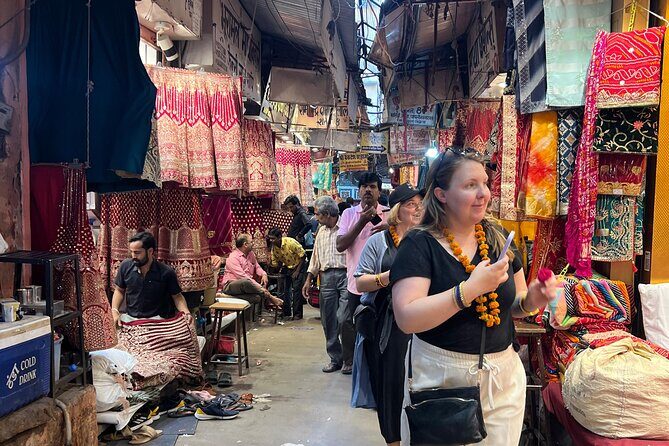
At about $11.34 per person for 3 to 4 hours, you are basically paying for structure. That structure matters in Jaipur’s walled-city streets. You get a guide to explain what you are looking at, plus a pre-set sequence so you are not hunting for the next gate, temple, or snack stall.
What really makes the price work is the food plan. This is not just one meal at one place. You get multiple stops: Lassiwala for sweet lassi, Sahu Tea for masala tea paired with kachori and samosa, and Pandit Kulfi at the end. Add tea/coffee/snacks and bottled water, and the day stops feeling like you are constantly deciding where to eat.
Also, the tour is private—only your group—so the vibe stays personal. And the itinerary is flexible, so if you care more about photography at Hawa Mahal Road than shopping, you can usually ask for the balance you want.
You can also read our reviews of more walking tours in Jaipur


Getting around: pickup, private tuk-tuk or car, and a rickshaw moment
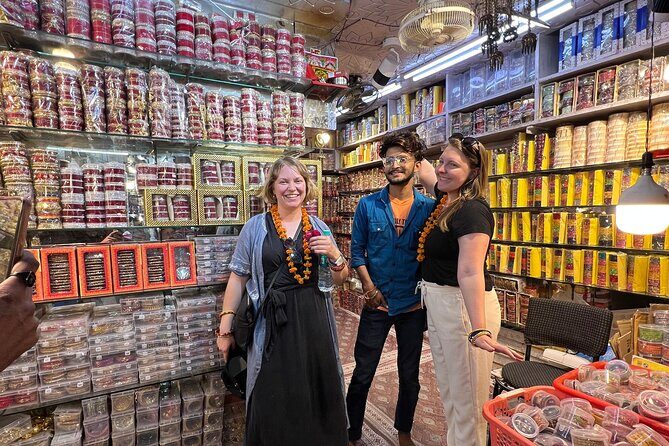
Pickup and drop-off are included from your hotel or any preferred location in Jaipur. That sounds simple, but in a city with traffic and tight lanes, it can save your whole morning or afternoon.
You can choose between private tuk-tuk or car for transport. For a short heritage walk, that choice affects comfort: you want the vehicle close enough to keep the walking enjoyable, but not so much that you lose the street-level feel.
The overview also includes a scenic rickshaw ride through the busy streets. This is the part where you slow down just enough to notice how people live around you—shops, daily routines, and market activity—without you having to figure out routes on your own.
My practical tip: wear comfortable shoes. Even with vehicle support, this kind of old-city tour includes walking through lanes and into small squares.
Raj Mandir Cinema to sweet lassi: starting with a landmark and a snack
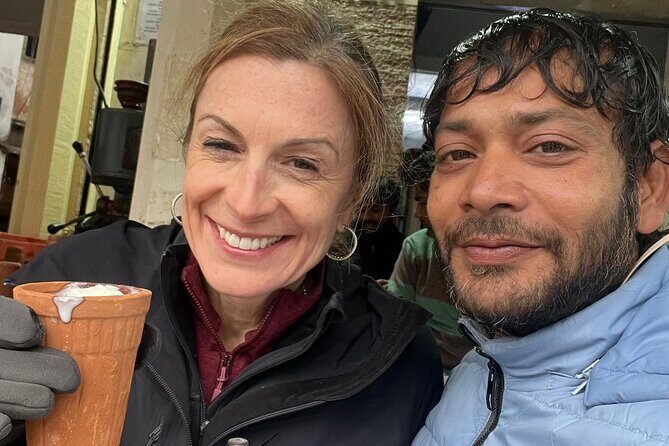
Your first stop is Raj Mandir Cinema, an iconic Jaipur landmark known for its stunning architecture. The theatre opened in 1976 and is often called the Temple of Cinema. Even if you are not a movie person, the building itself gives you a sense of how Jaipur treats showmanship and design.
Next comes Lassiwala, specifically Kishan lal Govind Narain Agarwal, where you start with a glass of their famous sweet lassi. This is a smart opener. It gets you fueled early, and it also cues the day’s theme: food is not an add-on, it is part of the cultural tour.
These two stops also set you up visually. Raj Mandir signals modern-meets-heritage energy; Lassiwala signals everyday taste and local habits. Together, they help you read the rest of the Pink City as something lived in, not just photographed.
If you have a sensitive stomach, go easy at the first food stop. You are about to rack up more tastes soon.
Ajmeri Gate and Choti Chaupar: the Pink City’s street-level crossroads

After lassi, you head into the Pink City and stop at Ajmeri Gate, also known as Ajmeri Darwaza or Kishan Pole. This gateway is one of the four southern gates, and it marks the road leading west into the city layout. Standing near a gate changes your perspective. You start to see how Jaipur’s old city grid was built for movement and control, not random sprawl.
From there, you move to Choti Chaupar, a vibrant square known for its market atmosphere. It is also a useful pivot point because it connects to nearby attractions (including access toward areas like Nahargarh Fort). If you like city geometry—how squares and streets link together—Choti Chaupar is a great place to feel it.
Practical note: squares and gates can be busy at peak hours. If you like photos without crowds, it helps to keep your timing flexible and let your guide guide your positioning at each stop.
Tripolia Gate and Tadkeshwar Mahadev Temple: royal entrances and sacred quiet

Next is Tripolia Gate, a prominent landmark tied to Tripolia Bazaar—the market that shares its name. It sits near the City Palace area and is one of the main entrances to the royal residence. This is where Jaipur starts to feel less like a set of buildings and more like a planned, royal system.
Then the tour shifts to Tadkeshwar Mahadev Temple, dedicated to Lord Shiva. The local tradition connects the temple name to palm trees that once grew in the area. Even if you do not follow Hindu mythology closely, you can still appreciate how local stories stay embedded in place names.
One thing I like about pairing a gate stop with a temple stop is contrast. Gates are about structure and movement. Temples are about meaning and stillness. Together, they help you understand why Jaipur’s “old” parts feel purposeful instead of merely old.
You can also read our reviews of more food & drink experiences in Jaipur






Sahu Tea to Badi Chaupar markets: snacks, shopping energy, and craft details
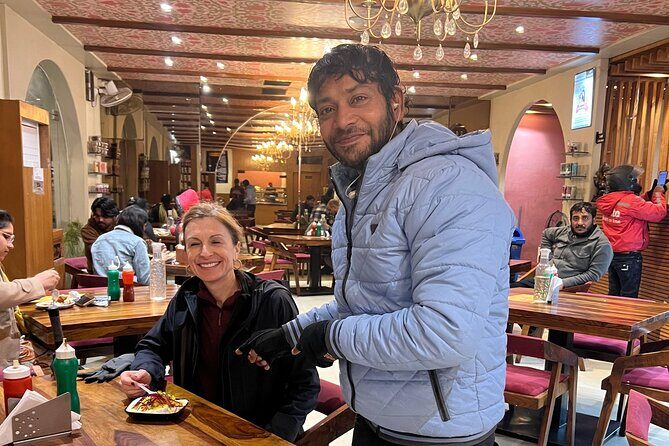
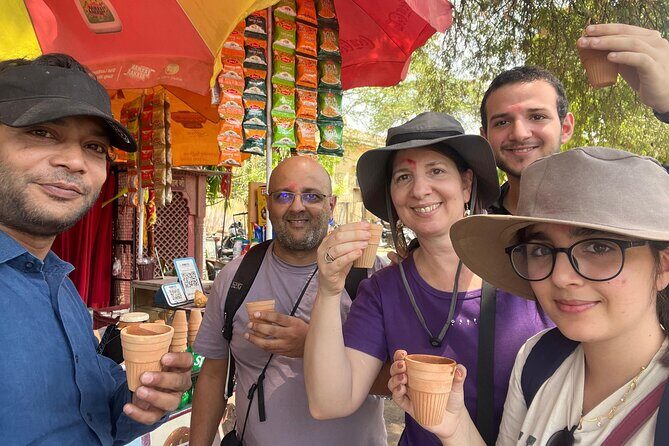
At Sahu tea stall, you get masala tea, paired with local favorites like kachori and samosa. This stop is a classic Rajasthan-flavored break: warm tea, crunchy snacks, and the sense that you are doing it the local way, not the tourist way.
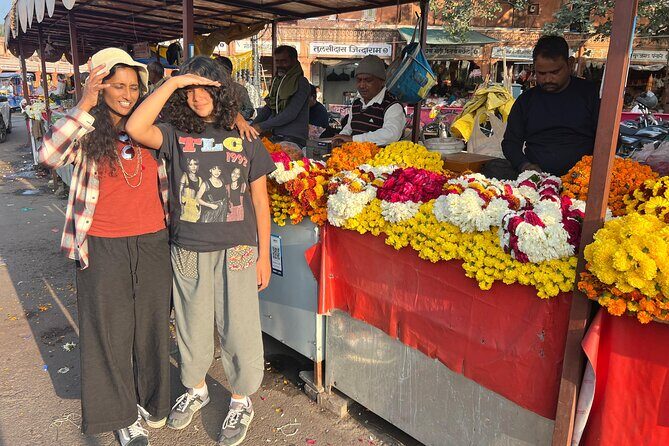
From there, you head to Badi Chaupar, at the heart of old town markets. This area is known for silver jewelry, handcrafted quilts, and traditional Rajasthani snacks. The key value here is guidance. Jaipur shopping can get intense fast, especially if you do not know what to look for. With a guide, you can focus on quality cues and you can decide what is worth your attention.
If shopping is one of your goals, this is where you can slow down. If shopping is not your priority, you can still benefit from the cultural context—what people sell and how craft traditions sit beside everyday street life.
Wind View Café for Hawa Mahal views: a terrace break that keeps you moving
Now comes a breather: Wind View Café, where you can relax on the terrace while you enjoy international snacks and coffee with a view of Hawa Mahal. This is a different kind of stop. It is not a gate or a temple. It is a viewpoint moment built into a café.
I like this part because it prevents “heritage fatigue.” You get to look across Jaipur’s signature façade—then decide whether you want to walk around the Hawa Mahal Road markets after.
You also learn the practical trick: don’t only see Hawa Mahal from one angle. Your perspective shifts with each street corner, and viewpoints help you notice details you would otherwise miss.
Hawa Mahal Road and Pandit Kulfi: from iconic architecture to cooling sweetness
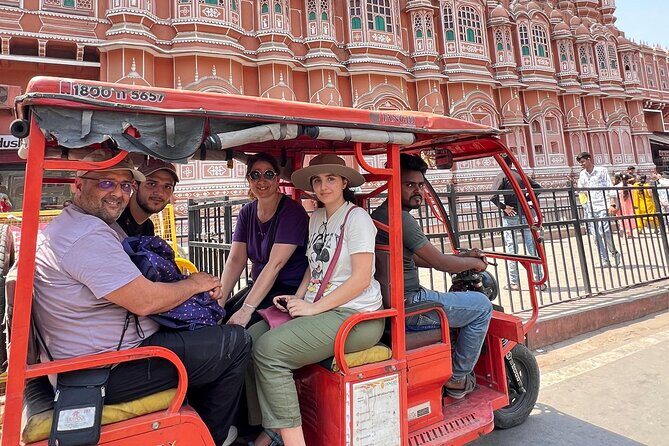
You then take a leisurely stroll along Hawa Mahal Road and explore the nearby markets where you can discover vibrant shops, local crafts, and traditional Rajasthani goods.
Next stop is Pandit Kulfi, an ice cream stop that ends the food portion on a cooling note. Kulfi works so well after a day of walking and tea-and-snacks stops. It also helps you avoid the problem of being too full too early. You are finishing your taste journey with something lighter than a heavy meal.
Tip: take one small moment after your kulfi to just look around. This is an easy time to notice how the streets actually function beyond the landmarks.
Jal Mahal drive and Albert Hall Museum: ending with contrast and culture
The tour shifts gears with a drive to Jal Mahal, a palace situated in the middle of Man Sagar Lake. Even from a drive-by perspective, you can feel why it became an icon. The setting puts the architecture into a wider scene than the old-city lanes.
After that, you head to Albert Hall Museum, one of Jaipur’s oldest and most impressive museums. The museum is known for its Indo-Saracenic architecture and houses an extensive collection of artifacts. The value here is pacing. You started with street-level heritage, moved through gates, markets, temples, and food stalls—then you get an indoor cultural stop that lets you cool down and process what you saw.
If you want a practical souvenir of memory, the museum is a better bet than another shopping bag. It ties together the day’s visuals into something you can think about later.
What you should watch out for (so the day stays pleasant)
This tour is built to be efficient. That means you will be moving fairly steadily and sampling foods across different stops. If you are not used to eating street food, go slowly at each tasting point. You do not need to finish everything, and your guide can usually help you pace it.
Also, because it is short, you cannot treat this as a replacement for longer Jaipur tours focused on one major site. Instead, treat it as your orientation day: see the layout of the old city, get a feel for the markets, and leave with a clear mental map.
Who this Jaipur walk is perfect for
This is ideal if you want three things in one go:
- Heritage landmarks fast: gates, squares, temples, Hawa Mahal views, Jal Mahal, and Albert Hall.
- Street-food structure: multiple tastings that are planned rather than random.
- Low-stress navigation: pickup, private transport, and a guide who handles the why behind what you see.
It can also suit couples, solo travelers, and groups because it is private and only your group participates. And because most travelers can participate, it is a good pick if you want a manageable walking day.
Should you book this guided Jaipur heritage & food walk?
I would book it if you are visiting Jaipur for the first time or you want a short afternoon that blends culture with real local tastes. The value for money is strong when you consider the food stops plus guide time plus pickup/drop-off and transport.
I would hesitate if you have a very narrow interest—like only museums, or only palaces—or if you want a slow-paced day with long stays at one attraction. Also, if you know you will not eat much, the food plan might feel like wasted value.
If your goal is to get your bearings fast, taste Jaipur in several bites, and end with museum culture, this one checks the boxes.
FAQ
How long is the Jaipur heritage and food walk?
It runs for about 3 to 4 hours.
Is pickup and drop-off included?
Yes. Pickup and drop-off are included from your hotel or any preferred location in Jaipur.
What’s included for food and drinks?
The tour includes tea, coffee, snacks, street food tastings, and bottled water.
Do I need to pay admission tickets for the stops?
The itinerary lists each stop with Admission Ticket Free, so you are not expected to pay entry fees for the listed stops.
Is this tour private or shared?
It is private. Only your group participates.
What is the cancellation policy?
You can cancel for a full refund up to 24 hours in advance. If you cancel less than 24 hours before the experience starts, the amount is not refunded.
If you want, tell me your travel dates and whether you prefer tuk-tuk or car, and I’ll suggest a good time of day to do this so you catch the best light and fewer crowds around Hawa Mahal.