REVIEW · JAIPUR
Jaipur@Twilight Guided Heritage City walk tour with Food Tasting
Book on Viator →Operated by Seagull Jaunt · Bookable on Viator
Twilight in Jaipur has real magic. This guided heritage city walk is built for that hour when daylight fades and markets start glowing, so you get the feel of Jaipur switching gears. I liked two big things right away: the hands-on craft trail, from marble statue work to lac bangles, and the planned food stops that actually taste like Jaipur, not just a break in the schedule.
The walk also has a slightly different angle than a daytime tour, with contrast built in, like Indian and European art styles you can spot in the architecture and details. One thing to consider: you’ll be in busy lanes and bazaars for a few hours, and the experience depends on good weather.
In This Review
- Key highlights I’d plan around
- Jaipur at Twilight: The Walk’s Real Point
- Getting Oriented: Start at Raj Mandir Cinema, End at Albert Hall
- Khajane Walon Ka Rasta: Marble Statues From Sketch to Paint
- Tripolia Bazar and Thakur Uday Singh Ji Haveli: Details You Can See
- Maniharon ka Rasta: Lac Bangles and Bridal Jewelry in Twilight Light
- Johri Bazaar to Achar Wali Gali: Sweet Tasting and Pickle Lore
- E-Rickshaw to Albert Hall Museum: Night Views Without a Long Detour
- Food Worth Timing Your Evening For
- Price and Value: Why This Tour Costs What It Costs
- Who This Tour Fits Best
- Booking Smarter: Start Time, Weather, and Pace
- Should You Book It?
- FAQ
- How long is the Jaipur twilight guided heritage city walk?
- Where does the tour start and where does it end?
- Is the museum admission included?
- Do you get food on the tour?
- How do you get to Albert Hall Museum from the market area?
- What’s the group size?
- Can I cancel and get a refund?
Key highlights I’d plan around
- Marble statue painting process you can see from sketch to finished work at Khajane Walon Ka Rasta
- Thakur Uday Singh Ji Haveli at Tripolia Bazar, including miniature wall paintings and vintage-style gas lamps
- Lac bangle-making and bridal jewelry streets at Maniharon ka rasta, timed beautifully for twilight lights
- Sweet tasting plus pickle shopping stop around Johri Bazaar and Achar Wali Gali
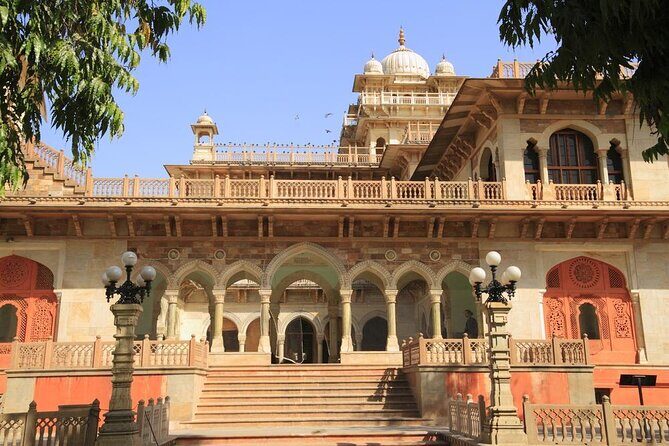
- Night views en route to Albert Hall Museum using an e-rickshaw segment, with the museum garden area as the vibe
Jaipur at Twilight: The Walk’s Real Point
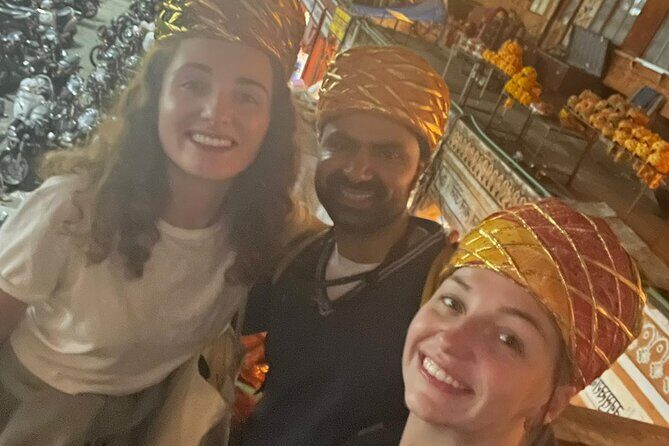
If you’ve only visited Jaipur in daylight, you’re missing a big part of the city’s personality. Twilight is when the narrow streets feel more human-sized, and when the market colors start popping against darker stone and brick. This tour is designed around that shift. You’re not just moving from landmark to landmark; you’re watching Jaipur work and make things, then eating your way through the story.
What makes it especially appealing is the craft-forward focus. You’ll see idol artisans at work, observe gold work on marble statues and artifacts, and hear how artistic styles vary across influences. You also get a proper look at bangle culture, including the lac bangle-making process in the bangle market area. That’s the kind of detail that’s hard to pick up on your own unless you already know where to look.
Group size stays small, up to 10 people. That matters in Jaipur’s older lanes, where you want a guide who can keep you from getting lost in the crowd.
You can also read our reviews of more walking tours in Jaipur


Getting Oriented: Start at Raj Mandir Cinema, End at Albert Hall
The tour starts at Raj Mandir Cinema (C-16, Bhagwan Das Rd, Panch Batti, C Scheme, Ashok Nagar). It ends at Albert Hall Museum in Ram Niwas Garden, which is a nice way to finish because you end up with a calmer, open feel right after tight bazaars.
I like this start-to-finish route because it naturally moves you from old-market texture toward a well-known public garden area. If you plan your evening, this ending location is handy for getting back to wherever you’re staying. It also helps you mentally “cap” the night, so the tour doesn’t feel like it just dumps you back into traffic.
The ticket is mobile, so you don’t have to fuss with printed passes. And since the group is small, you’ll likely spend less time regrouping and more time looking closely.
Khajane Walon Ka Rasta: Marble Statues From Sketch to Paint
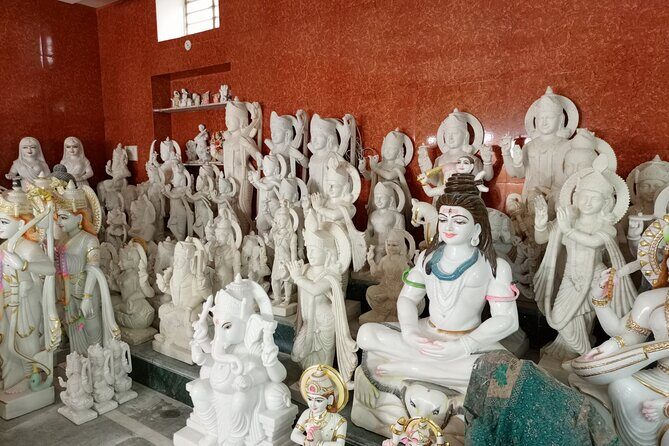
Your first major stop is Khajane Walon Ka Rasta, with the route moving through Khejado Ka Rasta. This is where the tour turns visual and practical. You’re pointed toward an area famous for statue-making art, and you get to see the process from sketch to final painting on marble stat forms.
That detail is the payoff. A lot of heritage walks talk about art in general terms. Here, the focus is on making: how a rough idea becomes a finished object through step-by-step work. And because this is early in the walk, it sets a theme for the rest of the evening: Jaipur isn’t just historical; it’s still manufacturing beauty.
A practical note: statue-making workshops and artisan lanes can be busy, and lighting varies. Bring your attention, not your camera flash obsession, because twilight is part of the look here.
Tripolia Bazar and Thakur Uday Singh Ji Haveli: Details You Can See
Next you head to Tripolia Bazar, where you visit Thakur Uday Singh Ji Haveli. Haveli time is always worth it in Jaipur, but this one has a specific charm for an evening tour.
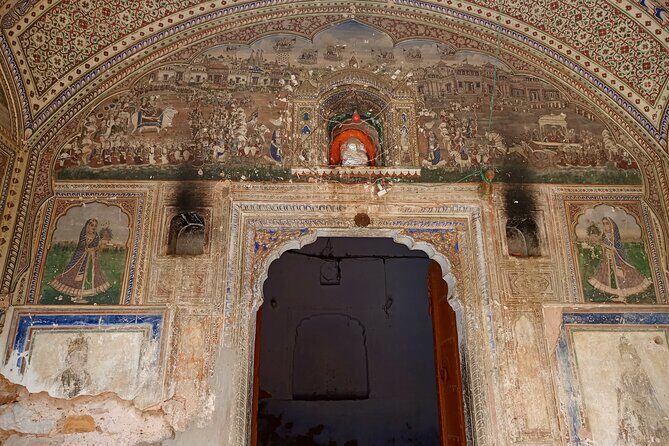
You’ll explore miniature art wall paintings, and you’ll also see British empire-time gas lamps for lighting at night plus a vintage car mentioned as part of the setting. Those gas lamps are a big reason this stop fits twilight: they visually bridge day and night, old and colonial-era design references, without you needing a lecture.
The haveli element also helps balance the craft streets. One moment you’re thinking about making objects; the next you’re looking at how people displayed taste, power, and artistry on private walls. If you like architecture and small details, you’ll get a lot from this segment.
Possible drawback: haveli visits can be photo-fussy if it’s crowded. If you’re sensitive to that, keep your expectations flexible and just enjoy the slower looking time.
Maniharon ka Rasta: Lac Bangles and Bridal Jewelry in Twilight Light
Then you move into Maniharon ka rasta, a street context where the meaning of the place is obvious. “Manihara” connects to bangles and bangle makers, and the lanes are described as full of colorful bangles and artificial jewelry for brides.
This stop is tailored for the time of day. The description focuses on twilight making the market look marvelous with lights and colors. And it isn’t just about shopping. The broader tour overview also highlights the lac bangle-making process, so you’re not just seeing finished items; you’re learning how the tradition is made.
You’ll also run into the tour’s bridal-jewelry angle more directly here, including the look of exquisite bridal collections and intricate Indian designs. Even if you’re not buying, it’s a fascinating cultural window into how weddings shape style, materials, and craftsmanship.
If you want a souvenir, bangles and bridal accessories are exactly the kind of purchases that feel meaningful when you’ve watched the process and understood what you’re looking at.
You can also read our reviews of more food & drink experiences in Jaipur






Johri Bazaar to Achar Wali Gali: Sweet Tasting and Pickle Lore
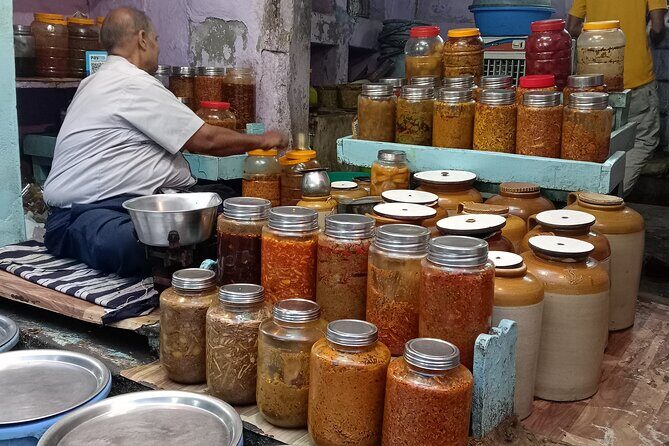
Around Johri Bazaar, the tour brings in food in a more intentional way. After a sweet tasting, you continue toward Gopal Ji Ka Rasta and then Achar Wali Gali to meet the famous Pickle Man of India, described as being awarded by Discovery Channel, from a shop with a 195-year-old history.
This part works because it connects Jaipur flavors to a person and a place, not just a menu. Pickles might sound like a quick snack, but the way this is framed turns it into a cultural stop: what families sell over decades, what gets preserved, and how street food culture becomes identity.
If you like food tours, this is a strong fit. If you’re not a big sweet eater, you can still enjoy the rest because the pickle segment adds a savory counterpoint.
One consideration: food tasting usually means small portions, not a full dinner. Plan to eat again after, especially if you start this tour earlier in the evening.
E-Rickshaw to Albert Hall Museum: Night Views Without a Long Detour
From the market area, you travel via e-rickshaw toward Albert Hall Museum, while enjoying night views of Jaipur markets along the way. This is one of those “small logistics” upgrades that makes a real difference. It keeps the pace from becoming exhausting and gives you a more scenic transition from crowded bazaars to a more open garden setting.
You’ll spend about 30 minutes in the Albert Hall Museum area (Ram Niwas Garden). Important detail: admission is not included, so you can’t assume you’ll get inside the museum galleries as part of the price. Even if you don’t enter, the garden and museum lighting are part of the evening experience.
If you do want to enter, factor in the extra time and cost. Since the tour duration is about 2 hours 30 minutes to 3 hours, you’ll want to keep your schedule flexible after the walk as well.
Food Worth Timing Your Evening For
The food element is a clear reason to choose the twilight version rather than a morning walk. You get at least one sweet tasting stop during the route and then a major flavor anchor with the pickle shop. This makes the tour feel like a real evening meal path, even if you’re not sitting down.
Also, the timing helps. Eating in Jaipur’s market lanes changes your sense of flavor because the streets are part of the backdrop. You’re tasting what people actively buy and share, right where it’s sold.
If you’re the type who hates repeating “tasting” tours that give you tiny samples with no context, this one feels more grounded because it ties food to actual shop history and local trades.
Price and Value: Why This Tour Costs What It Costs
At $29.96 per person, this is priced like a focused evening experience rather than an all-day, big-site ticket. For the money, you’re paying for three things that add up quickly in value:
- Guided craft storytelling tied to real artisan areas, including statue-making work and bangle-making context
- Food tasting that’s integrated into the route rather than dumped on at the end
- A guided night-market route that ends at a meaningful landmark area (Albert Hall Museum garden)
The group size cap of 10 travelers is another quiet value point. You’re less likely to feel swallowed by the crowd, and you usually get better help when you want to look carefully or ask what something means.
Where value might feel lower is if you’re mainly in Jaipur for major ticketed monuments. Since museum admission isn’t included and the tour is mainly street-and-craft focused, you’ll want to pair this with separate monument time.
Who This Tour Fits Best
This is a great match if you:
- Like markets but want more structure than wandering on your own
- Enjoy crafts, hands-on processes, and the “how it’s made” side of cultural tourism
- Want an evening walk that includes real food stops
- Prefer small groups and a smoother evening pace (including the e-rickshaw segment)
It’s not the best fit if you:
- Strongly dislike crowds or prefer fully air-conditioned sightseeing
- Are only interested in large, ticketed monuments and want those included in the price
Booking Smarter: Start Time, Weather, and Pace
This tour depends on good weather, so if rain is in the forecast, keep a flexible mindset. Also, because the walk moves through markets, it helps to arrive ready for uneven lanes and lots of foot traffic.
If your schedule is tight, there’s evidence the operator can adjust the tour start time in certain cases, with a guide/host named Umesh mentioned as handling an amended schedule when someone requested a later start. That’s not a guarantee for every request, but it’s a good sign you can communicate if your timing is off.
Given the average booking pace (about 54 days in advance), it’s worth booking early when you can, especially if you’re visiting during a busy season.
Should You Book It?
I’d book this Jaipur twilight heritage walk if you want your evening to feel local and specific. The mix of artisan processes (including marble and lac bangles), haveli details, and food that connects to real shop culture makes it more than a generic night stroll.
Skip it only if you’re looking for heavy museum time inside ticketed sites as the main event. In that case, you’ll get more from a monument-first plan and a separate market snack on your own.
If you want a Jaipur night that feels guided, flavorful, and built around how things are made, this one earns its place.
FAQ
How long is the Jaipur twilight guided heritage city walk?
It runs about 2 hours 30 minutes to 3 hours.
Where does the tour start and where does it end?
You start at Raj Mandir Cinema on Bhagwan Das Road (C-16, Panch Batti, C Scheme area) and you end at Albert Hall Museum in Ram Niwas Garden.
Is the museum admission included?
No. Albert Hall Museum is part of the evening route, but admission is not included.
Do you get food on the tour?
Yes. The tour includes a curated food tasting experience, including sweet tasting and a stop connected to pickles.
How do you get to Albert Hall Museum from the market area?
You move there via e-rickshaw for part of the transfer while enjoying night views of Jaipur markets.
What’s the group size?
The tour has a maximum of 10 travelers.
Can I cancel and get a refund?
You can cancel for a full refund up to 24 hours before the experience starts. If you cancel within 24 hours of the start time, you won’t receive a refund.