REVIEW · NEW DELHI
5 Days Private Golden Triangle Tour from Delhi
Book on Viator →Operated by Aalin Tours · Bookable on Viator
Five days, three cities, and a lot of wow. This private Golden Triangle tour is interesting because you’re not just hopping between sights. You’re moving with an AC driver, meeting a live guide in each city, and sleeping comfortably while covering the main Mughal and Rajput landmarks that define Delhi, Agra, and Jaipur.
I especially like the private guide approach, because the stops make more sense when someone explains what you’re actually looking at. I also like that your package can include breakfast and four nights of 4-star or 5-star hotel comfort, which matters when you’re spending early mornings and long drive days. The one drawback to plan for: monument entrance fees and tips are not included, and the Taj Mahal and Lotus Temple have day-of-week closures.
If you want a smooth first trip and you don’t want to wrestle with logistics, this is a strong fit. Just expect the tour to feel busy in a good way, with early starts and time inside cars between cities. Also note: Taj Mahal closes every Friday, and Lotus Temple closes every Monday.
In This Review
- Key Highlights You’ll Care About
- What You Get for $350: Private Comfort Plus Real Sightseeing
- Entering New Delhi by Tuk-Tuk: Jama Masjid and Chandni Chowk
- Mughal Delhi Landmarks: Humayun’s Tomb, Qutub Minar, and Lotus Temple
- Taj Mahal Morning in Agra: Early Start and Agra Fort Views
- Fatehpur Sikri: A UNESCO Stop That Breaks Up the Drive
- Jaipur’s Pink City Highlights: Amber Fort by Jeep, Hawa Mahal, and City Palace
- How Private Pacing Feels in Real Life (and Where It Can Feel Long)
- Guides and Drivers: Why English and Patience Matter Here
- Cost Reality Check: Entrance Fees and Tips to Plan For
- Who This Tour Suits Best
- Should You Book This 5-Day Golden Triangle Tour?
- FAQ
- Is pickup from the airport included?
- Are entrance fees included in the tour price?
- How many nights of hotel stay are included?
- What is included for meals?
- Do I get a private guide and private transport?
- Are any of the included attractions free to enter?
- What are the hotel check-in and check-out times?
- FAQ
- Is there a cancellation window for a full refund?
Key Highlights You’ll Care About
- Private guide in all cities: you get live explanations, not just a driver dropping you at gates
- AC car with door-to-door transfers: airport pickup and hotel transfers keep the trip sane
- Old Delhi tuk-tuk ride: a fun way to move through the tight lanes quickly
- Early Taj Mahal timing: the day starts early so you’re not arriving after the rush
- 5-star comfort option with breakfast: real downtime built into a fast itinerary
- Budget for entrance tickets: several major monuments have fees outside the package
What You Get for $350: Private Comfort Plus Real Sightseeing
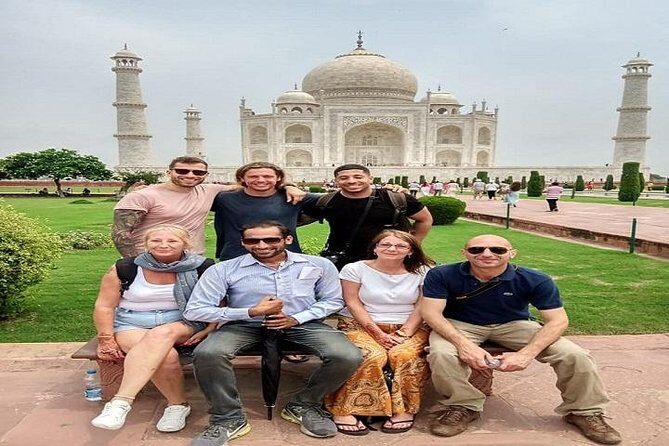
At $350 per person for a 5-day private tour, the value comes from what’s bundled. You get transportation by a private air-conditioned car, door-to-door hotel/airport transfers, and live tour guidance across Delhi, Agra, and Jaipur. You’re also looking at around four nights of hotel stay (if you choose the 4-star or 5-star option) with breakfast included.
That matters because Golden Triangle tours can become expensive once you add up taxis, guides, and separate transfers. Here, the “hard part” is handled for you, so your money mostly goes to experiences and time. The tradeoff is that entrance fees are not included (they’re listed as approximate), so you’ll still want to budget extra for sites that charge.
One small practical note: hotel check-in is 3:00 PM and check-out is 12:00 PM. That schedule can affect how much rest you get between sightseeing blocks, especially on the driving days.
You can also read our reviews of more private tours in New Delhi



Entering New Delhi by Tuk-Tuk: Jama Masjid and Chandni Chowk
Your Delhi day is set up to get your bearings fast and then pull you into Old Delhi. You’ll start with a guided tour that includes Jama Masjid and Chandni Chowk, plus time for stops like India Gate and other major landmarks you’ll recognize immediately.
Jama Masjid is a huge Mughal-era mosque built in 1656 under Shah Jahan. Even if you’re not religious, the courtyard scale hits you, and the architecture makes a clear point about how Mughal rulers designed monumental religious spaces. The entry fee is listed as not included, so treat it as an added cost when you’re planning.
Then comes Chandni Chowk, one of the oldest and most active market areas in Delhi. This is where you get the feel of daily life and street-level history without needing to “discover” it yourself. You’ll also have a tuk-tuk ride in Old Delhi, which is a smart way to cover tight lanes without spending all your energy moving slowly on foot.
A drawback to keep in mind: Old Delhi streets can be compact and busy, and you’ll likely spend time walking and standing for good viewing. If you’re traveling with kids or anyone with mobility limits, it helps to keep an easy pace and take breaks when your guide suggests it.
Mughal Delhi Landmarks: Humayun’s Tomb, Qutub Minar, and Lotus Temple
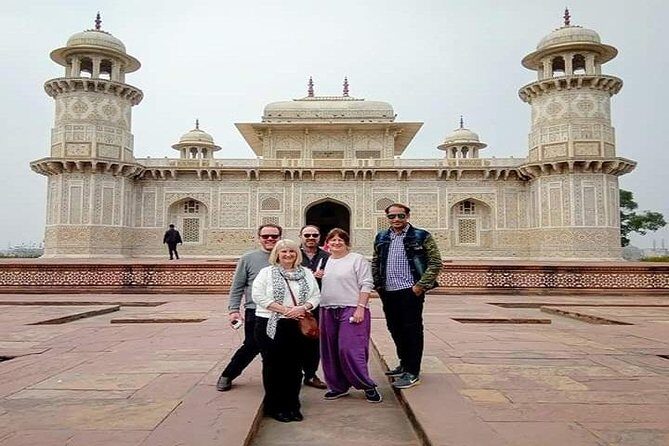
Delhi’s second layer is Mughal tomb-and-minaret style, plus a modern spiritual stop. This section includes Humayun’s Tomb, Qutub Minar, and the Lotus Temple, all with guided context so you don’t miss the bigger connections.
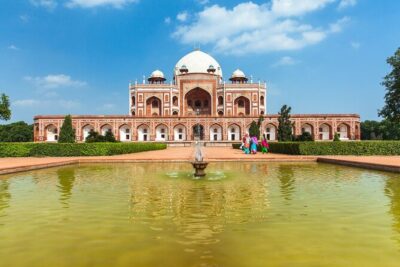
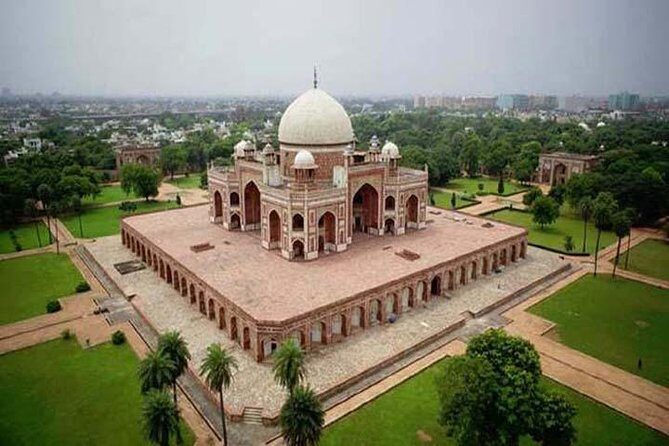
Humayun’s Tomb is a UNESCO World Heritage Site and is described here as India’s first garden tomb. Built in the 16th century, it helped inspire the design language later seen in the Taj Mahal. Entry is not included in the package, so you’ll want to expect a ticket cost. The payoff is that Taj Mahal feels less random after you’ve seen where the design ideas began.
Next is Qutub Minar, another UNESCO-listed site and a 73-meter-high brick minaret dating to the 13th century. The guide angle matters here because the appeal isn’t just height. You’re looking at Indo-Islamic design elements and intricate carvings, and a live explanation keeps you from treating it like a photo backdrop.
Lotus Temple is different. It’s a Bahá’í House of Worship open to all faiths, known for its peaceful atmosphere and lotus-shaped form. It’s listed as admission ticket free in the plan, but there’s an important timing warning: Lotus Temple is closed every Monday. If your schedule lands on Monday, you’ll want to have a flexible mindset about swapping the order of your stops.
You’ll also see India Gate, a World War I memorial with lawns and an eternal flame. Rashtrapati Bhavan is mentioned as an official residence landmark you’ll pass by or view during the city portion. These are shorter stops, but they give you a sense of how Delhi mixes old power and newer state symbolism.
Taj Mahal Morning in Agra: Early Start and Agra Fort Views
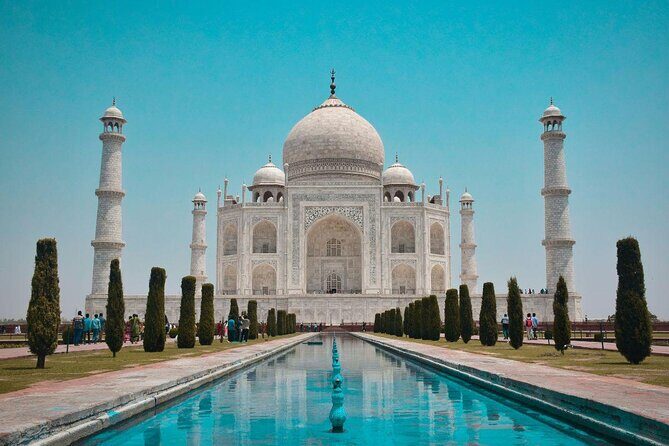
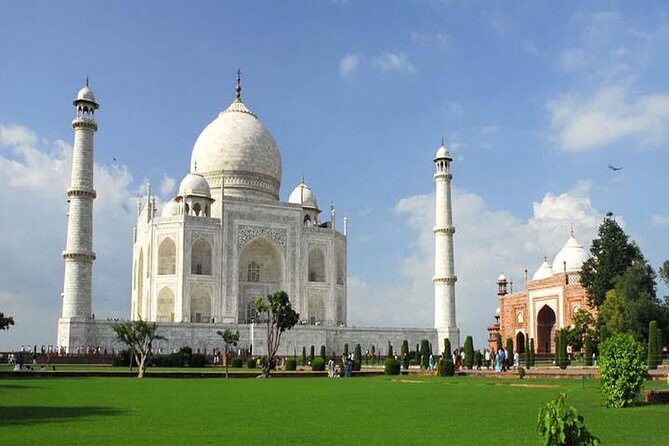
Agra is where the tour earns its name. You leave your hotel early morning to meet your guide, then you go straight to the Taj Mahal. The package lists Taj Mahal admission as not included, so plan for that additional ticket cost.
The early start is the practical reason this works. The Taj Mahal day begins before the busiest part of the morning, which makes the experience calmer and gives you better light for photos. When I plan this kind of visit, I care less about speed and more about arriving with enough time to actually look—symmetry, marble details, and the way the grounds open up as you walk in.
After Taj Mahal, you’ll head to Agra Fort, a UNESCO World Heritage Site and a red sandstone fortress once used by Mughal emperors. Entry is also listed as not included. The fort is a good companion visit because it connects the Taj Mahal area to the power center behind it, and you may get distant views of the Taj from the fort complex.
One drawback for some travelers: you’re doing a full sightseeing day and then still have the drive component later on the route toward Jaipur. If you’re prone to feeling travel-fatigue, pack water, plan for sun protection, and don’t underestimate the value of a slow lunch break when your guide offers one.
Fatehpur Sikri: A UNESCO Stop That Breaks Up the Drive
On the way to Jaipur, you stop at Fatehpur Sikri. The plan frames it as a former Mughal capital built by Emperor Akbar in the 16th century, with a preserved red sandstone city feel. This is one of those stops that can feel eerie in a good way because it’s built like a real city from another era, yet the place you’re standing in is not an everyday living neighborhood.
You’ll visit the Jama Masjid here too, and the guide helps you connect what you saw in Delhi’s Mughal architecture to Akbar’s era planning. The plan lists admission ticket free for this stop, which makes it easier on your budget than some of the other major monuments.
The main consideration is pacing. Fatehpur Sikri is worth it, but it interrupts your driving time. If you’re the type who likes uninterrupted travel days, you might find it adds another chunk of walking and heat. My advice: use that break intentionally. Eat, hydrate, and slow down when you’re inside the complex so the stop lands.
You can also read our reviews of more tours and experiences in New Delhi




Jaipur’s Pink City Highlights: Amber Fort by Jeep, Hawa Mahal, and City Palace
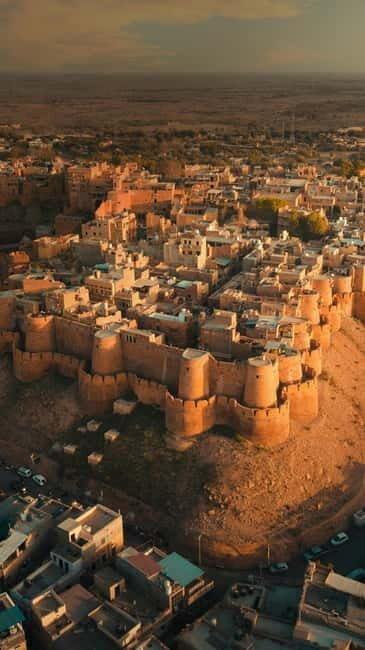
Jaipur is a full day of forts and palaces, with several iconic photo moments and a few details that feel almost theatrical when someone explains them. The tour includes the famous Amber Fort Jeep ride (called out in the tour highlights) and then adds major city landmarks.
Jaigarh Fort comes first in the plan. Built in the 18th century, it offers views over Jaipur and includes the world’s largest cannon called Jaivana. Entry is listed as not included. If you like military history and big structures, this is one of the more distinctive stops of the day because it’s not just decorative architecture.
Then you’ll see Hawa Mahal, the Palace of Wind. It’s pink sandstone and built in 1799, famous for its 953 windows that allowed royal women to observe street life privately. Entry is not included here either. What makes this stop worth more than a quick photo is the explanation of why the windows are shaped the way they are and what the building was designed to do.
City Palace is next, and it’s described as a blend of Rajasthani and Mughal architecture. You explore courtyards, gardens, and rooms such as Mubarak Mahal and Chandra Mahal. Entry is not included in the package. The guide focus matters because this complex has more structure than it first looks like, and it’s easy to miss the relationship between different sections if you’re rushing.
Jal Mahal, the Water Palace, is a short stop. It appears to float on Man Sagar Lake, and it’s listed as admission ticket free. It’s not a long visit, but it’s a good pause point if your feet are tired from the earlier forts and palaces.
As a practical note, some of the strongest Jaipur stops are ticket-based. If your budget is tight, decide ahead of time which entrances matter most to you, and let your guide know what you care about so you’re not paying for things you’ll barely look at.
How Private Pacing Feels in Real Life (and Where It Can Feel Long)
This tour is private, so you’re not sharing guides or cars with random strangers. That’s a big deal when you want your stops paced for your group, whether that means lingering longer at the Taj or moving quickly when it gets hot.
But private also means you control the tempo, and the route itself still takes time. You’re doing a multi-city loop: arrive in Delhi, spend a full day in Delhi, then travel onward to Agra for a major morning visit, continue toward Jaipur with another UNESCO stop, and then return to Delhi on the final day.
That final-day transfer matters because the plan says you’ll be taken from Jaipur to Delhi in the morning and dropped off. You might arrive with enough time to grab a meal and relax, but it’s not a day for extra sightseeing. Plan your flight or next reservation accordingly.
Hotel timing is another real-world factor. With check-in at 3:00 PM and check-out at 12:00 PM, you’ll likely store luggage and rely on the day’s schedule rather than making plans on your own. If you hate rushing, build in buffer time when you book your travel dates.
Guides and Drivers: Why English and Patience Matter Here
A Golden Triangle tour lives or dies on people. In the tour feedback, the most praised element is guidance quality—especially English-speaking guides with clear explanations and a patient approach.
Names that came up include Iqrar, Mohsin, MK, Mohammed, and a guide listed as SMS. Iqrar is highlighted for being extremely knowledgeable, answering questions well, and speaking excellent English. Mohsin is praised as professional, kind, patient, and attentive, and MK is described as a top guide with a very strong photo-capture style. Mohammed is praised for being helpful and providing great support during the Agra portion.
There’s also a useful reality check: one review note said a guide was English-speaking only when another language was expected. So if language matters to you, confirm it when you book, and don’t assume it’s always available.
Drivers also show up as a key part of the experience. Neeraj Kumar is mentioned as caring, punctual, and responsible, and Maharaj is described as skilled and patient. When you’re dealing with long drive days, a calm driver reduces stress in ways you don’t fully notice until they’re doing the job well.
Cost Reality Check: Entrance Fees and Tips to Plan For
Your package covers a lot, but it doesn’t cover monument entrances. Many major sites are explicitly listed as tickets not included: Jama Masjid, Humayun’s Tomb, Qutub Minar, Taj Mahal, Agra Fort, Jaigarh Fort, Hawa Mahal, and City Palace. Some stops are listed as admission ticket free, like Chandni Chowk, Lotus Temple, India Gate, Jal Mahal, and Fatehpur Sikri.
So your budget should include two categories:
- Entrance fees at the paid monuments
- Tips and gratuities, which are not included
A simple strategy: treat $350 as the transportation + guide + hotel foundation, then add a separate “ticket budget” for the monuments you most want to go inside. That way you avoid the common travel stress of reaching a gate and realizing you planned the day as if everything were included.
Who This Tour Suits Best
This tour is a good match if you want:
- A first trip to North India and you want the big icons without the research headache
- Private guiding and an AC car, especially if you value comfort between stops
- A structure that helps you see Delhi, Agra, and Jaipur in five days
It may not be ideal if you want slow travel, deep museum time, or you hate early mornings. The plan involves early pickup for Agra, plus full sightseeing days. You’ll be spending time on your feet and in vehicles, so bring water and plan for a faster rhythm than independent travel.
Should You Book This 5-Day Golden Triangle Tour?
Book it if you want a straightforward Golden Triangle that feels handled for you: pickup, private car, live guides in each city, and comfortable hotel nights with breakfast. I’d also book it if you care about learning what you’re seeing, because the guide quality is clearly the standout element.
Skip it or adjust expectations if entrance fees are a dealbreaker for your budget, or if you’re traveling on a Friday for Taj Mahal or a Monday for Lotus Temple closures. Those timing issues matter more than most people think, because they can change what you’re able to experience inside.
If your goal is to leave India with photos and context in the same trip, this is a strong option.
FAQ
Is pickup from the airport included?
Yes. The driver will pick you up from the airport on Day 1 and take you to your hotel.
Are entrance fees included in the tour price?
No. Entrance fees are listed as not included (approximate entrance fees are mentioned as extra), and several key sites show admission ticket not included.
How many nights of hotel stay are included?
The tour includes 04 nights accommodation if you select the 4-star or 5-star hotel option.
What is included for meals?
Breakfast is included for 4 days (4 breakfasts).
Do I get a private guide and private transport?
Yes. You’ll have a private live tour guide in all the cities and transportation by a private air-conditioned car.
Are any of the included attractions free to enter?
Some stops are listed as admission ticket free, such as Chandni Chowk, Lotus Temple, India Gate, Jal Mahal, and Fatehpur Sikri (as shown in the plan).
What are the hotel check-in and check-out times?
Standard hotel check-in time is 3:00 PM and check-out time is 12:00 PM.
FAQ
Is there a cancellation window for a full refund?
You can cancel up to 24 hours in advance of the experience for a full refund. If you cancel less than 24 hours before the start time, it won’t be refunded.