REVIEW · HARIDWAR
Guided Haridwar Walk with Ghats & Evening Ganga Aarti
Book on Viator →Operated by India Easy Trip Pvt Ltd · Bookable on Viator
A river ritual starts at your first temple. This 5 to 6 hour guided walk threads together Haridwar’s ghats, old market lanes, and two big spiritual anchors: Maya Devi Temple and the evening Ganga Aarti at Har Ki Pauri. You’re not just sightseeing. You’re learning why people do what they do—through temple stops, small ritual explanations, and the walk itself.
Two things I like a lot: the route covers both “important” sights and the smaller, story-filled spots many people skip, and you get built-in support for the main event. In particular, you’ll have seating arranged for the evening Ganga Aarti, plus a small pooja led by a pundit as part of the experience.
One consideration: you’ll walk through bazaars and along the ghats area, and Haridwar can get crowded—especially near Har Ki Pauri during the ceremony. Also, this tour starts at 2:00 pm, so plan to eat lunch beforehand (light snacks can be bought during the tour).
In This Review
- Key highlights at a glance
- Why a 2:00 pm Haridwar walk works so well
- Maya Devi Temple: where the city story gets its first chapter
- Bara Bazar and a Shiva temple you might miss in plain sight
- Anand Bhairav Ashram: learning what an ashram is for
- Kushavarta Ghat: a short stop with big ghat context
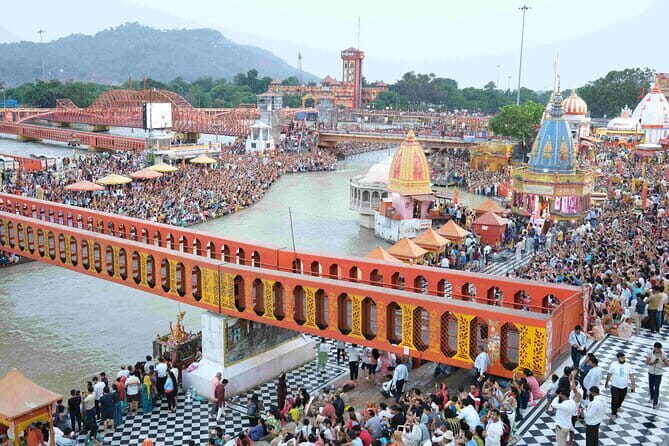
- Har Ki Pauri: temples, pilgrims, and the river as the main actor
- Evening Ganga Aarti: getting the seat, learning the ritual
- Price and logistics: is $27 good value?
- How to prepare so the walk feels easy
- Who this tour suits best (and who might prefer something else)
- Should you book this Haridwar guided walk?
- FAQ
- How long is the guided Haridwar walk?
- What time does the tour start?
- Where do I meet the guide?
- Is transportation included?
- What’s included in the price?
- Is lunch included?
- Do I get seating for the Evening Ganga Aarti?
- What temples and areas are visited?
- What is the cancellation policy?
Key highlights at a glance
- Maya Devi Temple start point: a Shakti Peeth connection and local-name history for Haridwar
- Bara Bazar + market Shiva temple: street-level spirituality, not just monuments
- Kushavarta Ghat stop: a short detour with direct ghat context near Har Ki Pauri
- Evening Ganga Aarti with seating: you’re not left to guess where to stand
- Small pooja with a pundit: hands-on ritual participation, kept simple
- English/Hindi local guide: explanations that match what you’re seeing as you walk
Why a 2:00 pm Haridwar walk works so well

Haridwar is a place where timing changes everything. A 2:00 pm start means you’re out during the afternoon flow, then you slide into the evening when the river becomes the main stage. You’ll go from temple and market rhythm to the ghats’ ritual rhythm without the awkward switch from day-tour mode to night-tour mode.
This is also the kind of tour where a guide matters. The city has layered meanings—temples, ash-rams, and ghats all talk to each other. A good local guide helps you connect the dots fast, so you’re not just taking photos of stone steps and lamp smoke.
You’ll move at a walking pace for roughly 5 to 6 hours. Since lunch isn’t included and the tour finishes before dinner time, I’d treat it like an afternoon program: eat earlier, carry a bottle of water if you like, and let the tour handle the spiritual focus.
You can also read our reviews of more tours and experiences in Haridwar.

Maya Devi Temple: where the city story gets its first chapter
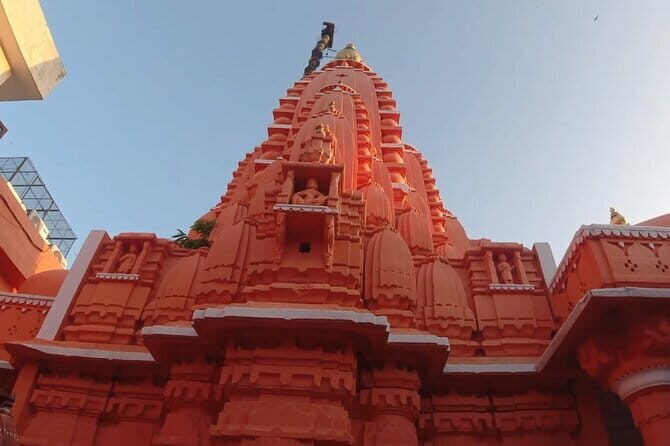
You start at Hotel La Casa Haridwar on Bilkeshwar Road, opposite Gurudwara near Balmiki Chowk by Birla Ghat. From there, the route leads you to Maya Devi Temple, one of the older Shakti Peeth shrines in the area.
What I find meaningful here is the temple’s link to the city’s identity. The tour explains that Haridwar has even been called Mayapur in older books because of this shrine. That little detail changes how you look at the place. It stops being one more temple and turns into a starting point for why Haridwar matters to devotees.
You’ll spend about 30 minutes at Maya Devi Temple. Admission is free. That’s a smart way to begin: enough time to get oriented, without rushing past the symbolism.
Bara Bazar and a Shiva temple you might miss in plain sight
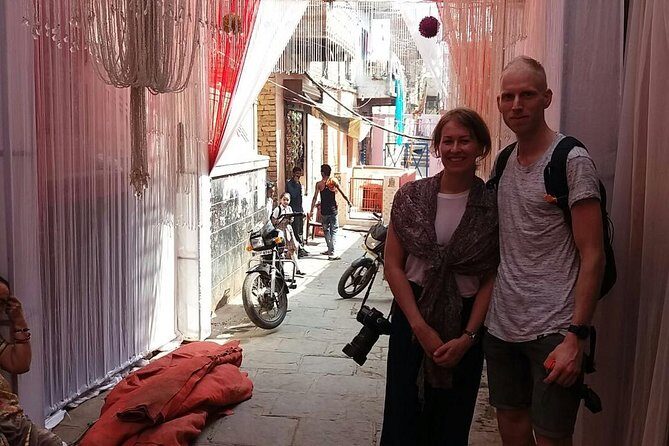
After the temple start, you head through Bara Bazar and along market areas where Haridwar feels like a living city—not a themed walkway. This is one of the tour’s best values for the money: you get local context while you’re surrounded by the very environment pilgrims and shoppers move through daily.
You’ll also visit a hidden Shiva Temple in the Market. The listing doesn’t describe it like a landmark, which is exactly the point. Market spirituality can be easy to overlook if you arrive without guidance. With a guide, you learn what you’re looking at and why it’s placed where it is—near the flow of daily life.
This portion is about perception. You start noticing smaller gestures: where people pause, how they show respect, and how the market doesn’t compete with religion—it supports it.
Anand Bhairav Ashram: learning what an ashram is for
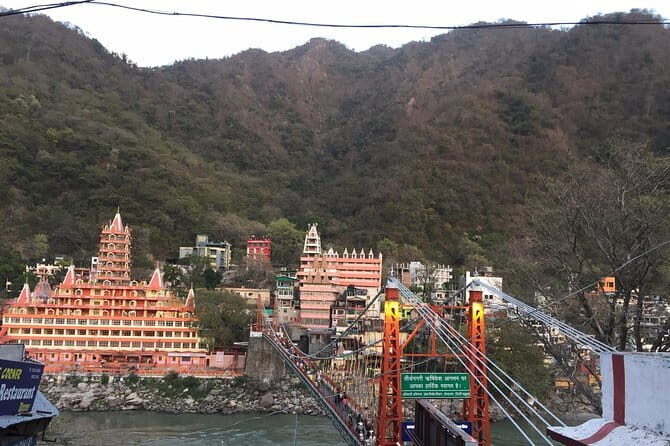
The route includes a stop at Anand Bhairav Ashram, where you’ll learn about the purpose of an ashram. Even if you’ve seen ashrams elsewhere, the context matters here because the ashram sits within the same spiritual geography as the ghats and main temples.
You’ll get explanations from a professional, local, experienced guide in either English or Hindi. That bilingual support is practical. If you speak even a little Hindi, it also helps you follow along as the city’s words and rhythms come through.
I like this stop because it keeps the tour from becoming only a checklist. The ashram piece helps explain the larger system: not just rituals, but the thinking behind them.
Kushavarta Ghat: a short stop with big ghat context
Next is Kushavarta Ghat, described as a famous ghat near Har Ki Pauri. You spend about 15 minutes here, with admission included as part of the tour.
This is a “connector stop.” You’re not meant to linger for hours. You’re meant to understand why the area matters before you hit the busiest ghat in the city. In practice, that makes the Har Ki Pauri section land harder, because you arrive with a bit of context instead of arriving cold.
Kushavarta Ghat also supports the tour’s ritual education theme. You learn about Hindu rituals connected to the river and ghat life, so the river isn’t just a photo backdrop—it becomes part of the story you’re hearing.
You can also read our reviews of more guided tours in Haridwar
Har Ki Pauri: temples, pilgrims, and the river as the main actor

When you reach Har Ki Pauri, you’ll move through the main market area first. That transition matters. You go from storefront energy and local activity into the space where pilgrims gather for ritual bathing and river worship.
The tour’s pace keeps you moving—about 1 hour total at this section—so you’re not stuck waiting in one spot too long. You’ll pass temples and shops along the way. That’s one of those real travel moments where you realize Haridwar isn’t built only for ceremonies; it’s built for daily movement around the sacred center.
What I’d pay attention to during this phase is the shift in behavior. As you approach the ghats, people start acting with more ceremony. If you keep your eyes open, you’ll see small actions that match what the guide is explaining—like when and why people pause, offer, and watch.
Evening Ganga Aarti: getting the seat, learning the ritual
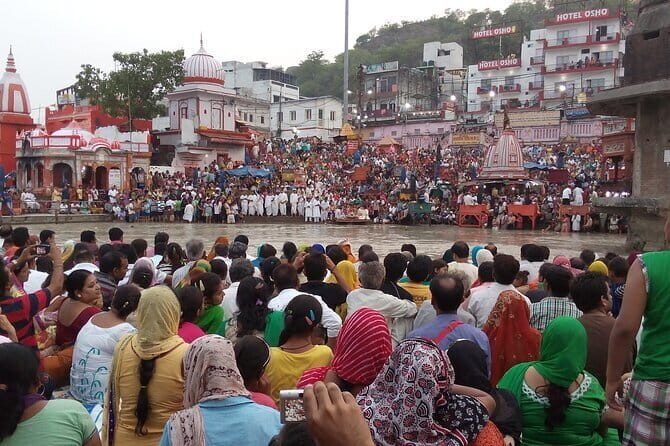
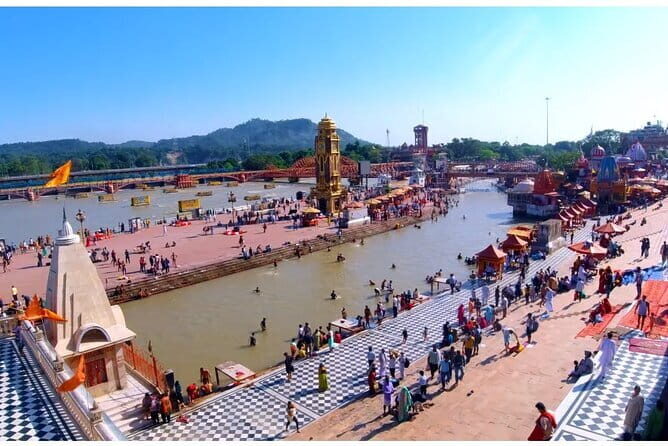
The highlight of the evening is the Ganga Aarti at Haridwar at Har Ki Pauri. The tour emphasizes that a visit to Haridwar isn’t complete without seeing the aarti here. And it’s scheduled twice daily—morning and evening every day—so Har Ki Pauri becomes a daily stage for devotion.
On this walk, you reach the evening ceremony with time to settle. You’ll have a seating arrangement and, importantly, a small pooja led by a pundit as part of the experience. That’s a big deal for value, because the hardest part of ceremonies like this is usually logistics: where you stand, when you arrive, and whether you’re able to participate without blocking someone else.
You’ll also get guidance on the Ganga River and Hindu rituals performed at the holy river. In plain terms: you’ll understand what you’re seeing beyond the spectacle of lamps and chants. That’s what turns a good photo opportunity into a memorable cultural moment.
Expect about 1 hour for the aarti and related explanation. If you’re sensitive to smoke from lamps or incense, be mindful near the water’s edge, where air can shift. If you can, keep your breathing calm and focus on the rhythm the guide is describing.
Price and logistics: is $27 good value?
At $27 per person, this tour is priced as an efficient, guided introduction to Haridwar’s sacred core. The key value is that you’re paying for coordination plus interpretation—walking a route you might not piece together on your own, and getting organized seating for the main ceremony.
Here’s what’s included:
- English and Hindi speaking guide
- Seating arrangement for the evening Ganga Aarti
- Small pooja with a pundit
- Bottled water
- GST
What’s not included:
- Private transportation
- Lunch (the tour ends before dinner time; take lunch before you go)
You’ll also receive a mobile ticket, and there are group discounts. Another practical plus: this is listed as a private tour/activity for your group, which usually means you won’t be fighting through unrelated strangers to follow the guide.
One more scheduling detail I think you should plan for: this is often booked about 25 days in advance. If you’re traveling near peak season or on a day when you really want the evening slot, don’t wait.
How to prepare so the walk feels easy
The tour is designed for most people who can walk, but you should still treat it as an afternoon walk through active areas. Bring comfortable shoes. Haridwar is all about steps—temple steps, ghat steps, and market pavement that can be crowded.
Since lunch isn’t included, eat before 2:00 pm. During the tour, you can buy light snacks in shops, so you’re not stuck, but plan so you’re not making hunger decisions while you’re trying to focus on the ceremony.
Also, keep a simple mindset: this isn’t a museum tour. It’s religion in motion. If you show up curious and a little flexible, the guide’s explanations land better and the small stops feel worth the time.
Who this tour suits best (and who might prefer something else)
This guided Haridwar walk is a strong fit if you want:
- A guided route that connects temples, markets, and ghats
- A clear plan for the evening Ganga Aarti, with seating
- Explanations in English or Hindi that help you understand what you’re seeing
It may be less ideal if:
- You don’t enjoy walking through crowded religious areas
- You want long free time at just one ghat or temple
- You’re only interested in broad landmarks and don’t care about ritual context
If you’re traveling with someone who likes spirituality but gets impatient with vague itineraries, this format is usually a good match.
Should you book this Haridwar guided walk?
I’d book it if you want an efficient afternoon that ends with one of Haridwar’s main events, without the common headaches of finding a good spot for aarti. The standout value is the combination of structured walking + reserved seating + a small pooja. That trio turns a potentially chaotic experience into something you can actually follow.
I would not book it if you’re expecting a long, slow, minimalist walk with lots of downtime. This is active. It’s religious. It’s people-moving. If that sounds fun rather than stressful, you’re in the right place.
FAQ
How long is the guided Haridwar walk?
The tour lasts about 5 to 6 hours.
What time does the tour start?
It starts at 2:00 pm.
Where do I meet the guide?
Meet at Hotel La Casa Haridwar on Bilkeshwar Road, opposite Gurudwara near Balmiki Chowk, by Birla Ghat, Haridwar, Uttarakhand 249401, India.
Is transportation included?
Private transportation is not included.
What’s included in the price?
Included are an English and Hindi speaking guide, seating arrangement and a small pooja by a pundit, bottled water, and GST.
Is lunch included?
No. Take lunch before the tour. The tour ends before dinner time, and you can buy light snacks during the walk.
Do I get seating for the Evening Ganga Aarti?
Yes. Seating arrangement is included for the evening Ganga Aarti at Har Ki Pauri.
What temples and areas are visited?
You’ll visit Maya Devi Temple, go through Bara Bazar and the market area, see a hidden Shiva Temple in the market, stop at Anand Bhairav Ashram, visit Kushavarta Ghat, and reach Har Ki Pauri.
What is the cancellation policy?
Free cancellation is available. You can cancel up to 24 hours in advance for a full refund.