REVIEW · JAIPUR
Private Full-Day Jaipur Guided Tour with Monkey Temple
Book on GetYourGuide →Operated by Jaipur City Tour Travels · Bookable on GetYourGuide
Jaipur in one day, with no stress. I love the private air-conditioned car and a route that strings together Jaipur’s top sights without you guessing your way through traffic. I also like that you get a real local guide to explain what you’re seeing, not just drop-off photos. The one thing to watch: monument entrance fees and lunch aren’t included, so you’ll want cash ready.
This is the kind of day where you can keep your energy for looking, not organizing. You’ll start with the face of Jaipur at Hawa Mahal, then swing past the geometric calm of Panna Meena ka Kund, and end with the Monkey Temple complex (Galtaji) built around those stacked water-tank systems. If you’re hoping for zero walking, plan for a fair bit of it around forts, palaces, and temples.
In This Review
- Key highlights people actually care about
- How a private Jaipur day stays sane
- Hawa Mahal: the photo stop that actually matters
- Panna Meena ka Kund: step geometry you can feel
- Amber Fort and Jal Mahal: red sandstone drama, plus a palace in water
- Gaitor Ki Chhatriyan: cenotaphs that make royalty feel human
- City Palace and Jantar Mantar: power and science in the same day
- Monkey Temple (Galtaji): kunds, pavilions, and the real rules
- Markets and food street time: browse without getting lost
- Price and value: what $13 covers, and what you’ll add on
- Transport, timing, and group size realities
- Smart packing for Jaipur temples and forts
- Should you book this Jaipur Guided Tour with Monkey Temple?
- FAQ
- How long is the private Jaipur guided tour with Monkey Temple?
- What’s included in the price?
- Are monument entrance fees included?
- Is lunch included?
- Where are the pickup and drop-off locations?
- What languages are available for the host or greeter?
- What car do we get for different group sizes?
- What should I bring and wear for temple stops?
- Are there any restrictions on what I can bring?
- Can I cancel for free, or pay later?
Key highlights people actually care about
- Private, air-conditioned transport so the day stays comfortable
- Guided explanations at major monuments (photo stops + proper time inside)
- Amber Fort plus Jal Mahal in one smooth stretch
- Jantar Mantar for the wow-factor of old-school astronomy
- Monkey Temple (Galtaji) with kunds and Rajasthan-style pavilions
- Markets and street-food browsing time built into the day
How a private Jaipur day stays sane
A DIY Jaipur day can work, but it gets messy fast: tickets, timing, lanes of traffic, and the constant question of where you should go next. This tour flips that. You get private transport, and the day is paced with specific photo stops and guided visits, so you spend your mental energy on the sights.
It’s also genuinely useful that the driver and guide language support runs through English, German, French, Spanish, and Italian. You’ll move through explanations faster when you can actually understand the details.
If you’re a solo traveler, this private setup can feel especially nice. One person I talked with loved how they were looked after throughout the day and didn’t feel rushed.
You can also read our reviews of more guided tours in Jaipur


Hawa Mahal: the photo stop that actually matters
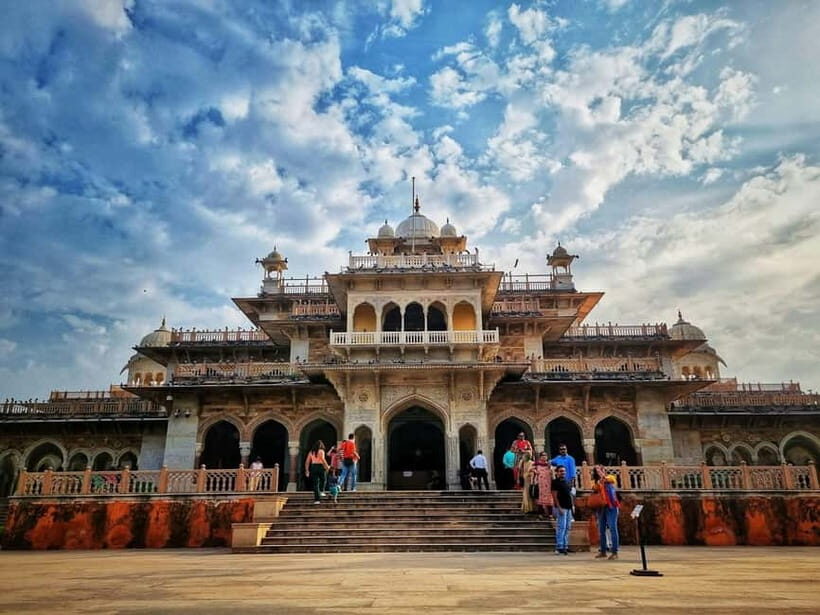
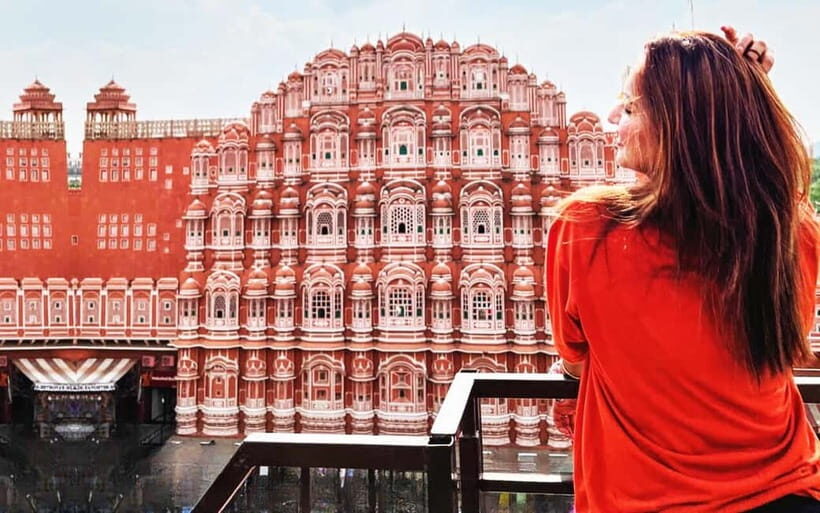
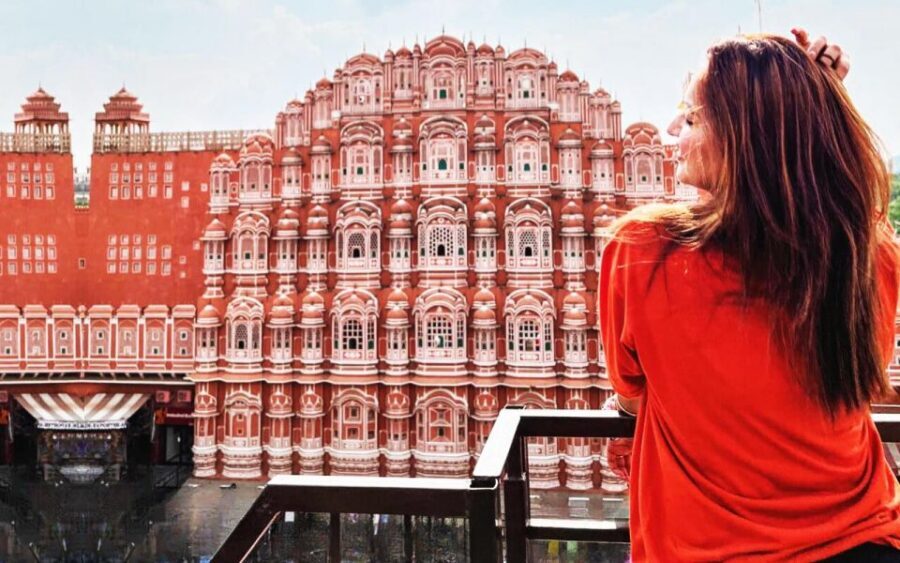
Hawa Mahal is one of those places where a quick look can feel like you did nothing. The good news: this tour gives you more than a roadside glance. You’ll get a photo stop and time to see the Palace of Winds up close, plus guided context on the famous lattice design that covers the facade.
Why it’s worth your attention: the building’s whole look is tied to how the city’s rulers wanted visibility and airflow, and the lattice makes the palace look like it’s made of lace. Even if you’ve seen pictures, standing there helps you understand why the design became an icon.
Practical tip: bring your camera and take a few minutes from different angles. The structure has depth, and the light can change quickly as you move.
Panna Meena ka Kund: step geometry you can feel
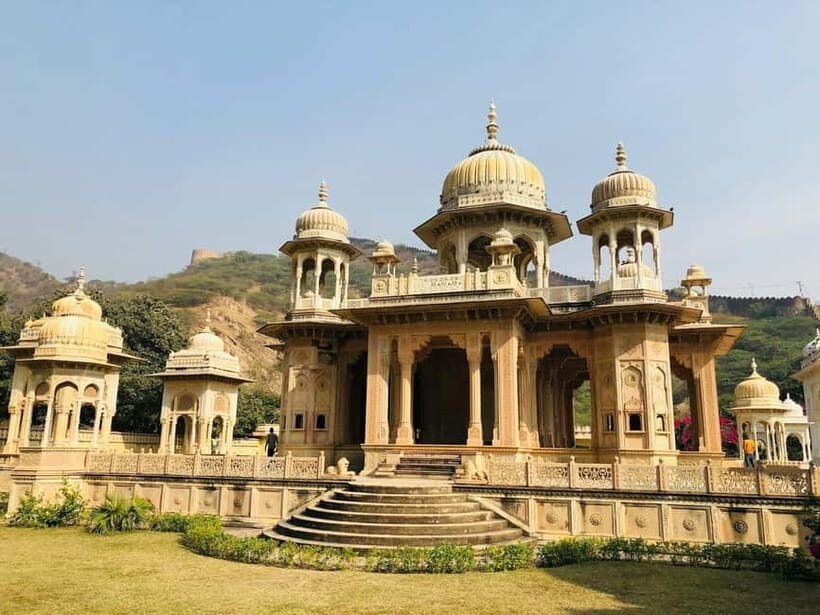
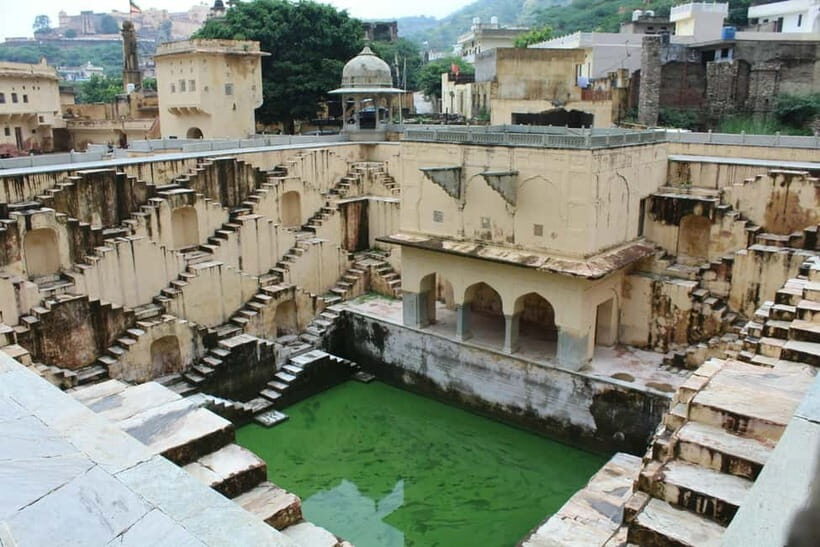
Panna Meena ka Kund (the stepwell) is the kind of sight people either skip or remember for weeks. This stop is short but focused, with time to walk and see the distinctive arrangement of steps leading down to a well.
What you’ll notice when you’re there: the steps form a clear, patterned geometry. It’s not just old architecture—it’s a functional space that also became a visual statement. If you like buildings that are both practical and artistic, this is your moment.
The main tradeoff is time. You’ll have about half an hour here, so if you’re the type who loves to linger, plan to take your own quick photos and then rely on your guide’s explanation.
Amber Fort and Jal Mahal: red sandstone drama, plus a palace in water
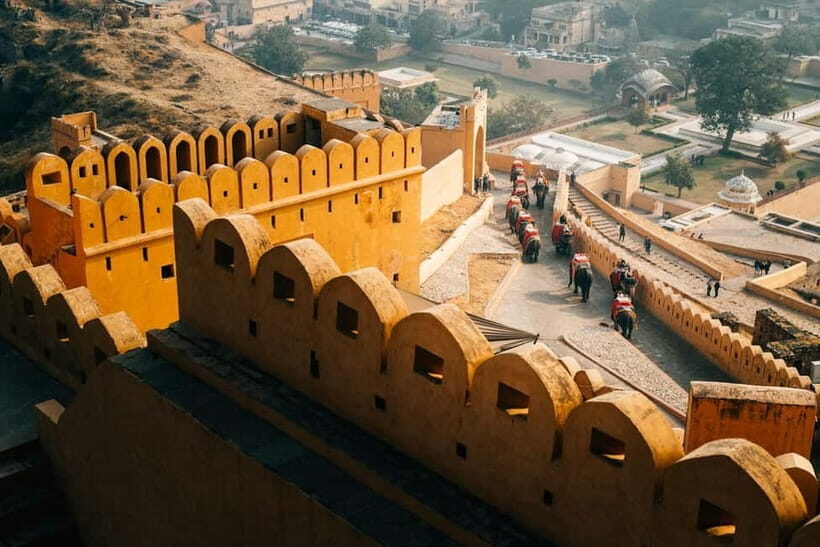
Amber Fort is the headline for many Jaipur trips, and this one treats it like it deserves attention. You’ll have time to visit Amber Fort with guided commentary, plus room for a walk and self-paced exploring.
You’ll see why it’s often described as a showpiece: red sandstone and marble elements work together, and the fort feels built for views as much as for defense. If you enjoy architecture, you’ll likely keep spotting small design details as you move through.
Then comes Jal Mahal, the palace partly submerged in water. It’s a quick stop, but it adds contrast. Amber Fort is solid and commanding; Jal Mahal is calm, reflective, and a little surreal because it looks like it’s floating between land and water.
Watch-outs:
- It’s a lot of visual impact in a single block, so take short breaks when you can.
- Comfortable shoes matter here. Even with guided pacing, there are walk segments.
Gaitor Ki Chhatriyan: cenotaphs that make royalty feel human
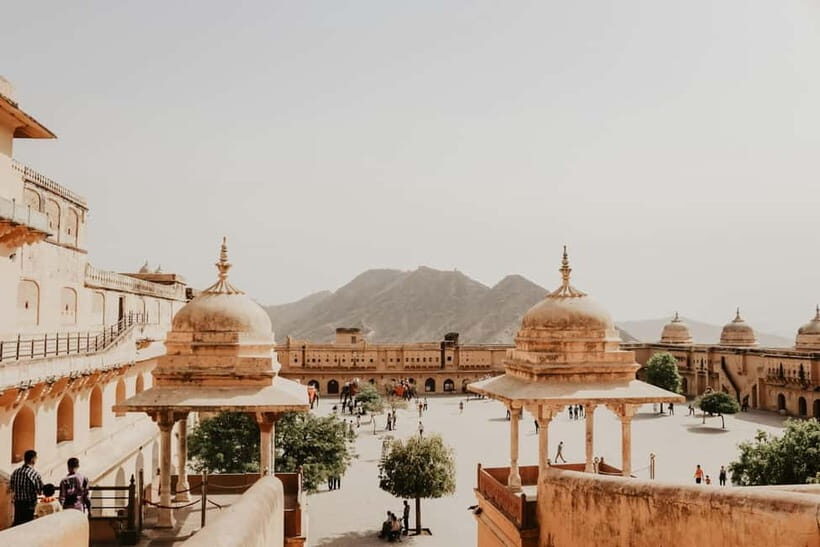
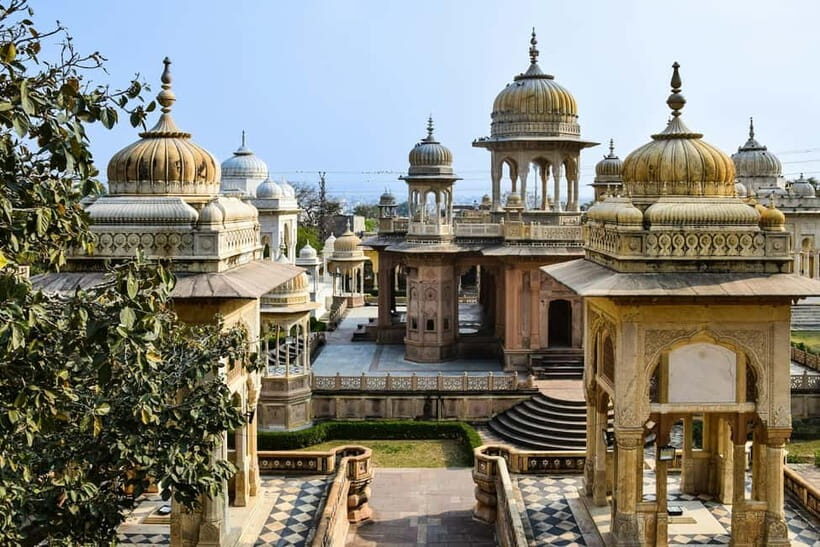
Royal Gaitor Tumbas (also known as Gaitor Ki Chhatriyan) shifts the mood. Instead of palace life and courtyards, you’re looking at cenotaphs—memorial structures tied to Maharajas and their families.
Why this stop works: it gives you a more grounded sense of who these rulers were, not just what they built. The architecture is the focus, but it also feels reflective.
This is also one of the better places to slow down. You’ll have about an hour, which is enough to walk, take photos, and actually read the structure with your eyes instead of treating it like a checkpoint.
You can also read our reviews of more private tours in Jaipur





City Palace and Jantar Mantar: power and science in the same day
City Palace is where Jaipur’s royal legacy is still visible. Part of it is a museum, but much remains a residence. That mix—museum pieces plus living space—helps you understand it as a continuing institution, not only a historical set.
With guided time, you’ll get context about the Kachwaha Rajput clan and how the palace functions within Jaipur today. Even if you’re not a museum person, it’s worth it because you can look at rooms and corridors and connect them to why the palace was built the way it was.
Then you move to Jantar Mantar, the observatory with astronomical instruments. Here’s the payoff: these aren’t just decorative monuments. They’re built tools for measuring the sky, and they show how seriously science was integrated into city life.
If you like a wow moment, Jantar Mantar delivers. Expect intricate shapes and scale that make you stop and stare for longer than you planned.
Monkey Temple (Galtaji): kunds, pavilions, and the real rules
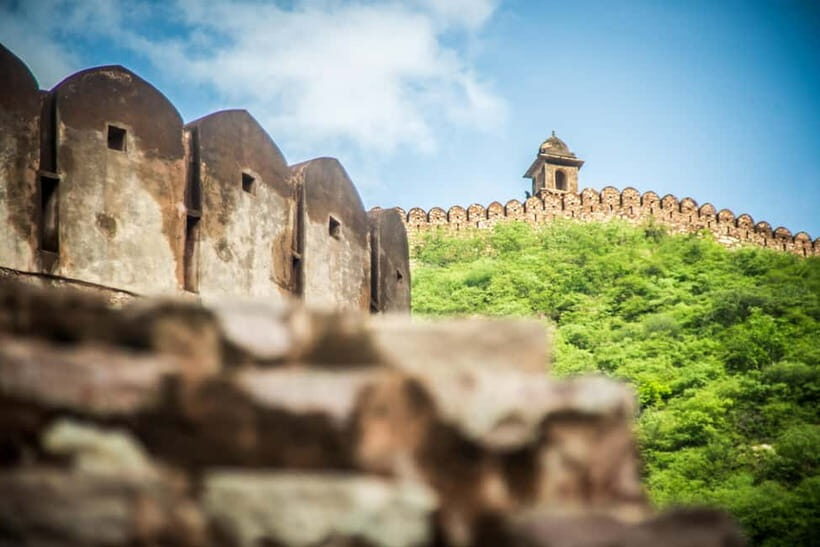
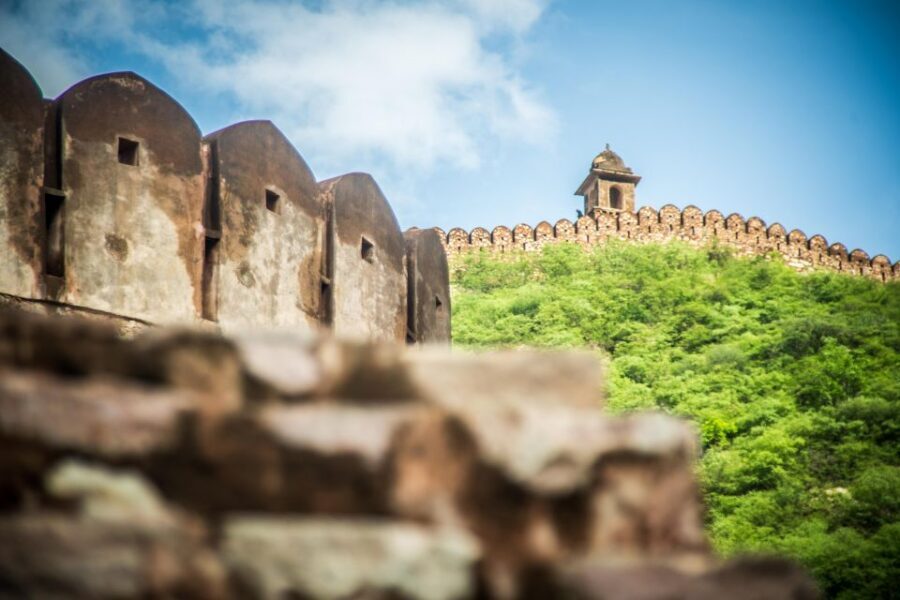
Monkey Temple is officially connected to Galtaji, and the complex gets multiple names. The big draw is the 18th-century temple complex built around those multi-storied water tank systems called kunds, which lead up to the central temple.
This stop feels different from the others in two ways:
- The architecture is layered, so you’re moving through a series of spaces rather than just viewing one main building.
- The environment is active. You’re in a place where monkeys are part of the setting, so you’ll want to follow the local guidance and keep your belongings secure.
You’ll see traditional rounded roofs and Rajasthan-style pavilions. It’s also described as partly abandoned in places, which adds to the atmosphere.
Tip that’s practical, not dramatic: wear clothes you can move in and comfortable shoes. Temple areas also have a smart-casual expectation. Short shorts and sleeveless tops are not recommended for temple visits.
Markets and food street time: browse without getting lost
Jaipur’s markets and food streets are a major part of the city’s everyday feel. This tour builds in time for a leisure stroll through the narrow lanes and market areas, so you can browse goods from local vendors without turning it into a scavenger hunt.
Two things to do with this slot:
- If you want street food, use this time to find a place your guide recommends, since it’s easy to get overwhelmed when you’re hungry.
- If you prefer shopping, treat this as a browse-first window. Pick up a few small items now, and if you still love them later, you can decide.
This is one of the better parts of the day if you don’t want every minute to be museum mode.
Price and value: what $13 covers, and what you’ll add on
At about $13 per person, the value is mostly in the structure: private transport in an air-conditioned car, guided explanations, and the work of handling logistics like parking. You’re paying for a planned route and a smoother flow between sights—especially helpful in a large city like Jaipur.
What you should expect to pay separately:
- Monuments entrance fees (not included)
- Lunch or dinner (not included)
That’s the key tradeoff. The tour gives you guidance and comfort, but it doesn’t feed you. A practical approach is to bring some cash for snacks and keep your larger meal budget flexible.
Also note the tour is designed as a full-day commitment (about 9 hours). If you’re short on time, this may be the best way to cover many top sights in one shot, but it’s still a long day.
Transport, timing, and group size realities
You’ll ride in an AC car with a driver. The size depends on your group:
- 1–3 people: AC 4-seater sedan
- 4–5 people: AC 6-seater car
- 6–10 people: AC 10-seater tempo traveler
This matters because comfort changes with car size, especially in hot weather. The private setup also means you’re not bouncing between multiple groups.
Pickup can be from Jaipur or Kukas, and drop-off can be back in Kukas or Jaipur. If you’re arriving by airport or train and request pickup, the driver waits with a sign showing your name.
One extra timing tip you should take seriously: go earlier if you can. A guide from a previous group recommended morning departure because it’s less crowded at the start. Even if you can’t control your exact timing, starting sooner usually makes the day feel easier.
Smart packing for Jaipur temples and forts
Here’s what you’ll want to have on you:
- Passport or ID card (a valid passport is required on the day of travel)
- Comfortable shoes (you’ll walk)
- Camera
- Comfortable clothes
- Cash
Dress code matters for temples. Smart casual is expected, and you should avoid short shorts or sleeveless tops. If you’re wearing something borderline, it can slow things down right when you want to see Monkey Temple or other temple stops.
Finally, follow the basic vehicle rules:
- No pets
- No alcohol and drugs
- No alcoholic drinks in the vehicle
Should you book this Jaipur Guided Tour with Monkey Temple?
Book it if you want a tight Jaipur hits-you-all-day plan with private comfort and real explanations. It’s a strong choice for first-timers who want Hawa Mahal, Amber Fort, City Palace, Jantar Mantar, and Monkey Temple in one day without juggling tickets and timing.
Consider skipping (or choosing a different pace) if you have mobility limits or pre-existing medical conditions. The day includes walking at forts, palaces, stepwell areas, and temple grounds.
If you’re the type who likes photos but also wants context, this tour fits. And if you care about getting good help for both history and practical picture moments, you’ll likely appreciate the guides who have been praised for clear English and careful driving—people like Vishan Singh and Abdul have been singled out for that kind of support.
FAQ
How long is the private Jaipur guided tour with Monkey Temple?
The tour runs for 9 hours.
What’s included in the price?
It includes transport by a private air-conditioned car, bottles of mineral water in the car, all taxes/fees/handling charges, fuel surcharge, and parking fee. A private local guide is available as an option.
Are monument entrance fees included?
No. Monument entrance fees are not included.
Is lunch included?
No. Lunch or dinner is not included.
Where are the pickup and drop-off locations?
Pickup is available from Jaipur or Kukas, and drop-off is available in Kukas or Jaipur.
What languages are available for the host or greeter?
English, German, French, Spanish, and Italian.
What car do we get for different group sizes?
For 1–3 people you’ll get an AC 4-seater sedan. For 4–5 people, an AC 6-seater car. For 6–10 people, an AC 10-seater tempo traveler.
What should I bring and wear for temple stops?
Bring a passport or ID card, comfortable shoes, a camera, comfortable clothes, and cash. For temples, dress smart casual, and short shorts or sleeveless tops are not recommended.
Are there any restrictions on what I can bring?
Pets are not allowed. Alcohol and drugs are not allowed, and no alcoholic drinks are permitted in the vehicle.
Can I cancel for free, or pay later?
You can cancel up to 24 hours in advance for a full refund. You can also reserve now and pay later, with an option to keep travel plans flexible.