REVIEW · NEW DELHI
Golden Triangle of India : Delhi | Agra | Jaipur
Book on Viator →Operated by MTA Destination Management Company · Bookable on Viator
Three cities, one smooth plan. This private Golden Triangle route is built for low-stress sightseeing, with a chauffeured car and an English guide at the big monuments. You’ll cover Delhi, the Taj Mahal in Agra, and Jaipur’s major highlights without juggling tickets, transport, or timing.
What I like most is how efficient it feels: Old Delhi starts with Jama Masjid, then you slide into Chandni Chowk on a rickshaw ride. I also love that the core sights are guided, so you’re not just looking at stones—you’re getting the story as you go.
The main thing to watch is time spent on extras. Meals are not included in the package, and one concern that shows up with private guides is extra stops that can turn into paid shopping or dining. If that’s not your style, set your boundaries early and keep an eye on what costs extra.
In This Review
- Key highlights that matter
- Why this Golden Triangle loop works in 5 days
- Getting picked up in Delhi: Gate 5 meet-up and mobile ticket
- Day 1 in Old Delhi: Jama Masjid, rickshaw lanes, and Gandhi’s Raj Ghat
- Rajpath views and Qutub Minar before hotel check-in
- Day 2 Agra: Taj Mahal first, then Agra Fort
- Day 3 on the road: Fatehpur Sikri and Chand Baori
- Day 4 Jaipur core: City Palace, Jantar Mantar, and Hawa Mahal photos
- Day 5: smooth drop-off back in Delhi
- What $769 per person really buys you here
- Guide style, shopping stops, and one red flag to manage
- Hotel nights: what you can count on and what you can’t
- This tour fits best if you want guided monument time
- Should you book this private Golden Triangle trip?
- FAQ
- What’s included in the price?
- How long is the tour and how many nights are you staying?
- Where do you meet in Delhi?
- Is the tour private?
- Are entrance fees included for monuments?
- Are meals included?
- What transport do you use?
- Can you cancel for free?
Key highlights that matter
- Meet-and-greet pickup in Delhi with an MTA representative holding a personalized name placard outside Gate 5
- Old Delhi rickshaw ride through the Chandni Chowk lanes after Jama Masjid
- UNESCO sights plus Mughal power: Qutub Minar, Taj Mahal, Agra Fort
- Akbar’s ghost city and a famous stepwell: Fatehpur Sikri and Chand Baori in Abhaneri
- Jaipur’s science and royal rooms at Jantar Mantar and City Palace
- Water + entry fees included, plus hotel/port pickup and drop-off
Why this Golden Triangle loop works in 5 days
The Golden Triangle is popular for a reason. Delhi gives you modern India plus deep old-city layers, Agra delivers the iconic Mughal masterpieces, and Jaipur adds royal architecture and clever geometry.
Doing it as a private, chauffeured trip means you stay in motion without the stress of figuring out routes, local transport switches, or where to line up. It also helps that this is a group-only experience, so you’re not fighting crowds for your guide’s attention.
You get a clear rhythm too: two days in the Delhi/Agra core, one travel day packed with two high-impact stops, and then a full day of Jaipur monuments.
You can also read our reviews of more tours and experiences in New Delhi.



Getting picked up in Delhi: Gate 5 meet-up and mobile ticket
Your day starts at 9:00 am, with an arrival meeting setup designed to reduce the first-day chaos. You’ll meet your MTA representative outside Gate 5 holding a personalized name placard, and you’ll get your bearings fast.
You also get a mobile ticket, which is useful in India where paperwork can slow you down. The tour includes hotel/port pickup and drop-off, so you’re not stuck managing transfers at the start or end.
This is a small detail, but it matters. When you’re arriving from a flight, shaving off friction is worth real money.
Day 1 in Old Delhi: Jama Masjid, rickshaw lanes, and Gandhi’s Raj Ghat
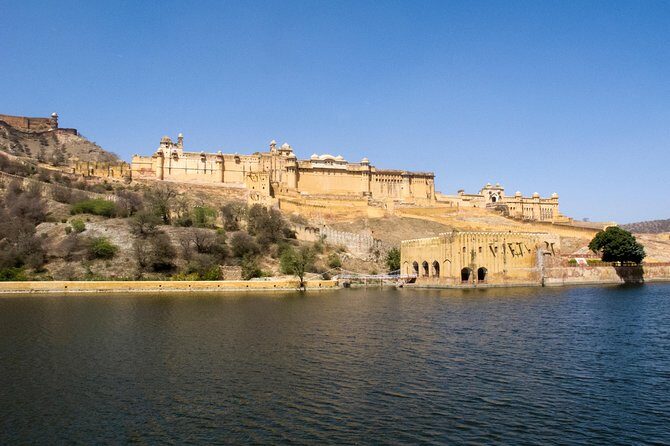
Day 1 is built around contrasts, and that’s the charm. You start at Jama Masjid, a major landmark in Old Delhi (Shahjahanabad), then step into street life with a rickshaw ride through the lanes around Chandni Chowk Market.
That rickshaw portion is more than a photo moment. It’s a low-effort way to feel the scale and energy of Old Delhi without walking yourself into exhaustion on day one. If you want the city’s texture, this is the easiest route into it.
Then comes a slower, reflective stop: Raj Ghat, the memorial marking Mahatma Gandhi’s final resting place. It’s an important modern-history checkpoint, and it balances the heavy architecture and market noise you’ve already seen.
Rajpath views and Qutub Minar before hotel check-in
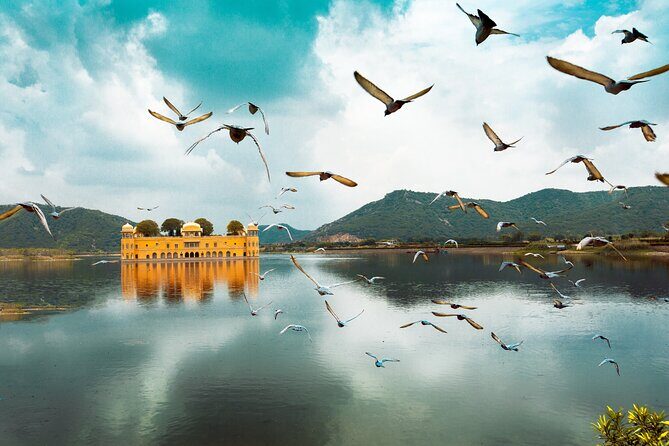
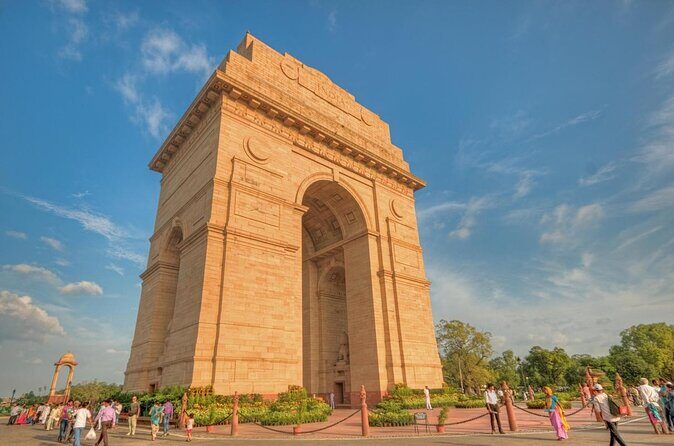
After Old Delhi, you get a change of pace with a scenic drive along Rajpath. From the car, you’ll view iconic government landmarks including Parliament House, President’s House, and India Gate.
This kind of drive-by section is useful because it gives context without eating your entire morning on logistics. You’re also mentally switching gears from narrow lanes to broad avenues, which helps the rest of the day land better.
You finish at Qutub Minar, a UNESCO World Heritage Site. After that, you check in and overnight in Delhi, so you’re not trying to compress too much into one late night.
Day 2 Agra: Taj Mahal first, then Agra Fort
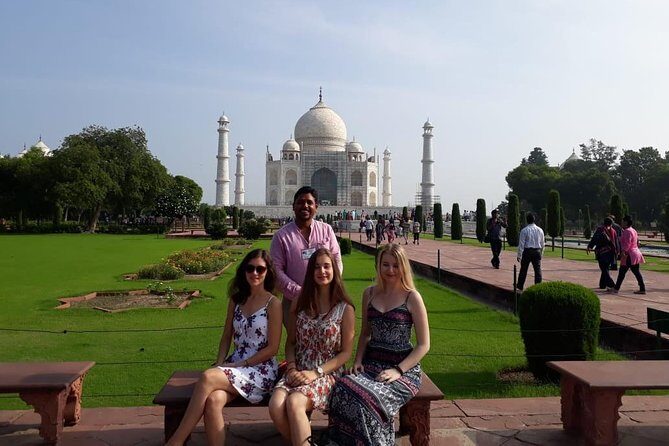
Agra’s schedule is clean and focused. You travel from Delhi, then start with the Taj Mahal, described on the tour as a symbol of love and Mughal architecture built by Emperor Shah Jahan in memory of Mumtaz Mahal.
The key value here is priority. Taj Mahal is the headliner, and starting your day there (rather than treating it as a late add-on) typically gives you the best chance to see it calmly and understand what you’re looking at.
Next you head to Agra Fort, a riverside Mughal complex that served as a residence for rulers. It’s tied to the broader Mughal story, built by Emperor Akbar in 1565 and expanded by later successors.
If you want a more complete picture of Mughal power than a single monument, this pairing works. Taj gives you the icon; Agra Fort gives you the political and residential setting behind the magic.


Day 3 on the road: Fatehpur Sikri and Chand Baori
This day is travel, but it’s not a wasted one. On the way to Jaipur you stop at Fatehpur Sikri, often called the Ghost City, built from red sandstone by Emperor Akbar and abandoned after about 12 years.
Even if you’re not a medieval-architecture fanatic, this stop helps explain why empires move and why cities rise and get left behind. It’s a monument you can read like a timeline.
Then you continue to Chand Baori in Abhaneri, the famous stepwell. The tour describes it as a 9th-century sandstone marvel, and it’s one of those places where geometry is the main attraction.
You close the day by continuing to Jaipur and checking into your hotel. This is a good structure: you get two major stops before you settle in, instead of arriving drained and trying to do too much later.
Day 4 Jaipur core: City Palace, Jantar Mantar, and Hawa Mahal photos
Jaipur day is where the trip shifts from Mughal legends into Rajput royal design and science.
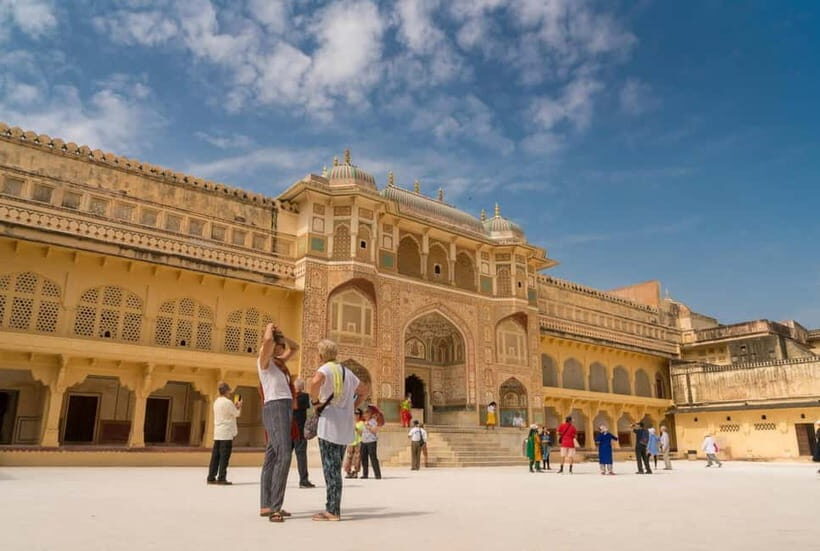
You begin with City Palace of Jaipur, a grand complex that includes the Maharaja’s private chambers and a museum. The tour highlights the museum’s collection of carpets and miniatures, which is a nice reminder that palace life included more than thrones.
Then you visit Jantar Mantar, a 17th-century astronomical observatory. You’ll see instruments including a 27-meter sundial, which is a great example of how rulers used math and engineering for real-world timekeeping.
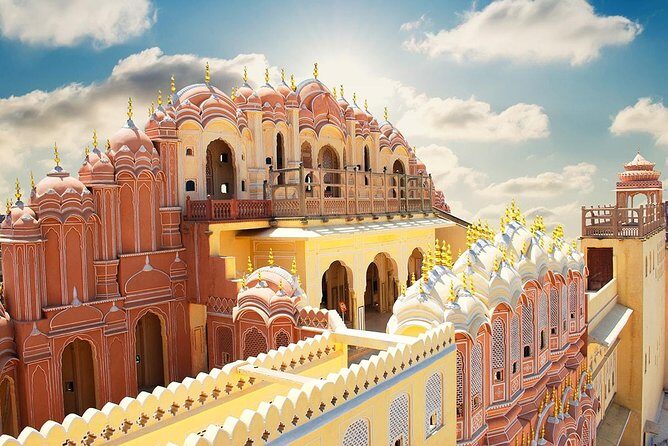
After that, there’s a market time note in the schedule (textiles are specifically called out). Then you get a photo stop at Hawa Mahal, the Palace of Winds, known for its lattice windows and iconic façade.
The Hawa Mahal stop is short by design, so treat it as a quick moment to frame the façade and move on. The longer, guided time is better spent at City Palace and Jantar Mantar, where you get the most context.
Day 5: smooth drop-off back in Delhi
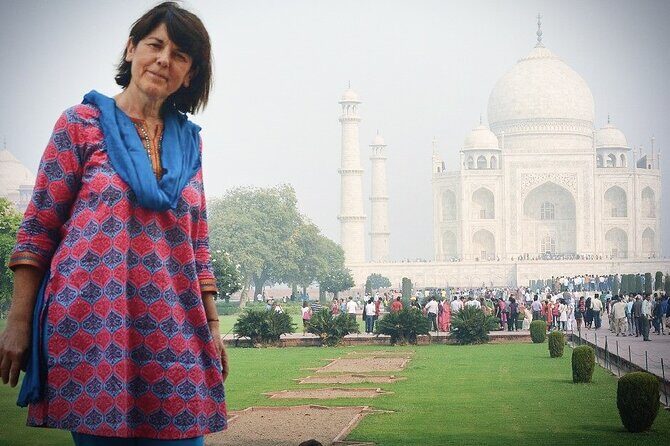
After breakfast, you head back to Delhi. On arrival, you’re dropped at your hotel or the airport, so the trip ends without another transfer scramble.
It’s a simple finish, but it’s a big deal. Late-day departures can be rough, and having a pre-arranged drop saves energy.
What $769 per person really buys you here
At $769 per person for roughly 5 days (including 4 nights of accommodation), you’re paying for a private setup with core costs already handled.
What’s included that often costs extra on your own:
- Private air-conditioned vehicle for all transfers and sightseeing
- Professional English-speaking tour guide for the sightseeing
- Monument entrance fees as per the program
- Rickshaw ride in Old Delhi
- Four nights’ accommodation on a twin-sharing basis
- Hotel/port pickup and drop-off
- Two bottles of water per traveler per day
- All applicable taxes
So the real value isn’t just the driving. It’s the way the tour bundles guide time, admissions, and transportation into one bill. That’s what makes the itinerary feel like one plan instead of a patchwork of tickets and ride apps.
If you’re traveling as two people and want fewer moving parts, the pricing can feel fair for the amount of guided access you get.
Guide style, shopping stops, and one red flag to manage
Private tours can be excellent, but they also give the guide more control over pacing. In one reported situation tied to a guide stop pattern, a couple described being taken to shops and then to a restaurant where they had to pay, with a total reported cost of 3200 rupees for two.
I can’t control your guide, but you can control your expectations. Since the package doesn’t list meals, ask upfront how shopping and dining stops work. If you want strictly monument time, say so early, and keep it simple: you’re here for Delhi, Agra, and Jaipur sights, not sales pitches.
Hotel nights: what you can count on and what you can’t
You get four nights’ accommodation included on a twin-sharing basis, plus transfers and admissions to keep everything structured.
One hotel name that shows up in the tour’s communications is Golden Tulip Agra. That at least tells you the tour provider is using established properties in key cities, not random motels.
What isn’t fully spelled out here is the full hotel list for each night. If hotel specifics matter to you, confirm the exact properties for each city before you lock in the booking.
This tour fits best if you want guided monument time
This works especially well if:
- You want private chauffeured transport and hate dealing with public transit on a tight schedule
- You like having an English-speaking guide at major stops so you don’t miss the meaning
- You’re okay with a packed plan that balances monuments in Delhi, Agra, and Jaipur
- You prefer to keep costs predictable since entry fees are included
It might be less ideal if you’re traveling ultra-budget and you’d rather pick your own timing, skip certain guided areas, and handle admissions and transport line-by-line.
Should you book this private Golden Triangle trip?
Yes, if you want a low-stress way to hit the Golden Triangle with real guide time. The included entrance fees, the rickshaw ride in Old Delhi, and the straightforward pacing from Taj Mahal to forts to Jaipur observatories make the trip feel organized.
Before you book, do two practical things:
- Ask whether your guide will schedule shopping or paid meal stops, and set your preference.
- Confirm the hotel names for each of the four nights, since only one example property is explicitly referenced here.
If your idea of travel is monuments with context, and you’d rather not spend your vacation negotiating logistics, this is a strong fit.
FAQ
What’s included in the price?
Accommodation on a twin-sharing basis for the included nights, a private air-conditioned vehicle for transfers and sightseeing, a professional English-speaking tour guide for sightseeing, monument entrance fees as per the program, the Old Delhi rickshaw ride, hotel/port pickup and drop-off, two bottles of water per traveler per day, and all applicable taxes.
How long is the tour and how many nights are you staying?
The duration is listed as about 5 days, with 4 nights of accommodation included.
Where do you meet in Delhi?
You meet an MTA representative outside Gate 5, holding a personalized name placard.
Is the tour private?
Yes. It’s described as a private tour/activity, with only your group participating.
Are entrance fees included for monuments?
Yes. Monument entrance fees are included as per the program, and each listed stop indicates tickets included.
Are meals included?
Meals and beverages are not included unless they’re specifically mentioned in the itinerary, so plan for meals at your own expense.
What transport do you use?
You travel in a private air-conditioned vehicle for all transfers and sightseeing.
Can you cancel for free?
Free cancellation is available up to 24 hours before the experience’s start time for a full refund, and cancellation can also happen if weather is poor or if minimum traveler numbers aren’t met (with an option for a different date or a full refund).