REVIEW · VARANASI
Guide francophone à varanasi – Rakesh
Book on Viator →Operated by Guide francophone à varanasi - Rakesh · Bookable on Viator
Varanasi feels personal with a local guide. With Rakesh, a francophone guide born and raised in the city, you’re not just sightseeing. You’re hearing how traditions, history, and faith connect to daily life in Banaras, including corners his family has known for generations.
I like the way this tour stays efficient without turning into a checklist. Over about 3 hours, you cover major ghats and important Shiva temples on foot, so you get orientation fast. One consideration: Manikarnika Ghat is a cremation ground, so if you prefer lighter stops, that part may feel intense.
In This Review
- Key highlights at a glance
- Why a francophone local guide matters in Varanasi
- A 3-hour loop from Dashashwamedh Ghat to Pita Maheshwar
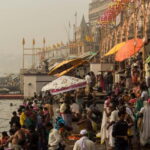
- Dashashwamedh Ghat: the river’s main entrance
- Vishalakshi Temple at Mir Ghat: devotion right on the banks
- Nepali (Kathwala) Temple: old name, distinctive style
- Manikarnika Ghat: a sacred cremation ground, approached with care
- Ratneshwar Mahadev Temple: a photographed temple with a noticeable lean
- Pita Maheshwar Mahadev Temple (Kashi Khand): a self-manifested Shivling
- How the tour handles crowds, narrow lanes, and big feelings
- Price and value: what $27.96 buys you in Varanasi
- Who this tour suits best (and who should think twice)
- Should you book Rakesh’s Varanasi walk?
- FAQ
- FAQ
- What language is the guide?
- Is it a private tour?
- How long is the tour?
- How much does it cost?
- Where do we meet?
- What sights are included?
- Are admissions included?
- Do I need a printed ticket?
- What if the weather is bad?
- Can I cancel and get a refund?
Key highlights at a glance
- Francophone guidance with local family ties: Rakesh grew up in Varanasi, so stories feel grounded, not rehearsed.
- A tight 3-hour circuit: You hit several standout sites without long waits or complicated planning.
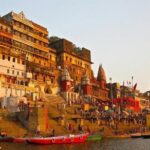
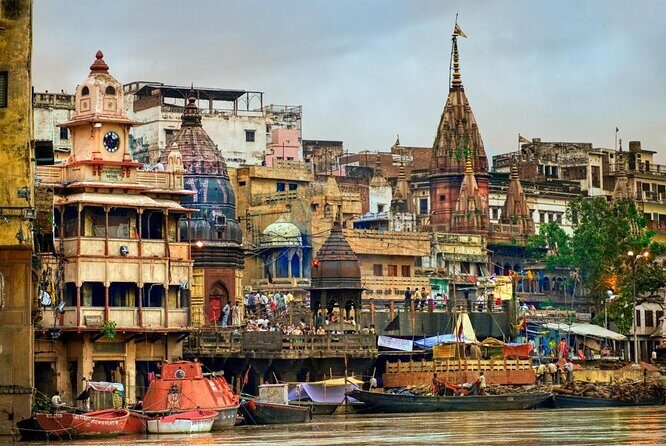
- Riverfront focus at real ghat level: Dashashwamedh and Mir Ghat bring you close to how the Ganga shapes the city.
- Respectful stops where meaning is physical: Manikarnika Ghat isn’t a photo prop; it’s part of an ongoing ritual landscape.
- Temple details you’d miss alone: From the leaning Ratneshwar Mahadev Temple to a self-manifested Shivling, the explanations help you “see” the symbolism.
Why a francophone local guide matters in Varanasi
Varanasi can overwhelm you fast. The streets near the ghats are crowded, people move in every direction, and the spiritual life is not something you can fully catch from guidebooks. That’s exactly where a local guide helps.
Rakesh’s main advantage is language and context. He’s a French-speaking guide, and his approach is built around helping you understand what you’re looking at—traditions, why temples exist in certain spots, and how the riverfront works as the city’s heartbeat. In practice, this means fewer blank stares and more “ah, that’s why this matters.”
Another big win is comfort with the route. You’ll be walking through areas where it’s easy to lose your bearings. A guide who knows the flow of the crowd makes the experience smoother and less stressful, especially during peak seasons when the city feels extra packed.
You can also read our reviews of more guided tours in Varanasi

A 3-hour loop from Dashashwamedh Ghat to Pita Maheshwar
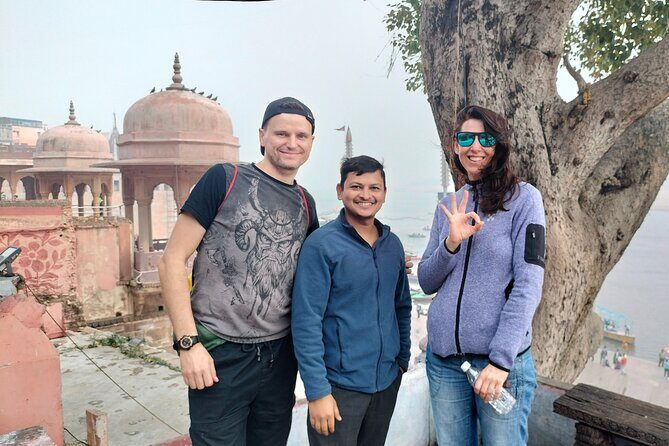
This is a private walking tour, so it’s only your group. You’ll start at Dashashwamedh Ghat Rd (Ghats of Varanasi, Godowlia) and end back at the same meeting point. The timing is set for an afternoon pace—about 3 hours—which is ideal if you want key sights without spending your whole day navigating.
You also get a mobile ticket, which is convenient in a city where paperwork and printed confirmations can become a hassle.
What’s especially useful: the itinerary mixes “main” sites (big riverfront ghats) with temples that add depth. You won’t just pass by structures. You’ll stop, look closely, and get meaning attached to what you see.
Dashashwamedh Ghat: the river’s main entrance
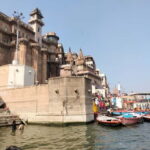
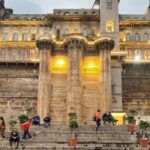
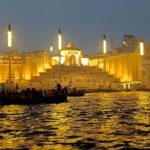
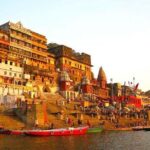
Your first stop is Dasaswamedh (Dashashwamedh) Ghat, a major ghat on the Ganga. It sits close to the Vishwanath Temple area, so the location naturally ties the river to devotion.
This is a good start because it gives you orientation. From here, the rest of Varanasi starts making more sense: the riverfront layout, the rhythm of daily movement, and how people gather at the water.
Practical note: it’s free at this stop, so you can focus on getting your first clear view of the riverfront without adding cost early on.
Vishalakshi Temple at Mir Ghat: devotion right on the banks
Next you head to the Vishalakshi Temple, dedicated to the goddess Vishalakshi, located at Mir Ghat along the Ganges in Varanasi. This stop tends to feel more intimate than the main ghat areas, because the temple connects strongly to the immediate surroundings.
What I like about starting the temple sequence here: you begin to see the city’s religious pattern. Instead of treating temples as separate monuments, the tour shows how faith is woven into the ghat setting where people live, pray, and move.
Admission is included here, so you’re not juggling ticket questions while your attention is on the scene.
Nepali (Kathwala) Temple: old name, distinctive style
Your third stop is the Nepali Temple, also known as Kathwala Temple (Shri Samrajeswar Pashupatinath Mahadev Mandir). It’s associated with names like Nepali Mandir and Kanthwala Mandir, and it’s even described as Mini Khajuraho—so you can expect a temple look with a strong decorative identity.
This is the kind of stop that works well on a short tour. It breaks the pattern and gives your eyes something different after the ghat settings. And when someone explains what the names point to, it’s easier to remember the site instead of forgetting it after the next crowd shift.
Admission is included, keeping the pacing smooth.

Manikarnika Ghat: a sacred cremation ground, approached with care
Then comes Manikarnika Ghat, one of the holiest cremation grounds among Varanasi’s sacred riverfronts, along the Ganga.
This stop is powerful and also not for everyone. Even if you’re comfortable with religious practices from around the world, cremation grounds carry a weight that photos alone can’t explain. A guide’s role here is mostly about framing and respect—helping you understand that you’re not watching a spectacle; you’re seeing an ongoing tradition tied to belief and release.
Admission is included, but the main “cost” is emotional. If you’re sensitive to death-related rituals or you get overwhelmed by intense scenes, you’ll want to mentally prepare before you arrive.
Ratneshwar Mahadev Temple: a photographed temple with a noticeable lean
After that, you’ll visit Ratneshwar Mahadev Mandir, one of the most photographed temples in Varanasi. Here’s a detail that makes it memorable: the temple, while apparently well-preserved, leans significantly toward the back.
This is a great stop for people who like architectural quirks and visual clues. It’s not just about name recognition. The leaning structure is something you can see quickly, and when you understand what makes it famous, it becomes easier to appreciate why locals point it out.
Admission is included here too, so your time goes to observing rather than arranging entry.
Pita Maheshwar Mahadev Temple (Kashi Khand): a self-manifested Shivling
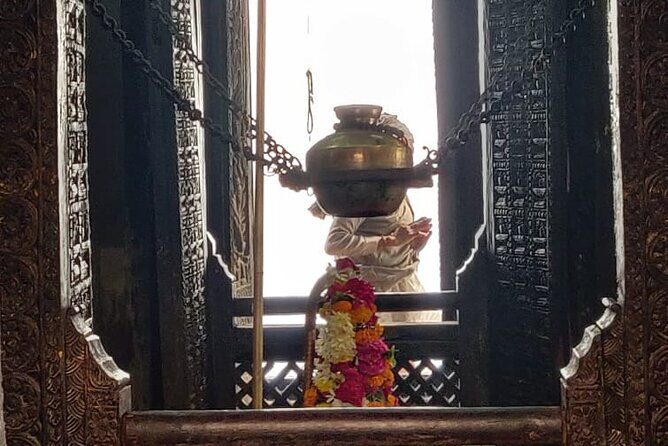
Your final stop is Pita Maheshwar Mahadev Temple, also connected with Kashi Khand. The highlight is the Pita Maheshwar Shivling, which is believed to be shwayambhu—a self-manifested form of Shivling. The mention of this Shivling is associated with Skand Puran, one of the 18 important Hindu scriptures.
Why this matters on a short tour: it gives you something deeper to carry home. Instead of only seeing stone and scenery, you get an explanation of how sacred objects are understood and how scripture references shape devotion.
Admission is included.
How the tour handles crowds, narrow lanes, and big feelings
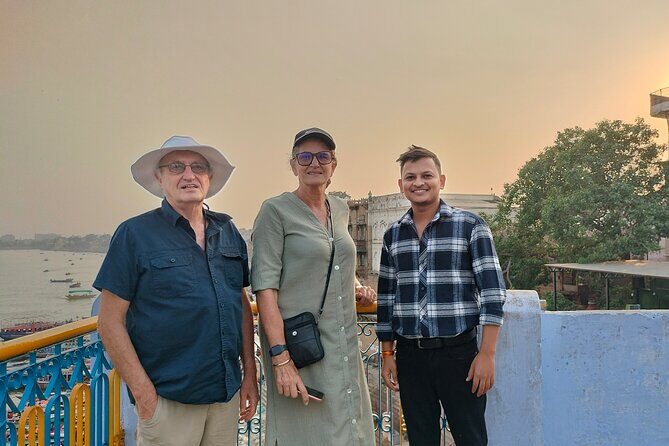
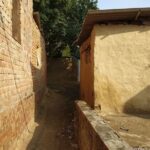
Varanasi is famous for being chaotic in the way only a living city can be. It’s not just crowds. It’s movement—people, carts, footsteps, and quick turns in narrow lanes.
One thing I appreciate in this kind of guided walk is practical calm. A good guide helps you keep your focus on what’s in front of you instead of getting stuck in bottlenecks or separated from your group. Rakesh’s style is described as patient and friendly, and he’s known for helping people navigate even during major surge periods, like Mahakumbh times.
Also, this itinerary isn’t “easy mode.” It includes Manikarnika Ghat, a cremation ground, plus intense temple spaces. If you go, go with respect and a steady pace. Wear shoes you can walk in for a while, and keep water in mind. Even with a guide, your body still has to handle the city.
Price and value: what $27.96 buys you in Varanasi
At $27.96 per person, this tour is priced like a budget-friendly afternoon—especially because it’s private and around 3 hours.
Here’s where the value comes from beyond the low cost:
- You’re paying for language support in French, not just directions. In a city where spiritual and cultural meaning is everywhere, that matters.
- The route includes multiple paid sites where admission is included for several stops (and the first ghat stop is free). That reduces surprise expenses mid-walk.
- You’re not just seeing monuments. You’re getting stories about traditions, religion, and what specific places mean. That kind of context is hard to improvise on your own when you’re trying to manage crowds.
Is it “everything in Varanasi”? No. It’s focused. But if you want a smart, guided orientation plus meaningful sites, the price-to-experience ratio is strong.
One more practical note: it’s commonly booked about 7 days in advance. If your dates are tight, I’d plan early rather than hoping to find a slot last-minute.
Who this tour suits best (and who should think twice)
This tour is a strong fit if you want:
- A French-speaking guide in Varanasi who can explain what you’re seeing
- A walk that balances major riverfront spaces with temples that add variety
- An experience that moves at an afternoon pace rather than dragging on all day
It may be a tough fit if:
- You’re very uncomfortable with cremation-related rituals or heavy religious settings. Manikarnika Ghat is part of the plan.
- You don’t like walking in crowded areas. Even with a guide, this is still a city where crowds are the rule, not the exception.
If you’re the type who likes short tours with clear outcomes, this works. You’ll leave with a mental map of the ghat zone and a better sense of what makes Banaras feel different.
Should you book Rakesh’s Varanasi walk?
Yes, if you want the kind of experience where language and local knowledge change what the sites mean. The best reason to book is simple: in Varanasi, understanding is the real souvenir. Rakesh’s French guidance, local roots, and the itinerary’s mix of ghats and Shiva temples make this a practical choice for a first or return visit.
Book with caution only if Manikarnika Ghat will be too much for you emotionally. Otherwise, it’s a well-paced private walk that gives you a lot of value in a short window—without losing the human side of the city.
FAQ
FAQ
What language is the guide?
This experience is led by a francophone guide, so you’ll have French during the tour.
Is it a private tour?
Yes. It’s a private activity, so only your group participates.
How long is the tour?
The duration is approximately 3 hours.
How much does it cost?
The price is $27.96 per person.
Where do we meet?
The start point is Dashashwamedh Ghat Rd, Ghats of Varanasi, Godowlia, Varanasi, Uttar Pradesh 221001, India. The tour ends back at the meeting point.
What sights are included?
You’ll visit Dashashwamedh Ghat, Vishalakshi Temple, Nepali (Kathwala) Temple, Manikarnika Ghat, Ratneshwar Mahadev Temple, and Pita Maheshwar Mahadev Temple (Kashi Khand).
Are admissions included?
The first stop (Dashashwamedh Ghat) lists free admission. Admissions for the other temple/ghat stops are listed as included.
Do I need a printed ticket?
No. This activity uses a mobile ticket.
What if the weather is bad?
This experience requires good weather. If it’s canceled due to poor weather, you’ll be offered a different date or a full refund.
Can I cancel and get a refund?
Yes, cancellation is free. You can cancel up to 24 hours in advance for a full refund.