REVIEW · PUSHKAR
Spiritual City Walking Tour-THE Pushkar Route
Book on Viator →Operated by THE PUSHKAR ROUTE · Bookable on Viator
Sacred Pushkar, paced for real walking. This temple-focused route helps you make sense of the town’s spiritual rhythm, with a guide explaining Hinduism and Sikh traditions as you go. I especially like the way you get both breakfast malpua and masala chai during the walk, so it’s not just sightseeing. One heads-up: it’s a compact 1 to 3 hours, and any optional blessing/ritual participation can cost extra.
What makes this work is the route design: you’re not bouncing around in a car all day. You’re in the part of Pushkar where pilgrims actually move—temples, the lake edge, and the ghats. With pickup/drop-off, a max group size of 6, and a mobile ticket, it’s built for an easy day even if you’re new to town.
In This Review
- The Big Take: A Guided Pushkar Temple Walk That Makes Meaning
- Key Things I’d Circle Before You Book
- Price and Value: Why This Feels Like a Bargain
- How Long Is It, Really?
- First Stop: Gurudwara Sahib and the Sikh Thread in Pushkar
- Varaha Temple: The 150-Foot Stone Landmark
- Old Rangji (Rama Vaikuntha Temple): Craftsmanship Over Crowds
- Ati Prachin Shri Atamteshwar Mahadev Mandir: Shiva and His Family
- Brahma Temple: Why This One Is Special in the World
- Pushkar Lake to Brahma Ghat: Prayers, Tribute, and Photo Time
- Alka Rooftop Restaurant Stop: Lemon Ginger Honey With Views
- Gau Ghat and Halwai Gali: The Sweet-Scented End Note
- What’s Included Food-Wise (and What’s Not)
- What to Expect From the Guide (This Is the Real Differentiator)
- Smart Tips Before You Go (So It Feels Effortless)
- Who This Tour Fits Best
- Should You Book This Spiritual City Walking Tour in Pushkar?
- FAQ
- How long does the Spiritual City Walking Tour – THE Pushkar Route take?
- What does the tour cost?
- Is pickup and drop-off included?
- What ticket type do I receive?
- How many people are in the group?
- What food and drinks are included?
- Which temple and sacred sites are visited?
- Are entrance fees included?
- Are holy rituals or ceremonies included?
- What if the weather is bad?
- Can I cancel and get a refund?
The Big Take: A Guided Pushkar Temple Walk That Makes Meaning

Pushkar can feel like a sea of temples and chanting. This tour turns that swirl into something you can follow. Your guide on the ground—often Manish, who’s praised for clear English and strong local context—ties each stop to the bigger story: why the site matters, what the rituals are trying to do, and what you’re looking at beyond the pretty stones.
You’ll walk through a Sikh Gurudwara first, then shift into Hindu temples and lake/ghat areas. That mix is useful because Pushkar isn’t only one religion or one crowd. Hindu and Sikh pilgrims show up for bathing in the ghats and for blessings, and the tour helps you understand how both traditions fit into the same sacred landscape.
The other thing I like is that it’s not just “stand here, take a photo.” You get pauses with real explanations, plus food and tea that feel like they belong to Pushkar—not a tourist replacement.
Key Things I’d Circle Before You Book
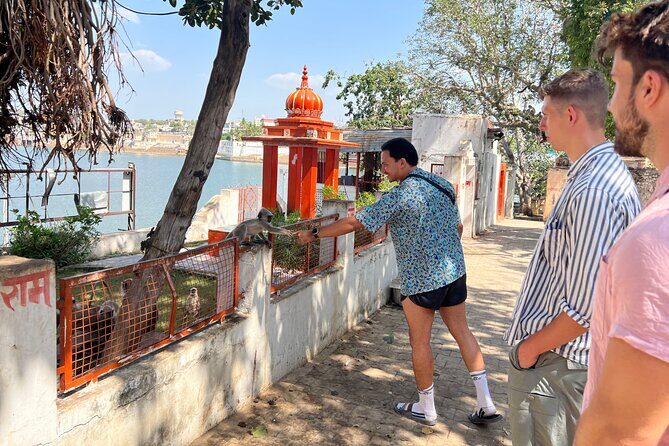
- Small group (max 6) keeps the pace conversational and easier for questions.
- Manish as a guide is repeatedly praised for history and practical clarity.
- Breakfast malpua + masala tea in a claypot keeps energy steady during the walk.
- A route that mixes Sikh and Hindu holy sites gives you a fuller Pushkar picture fast.
- Temple architecture highlights include Varaha’s large stone structure and Brahma Temple mythology.
- Ghat time at Brahma Ghat and Gau Ghat gives you the water-and-prayer setting, not just buildings.
You can also read our reviews of more walking tours in Pushkar



Price and Value: Why This Feels Like a Bargain
At $6.76 per person, this is priced for people who want meaning without spending a fortune. In practical terms, the value comes from what’s bundled in: guiding fees, taxes, entrance fees for the stops, and even pickup and drop-off.
Most budget tours hand you a map and call it a day. This one includes an explorer well versed in the subject, plus the food/tea moments that make the experience feel local. The tour also includes camera lockers for cameras and larger items (so you’re not juggling everything while you walk).
Could you find cheaper ways to walk temples on your own? Sure. But you’d be missing the context—why a temple exists, what a ritual is for, and what’s special about Pushkar’s holy geography.
The only real “cost” to watch is not the ticket price: optional holy rituals and ceremonies are not included if you choose to participate. Also, lunch and any extra drinks beyond what’s included are not covered.
How Long Is It, Really?
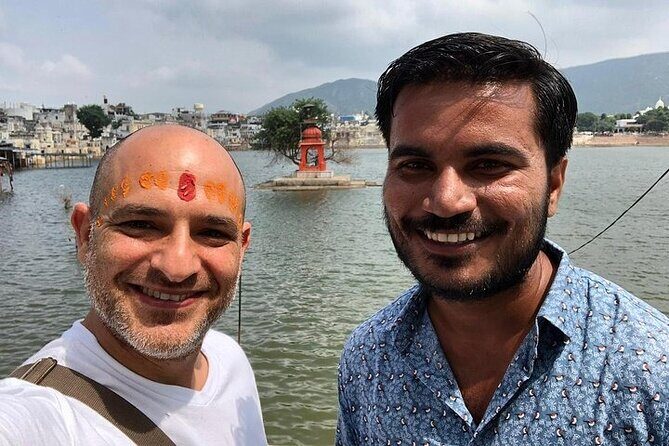
Expect about 1 to 3 hours. That’s perfect if you’re sightseeing with a schedule or you don’t want your whole day taken up by one activity.
The trade-off is that short tours can feel fast if you like to linger. This route moves at a steady pace through major sights, with stop times ranging roughly from 10 to 30 minutes at each place. If you’re the type who wants 45 minutes inside every shrine, you might feel a little “on the clock.” Comfortable shoes help because it’s ultimately a walking city tour.
First Stop: Gurudwara Sahib and the Sikh Thread in Pushkar
The walk starts at Gurudwara Sahib, and your guide uses this opening to explain the Sikh religion and why Pushkar matters to the Sikh community.
This first stop is a smart move. It sets expectations: you’re not only learning about Hindu temples. You’re learning how Pushkar functions as a shared pilgrimage destination in Rajasthan, where different faiths show up in the same sacred zone.
The visit is about 30 minutes and the admission ticket is free. Even if Sikhism is unfamiliar to you, the structure of the tour makes it approachable—you get enough background to understand what you’re seeing before you move on to Hindu sites.
Varaha Temple: The 150-Foot Stone Landmark
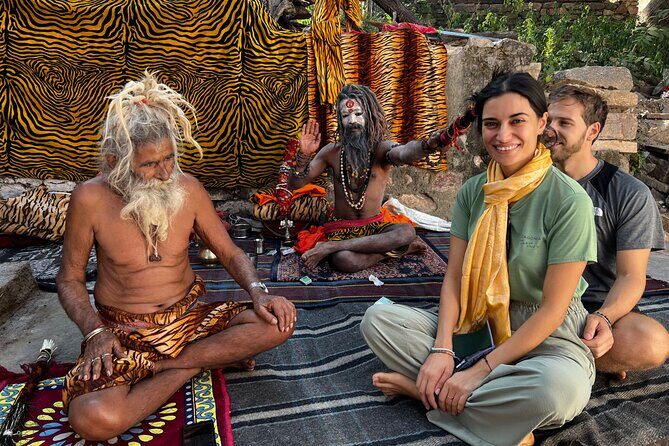
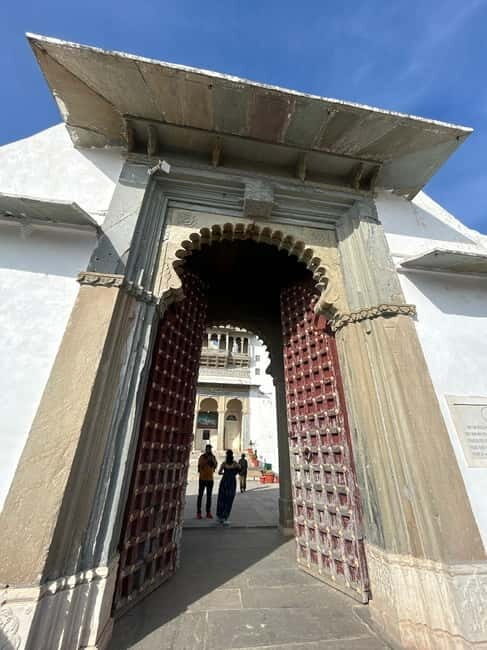
Next up is the Varaha Temple, described as about 150 feet high, with the present statue set up in 1784. The temple is built of heavy stone and plaster in a typical Rajasthani haveli style, inside a walled temple compound.
This is one of those stops where having someone explain what you’re looking at makes the difference. Without context, a tall stone temple is just a tall stone temple. With context, it becomes a landmark you can place in a timeline and a style tradition.
You’ll spend around 25 minutes, and entrance is included. One practical benefit: it’s early enough in the walk that you’re still fresh for longer attention moments like architecture and symbolism.



Old Rangji (Rama Vaikuntha Temple): Craftsmanship Over Crowds
After Varaha, you go to the Old Rangji Temple, also known as the Rama Vaikuntha Temple. This one is famous for workmanship and architecture. The structure is heavy stone with a Rajasthani-style look.
The stop is shorter—around 15 minutes—but it’s focused. You’re looking at craftsmanship, not just religious objects. If you enjoy stonework and temple design details, this is a solid “stop and notice” moment.
Entrance is included here too. The time limit means you’ll likely move on before you get tired, which is good for a walking route.
Ati Prachin Shri Atamteshwar Mahadev Mandir: Shiva and His Family
Then comes Atamteshwar Mahadev Mandir, associated with Lord Shiva. It’s also described as the oldest temple of Lord Shiva in town, where you can see a statue of Shiva with his family.
This stop runs about 25 minutes and has free admission. The value here is the guided interpretation. Instead of treating Shiva symbolism like a puzzle you have to solve alone, the guide helps connect the figures you see to what they represent.
If you’re trying to understand Hindu stories through the places where people worship them, this is one of the most straightforward stops on the route.
Brahma Temple: Why This One Is Special in the World
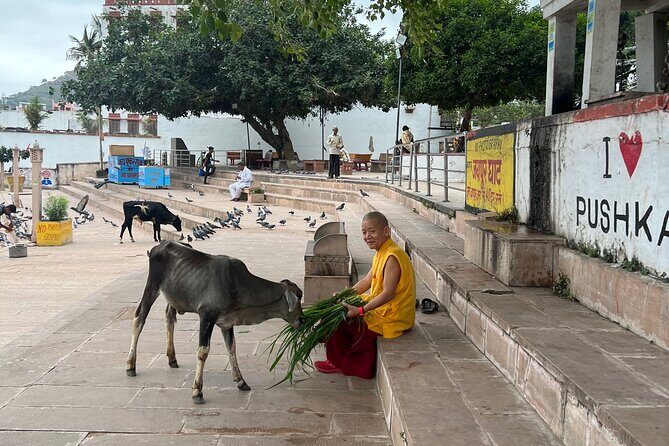
The tour then visits the Brahma Temple, where you’ll learn why Lord Brahma has only one temple in the world. The temple is also highlighted for its architecture and mythology.
This stop is about 30 minutes with free admission. Brahma temples are rare, and the tour framing gives you a reason to care beyond the fact that it exists. You’ll also get the myth context that helps the temple click into place.
If your goal is “I want to understand the spiritual logic of Pushkar, not just collect photos,” this is a key moment.
Pushkar Lake to Brahma Ghat: Prayers, Tribute, and Photo Time
After the Brahma Temple visit, you head toward Pushkar Lake, specifically the Brahma Ghat area.
Here’s what the tour focuses on: at Brahma Ghat, family people offer prayers for happiness and pay tribute to the dead souls. It’s also described as a place famous for photography and views along the lake setting.
This section includes two close moments:
- A Pushkar Lake/Brahma Ghat approach around 30 minutes
- Then a Brahma Ghat stop around 10 minutes
Admission is free at these parts. Even if you’re not planning to participate in anything ceremonial, it’s a powerful setting to watch devotion in action and understand what people are doing and why.
From the experience notes people share, you might also catch special timing moments like a fire ceremony or a sunset view when schedules line up. I’d treat that as a bonus that depends on when you go and what’s happening on the ghats that day.
Alka Rooftop Restaurant Stop: Lemon Ginger Honey With Views
After the Brahma Ghat segment, you head briefly to ALKA ROOFTOP RESTAURANT nearby.
This is a practical break and a sensory one. You refresh with a cup of lemon ginger honey, and you get a view over the market area.
It’s only about 10 minutes, but it matters because it breaks the walking up. Entrance isn’t a factor here—this is about comfort and a breather with a local-style drink included.
Gau Ghat and Halwai Gali: The Sweet-Scented End Note
The final key stop is Gau Ghat, also known as the oldest ghat in 52 ghats and sometimes referred to as Gandhi Ghat. The tour notes that this area connects to Halwai Gali, popular for sweet bakers and confectioners.
You’ll spend about 15 minutes and entrance is included. This is the best “last taste” segment—more sensory, less formal. Even if you don’t buy anything, the food street vibe is part of why Pushkar is memorable.
What’s Included Food-Wise (and What’s Not)
Here’s the food lineup you should plan around:
Included:
- Masala tea served in a claypot, with cardamom and ginger
- Breakfast malpua, described as sugar syrup coated pancakes made with curd, spices, khoya, dried milk solids, and topped with nuts
- A drink stop with lemon ginger honey at ALKA ROOFTOP RESTAURANT
Not included:
- Charges for holy rituals and ceremonies if you choose to participate
- Lunch and other foods/drinks beyond what’s listed as included
If you’re expecting a full meal day, treat this as a morning/afternoon walk with built-in tea and sweet breakfast, not a “food tour” replacement.
What to Expect From the Guide (This Is the Real Differentiator)
The strongest theme in the feedback is the guide. With Manish in particular, the praise centers on:
- Making Hindu and Sikh ideas understandable in everyday language
- Pointing you toward meaningful parts of each site
- Keeping a pace that feels right for a short, walking-based route
- Including clear explanations and sometimes timing moments like a ceremony view
That doesn’t mean the tour is “lecture mode.” It’s more like a guided walk where the history is connected to what you’re standing in front of.
If you ask questions, you’ll likely get answers that connect the dots between religion, architecture, and daily ritual life in Pushkar.
Smart Tips Before You Go (So It Feels Effortless)
A few practical things will make this easier and more enjoyable:
- Wear comfortable walking shoes. This is a city walk with multiple sacred stops.
- Bring a light layer for sun and weather. The experience is noted as requiring good weather.
- If you have a camera, check that the lockers are available for storing cameras and larger items during the route.
- Plan around the included food. You get tea and malpua, and a drink later, but lunch is not included.
- If you want to take part in any blessing ceremony, budget for separate ritual charges—they’re not part of the base inclusions.
Who This Tour Fits Best
This is a great fit if you:
- Want a short, high-impact introduction to Pushkar’s sacred side
- Prefer walking and smaller groups over big buses
- Like learning meaning behind sites, not just seeing them
- Want a route that connects Sikh and Hindu holy geography in one sweep
- Have a limited time window but still want breakfast/tea and a lake/ghat experience
It might be less ideal if you:
- Need long, quiet time in each temple
- Are looking for a full-day food experience (this is not marketed as a meal marathon)
- Don’t want any chance of extra charges for optional rituals
Should You Book This Spiritual City Walking Tour in Pushkar?
I’d book it if you want Pushkar that makes sense quickly—temples, ghats, and the story behind why people come here. The value is strong for what’s included: guidance, entrances, pickup/drop-off, and real Pushkar-style food moments like malpua and masala chai.
You should think twice only if you want a slow, deep temple crawl or you’re uncomfortable with a walking-based schedule. Otherwise, this is an efficient way to get oriented in one of Rajasthan’s most spiritual towns—without turning your day into a logistics headache.
FAQ
How long does the Spiritual City Walking Tour – THE Pushkar Route take?
The duration is approximately 1 to 3 hours.
What does the tour cost?
The price is $6.76 per person.
Is pickup and drop-off included?
Yes. Hotel pickup and drop-off are included.
What ticket type do I receive?
You get a mobile ticket.
How many people are in the group?
The tour has a maximum of 6 travelers.
What food and drinks are included?
You receive a traditional breakfast of malpua and a special masala tea in a claypot (cardamom and ginger). The route also includes a cup of lemon ginger honey at ALKA ROOFTOP RESTAURANT.
Which temple and sacred sites are visited?
The route includes Gurudwara Sahib, Varaha Temple, Old Rangji Temple (Rama Vaikuntha Temple), Ati Prachin Shri Atamteshwar Mahadev Mandir, Brahma Temple, plus the Pushkar Lake and Brahma Ghat area, and Gau Ghat.
Are entrance fees included?
Yes. Entrance fees are included in the tour.
Are holy rituals or ceremonies included?
Charges for holy rituals and ceremonies are not included if they are chosen by the traveler.
What if the weather is bad?
This experience requires good weather. If it’s canceled due to poor weather, you’ll be offered a different date or a full refund.
Can I cancel and get a refund?
Yes. You can cancel up to 24 hours in advance for a full refund. If you cancel less than 24 hours before the start time, the amount paid is not refunded.