REVIEW · NEW DELHI
4 Day Golden Triangle with Ranthambore Tiger Safari Tour from Delhi
Book on Viator →Operated by Crystal India Holidays · Bookable on Viator
Four days can feel like a sprint in India. This one works because you travel with a private car and local guides, then trade ticket lines for smart timing, like the sunrise Taj Mahal day.
I like the mix: world-famous Mughal sights plus a real wildlife mission. I also like the small logistics wins, like the battery bus up to the Taj Mahal parking area and airport/hotel pickup so you don’t waste your first day figuring things out.
The main drawback to plan for is pace. You’ll have early starts, long drives, and a tiger safari where sightings depend on luck—so you need flexible expectations, not a promise.
In This Review
- Key details worth knowing before you go
- The 4-day plan: why this route makes sense
- Day 1 in Delhi: Qutub Minar, Lotus Temple, India Gate, and secret-history stops
- Sunrise Taj Mahal and Agra Fort: Day 2’s Mughal masterpieces
- Day 3 Ranthambore safari: shared jeep/canter, zones, and tiger odds
- Jaipur Day 4: stepwells, Amer Palace, Jal Mahal, and the city’s big icons
- The drive between cities: comfort, timing, and how to stay sane
- Hotels and meals: what’s included, what’s not, and what to expect
- Price and value: what $289.58 includes and how to budget entrance fees
- Who this tour suits (and who should skip it)
- Final call: should you book this 4-day Golden Triangle plus Ranthambore?
- FAQ
- What does the tour price include?
- Are monument entrance fees included?
- What about the Taj Mahal battery bus?
- Will I see the Lotus Temple?
- Is tiger spotting guaranteed in Ranthambore?
- What safari vehicle will I ride in?
- Do I need hotels booked in advance?
Key details worth knowing before you go
- Private touring, not hop-on hop-off: Your group stays together with a driver and local guides in each city.
- Sunrise Taj Mahal timing: Early start plus guided time inside the Taj complex.
- Taj and safari both start early: Expect mornings that feel very early, especially compared with vacation time at home.
- Ranthambore safaris run on government zones: Which zone you get is based on availability, not your wishes.
- Shared jeep or canter for wildlife: This is how you join the safari—jeep is smaller, canter is larger.
- Entrance fees are extra: You’ll pay monument entry fees separately (handled with help from your guides).
The 4-day plan: why this route makes sense
This tour strings together India’s classic “Golden Triangle” (Delhi, Agra, Jaipur) and adds one high-interest day in Ranthambore National Park. In four days, that’s the whole point: you’re trading deep slow travel for a tight, efficient loop where you see the big icons without doing long-distance public transport.
If you’re a first-timer, or you want a clean “do the highlights” itinerary without logistics headaches, this style is a good fit. If you hate early mornings and nonstop driving, you’ll feel it.
You can also read our reviews of more tours and experiences in New Delhi



Day 1 in Delhi: Qutub Minar, Lotus Temple, India Gate, and secret-history stops
Your day begins with pickup from your Delhi hotel or the airport area in Delhi, Noida, or Gurugram. Then you’re guided through a set of Delhi stops that balance famous landmarks with a couple of quieter, more interesting textures.
Qutub Minar is the opener. It’s iconic for a reason: tall, detailed, and instantly a “you’re in India” moment even if you’re still adjusting to the city pace. Expect around an hour with guidance, and remember the monument entrance fee is not included.
Next is Lotus Temple, known for its clean, modern Bahá’í architecture. It’s free to visit, and the 30-minute stop is a good reset if you want something calmer than fort and memorial vibes. One note that matters: the Lotus Temple stays closed every Monday, so if your dates land on Monday, your route will need to adjust.
Then you hit India Gate—a short stop, but a meaningful one—plus drive-by views of Parliament House and Rashtrapati Bhavan. These are quick passes rather than inside visits, so treat them like photo checkpoints and a way to understand where the power sits.
A standout here is AgraSen Ki Baoli, an ancient stepwell. Stepwells can feel like a hidden side of India’s history, and this one gives you a different kind of sight than the typical palace-and-temple circuit.
The day moves toward Agra after a lunch stop on the way. When you arrive, you check into your hotel for the night. You won’t have hours to linger in Agra on Day 1, but that’s the trade: you’re saving the real Agra heavy lifting for tomorrow.
Sunrise Taj Mahal and Agra Fort: Day 2’s Mughal masterpieces
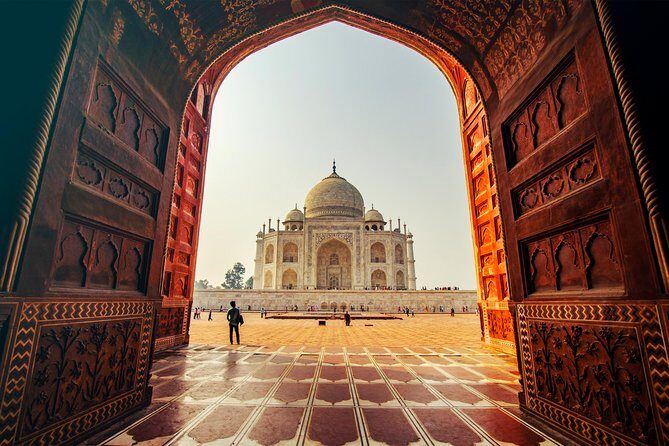
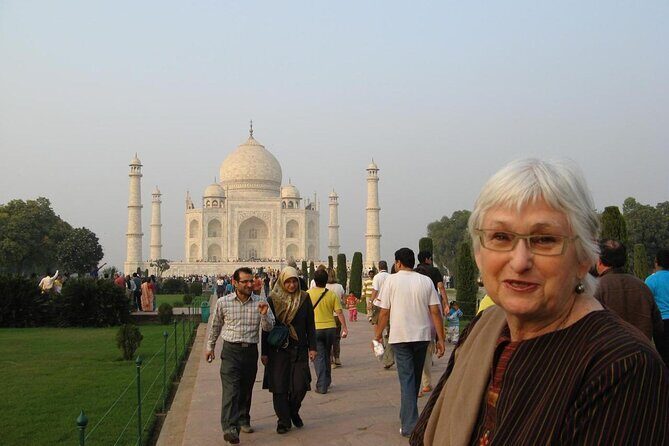
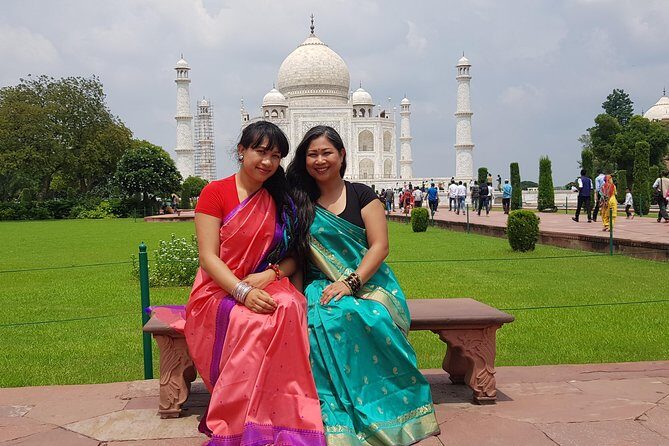
Day 2 is the big one for history and photography. The tour starts with an early rise to see the Taj Mahal at sunrise, then you get guided time inside. This is not just a “see it, leave” schedule. You get time to take in the scale and details when the light is softer and the crowds are still settling.
Then you move to Agra Fort, another UNESCO-listed Mughal powerhouse. This stop helps connect the Taj to its power source—same empire, different mood. After that, you go to Itmad-ud-Daula, often called the Baby Taj. It’s smaller than the main complex, but it’s a great way to see Mughal artistry without feeling like you’re sprinting between huge buildings.
After Agra sightseeing, you transfer to Ranthambore. The tour says the drive takes a few hours, and you’ll check in at your hotel. Your day ends at Ranthambore with a dinner included once at the hotel (when booking includes hotels).
Day 3 Ranthambore safari: shared jeep/canter, zones, and tiger odds
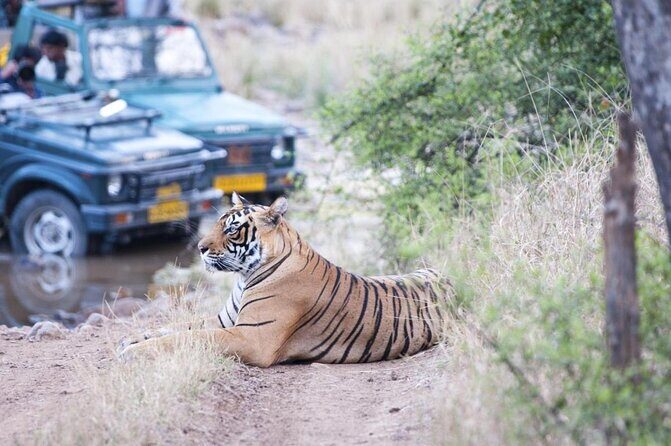
This is why people book. You wake up and head into Ranthambore National Park for a morning safari. The tour format is shared jeep or shared canter, and you should plan for about 2 to 3 hours in the park.
A few practical things matter a lot here:
- Tiger sightings are not guaranteed. You’re going in for a chance, not a promise.
- Safari zone assignment is based on availability. You don’t pick your zone. The tour uses whatever zone the government assigns for that day.
- Government-appointed guides run the safari. The guide is listed as English speaking, but the tour also warns that fluency can vary.
- Jeep vs canter changes the vibe. A jeep is smaller and often feels easier to navigate for close sight lines. If a shared jeep isn’t available, you’ll ride a shared canter, which is larger and can feel less intimate.
You’ll also want to know what to do in the moment. Wildlife watching here isn’t like a theme park. When animals appear, they can be quick. Stay quiet, keep your eyes moving, and let your guide’s spotting help you find what you might otherwise miss.
After the safari, you transfer to Jaipur and check in. The rest of the afternoon is left for you to enjoy at leisure, which is smart. After a wildlife morning, you probably don’t want another forced schedule before the full Jaipur day tomorrow.
Jaipur Day 4: stepwells, Amer Palace, Jal Mahal, and the city’s big icons
Jaipur gets a full guided day with the main sights, plus a few stops that show off local character.
Start with Panna Meena ka Kund, another stepwell, then head to Amer (Amer Fort/Palace). This is one of the strongest historical stops in Jaipur. The architecture and interior sights are what you came for, but the payoff is also the viewpoint. You’ll get that classic hilltop fort feeling and plenty of photo chances.
Next is Jal Mahal, the Water Palace. It’s a short stop, and it’s more about the visual and the setting than long exploration.
You continue to City Palace for guided time. Note: the tour lists this as not included for admission fees, so plan for that extra cost.
Then it’s Jantar Mantar, the UNESCO-listed set of ancient astronomical instruments. It’s one of those places where you understand history in a more hands-on way—geometric and designed, not just decorative.
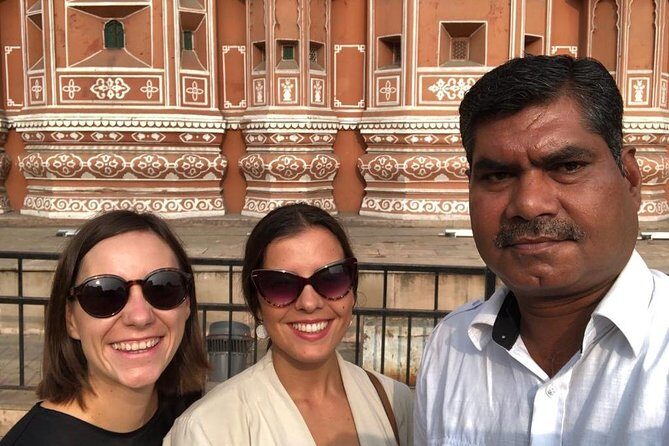
You also get a drive-by for Hawa Mahal (Palace of Breeze). This is a good use of time. Even if you don’t go inside, the facade alone gives you instant Jaipur identity.
Finally, Gaitore Ki Chhatriyan, the royal crematorium complex. It’s not the most famous on the map, but it’s a memorable closing note that feels quieter and more reflective.
At the end of Day 4, you head back to Delhi, with the tour noting you return around 9 pm. If you want a different arrival time, you’re told you can adjust the schedule after you inform them.
You can also read our reviews of more tours and experiences in New Delhi



The drive between cities: comfort, timing, and how to stay sane

This tour is intense mainly because of distance. Delhi to Agra is one day, Agra to Ranthambore is another, then Ranthambore to Jaipur, and Jaipur back to Delhi. You’re going to spend meaningful time in the car.
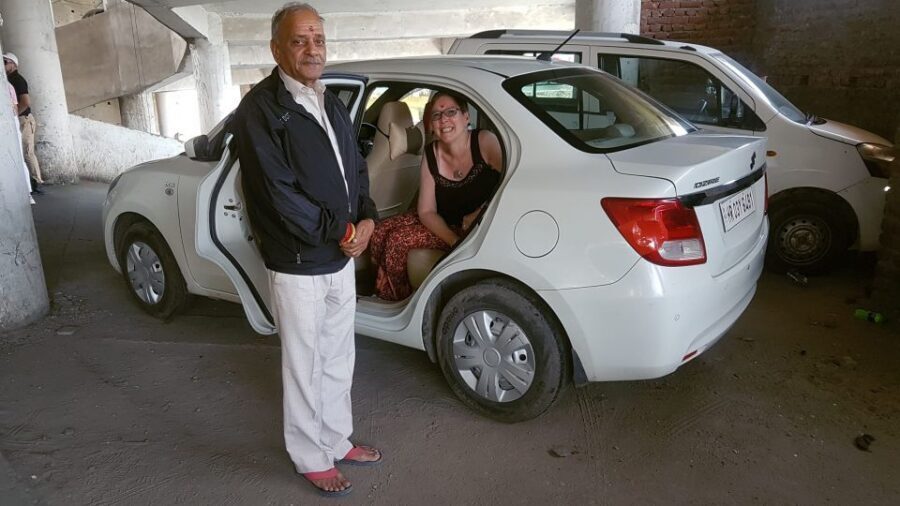
The good part: the tour includes a private, air-conditioned vehicle with a driver, and it matches the car type to your group size (sedan, SUV, or van depending on number of travelers). You also get bottled water during journeys, which sounds small, but it matters when you’re moving through India’s heat and traffic.
I also like that you’re not making your own connections. Having the driver collect you after each stop means you keep momentum instead of losing time hunting for your next meeting point.
A common “watch-outs” combo here is heat and fatigue. The itinerary is built for early starts, and Jaipur especially can get hot. If you’re going in warmer months, plan for sunscreen, a hat, and water you can carry.
Hotels and meals: what’s included, what’s not, and what to expect

The tour includes three nights accommodation when you book with the hotel option, plus daily breakfast. It also includes one dinner at your Ranthambore hotel.
Rooms are generally twin-sharing, and if you book as 3 people, triple-sharing is the default unless you pay to switch to 2 rooms. If you’re traveling as a pair and want separate rooms, it’s worth confirming how your rooming is set up when you book.
One more point that affects your day: you won’t have hours to relax at the hotel on most days. This is a “sightseeing first” plan. Even so, many people highlight the Ranthambore stay as a special part of the trip, with more of a resort feel than a plain stopover.
Price and value: what $289.58 includes and how to budget entrance fees
The listed price is $289.58 per person for the 4-day experience. What makes the value work is the combo of:
- private transportation
- hotel pickup and drop-off
- local guides in each city
- multiple major sights with guided time
- and the Ranthambore safari itself
The big extra cost you must budget is monument entrance fees. The tour notes entrance fees are not included and gives a total figure of ₹5,000 per person for all monuments. Your guide helps with purchasing so you’re not stuck in long lines.
So, how do you decide if it’s worth it? If you’d otherwise need separate tickets, separate private guides, and a lot of DIY coordination, you’re already halfway there. If you’re okay spending extra time doing everything on your own, you can travel cheaper—but you’ll trade away time and comfort.
Who this tour suits (and who should skip it)
This is a strong match if:
- you want the Golden Triangle highlights without the hassle of coordinating trains or drivers yourself
- you’re okay with early starts
- you want a serious safari experience even though tiger sightings aren’t guaranteed
- you travel solo, as a couple, or with family and want the “someone handles it” feeling
It may be less ideal if:
- you hate long drives and can’t handle a tight schedule
- you need guaranteed wildlife sightings
- you prefer slow travel and lots of unplanned downtime
Final call: should you book this 4-day Golden Triangle plus Ranthambore?
If you’re planning a short North India trip, I think this itinerary makes sense. You get the iconic sights—sunrise Taj Mahal, Agra Fort, Amer, and the main Jaipur landmarks—then you add Ranthambore for the kind of wildlife experience you can’t easily DIY.
Just go in with two realistic expectations: you’ll be busy, and the tiger is never guaranteed. If you can accept that, this tour hits a sweet spot of value, comfort, and big moments in a short window.
FAQ
What does the tour price include?
It includes private air-conditioned transport with a driver, hotel or airport pickup and drop-off, private local guides for sightseeing, daily breakfast (when booking includes hotels), bottles of mineral water during journeys, battery bus to and from the Taj Mahal parking lot, and the Ranthambore tiger safari in a shared jeep or canter. It also includes dinner once at the Ranthambore hotel.
Are monument entrance fees included?
No. The tour lists monument entrance fees as not included, with an extra charge mentioned as ₹5,000 per person for all monuments.
What about the Taj Mahal battery bus?
You get battery bus service to and from the Taj Mahal parking lot up to the Taj Mahal monument area.
Will I see the Lotus Temple?
You’ll visit the Lotus Temple as part of the Delhi day, but it remains closed every Monday, so your schedule will need to account for that.
Is tiger spotting guaranteed in Ranthambore?
No. The tour states tiger spotting depends largely on luck, and safaris also depend on government-assigned zones.
What safari vehicle will I ride in?
The tour tries to book a shared jeep. If a shared jeep isn’t available, it books a shared canter instead, which is larger.
Do I need hotels booked in advance?
If you book without hotels, you will still be picked up and dropped off at your booked hotels in each city. If you book with the hotel option, the tour includes three nights accommodation and breakfast.