REVIEW · NEW DELHI
4 Days Golden Triangle Tour
Book on Viator →Operated by Creative India Holidays · Bookable on Viator
Four days, three legends, and no map headaches. This private Golden Triangle tour is a fast, guided way to see Delhi, Agra, and Jaipur with air-conditioned car transfers between distant sights. It’s interesting because you’re not bouncing between stations and ticket desks on your own—you’ve got a driver, a guide, and a planned route.
What I like most is the air-conditioned transfers that keep the long distances from eating your whole day. Second, the itinerary hits big, high-demand UNESCO sights—especially the Taj Mahal and Amber Fort—without turning it into a rushed photo sprint. One real drawback to consider: entrance tickets are not included, and the schedule is full, so you’ll want energy for walking and occasional early starts.
This is also one of those rare tours that feels built for comfort and clarity. The guide helps with entrance fees so you can spend more time at the monuments and less time in lines. You’ll also get hotel stays in Agra and Jaipur (typically twin-sharing), plus breakfast each morning.
In This Review
- Key Things You’ll Notice on This Golden Triangle Tour
- Price and Time Value: What $146 Buys You in India
- Meeting at 8:00 and the “Private Group” Feel
- Day 1 in Delhi: Jama Masjid to Qutub Minar, Then Off to Agra
- Jama Masjid: The Old Delhi Scale Shock
- Raj Ghat: A Quiet Reset
- India Gate and the Lutyens Civic Zone
- Qutub Minar and Humayun’s Tomb: UNESCO Day Finish
- Day 2 Agra: Taj Mahal, Agra Fort, and Fatehpur Sikri on the Way to Jaipur
- Taj Mahal: Not Just the Big Moment
- Agra Fort: The Fort That Explains the City
- Fatehpur Sikri: The Stop That Changes the Mood
- Day 3 Jaipur: Hawa Mahal, Amber Fort, City Palace, and Jantar Mantar
- Hawa Mahal: The Face You’ve Seen in Photos
- Amber Fort: The Day’s Big Physical Moment
- City Palace: Where Rule and Art Meet
- Jantar Mantar: The Science Stop That Feels Surprising
- Evening Free for Shopping
- Day 4: Back to Delhi Around Early Afternoon
- Hotels and Rooms: Twin Sharing Is the Default
- Entrance Tickets: Plan for Them Even with a Guide
- What I’d Emphasize if You Care About Comfort and Safety
- Should You Book This 4-Day Golden Triangle Tour?
- FAQ
- What cities does the Golden Triangle tour cover?
- What is included in the tour price?
- Are entrance tickets included for the monuments?
- What time does the tour start, and where does pickup happen?
- Is the Taj Mahal always part of the itinerary?
- How are hotel rooms handled?
- Can I cancel and get a refund?
Key Things You’ll Notice on This Golden Triangle Tour

- Air-conditioned transfers between cities: fewer fatigue points, more time for sites
- UNESCO-heavy day planning: you see major landmarks across Delhi, Agra, and Jaipur
- Guide support for entrance fees: less waiting around for ticket counters
- Taj Mahal timing rules: plan around the Friday closure (the route may shift)
- Balanced mix of icons and local classics: forts, palaces, mosques, and observatories
- Private setup for your group: just your party in the same vehicle and schedule
Price and Time Value: What $146 Buys You in India
At $146 per person for a 4-day, three-city route, the value is mostly about time and logistics. Golden Triangle travel can be slow if you’re piecing together public transit, juggling taxis, and estimating drive times. Here, your biggest “cost” is not money—it’s effort you avoid.
You also get a real guide-led rhythm. You won’t just stop at a place and wonder what matters. The tour is structured so you see the essentials in each city, and you’re guided between them with an air-conditioned vehicle.
A second value point is that you get breakfast included for four mornings. Food costs can add up quickly in tourist-heavy areas, so having breakfast handled helps keep your day budget more predictable.
The one thing to keep in mind: entrance tickets are not included. The tour does help you buy them so you’re not stuck searching, but you should still budget extra for monument entry.
You can also read our reviews of more tours and experiences in New Delhi


Meeting at 8:00 and the “Private Group” Feel
The day starts at 8:00am, with pickup from the airport or your location in Delhi or Gurugram. This matters because getting a clean start in Delhi can be tricky. You don’t want your first morning to turn into a half-day waiting game.
This is listed as a private tour/activity, meaning only your group participates. Practically, that usually leads to smoother timing than shared group tours. You should still expect a busy itinerary—private doesn’t mean slow—but it often feels more flexible when you ask simple questions or want your guide to adjust pacing.
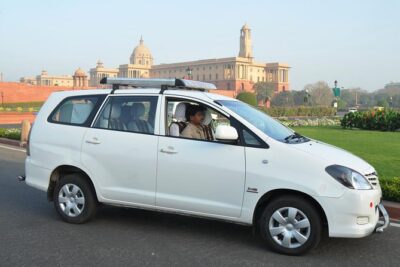
You’ll travel by air-conditioned vehicle, and transfer times are approximate and tied to traffic and time of day. Delhi traffic can be chaotic, so the “approximate” wording is realistic. Build in the mindset that you’re on Indian time and the route may shift slightly.
Day 1 in Delhi: Jama Masjid to Qutub Minar, Then Off to Agra
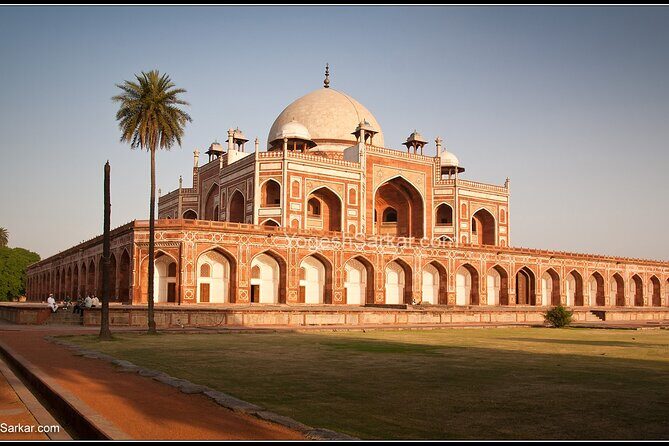
Day 1 is your Delhi primer, packed with major sights that help you understand India’s layers—Mughal, British-era civic power, and more early Islamic monuments.
Jama Masjid: The Old Delhi Scale Shock
You start at Jama Masjid, one of Delhi’s best-known mosques, built in the 1600s. This is not a small stop. Even if you don’t time it for prayer, the sheer scale and the old-city setting do the heavy lifting.
Expect a slower feel here. It’s a place where you naturally look up and take in the surroundings. You’ll also want to follow mosque etiquette (dress conservatively and be mindful inside). Ticket is not included, so budget entry costs.
Raj Ghat: A Quiet Reset
Next comes Raj Ghat, a memorial dedicated to Mahatma Gandhi on the Yamuna riverbank. It’s a very different energy from Jama Masjid. This stop works well because it breaks the intensity of old-city sightseeing before you move back into monuments.






India Gate and the Lutyens Civic Zone
Then you reach India Gate, built to commemorate soldiers from the British Indian Army. Nearby, your route includes major government-area architecture like the Parliament complex (Sansad Bhavan) and the Rashtrapati Bhavan area.
You may not spend hours in one building, but this part of Delhi gives you context. You’re seeing how the city looked when power was centered around imperial architecture and ceremonial spaces.
Qutub Minar and Humayun’s Tomb: UNESCO Day Finish
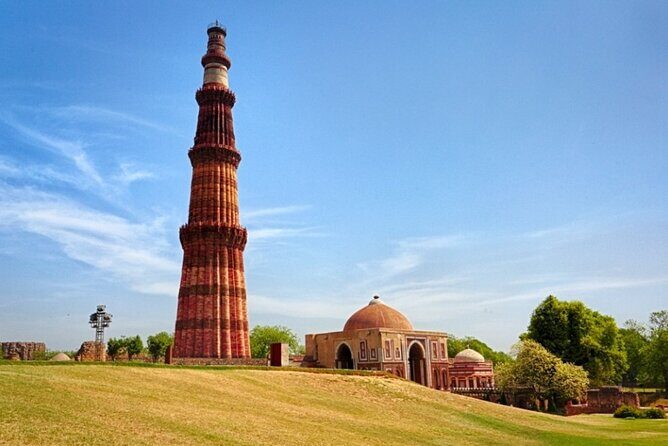
You end the Delhi sightseeing with Qutub Minar (a famous tall minaret) and Humayun’s Tomb, a UNESCO-listed highlight. Both are great at different things:
- Qutub Minar is about dramatic form and early monumental style.
- Humayun’s Tomb is about the refined layout and garden-tomb feel.
Ticket entries are not included for these stops, but the guide’s help with entrance fees reduces the hassle. After Delhi, you’ll drive to Agra for an overnight stay.
Day 2 Agra: Taj Mahal, Agra Fort, and Fatehpur Sikri on the Way to Jaipur
Day 2 is where the tour earns its name. You go from Delhi-area history to Agra’s Mughal heart and then into Rajasthan.
Taj Mahal: Not Just the Big Moment
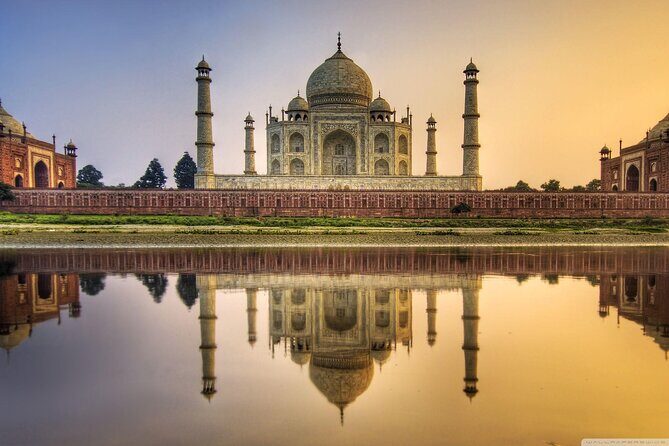
You’ll spend about two hours at the Taj Mahal. The Taj is famous for a reason, but what I like about having a set time block is that it lets you actually see more than one angle. You can look at the marble details and the surrounding complex without feeling like a stopwatch is chasing you.
It’s worth planning clothing and timing: mornings can feel crisp and evenings smoother, but the tour’s schedule depends on your day order. One key note: Taj Mahal is closed to all visitors on Friday. If your start date involves that, the tour may change the order of cities (more on this in the FAQ).
Agra Fort: The Fort That Explains the City
After the Taj, you move to Agra Fort for about an hour. This is where you can connect the dots between Mughal authority and the city’s layout. Forts can be intimidating because they’re big, but Agra Fort doesn’t require you to memorize facts—you just get the scale and the sense of power.
Fatehpur Sikri: The Stop That Changes the Mood
Then comes a drive to Jaipur via Fatehpur Sikri, with time at Panch Mahal (part of this fortified complex). This is a great mid-route detour because it’s different from palaces and forts in the cities. It’s also a reminder that some Mughal ambition was built outside the main capitals.
You get about two hours here, which is enough to take in the layout and absorb the atmosphere without turning it into a 10-hour detour.
You overnight in Jaipur, and that sets you up for the big Rajasthan sights the next day.
Day 3 Jaipur: Hawa Mahal, Amber Fort, City Palace, and Jantar Mantar
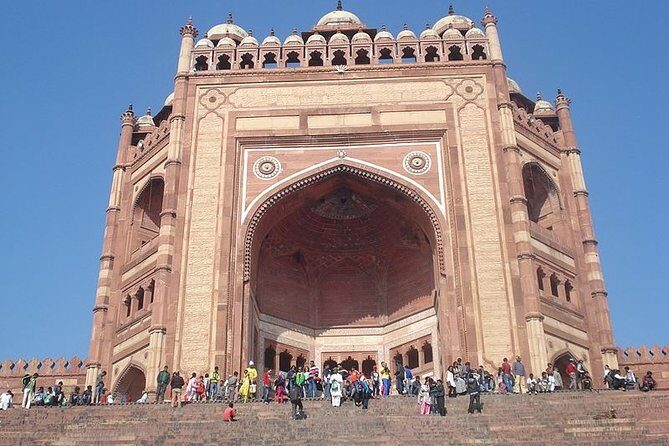
Jaipur day is classic Golden Triangle energy. You’ll go from iconic facade views to fort climbing (depending on your pace) and then into palace and science.
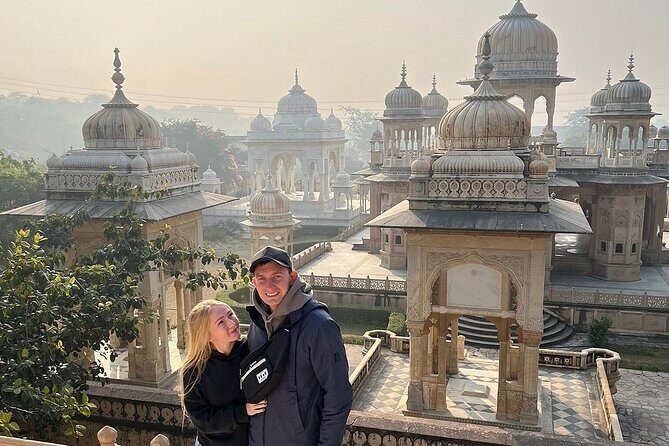
Hawa Mahal: The Face You’ve Seen in Photos
Your first major Jaipur stop is Hawa Mahal (Palace of Winds). It’s known for its distinctive frontage, and the one-hour slot is a good pace. You can stand back, look at the facade patterns, and then see it up close. Even if you’re not into architecture, it’s one of the easiest places to understand why Jaipur became an image of Rajasthan.
Amber Fort: The Day’s Big Physical Moment
Next is Amber Fort, about two hours. This is one of the most popular sights in the entire region, and it’s popular because it feels like you step into a royal world.
Amber Fort works best when you don’t treat it like a checklist. Look at the fort’s planning, the fortifications, and the way the space controls movement. If you like forts, you’ll feel satisfied here.
City Palace: Where Rule and Art Meet
Then you visit City Palace, also about two hours. City Palace is valuable because it’s not just a pretty building. It’s tied to how the Maharaja lived and ruled in the heart of Jaipur.
You’ll see multiple palace sections within the complex, including Chandra Mahal and Mubarak Mahal (listed within the tour info). Even if you only have one day in Jaipur, this stop helps you understand why the city is called the Pink City and how royalty shaped it.
Jantar Mantar: The Science Stop That Feels Surprising
Then comes Jantar Mantar, an early 18th-century astronomical observation site with monumental instruments. If you think you’re not a science person, don’t worry. This is one of those places where the scale of the masonry tools does the explaining for you.
A one-hour visit is enough to walk the main instruments and get the idea of how they were used.
Evening Free for Shopping
Your evening is free for shopping, with about 30 minutes set aside as free time. That’s not a full market day, but it’s enough to pick up small souvenirs, snacks, or textiles if you’re traveling with someone who loves crafts.
Day 4: Back to Delhi Around Early Afternoon
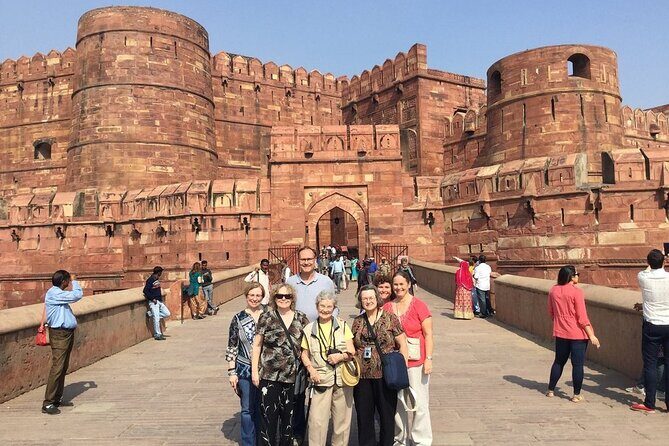
Day 4 is a transfer day back to Delhi. You’ll have breakfast and then drive to Delhi for airport or hotel drop-off.
The tour info notes you’ll be back by around 2pm (and it also says the drive is about 5 hours, depending on the route). That mismatch is usually normal with timing descriptions, so just treat it as: you should plan on an early afternoon arrival if everything runs smoothly.
This is also a good time to decide how you want to end your trip. If you’ve got a late flight, you may have some wiggle room to rest. If you’ve booked something for the next morning, aim to go easy the night before, because Day 3 can be active.
Hotels and Rooms: Twin Sharing Is the Default
You’ll stay overnight in Agra and Jaipur, with rooms generally provided on a twin-sharing basis. If you’re traveling in a group of three, the default is triple-sharing unless you request two rooms (an additional charge may apply).
This is worth thinking about if you’re sensitive to room layout, or if you value private space. For couples, twin-sharing usually works fine since you’re likely booking as two people. For friend groups, ask your provider how you’re assigned before you lock anything in.
The tour includes breakfasts each morning, but food and drinks aren’t included beyond that. In practice, you’ll want to budget for lunch and dinner daily and plan for the fact that options can range from casual to tourist-priced.
Entrance Tickets: Plan for Them Even with a Guide
Entrance fees are clearly listed as not included, but your guide helps you buy them so you won’t sit around waiting in lines. That’s a meaningful difference on a tour like this. A lot of time can disappear when ticket lines are long or when you’re trying to find the right counter while also negotiating crowds.
So treat tickets as a separate line item in your budget. The guide support turns the process into a quick errand, not a long delay.
What I’d Emphasize if You Care About Comfort and Safety
The highest praise in the experience points to three practical things:
1) You feel looked after, not stuck figuring it out.
2) The guide explains enough to make the stops feel connected.
3) The driver drives with caution and safety.
That last part matters more than people think. When you’re traveling between Delhi, Agra, and Jaipur, you’re in the car a lot. A careful driver helps you relax, and that relaxation improves how much you enjoy the sites.
Also, the tour repeatedly aims for “less stress.” That shows up in the structure: pickup is handled, transfers are organized, and the monument-day flow is planned.
Should You Book This 4-Day Golden Triangle Tour?
If you want the Golden Triangle highlights in a short window, this is a strong match. I’d book it if:
- you want guided UNESCO sites without doing a ton of independent planning
- you value air-conditioned comfort between cities
- you prefer a structured route where ticket confusion is handled for you
- you like forts, palaces, and major monuments more than offbeat detours
I’d think twice if:
- you hate tight schedules and long days
- you’d rather spend extra time in one city instead of moving every day
- entrance fees are a dealbreaker for your budget (because they’re not included)
One final tip: check your start day. Taj Mahal closure on Friday can change the city order. If your dates land you on a Friday, confirm the plan before you go so you know what order you’ll experience.
FAQ
What cities does the Golden Triangle tour cover?
The tour covers Delhi, Agra, and Jaipur in about four days.
What is included in the tour price?
The tour includes guide services, pickup and drop-off, an air-conditioned vehicle, and breakfast (4). Entrance tickets and food/drinks are not included.
Are entrance tickets included for the monuments?
No. Entrance tickets are listed as not included. The guide helps you buy entrance fees so you don’t have to wait in queues.
What time does the tour start, and where does pickup happen?
The start time is 8:00am, with pickup from the airport or any location in Delhi/Gurugram.
Is the Taj Mahal always part of the itinerary?
Taj Mahal is listed as closed for all visitors on Friday. The itinerary can adjust if you start on Thursday so the tour avoids that closure.
How are hotel rooms handled?
Rooms are generally provided on a twin-sharing basis. If three guests are booked, rooms are typically triple-sharing by default, unless you prefer two rooms and pay an additional charge.
Can I cancel and get a refund?
You can cancel up to 3 days in advance for a full refund. If you cancel less than 3 days before the start time, the amount paid is not refunded.