REVIEW · NEW DELHI
Luxury Rickshaw Tour of Old Delhi
Book on Viator →Operated by When in India Tours · Bookable on Viator
Old Delhi can feel loud and confusing. This tour keeps it manageable while you see real city life.
I like the luxury rickshaw ride for getting around comfortably, and I really appreciate the wireless headsets that let you hear your English-speaking local guide clearly even when you’re surrounded by crowds. The one thing to consider is timing: many Old Delhi bazaars close on Sundays, so your route may shift depending on the day.
What makes this experience click is that it’s not a fixed checklist. You start at the Digambar Jain Temple area, then your guide directs the pace and route based on your interests, mixing famous landmarks with lesser-visited lanes and places you can actually picture living people in.
You also get real extras for the price: bottled water, food tasting, admission to attractions on the route, and even a specially drafted book with help from Indian history experts. At $85 per person for about three hours, it’s best seen as a guided, all-in way to get oriented fast—without losing the fun of wandering.
In This Review
- Key things to know before you go
- How the luxury rickshaw tour really works in 3 hours
- Starting point near Digambar Jain Temple and Red Fort area
- Old Delhi markets: Chandni Chowk and the lanes around it
- Khari Baoli spice market: Asia’s largest spice market
- Temples and faith spaces: Digambar Jain, Gauri Shanker, and more
- Palaces and havelis: Begum Shamroo Palace and Mughal-era style
- Red Fort, Jama Masjid, and civic landmarks you can place on the map
- Food samples and tasting stops without the guesswork
- The included book and visual explanations you’ll actually use later
- Price and value: what $85 gets you in a private 3-hour format
- Who should book this tour, and who should skip it
- Should you book the Luxury Rickshaw Tour of Old Delhi?
- FAQ
- How long is the Luxury Rickshaw Tour of Old Delhi?
- How much does the tour cost?
- Where does the tour start?
- Is this a private tour?
- What is included in the tour price?
- Is hotel pickup and drop-off included?
- Are there any days when Old Delhi bazaars are closed?
- What kinds of places might we see?
- Do I need a minimum number of people to book?
- What is the cancellation policy?
Key things to know before you go
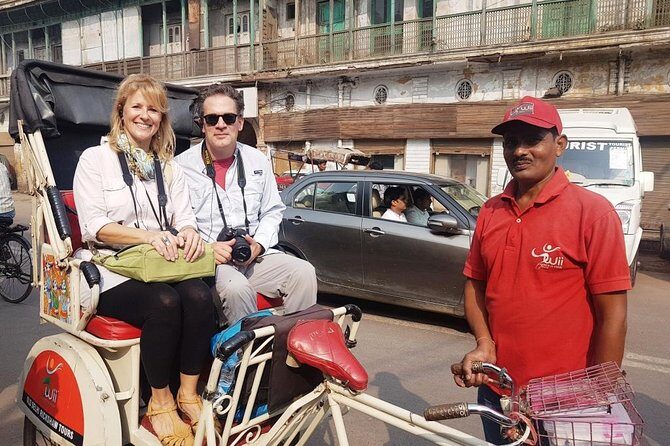
- Wireless headsets for clear commentary: You won’t have to lean in or guess what’s being said over market noise.
- Customize the route to your interests: Palaces, shrines, spice trading, and food can all be part of your plan.
- Old Delhi landmarks plus calmer, less touristy stops: You get variety instead of only the biggest sights.
- Food samples and bottled water included: You taste along the way, not just look.
- A book and visual aids: You get a guidebook-style takeaway plus explanations with rare pictures and sketches.
- You ride and move through real bazaars: Places like Chandni Chowk and Kinari bazaar are built into the experience.
How the luxury rickshaw tour really works in 3 hours
Think of this as a guided ride with stops that can shift. You’ll start near the Digambar Jain Temple area, and from there the itinerary is flexible so you can choose a mix of major monuments, places of worship, heritage mansions, markets, and older food shops.
You also get a practical advantage: your guide isn’t just pointing at buildings. With live narration through wireless headsets, the guide gives context as you pass and, in many cases, goes inside places or drives past others. That matters in Old Delhi, where locations can look similar if you’re not sure what you’re looking at.
The tour runs for about three hours, which is a sweet spot for getting the feel of the city without burning the whole day. But you should expect a packed route where you’ll move through crowded areas and then slow down when the guide wants you to see details.
You can also read our reviews of more tours and experiences in New Delhi



Starting point near Digambar Jain Temple and Red Fort area
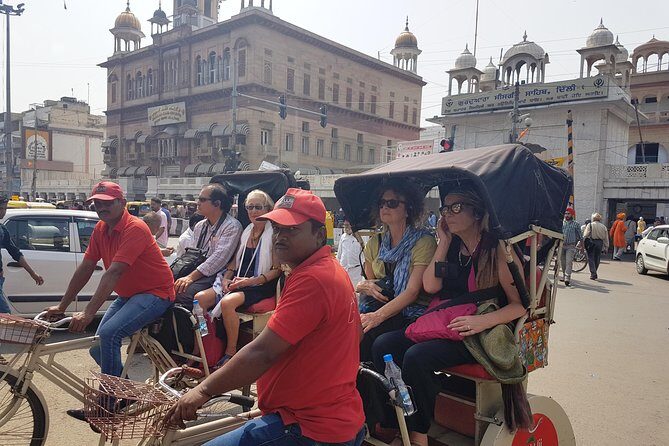
Your meet-up is at Charity Birds Hospital, next to Shri Digambar Jain Lal Mandir, opposite Red Fort in the Chandni Chowk area of Delhi. That’s a smart start: you’re close to the historic core, and it’s not a long transfer day once you arrive.
Starting at a Jain temple area also sets the tone. Old Delhi isn’t one single story—it’s many communities side by side. As you get going, you’ll hear explanations that tie architecture and daily life together, not just a list of names.
If you’re trying to get oriented quickly, this starting point helps. You’ll likely be able to connect what you see today with the broader sweep of Red Fort and the trading lanes that feed into Chandni Chowk.
Old Delhi markets: Chandni Chowk and the lanes around it
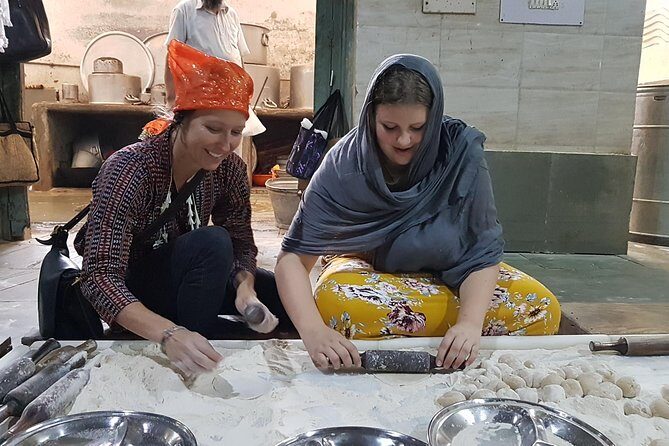
Chandni Chowk is more than a famous name. Its meaning—moonlit square—hints at how this space was designed as a central hub for movement and commerce. On this tour, it’s part of the mix that brings the city to life.
You’ll also pass or enter related bazaars that have their own specialties. For example:
- Kinari bazaar is the wedding market with traditional outfits.
- Dariba kalan is known as silver street.
- Ballimaran is associated with bangles and footwear.
The value here isn’t only shopping. It’s that each lane gives you a different snapshot of Old Delhi’s old trade system. You’re seeing how neighborhoods organize themselves around what they sell, and how that shapes the look of the street.
One practical note: markets can be sensory overload. The headset audio is a big help because you can keep your attention on what the guide is explaining instead of trying to keep up with noise and motion at the same time.
Khari Baoli spice market: Asia’s largest spice market
If there’s one place in Old Delhi that really sells the senses, it’s Khari Baoli, described here as Asia’s largest spice market. Your tour may include a stop there, and this is where the neighborhood theme becomes obvious: spices aren’t just a product. They’re part of the local identity.
Your guide’s commentary is key in a market like this. Without context, you might treat it like any other spice shop. With the tour narration, you get a better sense of how the market fits into the larger history of trade routes and food culture in the area.
You’ll also see how the market connects to the rest of your day. Spice trading sits next to houses of worship, older streets, and heritage structures, which is why the guide’s route planning makes a difference. You’re not only taking in sights—you’re watching the city’s different layers overlap.
Temples and faith spaces: Digambar Jain, Gauri Shanker, and more
This tour includes multiple faith sites, and that gives you a fuller picture of Old Delhi. You start near the Digambar Jain Temple area, and your route can also include the Gauri Shanker Hindu Temple. You may even pass or visit other religious landmarks such as a Baptist church and places like the Fatehpuri Mosque and a Gurudwara.
Why I like this part of the experience: it helps you stop treating Old Delhi like a theme park made of monuments. Faith spaces are where daily life still feels active, even when you’re surrounded by visitors.
The guide’s job is to explain what you’re seeing as you go—what to notice in the architecture, why the site matters, and how it connects to the neighborhood. If you’re the kind of person who wants meaning, this is where the tour earns its keep.
Also, because you get to go inside at some stops (or drive past others), you can experience different levels of access without turning the tour into a long line day.






Palaces and havelis: Begum Shamroo Palace and Mughal-era style
Old Delhi is packed with “old walls,” but palaces and havelis are where you see the ambition behind them. Your tour may include visits to places like Begum Shamroo Palace, plus other heritage mansions and palaces such as Gadodiya Palace and Zeenat Mahal Palace.
You might also see heritage havelis with original Mughal architecture. That phrase matters because it’s pointing you toward design heritage, not just age. Mughal-era architecture typically shows up in the way spaces are laid out and how details are handled across facades and entrances.
The tour’s pacing helps here. You’re not just staring at buildings from a distance. With the headset commentary, you get specific descriptions as you move through the area, and the guide may share rare pictures and sketches to help you visualize how the sights functioned in earlier days.
A good reminder: palaces and havelis are not always designed for tourist-style stopping. The guide’s plan—when to go inside or when to drive past—keeps the day flowing so you don’t spend all three hours wrestling with access.
Red Fort, Jama Masjid, and civic landmarks you can place on the map
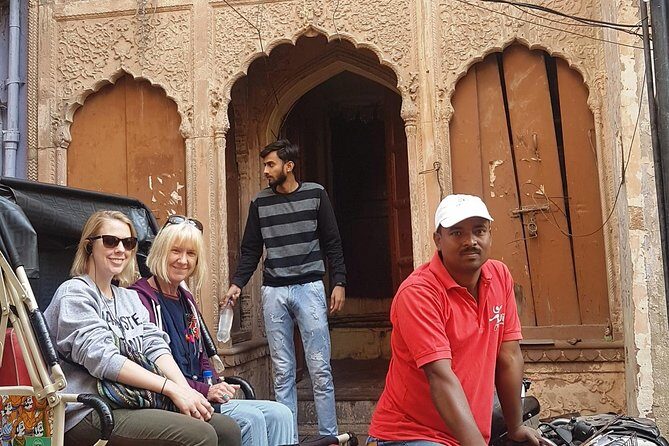
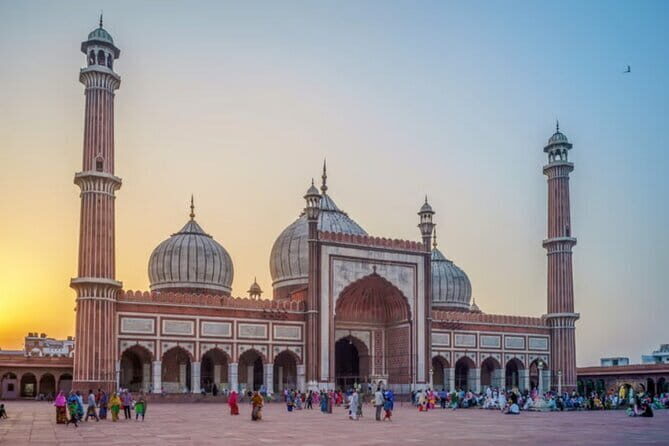
Even when your route doesn’t linger, the tour often threads through the historic center’s big anchors. Landmarks that can appear in your path include Jama Masjid Mosque and Red Fort, plus civic points like the Town Hall area.
You may also see, depending on your route choices, the mix of monumental scale and street-level detail that makes Old Delhi feel like a living archive. The trick for first-timers is not just seeing these names, but building a mental map of where they relate to the markets.
That’s where the guide’s commentary helps most. You’re getting direction along the way through the same lanes people have used for generations. And because you’re riding a rickshaw, you’re moving at a speed that lets you actually read the street.
Food samples and tasting stops without the guesswork
This is a food tour in disguise. You’re not only eating at one place. You get food samples as part of the route, plus your guide includes explanations around what you’re tasting and where it fits in the local tradition.
There’s also something smart in the included approach: you don’t have to figure out which older shops are worth your time while you’re trying to navigate crowds. Your guide directs you toward places to eat or taste, and then you move on before you get stuck waiting.
The tour also includes bottled water, which sounds basic but matters in a city where you’re constantly moving. You’ll likely appreciate that small comfort during a three-hour loop through dense streets.
And because the tour can include centuries-old shops, this is less about modern food trends and more about the older patterns that still define Old Delhi.
The included book and visual explanations you’ll actually use later
One extra that I’d never skip: each guest receives a book drafted with help from experts in Indian history. It’s paired with guide explanations that include rare pictures and sketches to help you picture what you’re seeing.
This turns the experience into something that lasts past the ride. Instead of only remembering a street scene, you can refresh your memory later by using the visuals and context you were given.
If you’re the type who wants to understand what you saw—not just take photos—this added learning piece is a big part of the value.
Price and value: what $85 gets you in a private 3-hour format
At $85 per person for roughly three hours, this is priced like a real guided experience, not a casual stroll. For me, the value hinges on what’s included: a private tour, an English-speaking local guide, live commentary through wireless headsets, bottled water, food tasting, and admission to attractions on the route.
It also includes the rickshaw ride itself, which changes how you see Old Delhi. You get around with a local feel at a comfortable pace, and you’re not stuck doing only walking.
Group discounts are mentioned too, and there’s a minimum of two people per booking. So it can be a good deal if you’re traveling with a friend or two, or if you’re comfortable sharing with a small group.
A quick practical thought: if you’re already fully confident navigating Old Delhi and you don’t care about guided context, a self-planned route might be cheaper. But if you want less stress, better explanations, and food built into the day, this price starts to make sense.
Who should book this tour, and who should skip it
This tour fits best if you want Old Delhi’s highlights and specialty areas without spending all day researching. It’s also ideal if you like history and architecture but you need help turning names and buildings into something you can place in your mind.
You’ll enjoy it if you:
- want custom stops based on your interests (temples, palaces, markets, or food)
- like being guided through crowds with clear audio support
- prefer a structured experience that still allows flexibility
You might skip it if you want a totally DIY day with no guide at all, or if you’re traveling on a Sunday when many markets can be closed, which can affect the route.
Also, children must be accompanied by an adult. That’s good to know for family planning.
Should you book the Luxury Rickshaw Tour of Old Delhi?
I’d book it if you’re in New Delhi for a short window and you want to feel like you understood Old Delhi, not just toured it. The headset setup, English narration, and built-in tastings do real work for first-timers, and the route flexibility keeps you from doing the same generic highlights loop.
I’d think twice if your schedule is pinned to a Sunday and you’re expecting every market stop to happen the way you imagined. Since bazaars can be closed, your experience may shift.
If you want an organized way to see Chandni Chowk, experience Khari Baoli, and balance temples, palaces, and food within about three hours, this is a smart use of time.
FAQ
How long is the Luxury Rickshaw Tour of Old Delhi?
It runs for about 3 hours (approx.).
How much does the tour cost?
The price is $85.00 per person.
Where does the tour start?
The meeting point is Charity Birds Hospital next to Shri Digambar Jain Lal Mandir, opposite Red Fort, Chandni Chowk, Delhi 110006, India.
Is this a private tour?
Yes. It’s a private tour/activity, and only your group participates.
What is included in the tour price?
Bottled water, food tasting, headsets to hear the guide clearly, live commentary on board, an English-speaking local guide, and the rickshaw ride. Admission to attractions on the route is also included.
Is hotel pickup and drop-off included?
No. Hotel pickup and drop-off are not included.
Are there any days when Old Delhi bazaars are closed?
Yes. Many Old Delhi bazaars are closed on Sundays, so your market time may be affected.
What kinds of places might we see?
Stops can include Digamber Jain Temple at the start area, Gauri Shanker Hindu Temple, Khari Baoli spice market, Chandni Chowk, Begum Shamroo Palace, and other landmarks such as Jama Masjid Mosque and Red Fort, plus areas like Kinari bazaar, Dariba kalan, and Ballimaran.
Do I need a minimum number of people to book?
Yes. A minimum of 2 people per booking is required.
What is the cancellation policy?
The experience is non-refundable and cannot be changed for any reason. If you cancel or ask for an amendment, the amount you paid will not be refunded.