REVIEW · NEW DELHI
4 Days Private Golden Triangle Tour to Agra and Jaipur from Delhi
Book on Viator →Operated by TRAVEL INDIA ONE DAY · Bookable on Viator
Four days, three cities, one smooth plan. This Golden Triangle tour is a fast but thoughtful route through UNESCO sights and classic neighborhood stops, with a private driver keeping the logistics simple. You’ll cover Delhi’s big monuments and Old Delhi flavor, then move on to Agra for the morning Taj Mahal moment, and finish in Jaipur with fort-and-palace viewpoints that look like they belong in a postcard.
What I really like is how the tour balances major landmarks with short, practical breaks. You get a private vehicle so you’re not hunting taxis between stops, and you’re not stuck waiting around when it’s time to enter big-ticket sites.
One thing to plan for: entry tickets aren’t fully included. Your itinerary notes many stops as free, but the package also estimates monument entry tickets at about $55 per person, plus the Taj Mahal is closed every Friday.
In This Review
- Key highlights
- How this Golden Triangle tour really works (and for whom)
- Day 1 in Delhi: Old Delhi intensity plus UNESCO monuments
- Chandni Chowk and Jama Masjid: the Old Delhi core
- Gurudwara Moti Bagh Sahib (and the tour’s swap logic)
- India Gate, Rashtrapati Bhavan area, and big Delhi architecture
- Swaminarayan Akshardham and Humayun’s Tomb: UNESCO-grade contrast
- Qutub Minar: the Delhi that goes farther back
- Then: the drive to Agra
- Day 2 in Agra: sunrise Taj Mahal and the layers of Mughal power
- Taj Mahal at sunrise: the famous view, early timing
- Agra Fort: the power base behind the postcard
- Itmad-ud-Daula (the Baby Taj) and Fatehpur Sikri area stop
- Transfer to Jaipur
- Day 3 in Jaipur: palaces, observatories, and the fort you remember
- Hawa Mahal: quick, iconic, and very Jaipur
- City Palace: where power and daily life overlap
- Jal Mahal: short lake stop with photo potential
- Amber Fort: UNESCO grounds and a big finish
- Jantar Mantar: the astronomy side of Rajasthan
- Day 4: back to Delhi and an airport-friendly finish
- Price, included value, and what to budget for monuments
- Tickets, Friday closures, and how the schedule protects your day
- My practical tips to make this feel worth it
- Should you book this 4-Day Private Golden Triangle Tour?
- FAQ
- FAQ
- Where is pickup offered, and what time can I choose?
- Is this tour private or will I join other groups?
- What monument entry tickets are included in the package?
- Does the itinerary include sunrise at the Taj Mahal?
- Is the Taj Mahal ever closed during the trip?
- Are hotel nights included?
- What transport detail is included specifically for the Taj Mahal area?
Key highlights
- Private car and guides throughout: your pace, your route, only your group
- Sunrise Taj Mahal visit: timed to help you catch softer light and fewer crowds at the start
- UNESCO-heavy days: Qutub Minar, Humayun’s Tomb, Agra Fort, Amber Fort, plus the Taj Mahal area
- Battery bus at the Taj: included ride between the parking area and the monument zone
- Old Delhi stops on Day 1: Chandni Chowk and Jama Masjid are a big part of the Delhi story
- Simple extras during the drive: bottled water and soft drinks are included
How this Golden Triangle tour really works (and for whom)
This is a private, 4-day circuit linking New Delhi, Agra, and Jaipur by road. The value is in the flow: you’re not organizing separate guides and drivers for each city, and you’re not juggling transfers while trying to see top sights. It’s also the kind of plan that works well if you want the headline monuments, but don’t want your day schedule to feel like a race.
The tour starts with pickup somewhere in the Delhi region—Delhi, Noida, Gurugram, Ghaziabad, or Faridabad—with a pickup window you can choose between 9:00 AM and 11:00 AM. Most travel is by car, and the operator states that toll and parking charges are covered, which matters because it keeps your day from turning into a series of small, annoying negotiations.
This tour suits you if:
- you want a clear 4-day plan without micromanaging,
- you prefer a driver who stays with you between sights,
- and you like guides who help you get oriented fast (especially for ticketing-heavy places).
It may not be ideal if you want a super relaxed pace or you hate early starts—because the itinerary stacks major stops tightly across each day.
You can also read our reviews of more private tours in New Delhi



Day 1 in Delhi: Old Delhi intensity plus UNESCO monuments
Day 1 is built like two Delhi worlds in one: the Old Delhi lane-and-market feeling, then the grand monuments and UNESCO-listed architecture.
Chandni Chowk and Jama Masjid: the Old Delhi core
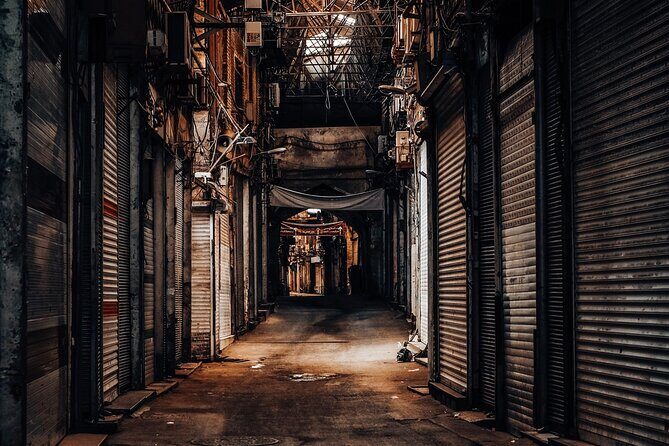
You’ll start with Chandni Chowk, one of the oldest and busiest markets in Old Delhi. Even when you only have an hour, this is the kind of place that helps you understand Delhi beyond its monuments. It’s a sensory start: shops, movement, and a street-food vibe that feels very local.
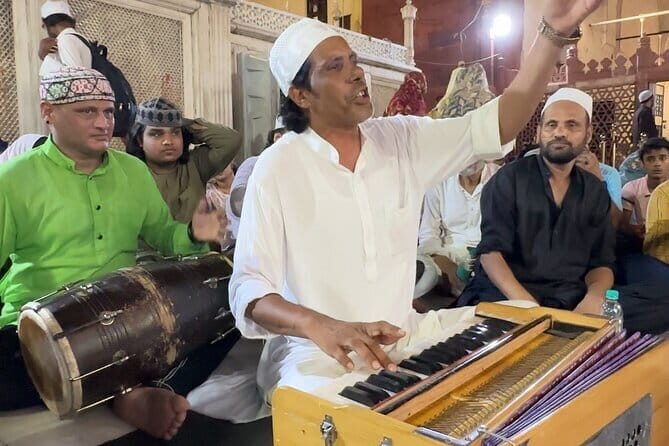
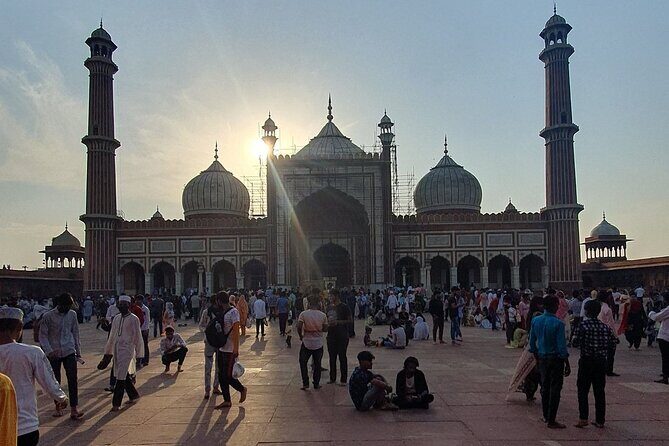
Next comes Jama Masjid, described as one of India’s largest and most important mosques, built in the mid-17th century by Shah Jahan. The important practical point: your package lists Jama Masjid admission as not included, so it’s worth budgeting time and money here. It also tends to be a strong photography moment, so I’d plan for it to be one of those stops where you slow down and actually look.
Gurudwara Moti Bagh Sahib (and the tour’s swap logic)
You’re scheduled for a Sikh worship stop named Gurudwara Moti Bagh Sahib for about an hour. The tour description text also mentions Gurudwara Bangla Sahib in the explanation, which suggests the operator may sometimes swap within that general category of central Delhi gurdwaras. Practically, treat this as a “be ready for a key Sikh shrine stop” and confirm the exact place when you book so there’s no surprise on arrival.
One detail worth appreciating: the operator also notes that on Mondays, Akshardham and Gandhi Smriti are closed, and you’ll be taken to Gurudwara Bangla Sahib and Birla Temple instead. So this day’s “religious and cultural stops” can shift slightly depending on the calendar.
India Gate, Rashtrapati Bhavan area, and big Delhi architecture
After Old Delhi, the itinerary pivots to central Delhi icons: India Gate (free in the itinerary) is the war memorial arch you’ve likely seen in photos, and then you’ll also pass the Rashtrapati Bhavan area (listed as a stop in the day plan). Even if you don’t go inside, this segment helps you see how Delhi’s imperial-era planning still frames today’s city center.
You can also read our reviews of more tours and experiences in New Delhi





Swaminarayan Akshardham and Humayun’s Tomb: UNESCO-grade contrast
You’ll then hit two major architecture stops:
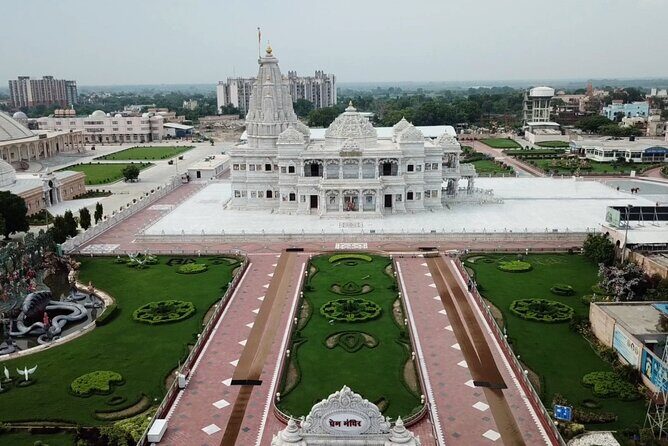
- Swaminarayan Akshardham (listed as not included, about 30 minutes)
- Humayun’s Tomb (UNESCO World Heritage Site, listed as not included)
Humayun’s Tomb is a big deal because it’s Mughal architecture at its most elegant—more than a quick photo stop. With only about 30 minutes, you’ll want to focus: walk the main paths, study the symmetry, and take in the way the complex is laid out.
Qutub Minar: the Delhi that goes farther back
Finally on Day 1, you reach Qutub Minar, listed as a UNESCO World Heritage Site. It’s a 73-meter tower built in the 12th century by the Delhi Sultanate, and the complex around it is part of why it’s famous. Your itinerary allows about 45 minutes. With that time, I recommend treating this as your “big architecture moment”: look up often, and don’t rush the surrounding details.
Then: the drive to Agra
After Delhi sightseeing, the driver moves you to Agra. The itinerary states about 3 hours of driving time for this leg. This matters because it sets expectations for your energy level: you’re not going to linger late in Delhi on Day 1.
Day 2 in Agra: sunrise Taj Mahal and the layers of Mughal power
Day 2 is where the Golden Triangle earns its name.
Taj Mahal at sunrise: the famous view, early timing
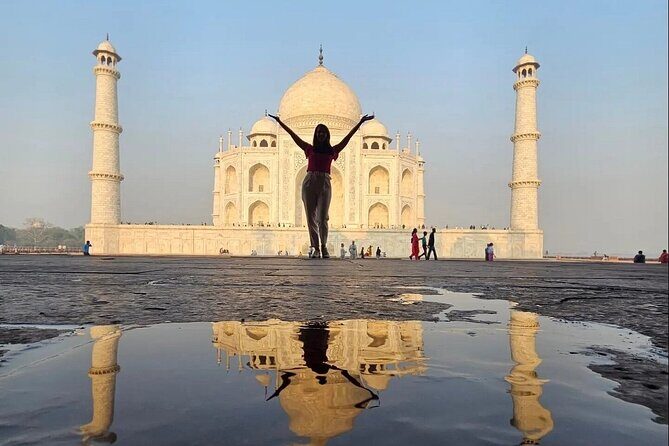
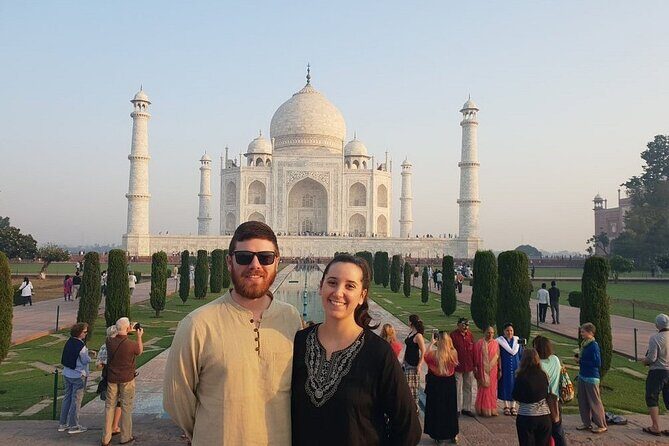
You’ll start with an early sunrise visit to the Taj Mahal. The itinerary lists about 3 hours here, and your package states Taj Mahal admission is not included. Timing matters: sunrise is often your best bet for softer light on the white marble and calmer conditions at the start of the day.
A practical note: Taj Mahal is closed every Friday, so if your dates land on Friday, plan for a schedule adjustment. Your operator’s system will need to swap the visit.
Agra Fort: the power base behind the postcard
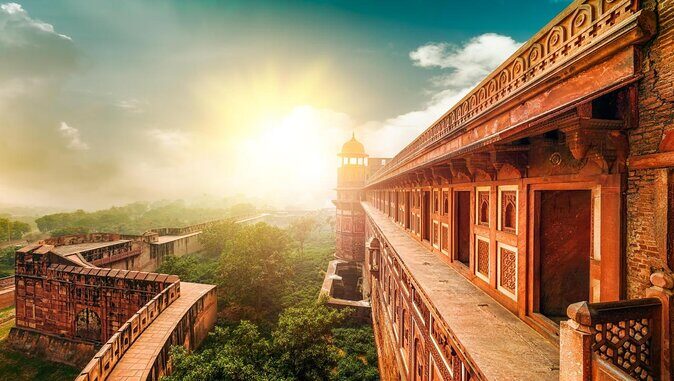
After the Taj, you’ll go to Agra Fort. This is another UNESCO World Heritage Site and the itinerary lists about 1 hour. The fort was built in the 16th century by Akbar and later used by Shah Jahan as a palace—so it gives context for the Mughal story you see in the Taj Mahal.
If the Taj Mahal is the emotion, Agra Fort is the structure: walls, ramparts, and the sense of how rulers organized their world. With just an hour, you’ll get value if you don’t try to see everything at once. Pick a few key viewpoints and focus on the fort’s layout.
Itmad-ud-Daula (the Baby Taj) and Fatehpur Sikri area stop
You’ll also visit Itmad-ud-Daula, often called the “Baby Taj” because of the resemblance to the Taj Mahal. The itinerary gives about 1 hour here. Again, admission is listed as not included, so keep that budget in mind.
Next comes Panch Mahal – Fatehpur Sikri. The itinerary gives about 1 hour. Fatehpur Sikri is a major Mughal site, and even with limited time, the Panch Mahal portion can help you see how palaces were designed for both function and display. Expect more “architecture and meaning” than “shopping and wandering.”
Transfer to Jaipur
After Fatehpur Sikri area, the drive to Jaipur is about 3 hours. The operator states you’ll be dropped at your hotel in Jaipur after the drive. This is a sensible end point because it protects your Day 3 sightseeing energy.
Day 3 in Jaipur: palaces, observatories, and the fort you remember
Jaipur day is a mix of iconic visuals and strong “Rajasthan made of stone and geometry” moments.
Hawa Mahal: quick, iconic, and very Jaipur
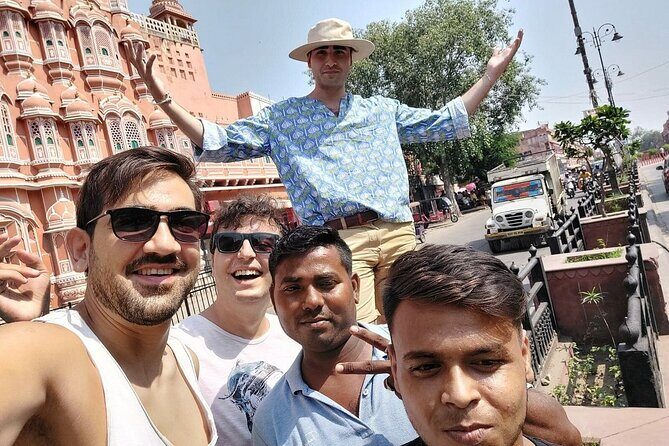
You’ll visit Hawa Mahal (Palace of Breeze). The itinerary gives about 1 hour. Hawa Mahal is known for its facade with 953 small windows, designed so royal women could observe street life while staying hidden. Even if you’re not going deep into interpretation, the facade alone helps you understand Jaipur’s flair for pattern and design.
City Palace: where power and daily life overlap
Next is the City Palace, about 2 hours. This is listed as a royal palace complex with Rajasthani architecture and a museum component. With two hours, you’ll have time to balance exterior looks with indoor museum-style viewing, depending on what’s open and how the crowds feel.
Jal Mahal: short lake stop with photo potential
You’ll then see Jal Mahal, the Water Palace in the middle of Man Sagar Lake, with about 30 minutes. It’s brief by design. Treat it as a breather stop: step out, take photos, and keep moving because Day 3’s big finish is Amber Fort.
Amber Fort: UNESCO grounds and a big finish
Your biggest stop is Amber Fort (Amer Fort), a UNESCO World Heritage Site, listed for about 1 hour. This is where carvings, architecture, and hilltop views create one of Jaipur’s strongest memories. With only an hour, I suggest you aim for the main lines of sight and don’t get stuck trying to photograph every detail.
Jantar Mantar: the astronomy side of Rajasthan
To round the day out, you’ll visit Jantar Mantar, an astronomical observatory built in the early 18th century by Sawai Jai Singh II. You get about 1 hour. The instruments look like art, but they’re tied to measurement and observation. If you’re the kind of traveler who likes learning a little science inside a history trip, this stop is a smart closer.
Day 4: back to Delhi and an airport-friendly finish
Day 4 is the “go home smart” day. After breakfast at your hotel, you’ll drive back to Delhi. On arrival, the plan is to drop you at the international airport so you can catch your connecting flight.
This is practical: it avoids the headache of trying to figure out timing and transport in Delhi again at the end of your trip. It also means you shouldn’t plan an extra sightseeing sprint on Day 4 unless your flight timing gives you buffer.
Price, included value, and what to budget for monuments
The headline price is listed as $6.96 per person, which sounds almost unreal for a 4-day private experience. The catch is that this number doesn’t replace the reality that major monuments can carry entry fees, and your package says you should budget around $55 per person for monument tickets.
Here’s the value math you can actually use:
- You’re getting private air-conditioned car plus fuel surcharge.
- You’re getting private local guides for sightseeing.
- You’re getting battery bus ride for the Taj Mahal zone, which saves time and hassle.
- If you choose the option that includes hotels, you also get 3 nights hotels and daily hotel breakfast (plus the plan notes breakfast 4 times total).
So if you’re booking flights and hotels yourself anyway, this can still be good value because it bundles the hard parts: transport between cities, guided sightseeing, and the Taj-area transit support. If you already have hotels planned, your best value may come from focusing on the private guide + car + ticket help part, rather than the lodging value.
Also keep in mind the itinerary lists some stops as admission ticket free (like parts of India Gate, and the market time). But key monuments are generally the paid portion, so your $55 budget estimate should be taken seriously.
Tickets, Friday closures, and how the schedule protects your day
A small amount of planning saves big stress on this route.
- Taj Mahal closure: it’s closed every Friday. If your Day 2 date is a Friday, expect a swap or timing change.
- Akshardham and Gandhi Smriti closure on Monday: on Mondays, the itinerary notes you’ll be taken to Gurudwara Bangla Sahib and Birla Temple instead.
- The operator states your guide will help you buy entrance tickets so you don’t have to wait in queue, which is a big deal when you’re on a tight schedule.
I also like that the tour avoids sketchy add-ons: the operator notes no elephant activities. And you’ll be in good hands in the sense that the operator specifies fully vaccinated private driver and private guides.
My practical tips to make this feel worth it
If you want the best experience, don’t treat this like a checklist. Treat it like three chapters.
- Wear layers. Delhi and Agra can swing in temperature through the day, and you’ll be outside for key sights.
- For mosques and religious sites, dress respectfully. You’ll have an easier time if shoulders and knees are covered.
- Keep your expectations realistic for time at each stop. This is a tour where 30–60 minutes at each major site is normal. The win is that you don’t waste time traveling between them.
- Bring a small bottle of patience. The route is efficient, but roads can still be unpredictable, and the operator says transfer times depend on traffic.
Should you book this 4-Day Private Golden Triangle Tour?
Book it if you want a guided, private, road-based Golden Triangle that hits the big UNESCO targets without forcing you to arrange separate transport and guides city by city. It’s especially good for first-timers who want the major monuments—plus Old Delhi stops—while keeping logistics simple.
Skip it or at least ask questions before booking if:
- you’re traveling on a Friday and Taj Mahal is non-negotiable,
- you’re on a very strict budget for entry fees (the estimated monument tickets add up),
- or you’d rather spend long hours wandering independently instead of following a structured route.
FAQ
FAQ
Where is pickup offered, and what time can I choose?
Pickup is offered from anywhere in Delhi, Noida, Gurugram, Ghaziabad, or Faridabad. You can choose any pickup time between 9:00 AM and 11:00 AM.
Is this tour private or will I join other groups?
This is a private tour/activity, and only your group will participate.
What monument entry tickets are included in the package?
Entry tickets are not included. The tour lists an approximate monument entry cost of about $55 per person, including all monuments.
Does the itinerary include sunrise at the Taj Mahal?
Yes. Day 2 starts early for a sunrise view of the Taj Mahal, with about 3 hours allocated.
Is the Taj Mahal ever closed during the trip?
Yes. The Taj Mahal is closed every Friday.
Are hotel nights included?
Hotel nights are included if you book the option that includes hotels. The plan states 3 nights hotels (and pickup/drop-off and hotel breakfast in that option).
What transport detail is included specifically for the Taj Mahal area?
The package includes a battery bus ride to and from the Taj Mahal parking lot to the Taj Mahal monuments.