REVIEW · NEW DELHI
3 Day Luxury Golden Triangle Tour to Agra and Jaipur From Delhi
Book on Viator →Operated by India Tour Express · Bookable on Viator
Golden Triangle trips can feel rushed. This one is built to keep you moving without losing the meaning of each stop. You’ll cover Delhi, Agra, and Jaipur in about three days, with a private guide and door-to-door car service that handles the long stretches for you.
I especially like two things: the Chandni Chowk rickshaw ride that gives you a real sense of Old Delhi, and the fact that meals and hotel transfers are wrapped in, so you’re not constantly recalculating costs and logistics. Breakfast and dinner support your schedule on days that start early and end late.
The main drawback is timing pressure. Delhi traffic can be unpredictable, and Taj Mahal is closed every Friday, so your exact visit day matters.
In This Review
- Key Points at a Glance
- Golden Triangle in Three Days: What You’re Really Buying
- Private A/C Car and Hotel Transfers: Comfort That Saves Your Energy
- Day 1 in Delhi: Jama Masjid, Old Delhi Rickshaws, and Mughal Masterpieces
- Jama Masjid: Big-Scale Mughal Architecture
- Chandni Chowk by Rickshaw: The Market That Smells Like India
- Red Fort from the Outside: Photo Stop, Not the Full Ticket Tour
- Gurudwara Bangla Sahib: Quiet Inside the City Noise
- Humayun’s Tomb and Qutub Minar: UNESCO Days That Feel Worth It
- Lotus Temple or Qutub Minar: A Possible Swap
- Drive to Agra: The Day Ends, the Monument Waits
- Day 2 in Agra and Fatehpur Sikri: Sunrise Taj Mahal and Akbar’s Fort
- Taj Mahal at Sunrise: Why Photos Don’t Tell the Full Story
- Agra Fort: Akbar’s Military Capital in Stone
- Fatehpur Sikri en route to Jaipur
- Drive to Jaipur: Hit the Walls, Then Rest
- Day 3 Jaipur Classics: Amber Palace, City Palace, Hawa Mahal, and Jal Mahal
- Amber Palace: Rajput Architecture with Multiple Levels to Explore
- City Palace: The Seat of Power from 1727
- Hawa Mahal: The Palace of Wind
- Jal Mahal: A Water Palace That Looks Different From Every Angle
- Return to Delhi NCR
- Ticket Timing, Photo ID, and the Small Rules That Matter
- Price and Value: Does $90 per Person Make Sense?
- Safety, Organization, and the Real Human Touch
- Who This Tour Fits Best (and Who Might Want More Time)
- Should You Book This 3-Day Golden Triangle Tour?
- FAQ
- What is the duration of the Golden Triangle tour?
- Does the price include hotel accommodation in Agra and Jaipur?
- What meals are included during the tour?
- Is transportation between Delhi, Agra, and Jaipur included?
- Is this a private tour?
- Do I need tickets for monuments, and are some admissions included?
- Is the Taj Mahal open every day?
- What do I need to carry for entry to monuments?
Key Points at a Glance
- Door-to-door transfers keep you from juggling taxis and pickup windows across Delhi traffic
- Private guide support throughout means you spend less time figuring things out
- Taj Mahal at sunrise is the big “wow” moment for most people’s photos and memories
- UNESCO stops on both sides of the route (Delhi and Agra) help you see more than just one city’s highlights
- Hotel choice (3-star or 5-star) affects what luxury feels like at this price
- Car size matches your group so you aren’t packed into a vehicle that feels too small
Golden Triangle in Three Days: What You’re Really Buying
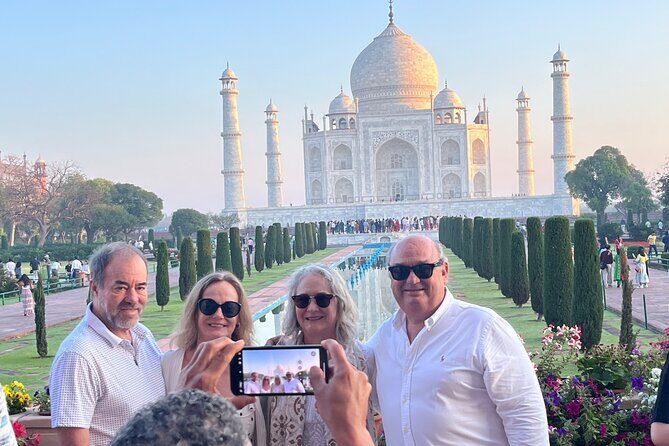
This is the classic India starter route: Delhi first, then Agra, then Jaipur. The smart part is how the tour blends “big name” monuments with a few places that feel more like everyday life, like Old Delhi’s market lanes.
At this length, you’re not going for slow wandering. You’re going for high-impact sightseeing with a guide to translate the why behind the wow. That matters because the Golden Triangle gets famous for a reason, but the details (who built what, why, and how the design works) are what make it stick in your head instead of turning into a checklist.
One more reason this format works: you’re traveling by private A/C car, not trains or shared shuttles. In India, road time can be long, but having one driver and one vehicle reduces stress. Add hotel pickup and drop-off, and your day starts and ends in predictable ways.
You can also read our reviews of more tours and experiences in New Delhi



Private A/C Car and Hotel Transfers: Comfort That Saves Your Energy
You ride in a private car with a driver, and the vehicle size depends on group size: a four-seater sedan for 1–2 people, a six-seater wagon for 3–5, and larger options for bigger groups. That’s useful because cramped transport ruins the “vacation feeling,” especially when you’re doing a long day in two or three different cities.
This tour also includes parking fees, tolls, fuel, and taxes. Those “small” costs are exactly how budgets get messy when you book transportation separately. With the tour handling the driving and fees, you can budget for what you actually choose—like extra snacks, souvenirs, or any meals not listed as included.
In Delhi, where traffic can change minute to minute, door-to-door pickup is more than comfort. It keeps you from losing time to meeting points, app taxis, and translation gaps. And when you’re trying to fit Taj Mahal and other major sites into a short window, time control is the real luxury.
Day 1 in Delhi: Jama Masjid, Old Delhi Rickshaws, and Mughal Masterpieces
Day 1 is a full Delhi sampler. You’ll start with monumental architecture, then shift into market energy, then move into quiet heritage stops—before heading to Agra.
Jama Masjid: Big-Scale Mughal Architecture
You’ll visit Jama Masjid, built by the Mughal emperor Shah Jahan between 1650 and 1656. It’s one of the largest mosques in the world, and it shows. Even if you only spend about 30 minutes, you’ll notice the proportions and the way the complex is designed for crowds.
Admission is included here, so you don’t waste time at the ticket counter.
Chandni Chowk by Rickshaw: The Market That Smells Like India
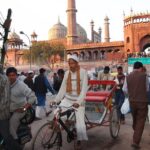
Next comes Chandni Chowk. This part is a mood shift: narrow lanes, people moving in every direction, and stalls selling spices and goods. You’ll do a rickshaw ride through the lanes (with about an hour allowed for this segment), which is the easiest way to experience Old Delhi’s street layout without walking yourself into a fatigue nap before dinner.
The practical win: your guide helps you read what you’re seeing, so it’s not just sensory overload.
You can also read our reviews of more tours and experiences in New Delhi




Red Fort from the Outside: Photo Stop, Not the Full Ticket Tour
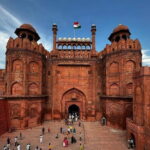
You’ll see the Red Fort from outside. This is a quick photo moment with the fort as the backdrop, but it’s not the same experience as going inside the fort’s museum and courtyards.
So if your dream includes a deeper Red Fort visit, plan on doing that separately on a longer Delhi stay. In a three-day route, this tour makes room for more sites.
Gurudwara Bangla Sahib: Quiet Inside the City Noise
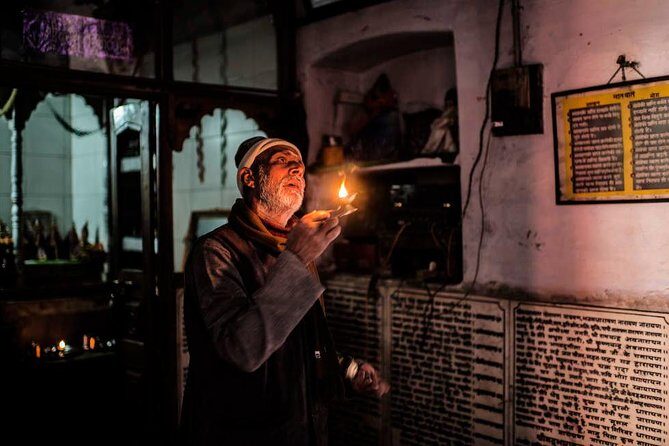
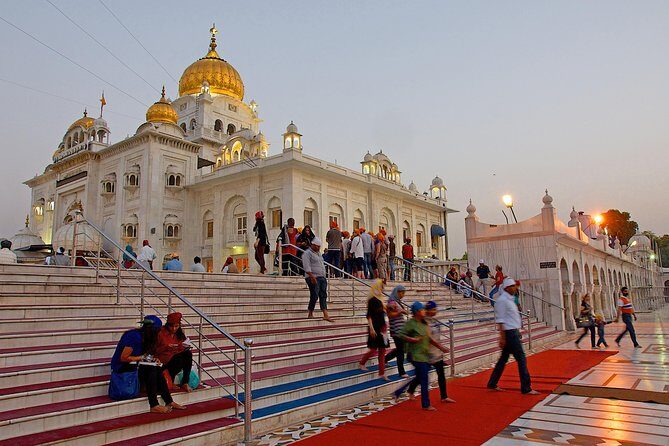
Then you’ll head to Gurudwara Bangla Sahib. It’s one of Delhi’s best-known Sikh temples, tied to the eighth Sikh Guru, Guru Har Krishan, and it features a holy pond inside the complex (often referred to as Saro var). Admission is free, and the time slot is short—about 30 minutes—so you get the spiritual pause without sacrificing the schedule.
Humayun’s Tomb and Qutub Minar: UNESCO Days That Feel Worth It
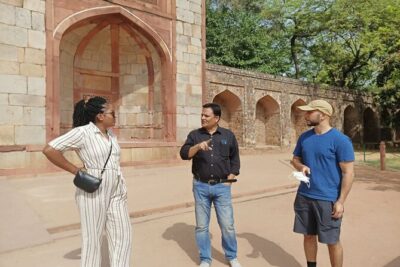
Humayun’s Tomb is next. It’s an UNESCO site built by Humayun’s wife, and it’s often described as the first garden tomb in India. What you’ll notice fast is that the grounds are part of the story, not just the tomb itself.
Then you move to Qutub Minar, another UNESCO World Heritage Site. It’s described as the highest brick tower in India, with construction dating to 1192 and linked to the start of a Muslim empire in India. You’ll have about an hour here, including admission.
Lotus Temple or Qutub Minar: A Possible Swap
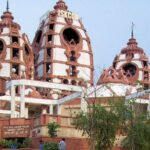
The schedule indicates that you can either visit Lotus Temple or Qutub Minar. Since Qutub Minar is already listed earlier with admission included, you should treat this as a “final-day adjustment” possibility. If your booking ends up choosing Lotus Temple, it’s known for its flower-like shape and is a major modern house of worship.
In other words: expect a small reroute at the end of Day 1 depending on timing and what the operator decides fits best.
Drive to Agra: The Day Ends, the Monument Waits
After Delhi sightseeing, you drive to Agra (about three hours). You’ll check in, then relax. This is a smart move because your next morning is the one you’ll remember most.
Day 2 in Agra and Fatehpur Sikri: Sunrise Taj Mahal and Akbar’s Fort
Day 2 starts with an early, high-priority mission: Taj Mahal. You’ll meet your guide at the hotel lobby and then head out.
Taj Mahal at Sunrise: Why Photos Don’t Tell the Full Story
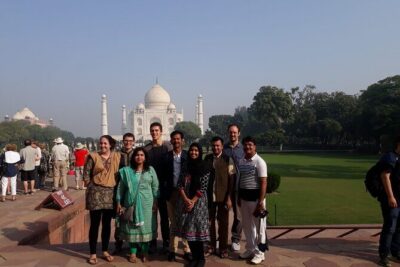
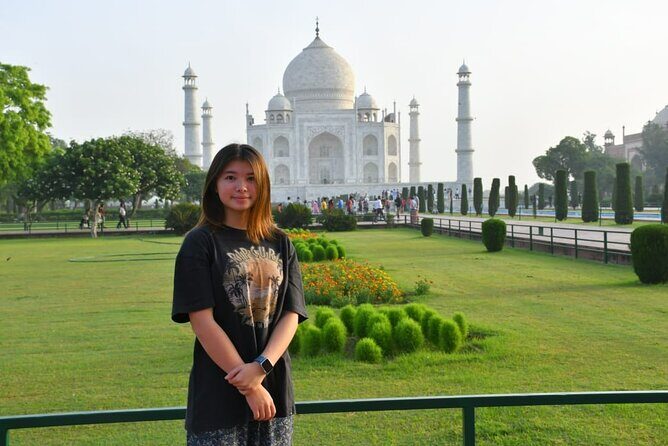
You’ll get about three hours at the Taj Mahal with admission included. Sunrise viewing is the standout. The reason is simple: early light softens shadows, and you’re more likely to enjoy the site when it’s not at peak crowd intensity (even though it’s still a world-famous place).
The important expectation to have: the Taj Mahal can be hard to fully capture in photos because the scale hits you when you’re there. You’ll see that the monument isn’t just pretty—it’s designed like a visual machine, pulling your eye toward symmetry and detail.
Agra Fort: Akbar’s Military Capital in Stone
After breakfast, you’ll head to Agra Fort, another UNESCO World Heritage Site. It was built in 1565 by Mughal Emperor Akbar, and Agra was the capital at the time. This stop is about context: the Taj Mahal is about love and monumentality, while the fort connects you to power and the practical side of Mughal rule.
You’ll have about an hour here with admission included. It’s enough to get a feel for the complex layout, but not enough to become an expert. That’s where your guide helps.
Fatehpur Sikri en route to Jaipur
Next comes Fatehpur Sikri, about 40 km west of Agra. It was the short-lived capital of the Mughal empire between 1572 and 1585. Admission is included, and you’ll have around an hour to see the fortified ancient city.
This is one of those places where a quick visit can still feel meaningful if someone explains the story of why the city mattered and why it didn’t last.
Drive to Jaipur: Hit the Walls, Then Rest
Then it’s on to Jaipur by road, about 4 to 4.5 hours. You’ll check in and relax. Don’t underestimate this: after Taj Mahal, Agra Fort, and Fatehpur Sikri, Jaipur feels better when you’re rested instead of running on pure willpower.
Day 3 Jaipur Classics: Amber Palace, City Palace, Hawa Mahal, and Jal Mahal
Day 3 is built around Jaipur’s royal architecture. You’ll do the big viewpoints, then end with a return drop back toward Delhi NCR or your hotel/airport plan.
Amber Palace: Rajput Architecture with Multiple Levels to Explore
You start at Amber Palace (Amber Fort). It’s described as a great example of Rajput architecture, and the visit includes exploring all four levels. Admission is included, and you’ll have about two hours.
Practical reality check: expect stairs and uneven walking. Wear shoes you’d trust on cobblestones, and take your time. The reward is that Amber’s viewpoints help you understand why kings cared about placement.
City Palace: The Seat of Power from 1727
Next is City Palace of Jaipur, established by Maharaja Sawai Jai Singh II in 1727. You’ll get about an hour, with admission included, and it’s described as a place for religious and cultural events as well as arts, commerce, and industry.
This is the stop that often turns into the “oh, this is more than just buildings” moment. It connects the palace design to daily life and the role of the monarchy.
Hawa Mahal: The Palace of Wind
Then you’ll see Hawa Mahal (Palace of Wind), built in 1799. It was designed for royal ladies to view the bazaar without showing themselves. You’ll have about 30 minutes with admission included.
Even in a short time, you’ll see the idea: the facade is shaped like a honeycomb of windows, made for watching while staying hidden.
Jal Mahal: A Water Palace That Looks Different From Every Angle
You also visit Jal Mahal, often called the Jal Mahal underwater palace or water palace. It’s described as an example of Rajput and Mughal architecture and built in 1692. This is a shorter stop (about 30 minutes), and admission is listed as free.
You’ll likely spend more time observing views than exploring rooms because the “magic” is how it sits in the water. It’s a nice palate cleanser before the trip wraps up.
Return to Delhi NCR
Your driver then drops you back to the airport or your hotel anywhere in Delhi NCR, Gurugram, or other desired locations. For a three-day loop, that last handoff matters because it prevents a stressful end-of-trip scramble.
Ticket Timing, Photo ID, and the Small Rules That Matter
A few practical notes can save you from last-minute stress.
First, Taj Mahal is closed every Friday. If your dates land on Friday, your Taj Mahal timing will need to be adjusted by the operator.
Second, you should carry a valid photo ID for monument checking. This is specifically called out for monument entry, so keep it in an easy-to-reach place.
Third, not every stop is a ticketed entry. Some are admission included, some are free, and one major monument (Red Fort) is a view-from-outside photo stop. If you’re the type who wants to step inside everything, you might feel the tradeoff. In a tight itinerary, the tour has to make choices.
Last, tips and gratuities are not included. Your driver and guide work the schedule hard, so budget something for tips if you want good karma at the end.
Price and Value: Does $90 per Person Make Sense?
At $90.00 per person, this can look like a bargain for a three-day Golden Triangle with private transport. But here’s the real value math: you’re getting private A/C car with driver, hotel transfers, a live guide, all parking/tolls/fuel/taxes, bottled water during the tour, plus breakfast and dinner support.
You also get two-night hotel accommodation in Agra and Jaipur if you choose the hotel option. And you can select three or five-star accommodation, which is where your “luxury” feel is defined. If you choose a higher tier, the price-to-comfort ratio can still be attractive. If you choose the lower tier, the tour remains good for logistics, but luxury is more about convenience than a fancy room.
The other value point is your time. Buying tickets, arranging private guides, and planning city-to-city transport separately can cost more and take more effort than you expect. This package is built to remove that friction so you can focus on the monuments.
One more clue: the tour has strong demand and is often booked weeks in advance (about 71 days on average). If you’re traveling during a busy season, booking earlier tends to keep your options from tightening up.
Safety, Organization, and the Real Human Touch
The biggest praise in how these trips run is consistency: punctual pickup, smooth driving, and guides who keep the day flowing. In some recent runs, people were supported by guides such as Gyanendra, Aquib, Wasim, and Akram, along with drivers including Ajay ji, Vijay, Raj, and Bantu.
That matters because Golden Triangle routes can go sideways when logistics are sloppy. With a team that focuses on timing and safe driving, your energy stays for the sights instead of the hassles.
Also, expect hands-on guidance. You’ll have a private guide for the duration, and on Taj Mahal morning you’ll meet in the lobby. That’s small, but it prevents the classic “Where are we meeting?” stress when you’re traveling with jet lag.
Who This Tour Fits Best (and Who Might Want More Time)
I think this tour is ideal if you:
- Want the core Golden Triangle sights without building a plan from scratch
- Have limited days and still want guided context, not just transportation
- Prefer road comfort with an A/C car and a driver handling routes and stops
- Like sunrise experiences and don’t mind early starts
You might choose a different style of trip if you:
- Want long museum-style time inside every major monument
- Travel slowly and need big breaks between locations
- Are flexible about dates and can’t risk a Friday Taj Mahal closure
Should You Book This 3-Day Golden Triangle Tour?
If you want a fast, guided route that connects Delhi, Agra, and Jaipur with private car comfort and a guide explaining what you’re looking at, I’d say yes. This is built for people who value time and hate logistics more than they love spreadsheets.
Book it when your priorities are clear: sunrise Taj Mahal, key Delhi landmarks, Agra Fort, Fatehpur Sikri, and Jaipur’s royal sites. Just make sure you’re choosing a hotel tier you’ll actually enjoy, and keep your photo ID ready.
FAQ
What is the duration of the Golden Triangle tour?
The tour runs for about 3 days.
Does the price include hotel accommodation in Agra and Jaipur?
Two-night hotel accommodation in Agra and Jaipur is included if you choose the hotel option.
What meals are included during the tour?
Breakfast is included (2) and dinner is included (2). Other meals aren’t included.
Is transportation between Delhi, Agra, and Jaipur included?
Yes. You travel by private air-conditioned car with a driver, including hotel pickup and drop-off.
Is this a private tour?
Yes. It’s listed as a private tour/activity with only your group participating.
Do I need tickets for monuments, and are some admissions included?
Admissions are included for several monuments listed on the itinerary (for example Jama Masjid, Humayun’s Tomb, Qutub Minar, Taj Mahal, Agra Fort, Fatehpur Sikri, Amber Palace, City Palace, and Hawa Mahal). Some stops are free or are outside-view/photo stops.
Is the Taj Mahal open every day?
No. The Taj Mahal is closed every Friday.
What do I need to carry for entry to monuments?
Carry a valid photo ID for checking at the monuments.