REVIEW · JAIPUR
“Jaipur Cultural Walk: Explore life behind the pink walls”
Book on Viator →Operated by Jaipur Cultural Walk · Bookable on Viator
Skip the bus. Follow the smells of Jaipur.
This Jaipur Cultural Walk is a 3-hour Old City trek designed for real street-level life behind the pink walls. You’ll move with a small group, so the guide’s explanations land fast, and you can slip into the bazaars without feeling like you’re marching with a crowd.
I especially love how it’s built around hands-on places: you’ll watch artisans at work in the markets and get a close look at how everyday goods get made. I also like the food pacing, with coffee or tea and warm snacks breaking up the walk, plus a proper tea break at Chhoti Chaupar with masala chai.
One drawback to plan for: it’s a walking tour with moderate fitness needs, and there’s no hotel pickup/drop-off. If you’re not comfortable moving for about 3 hours, or you hate figuring out meeting points, this may feel more work than reward.
In This Review
- Key highlights to look for
- Walking Jaipur’s Old City With a Small Group
- Is the $30 Price Worth a 3-Hour Old City Walk?
- Meeting Points and the Simple Real-World Plan
- Stop 1: Tripolia Bazar and the Makers Behind the Goods
- Stop 2: Chhoti Chaupar Tea Break, Incense, and Narrow Lanes
- Stop 3: Badi Chaupar Milk Sweets, Curds, Cheese, and Spice Bazaar
- What You’ll Actually Eat (and Why the Timing Works)
- The Guide Factor: Why This Walk Feels Personal
- Who Should Book This Jaipur Cultural Walk?
- Quick tips to get more out of the walk
- Should You Book It?
- FAQ
- How much does the Jaipur Cultural Walk cost?
- How long is the tour?
- What’s included in the price?
- How big is the group?
- Where do we meet, and where does it end?
- Is hotel pickup and drop-off included?
- Can I take photos during the bazaar stop?
- What if I need to cancel or the weather is bad?
Key highlights to look for
- Up to 8 people keeps the vibe personal and the questions coming
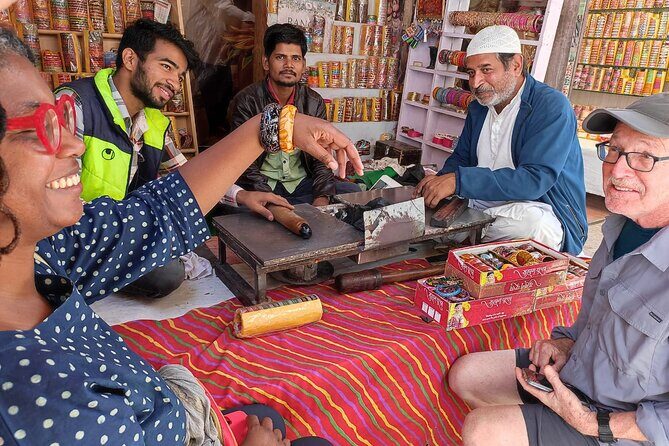
- Tripolia Bazar artisans: lacquer bangles, brass, and metal vessels up close
- Chhoti Chaupar tea break with fresh masala chai and hot snacks
- Incense-and-candle alleys where you’ll see how homes and shopfronts get decorated
- Milk-based sweets and dairy stops at Badi Chaupar (curd, cheese, and more)
- Coffee/tea, snacks, and bottled water included so you can stay focused on the sights
Walking Jaipur’s Old City With a Small Group
Jaipur’s Old City can feel like a maze from a distance. Up close, it’s a working place—shops, homes, makers, and worship all sharing the same lanes. This walk is smart because it uses a small-group format, which means you don’t spend the whole time playing guess-the-sign or shouting to hear your guide.
You’ll also get a guide who’s comfortable explaining what you’re seeing in plain language. In particular, past groups have singled out local guide Kumar for steering people through side streets and away from the most obvious tourist shortcuts, while tying it back to Hindu traditions you’ll notice around temples and shopfronts.
And yes, it’s walking. That’s the point. No long bus rides to nowhere. You’ll get your bearings faster by putting your feet on the ground.
You can also read our reviews of more walking tours in Jaipur



Is the $30 Price Worth a 3-Hour Old City Walk?
At $30 per person for about 3 hours, the value comes from three things: time, access, and what’s included. This isn’t an all-day production, so you’re paying for focused, guided neighborhood wandering—plus stops that are normally the kind you’d only see if you were already locally oriented.
What’s included matters more than it sounds. You get coffee and/or tea, snacks, and bottled water. That helps you keep your energy up while you’re in market lanes where you might not want to hunt for a safe, clean break on your own.
The small-group cap (max 8 travelers) also keeps the experience from turning into a line you can’t move. In these bazaars, that’s a big deal. You want room to turn, stop, look, and ask a question without blocking everyone behind you.
The trade-off is convenience. There’s no hotel pickup, so you’ll need to get yourself to the meeting point near the Government Maharaja Public Library, close to Tripolia Gate. If you’re already using public transportation, that’s manageable.
Meeting Points and the Simple Real-World Plan

The walk starts near Government Maharaja Public Library on Chaura Rasta Rd, opposite Tripolia Gate (Bapu Bazar area). The route then ends at the City Palace Parking Area around Gangori Bazaar and J.D.A. Market.
I like this kind of setup because it often leaves you positioned to keep exploring afterward. City Palace is a natural anchor, so it’s easier to connect your next stop without backtracking across the city.
Two practical notes:
- Bring comfortable shoes. Market pavements can be uneven, and you’ll be on foot the whole time.
- Dress for weather. The tour depends on good weather, and if conditions are poor, you’ll be offered a different date or a full refund.
Stop 1: Tripolia Bazar and the Makers Behind the Goods
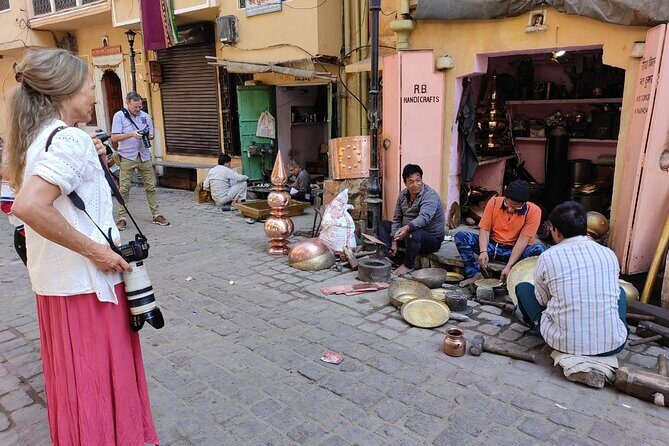
Your first stop is Tripolia Bazar, where the focus shifts from seeing Jaipur to understanding how it works. This area is known for artisans and handicraft makers, and you’ll spend about an hour in the designated zones so the group doesn’t wander off in random directions.
What I find useful here is the specific craft angle. Instead of only browsing products, you’ll watch artisans making items like lacquer bangles and brass or metal vessels. When you’re that close, you can spot how much skill lives inside what looks like a simple purchase later.
Photography is allowed here, which is great. You can capture the textures and tools without having to guess whether you’re breaking a rule.
Potential drawback: because you’re around working craftspeople and busy shop lanes, the area can feel crowded and busy at certain times. If you’re sensitive to crowds, keep your expectations realistic. The benefit is that you’re seeing the process, not just the display.
Stop 2: Chhoti Chaupar Tea Break, Incense, and Narrow Lanes
At Chhoti Chaupar, the walk takes a breather with a short tea break—masala chai plus freshly cooked hot snacks. This is a smart pacing move. It keeps the group comfortable and helps you avoid the classic market problem: you start hungry, then you end up rushing.
After the tea, you’ll head down alleyways to find a wall of small sensory details: incense and candles, plus decorative strings used to dress up spaces. These are the kinds of things you usually miss if you only stick to the wide main roads.
What makes this stop valuable is context. The guide is the key here, linking everyday items to what they’re used for in daily life and around religious practice. Past groups have highlighted how the guide connects street scenes to temple traditions, so you’re not just collecting images—you’re understanding the logic behind what you see.
My quick advice: take a second to slow down during the alley portion. This is the part where Jaipur stops being a postcard and starts acting like a lived-in place.






Stop 3: Badi Chaupar Milk Sweets, Curds, Cheese, and Spice Bazaar
The third stop is Badi Chaupar, and it leans into a very Jaipur side of shopping: food and ingredients. You’ll visit a small factory where confectioners work with milk to make curd, cheese, and sweets, and you’ll get to enjoy the taste of freshly cooked sweets.
This is one of the best sections for people who like food experiences that go beyond eating. The point isn’t just flavor. It’s seeing how dairy products become sweets, which makes the market’s spice and snack world feel less random.
From there, the route guides you through a spice bazaar and into areas connected with flowers (based on the stop’s market focus). Spices and flowers aren’t just for decoration or shopping bags here—they’re tied to daily cooking, rituals, and the smell of the city itself.
Possible consideration: sweets can be filling, so don’t plan a heavy lunch immediately after. You’ll likely want something lighter afterward, or at least a slower pace the rest of the day.
What You’ll Actually Eat (and Why the Timing Works)
Food is a big part of this walk, and the tour handles it in a way that feels realistic. You get snacks throughout, plus coffee/tea, and you have a planned hot-food break during the Chhoti Chaupar portion.
Street-food culture in Jaipur is best enjoyed when you’re not rushed. Here, you’re not stopping for food at random. You’re pausing at the moments the route is set up for, which makes it easier to stay relaxed and keep moving.
I also appreciate that bottled water is included. Hydration matters in Old City lanes, especially when you’re walking and stopping frequently for photos and questions.
One more small benefit: because you’re not hunting for food on your own, you avoid the decision fatigue that can drain the fun right when the sights start getting good.
The Guide Factor: Why This Walk Feels Personal
The biggest difference between a good market walk and a mediocre one is the guide. This one is set up for conversation and explanation, not just pointing.
Local guide Kumar is repeatedly praised for bringing people into non-touristy streets and explaining Hindu traditions clearly. That makes the sights feel more connected. You understand why incense shows up in certain places, what different shops are doing, and how daily life folds into religious rhythms.
You’ll also notice the difference from a larger tour group. With fewer people, you can stop longer near a craft process, and you’re less likely to get herded past the good bits.
And if you’re the type who likes to ask questions—about materials, ingredients, or what something is used for—this format gives you space.
Who Should Book This Jaipur Cultural Walk?
This tour is a great match if you want:
- A guided walking tour of the Old City rather than a bus ride
- A small group (max 8) for a more personal pace
- A mix of crafts, markets, and food stops
- Practical access to places near Tripolia Gate and around City Palace
It’s also ideal for you if you’re comfortable doing short-to-moderate walking and you don’t need hotel pickup. The meeting points are in the Old City zone, and that’s where the experience lives.
It may not be the best fit if:
- You hate finding meeting points without hotel pickup
- You’re dealing with mobility limits or you’re not up for about 3 hours on foot
- Weather is unreliable during your dates (the tour depends on good weather)
Quick tips to get more out of the walk
- Wear shoes you trust on uneven pavements.
- Carry a light layer. Market shade can swing fast depending on sun and wind.
- Don’t overbook right before or after. This is a full little block of your day.
- If you care about photos, Tripolia Bazar is your best bet for photography-friendly craft scenes.
Should You Book It?
I think this one is worth booking if you want a guided, no-bus way to experience Jaipur’s Old City as a living neighborhood—not a staged shopping route. The combination of artisan stops, chai and hot snacks, and a food-focused final stretch at Badi Chaupar gives you variety without turning the day into a marathon.
Book it if you’re the type who likes seeing how things get made and learning the context behind what’s sold. Skip it if you need hotel pickup, want a totally low-walking plan, or can’t handle market crowds at close range.
If you’re staying near the Old City and you like to move with intention, this Jaipur Cultural Walk is a strong use of a half-day.
FAQ
How much does the Jaipur Cultural Walk cost?
It costs $30.00 per person.
How long is the tour?
The duration is about 3 hours.
What’s included in the price?
The tour includes coffee and/or tea, snacks, and bottled water.
How big is the group?
This experience has a maximum of 8 travelers.
Where do we meet, and where does it end?
You start near the Government Maharaja Public Library (opp. Tripolia Gate area). The tour ends at the City Palace Parking Area (near Gangori Bazaar and J.D.A. Market).
Is hotel pickup and drop-off included?
No. Hotel pick-up and drop-off is excluded.
Can I take photos during the bazaar stop?
At Tripolia Bazar, photography is allowed.
What if I need to cancel or the weather is bad?
You can cancel for a full refund up to 24 hours in advance. The tour requires good weather. If it’s canceled due to poor weather, you’ll be offered a different date or a full refund.